Artwork
Sinhalese Man
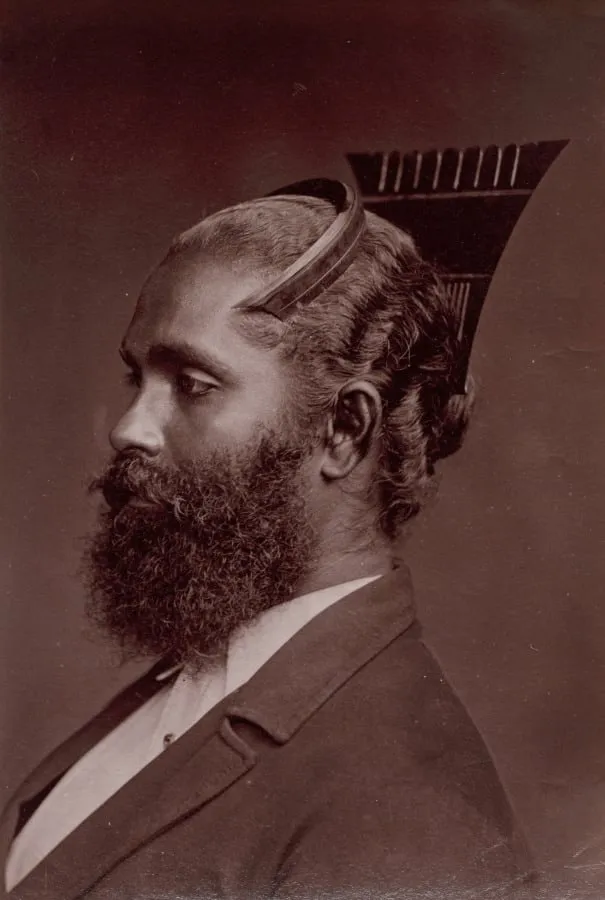
Sinhalese Man is a photography by the Impressionist artist Scowen & Co.. It dates from 1884 and is held in the collection of the Cleveland Museum of Art.
About this work
The artist, a British studio in Ceylon, likely made this for travelers or officials who wanted a "local type" to take home.
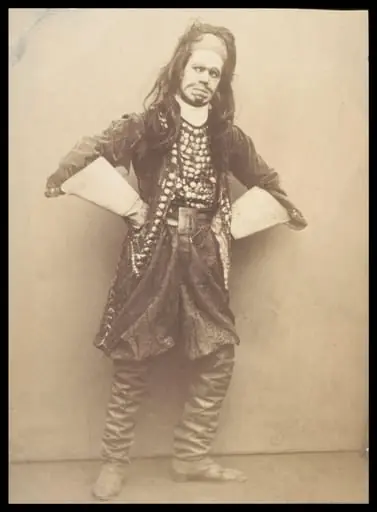
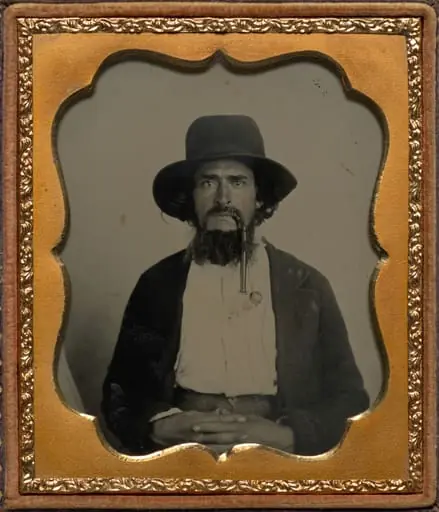
This painting shows a man in a dark Western suit, his hair tied in a neat topknot. His face is calm, almost serious.
He’s Sinhalese—part of the majority group in Sri Lanka—but wears clothes that wouldn’t look out of place in London. That mix of styles hints at colonial life in the 1880s, when British rule shaped daily routines. The artist, a British studio in Ceylon, likely made this for travelers or officials who wanted a "local type" to take home.
If you like this, look up more works tagged subject: india, 19th century.
Overview
This photograph depicts a Sinhalese man in early colonial Sri Lanka, dressed in a dark Western suit and shirt, with his hair styled in a traditional topknot. The image was produced by a British photographic studio in Ceylon during the 1880s, likely as part of a commercial series intended for European audiences. It reflects the visual culture of colonial documentation, where local subjects were framed as representative types rather than individuals.
Subject & Meaning
The man’s attire blends European fashion with a distinctly Sinhalese hairstyle, signaling a cultural intersection shaped by British colonial presence. His composed expression and formal dress suggest an attempt to project dignity within a colonial hierarchy. The image does not capture personal identity but rather constructs a visual category—'the Sinhalese gentleman'—for consumption by foreign viewers seeking familiar yet exoticized representations.
Technique & Style
The photograph is rendered in a studio setting with careful lighting and a neutral background, typical of 19th-century ethnographic portraiture. The subject is centered and still, emphasizing clarity and detail over spontaneity. The sharp focus on texture—fabric, hair, skin—reflects the technical priorities of the era, where photographic precision served documentary and commercial aims rather than artistic expression.
History & Provenance
Produced in colonial Ceylon by a British-operated studio, the photograph was likely sold as a keepsake to administrators, travelers, or collectors. Such images were common in the period, circulating as visual souvenirs that reinforced colonial perceptions of local populations. Its original context was commercial, not archival, and its survival suggests it was preserved as a cultural artifact rather than a personal memento.
Context
During the 1880s, British rule in Sri Lanka influenced dress, education, and social norms among the Sinhalese elite. While many adopted Western clothing as a sign of status or assimilation, traditional customs like the topknot persisted as markers of cultural identity. This image captures that tension—neither fully indigenous nor entirely colonial, but a product of negotiation under imperial rule.
Legacy
The photograph remains a quiet testament to the ways colonial power shaped visual representation. It contributes to a broader archive of 19th-century ethnographic imagery, now studied for its role in constructing racial and cultural stereotypes. Today, it is valued not for its aesthetic innovation but for its historical testimony to the complexities of identity under empire.
Artist & collection