Artwork
Entrance to the Nata Dewale Grounds, Kandy
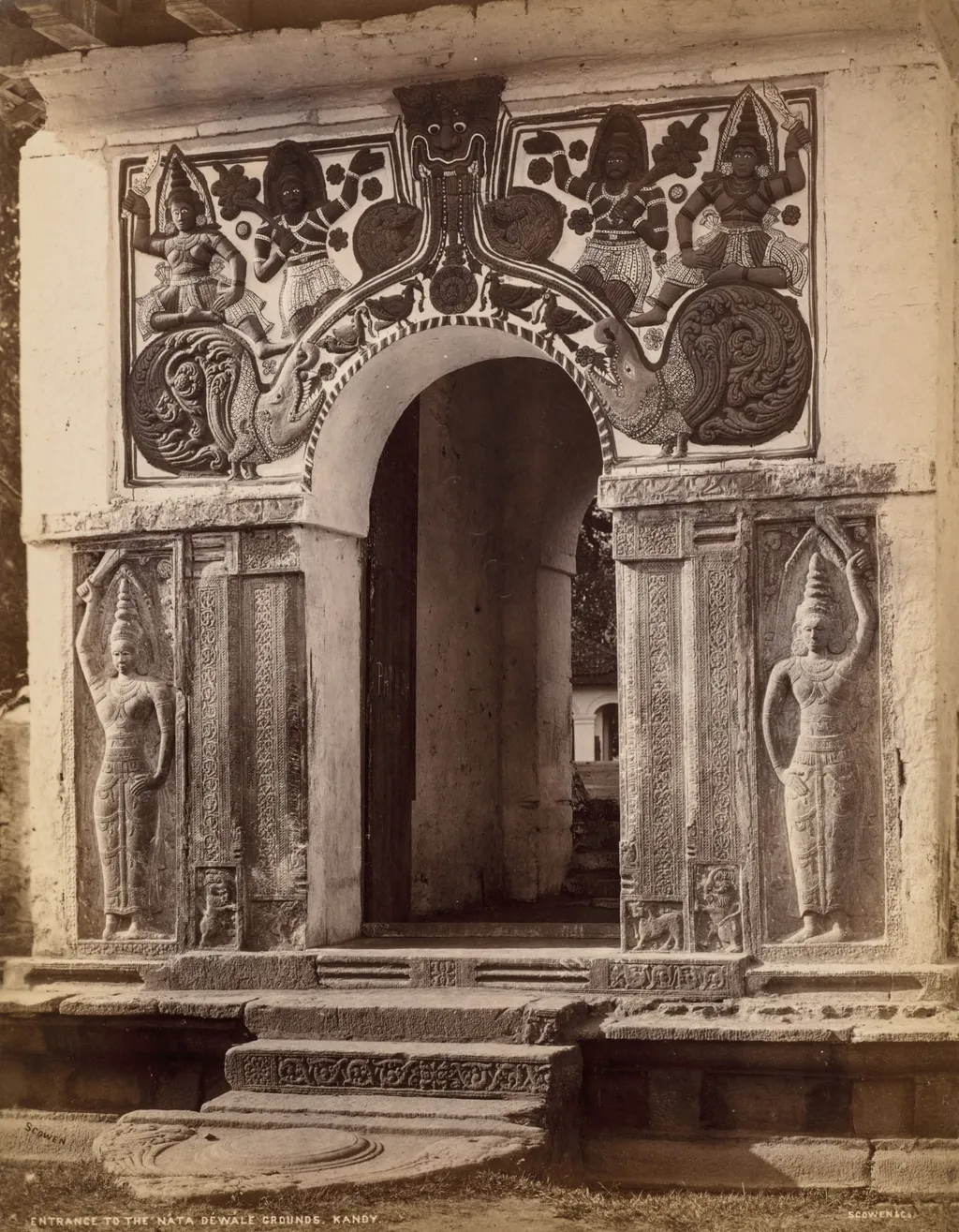
Entrance to the Nata Dewale Grounds, Kandy is a photography by the Impressionist artist Scowen & Co.. It dates from 1880 and is held in the collection of the Cleveland Museum of Art.
About this work
It’s linked to Natha, a local Buddhist deity tied to protection and good fortune.
This painting shows an ornate stone archway leading into a courtyard.
The gate is carved with figures and patterns, framed by a lush tropical setting.
Two stone lions sit at the base, a common sight at sacred Ceylonese sites.
The shrine behind the gate was used for royal ceremonies in Kandy.
It’s linked to Natha, a local Buddhist deity tied to protection and good fortune.
The photo style blends British colonial records with Ceylonese tradition.
Look up Scowen & Co. (British, active Ceylon, 1876–1895).
Overview
This photograph captures the entrance to the Nata Dewale grounds in Kandy, Sri Lanka, taken during the British colonial period by Scowen & Co. The image documents a sacred threshold associated with Natha worship, a localized Buddhist figure linked to protection and royal legitimacy. The composition emphasizes architectural detail against a dense tropical backdrop, reflecting both cultural significance and colonial documentation practices.
Subject & Meaning
The site is dedicated to Natha, a Ceylonese manifestation of the Mahayana Bodhisattva Avalokitesvara, revered for compassion and fortune. Historically, this shrine served as a ceremonial space for royal rituals, including the naming of kings. The stone lions flanking the entrance symbolize guardianship, a motif common in sacred Sri Lankan architecture, reinforcing the site’s spiritual and political authority.
Technique & Style
The photograph employs sharp focus and careful framing to highlight the intricately carved stone archway and surrounding vegetation. The lighting suggests midday sun, enhancing texture in the carvings and foliage. The image adheres to the documentary style of British colonial photographers, prioritizing clarity and ethnographic detail over artistic embellishment.
History & Provenance
Taken between 1876 and 1895 by Scowen & Co., a British photographic firm active in Ceylon, the image is part of a broader effort to record local religious sites during colonial administration. Its preservation reflects colonial interest in mapping cultural landmarks, while the shrine itself remained a living center of devotion, continuously used beyond the colonial era.
Context
Natha worship in Kandy emerged from the fusion of Theravada Buddhism and indigenous deities, reflecting Sri Lanka’s syncretic religious landscape. The shrine’s role in royal ceremonies underscores the intertwining of spiritual and political power. British photographers like Scowen & Co. often targeted such sites to catalog cultural heritage, inadvertently preserving records of practices still observed today.
Legacy
The photograph endures as a visual archive of a sacred space that continues to function in contemporary Sri Lankan religious life. It bridges colonial documentation and local tradition, offering insight into how sacred architecture was perceived and recorded during a period of political transition. The Nata Dewale remains a site of pilgrimage, its historical layers preserved in both stone and image.
Artist & collection

 Goldsmith's Arch, Rome
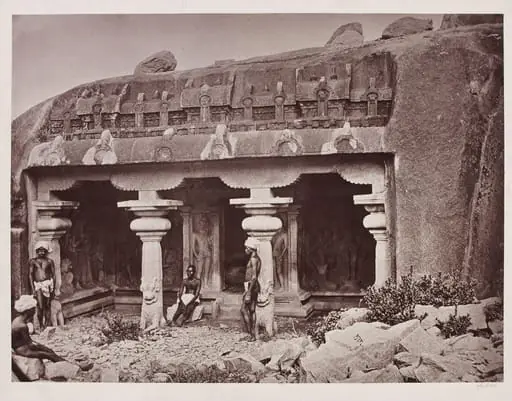 Cave sanctuary at Mahabalipuram
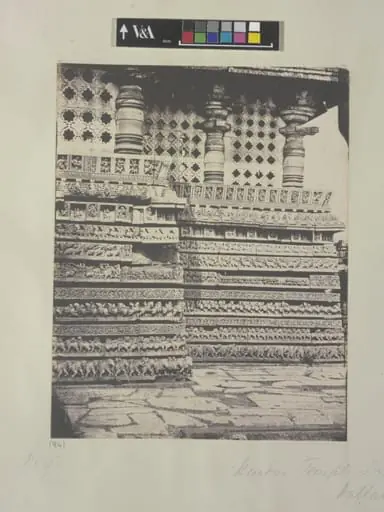 Hindoo Temple Sculpture, Southern India, Hullabeed
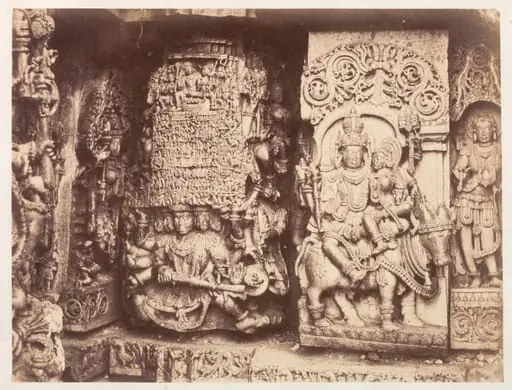 Hoyshaleshvara Temple Sculpture, Halebidu (Halebeedu)
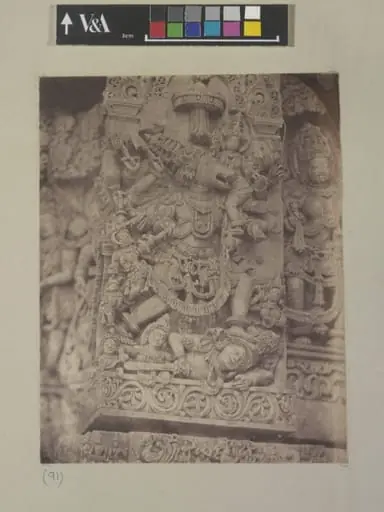 Hindoo Temple Sculptures, Southern India, Hullabeed
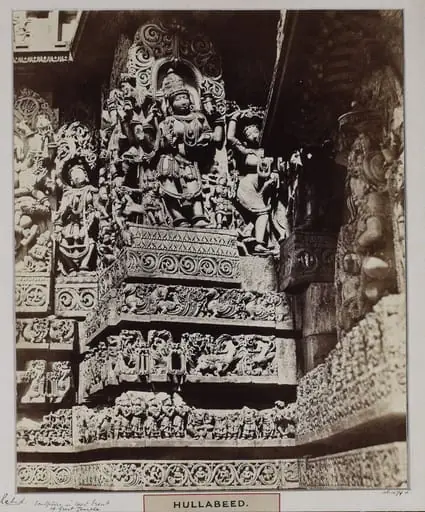 Western terraced front of the great temple at Halebid
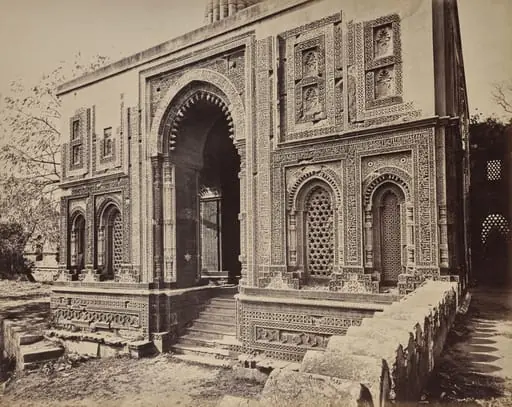 Delhi. Gateway of Allahood Deen's Palace, Old Delhi
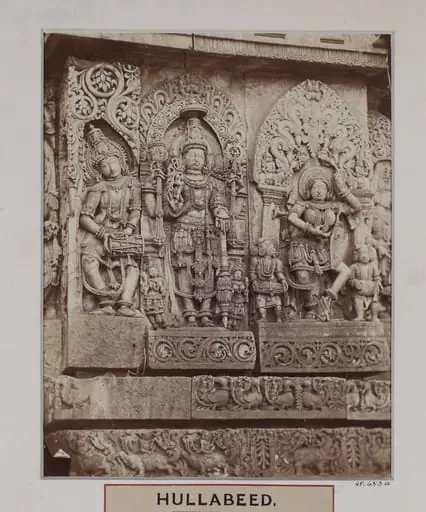 Relief sculpture of the great temple at Halebid