Artwork
Veddahs of Ceylon
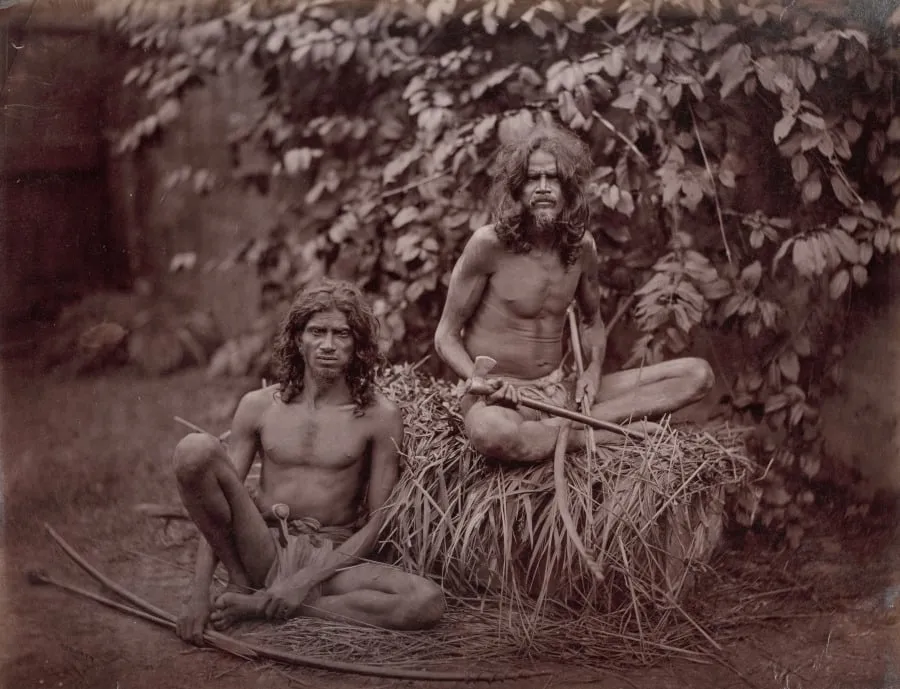
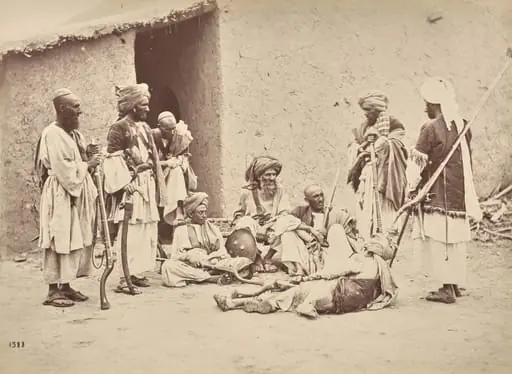
Veddahs of Ceylon is a photography by the Impressionist artist Scowen & Co.. It dates from 1884 and is held in the collection of the Cleveland Museum of Art. This photograph, produced by a British studio in Ceylon during the 1880s, depicts two Veddah men standing in a forest clearing.
About this work
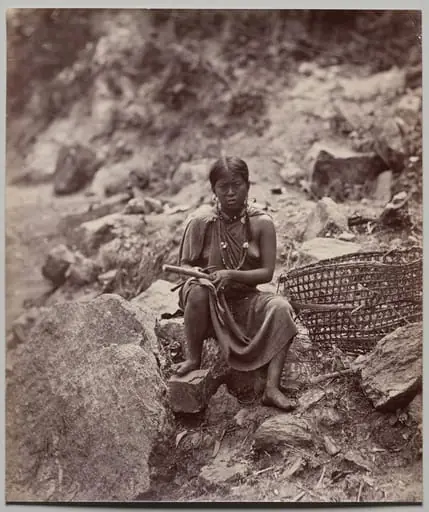
The Veddah people were the island’s first inhabitants, and this image shows them as outsiders saw them—part of colonial-era travel records, not their own story.
You see two men standing in a forest clearing, wearing only loincloths tied with rope.
This photo-like painting was made by a British studio in Sri Lanka in the 1880s. The Veddah people were the island’s first inhabitants, and this image shows them as outsiders saw them—part of colonial-era travel records, not their own story. The artist never asked their names or lives.
To see more 19th-century India, look up *subject: india, 19th century*.
Overview
This photograph, produced by a British studio in Ceylon during the 1880s, depicts two Veddah men standing in a forest clearing. Dressed in minimal loincloths secured with rope, they are presented without context or individual identity. The image belongs to a colonial visual archive, documenting indigenous people as ethnographic subjects rather than as individuals with personal histories.
Subject & Meaning
The two men represent the Veddah, an indigenous group considered among the earliest inhabitants of Sri Lanka. Their depiction reflects 19th-century colonial perspectives that reduced complex cultures to visual stereotypes. The absence of names, expressions, or narrative frames the image as an anthropological specimen rather than a portrait of lived experience.
Technique & Style
The work is a photographic print made in a British-run studio, employing the dry plate process common in the era. The composition is static, with natural light illuminating the figures against a wooded backdrop. The formal pose and lack of environmental detail suggest staged documentation, prioritizing visual clarity over cultural nuance.
History & Provenance
Created in the 1880s during British colonial rule, the photograph was likely produced for commercial or ethnographic distribution in Europe. It entered colonial collections as part of a broader effort to catalog the peoples of South Asia. No records exist of the subjects’ identities or consent, reflecting the era’s disregard for indigenous agency.
Context
The image emerged amid European interest in classifying global populations, often through reductive visual records. In Ceylon, colonial administrators and travelers used photography to construct narratives of primitive otherness. The Veddah were frequently portrayed as relics of a pre-civilized past, ignoring their ongoing adaptation and resilience.
Legacy
Today, the photograph survives as a historical artifact of colonial gaze, offering insight into how indigenous communities were visually controlled and misrepresented. Scholars now use such images critically, not as objective records but as evidence of power dynamics embedded in 19th-century visual culture.
Artist & collection