Artwork
Schrankbild mit Trinkgeschirr und Spanschachteln
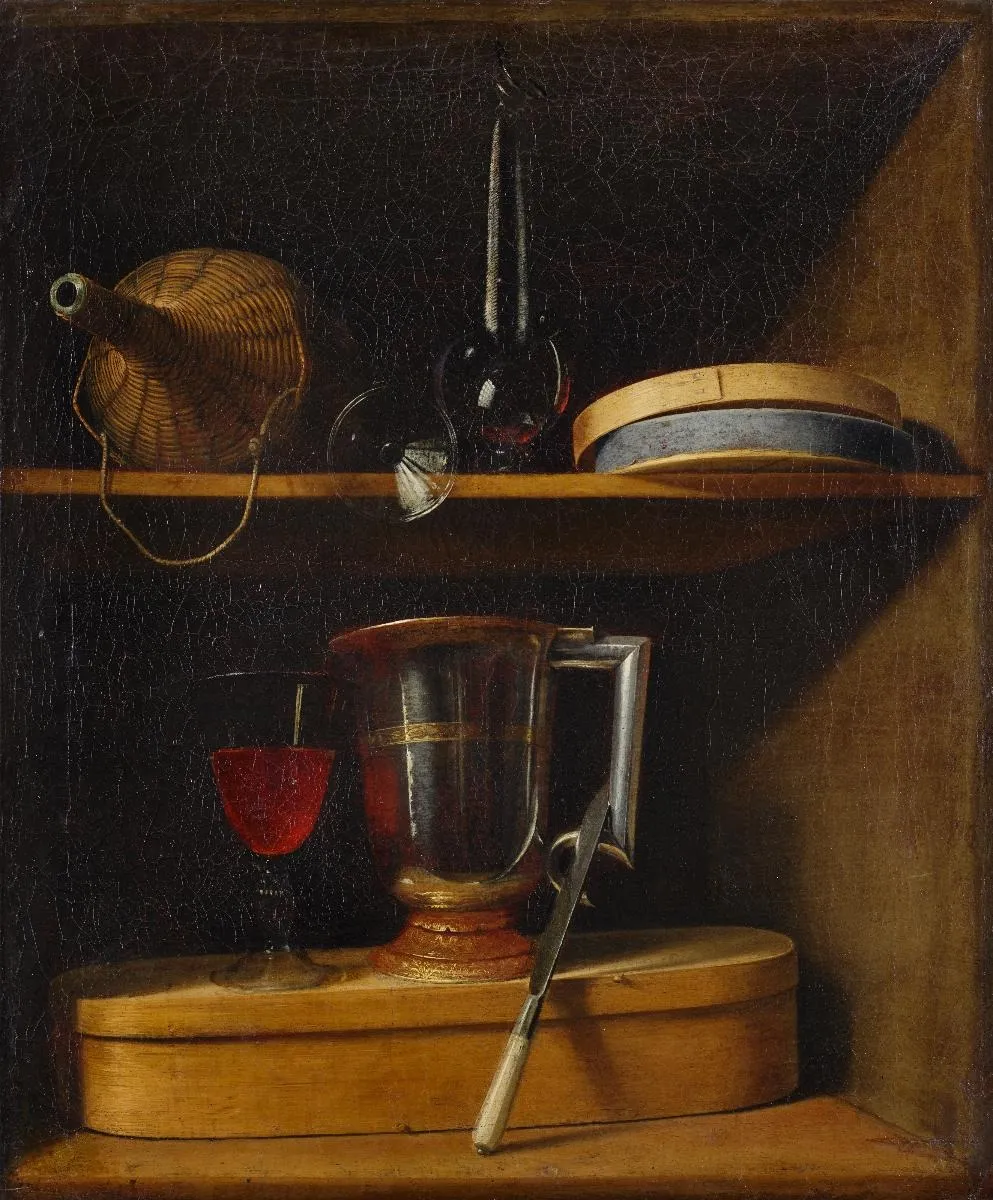
Schrankbild mit Trinkgeschirr und Spanschachteln is an oil painting by the Flemish Baroque painting artist Sebastian Stoskopff. It dates from 1627 and is held in the collection of the Kunsthaus Zürich.
About this work
Overview
Painted in 1627 by Sebastian Stoskopff, this oil-on-panel work presents a carefully arranged interior shelf holding drinking vessels and wooden containers.
Painted in 1627 by Sebastian Stoskopff, this oil-on-panel work presents a carefully arranged interior shelf holding drinking vessels and wooden containers. Stoskopff, an Alsatian artist active in the early 17th century, specialized in restrained still lifes that emphasize quiet observation over theatricality. The composition reflects the influence of Northern European traditions, particularly in its attention to material presence and spatial clarity.
Subject & Meaning
The painting displays everyday objects—glassware, a metal jug, a wicker vessel, a knife, and wooden boxes—arranged on a two-tiered shelf. These items suggest domestic use, possibly related to wine consumption or storage. Their arrangement avoids symbolic allegory, instead inviting contemplation of function, material, and order. The absence of human figures reinforces a focus on the quiet dignity of ordinary things.
Technique & Style
Stoskopff employed precise brushwork to render textures: the smoothness of glass, the rough grain of wood, the metallic sheen of the jug, and the woven weave of the wicker jug. A dark, unmodulated background enhances the three-dimensionality of the objects. Subtle contrasts of light and shadow, characteristic of chiaroscuro, define form without dramatic effect, creating a sense of quiet realism grounded in observation.
History & Provenance
Created during Stoskopff’s mature period, the painting reflects his established reputation in German-speaking regions. While specific early ownership records are sparse, the work aligns with collections of Northern European patrons who valued detailed still lifes. It has been included in scholarly surveys of 17th-century German painting and is held in a public European collection, consistent with the dissemination of his oeuvre.
Context
In the 1620s, still life painting flourished across the Low Countries and German territories, often as expressions of material culture rather than religious or mythological narrative. Stoskopff’s work emerged alongside contemporaries who favored sparse arrangements and meticulous rendering. His approach diverged from the opulent displays of Dutch banquet pieces, favoring intimacy and restraint.
Legacy
Stoskopff’s disciplined compositions influenced later German still life painters who prioritized subtlety over spectacle. His focus on ordinary objects, rendered with technical precision, contributed to a tradition of quiet realism in Northern art. Though less widely known than his Flemish peers, his works remain important for understanding regional variations in Baroque still life and the cultural value placed on domestic materiality.
Artist & collection
Artist
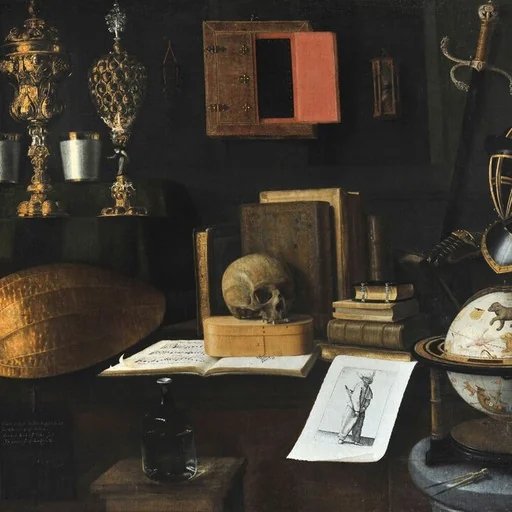
Sebastian (or Sébastien) Stoskopff (July 13, 1597 – February 10, 1657) was an Alsatian painter.

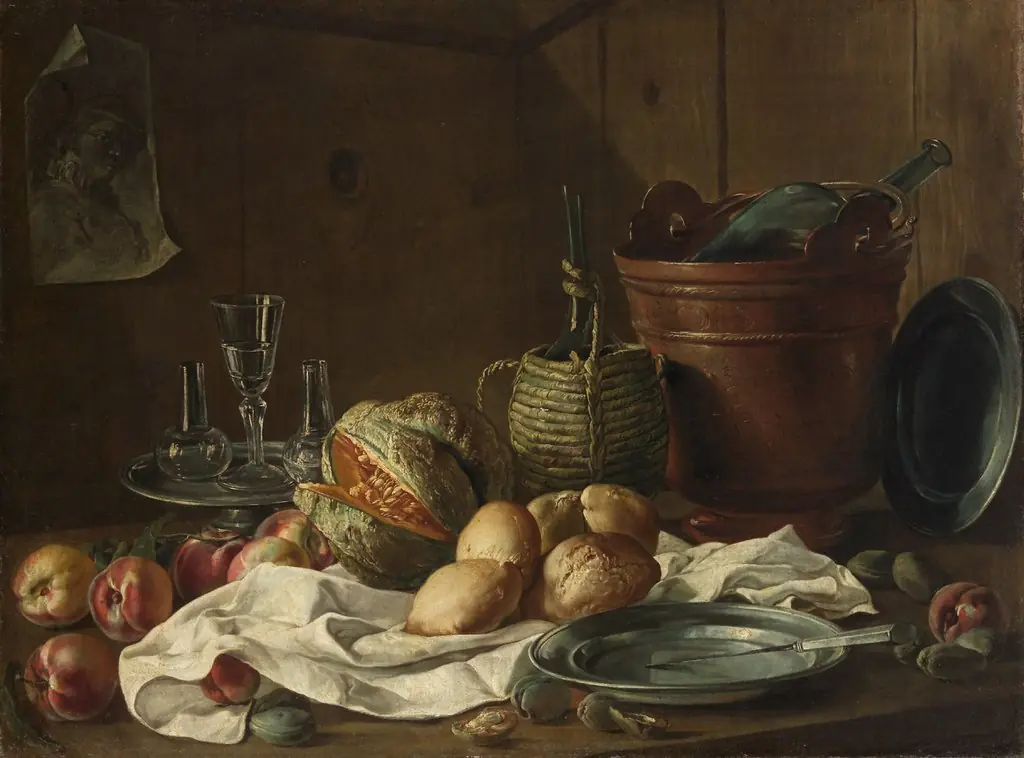 Früchtestilleben
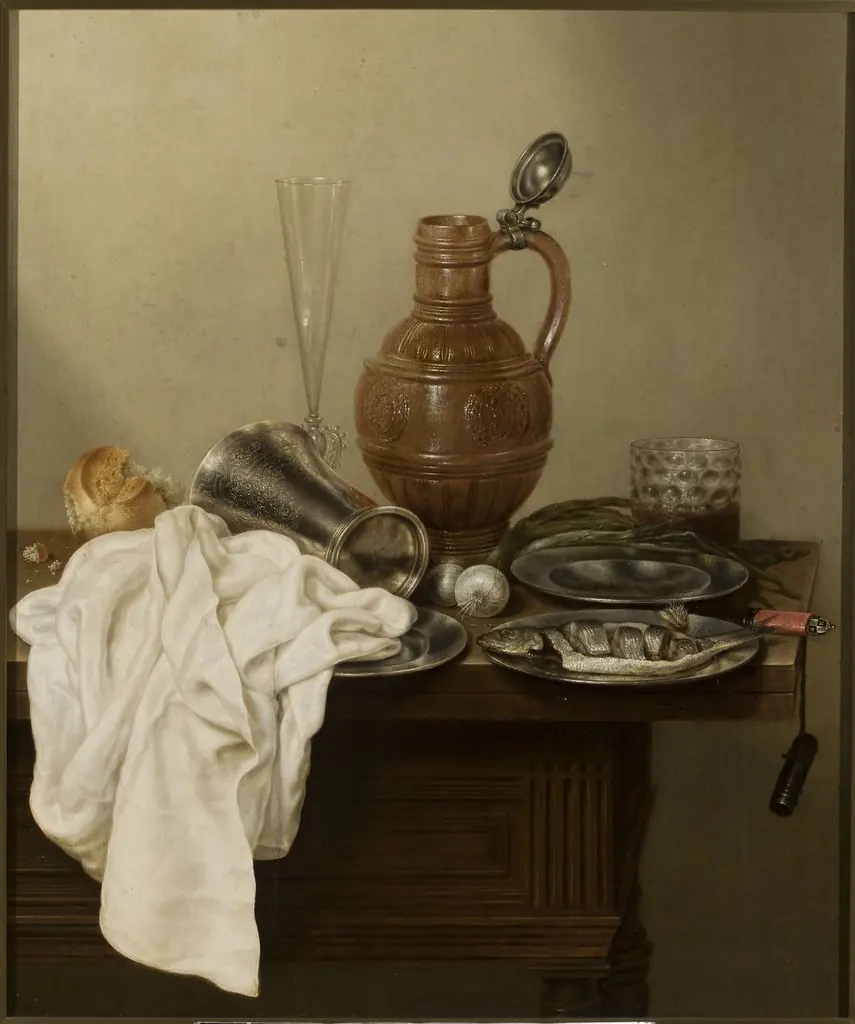 Still life with a herring
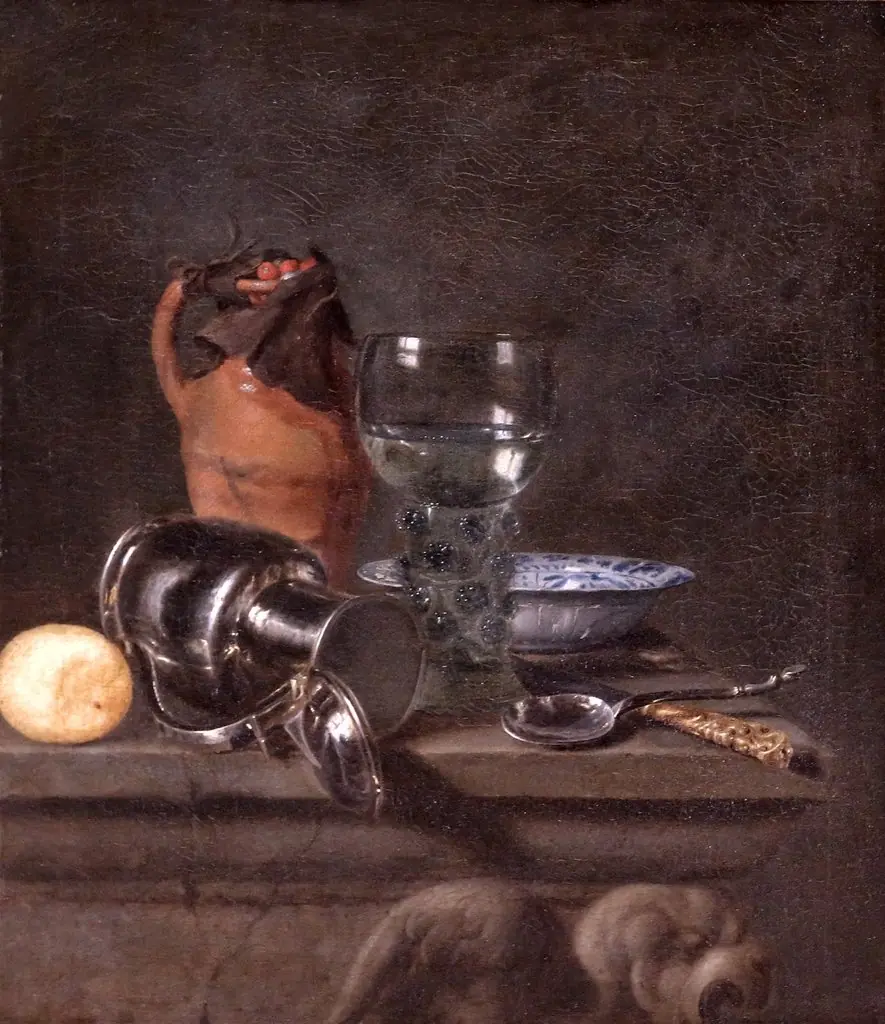 Still life with fallen pewter jug and roemer
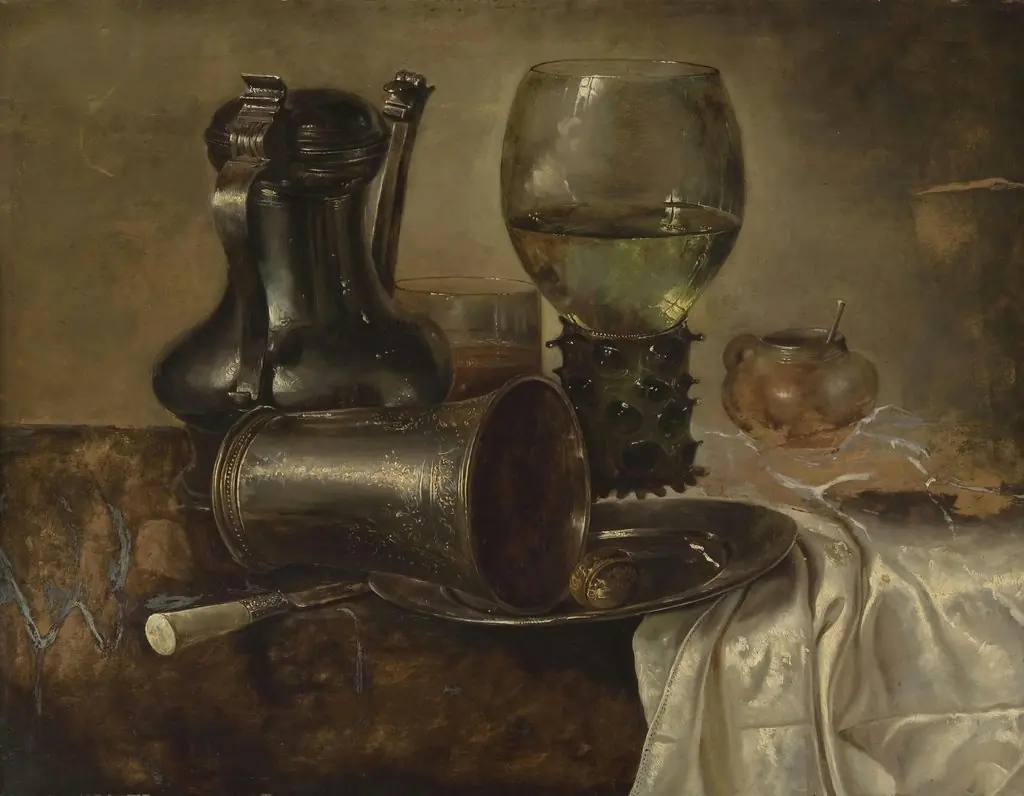 Still Life with a Roemer, a Covered Flagon, and a Beaker
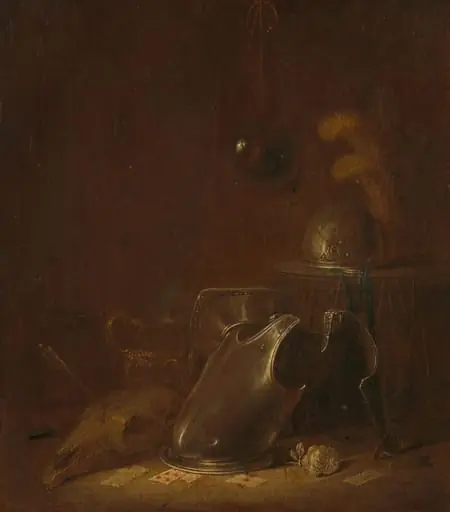 Still life with Implements of War
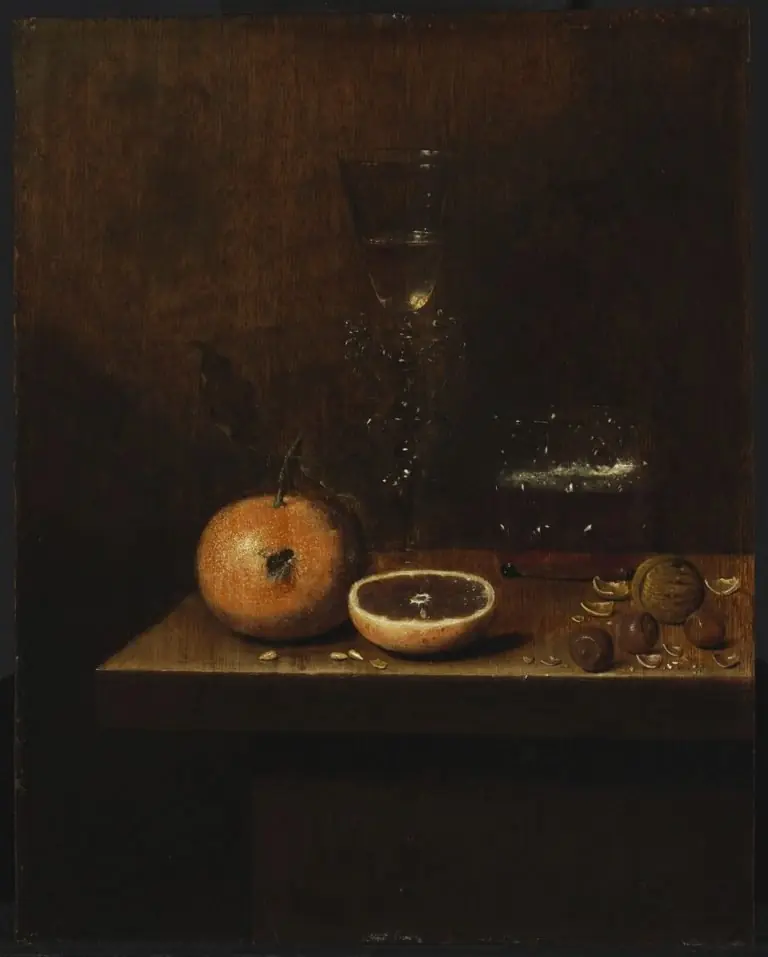 Still Life with Orange and Venetian Glass
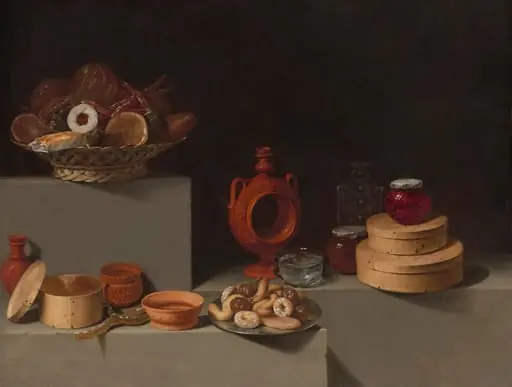 Still Life with Sweets and Pottery
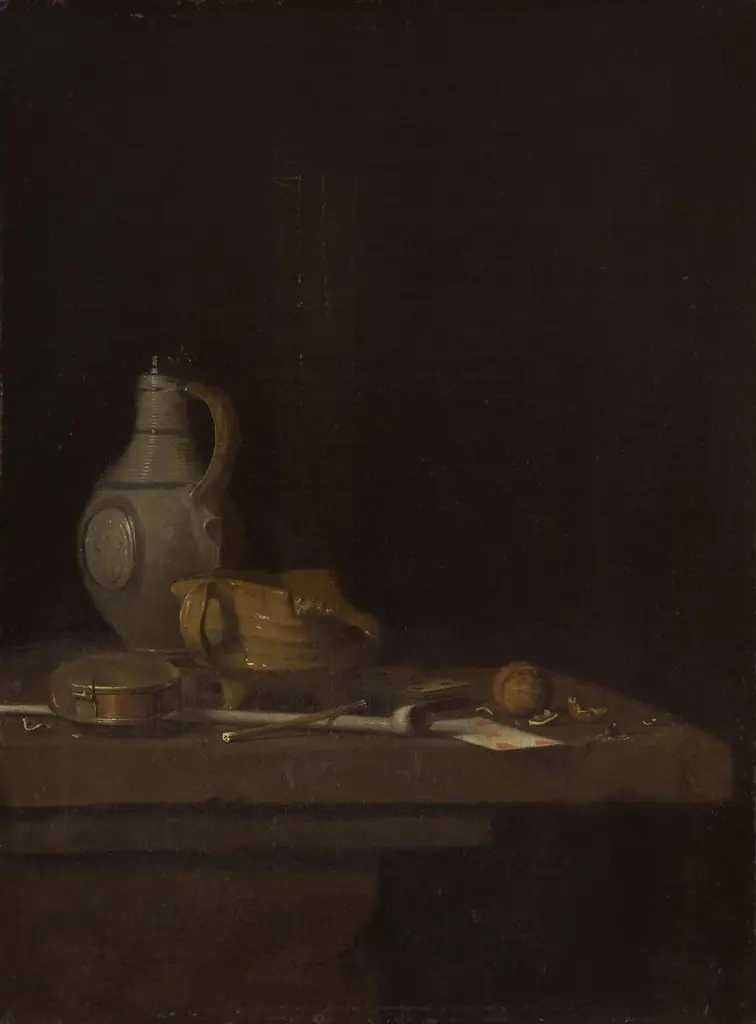 Still Life with a Stoneware Jar and a Brazier
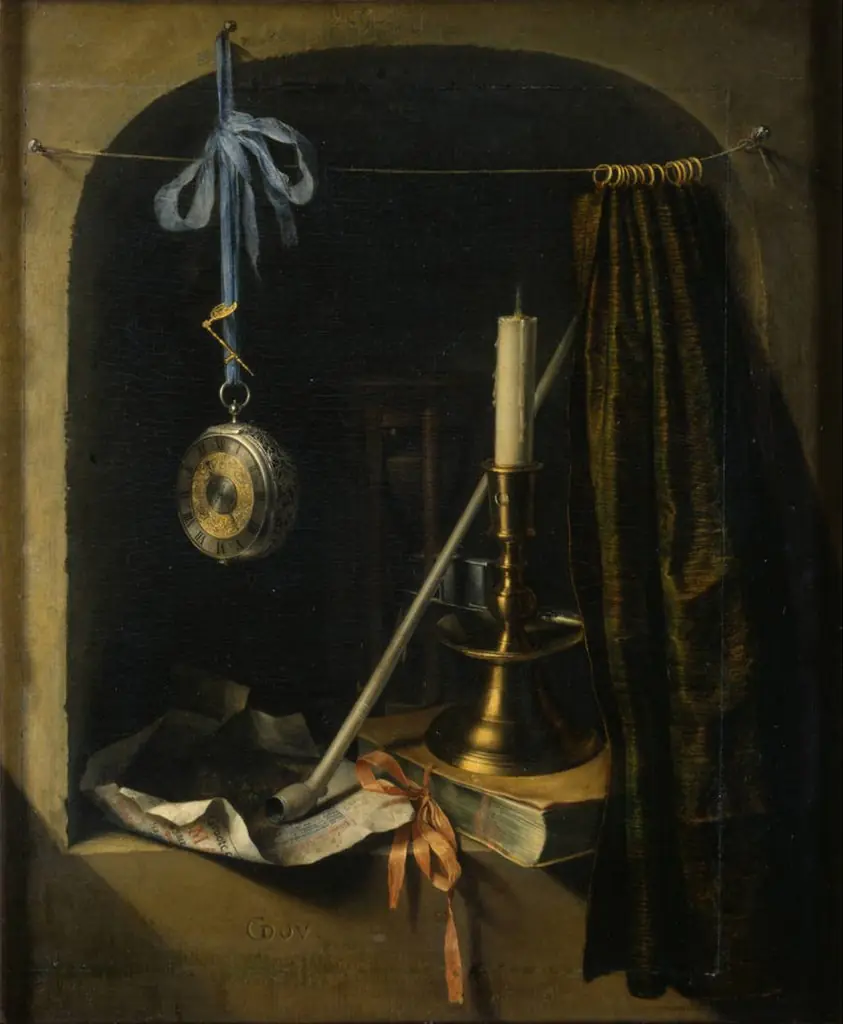 Still life with candle and watch
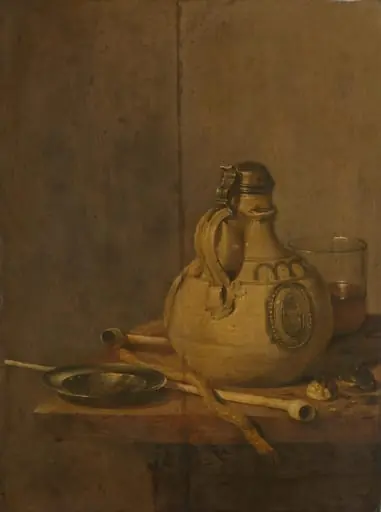 Still Life with Westerwald Jug and Smoking Paraphernalia
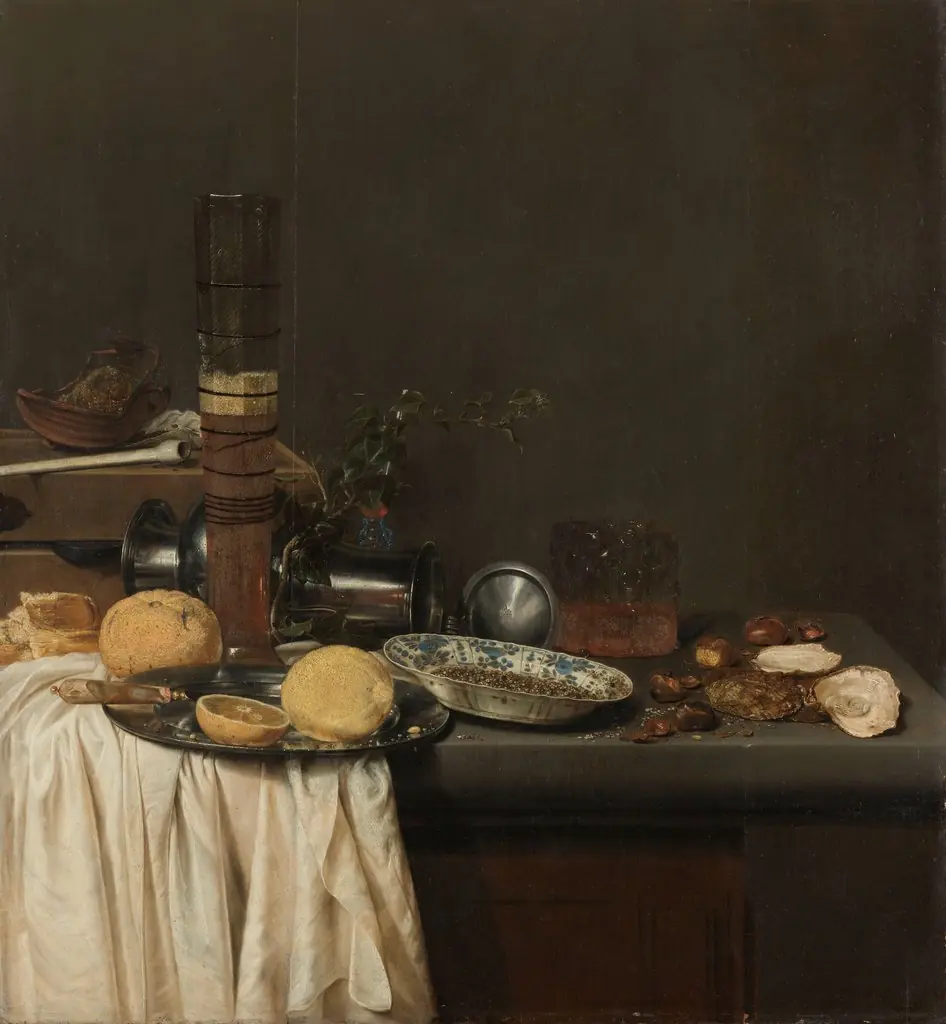 Still-life with a Tall Beer Glass
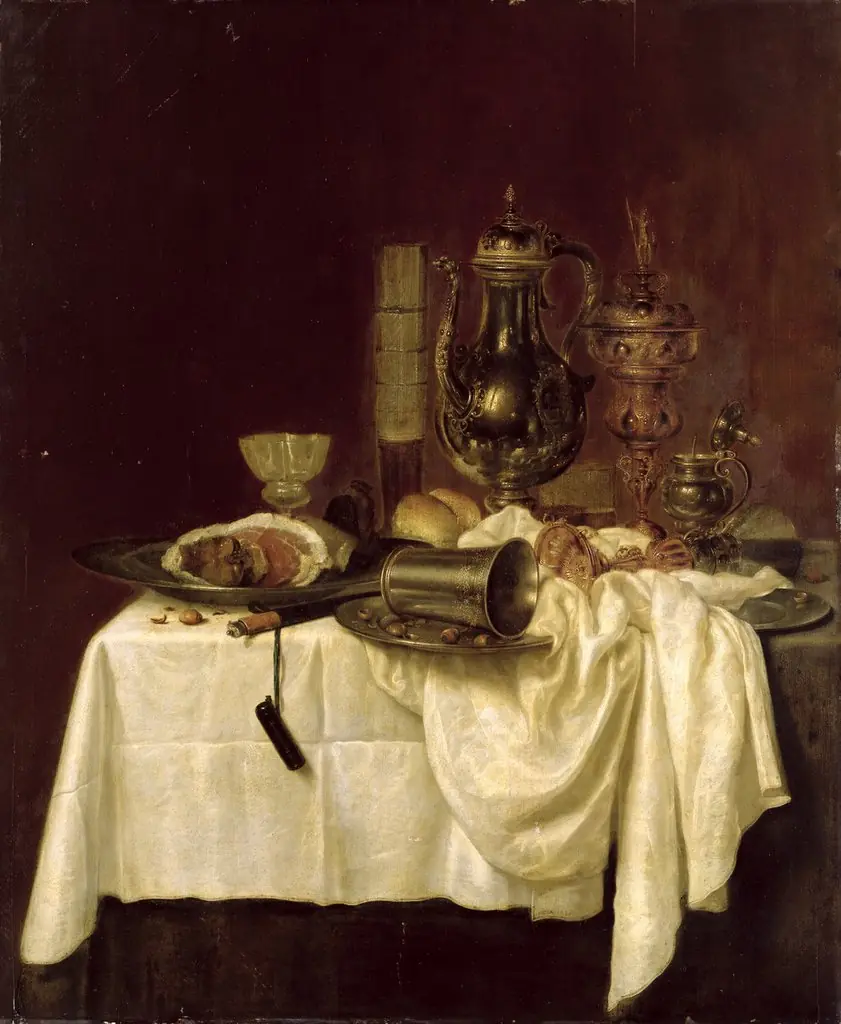 Still life with ham, decanter, columbine cup and passglass on a laid table