Artwork
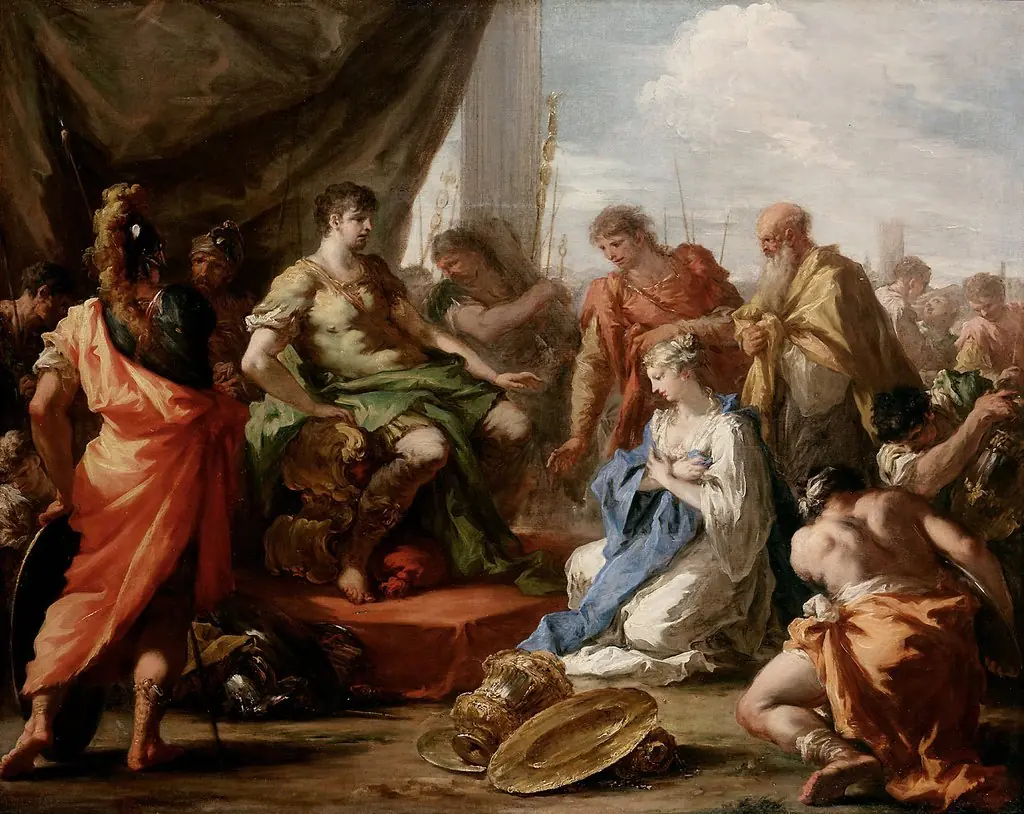
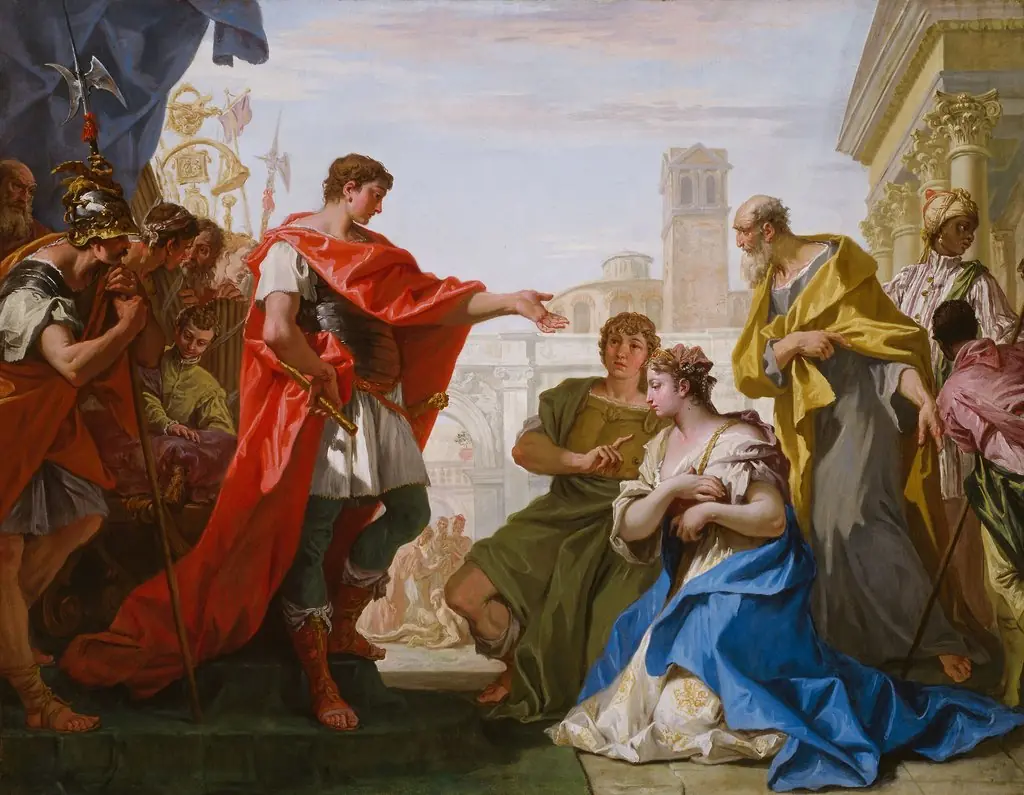
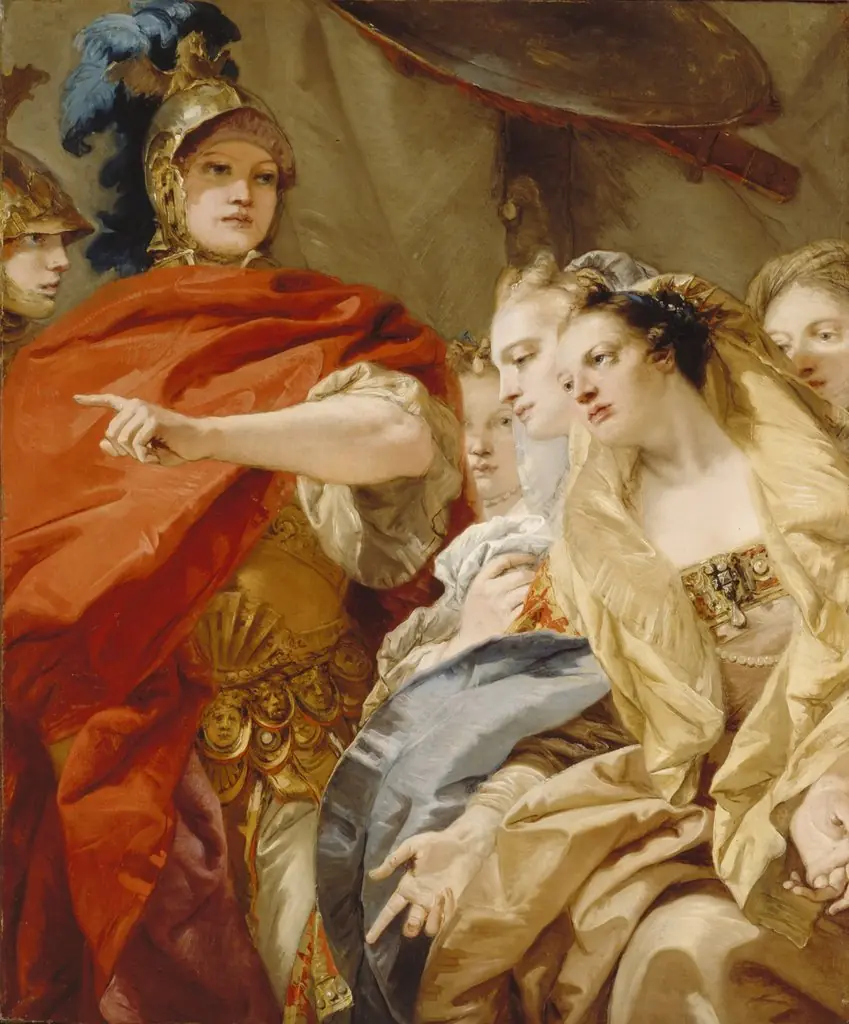
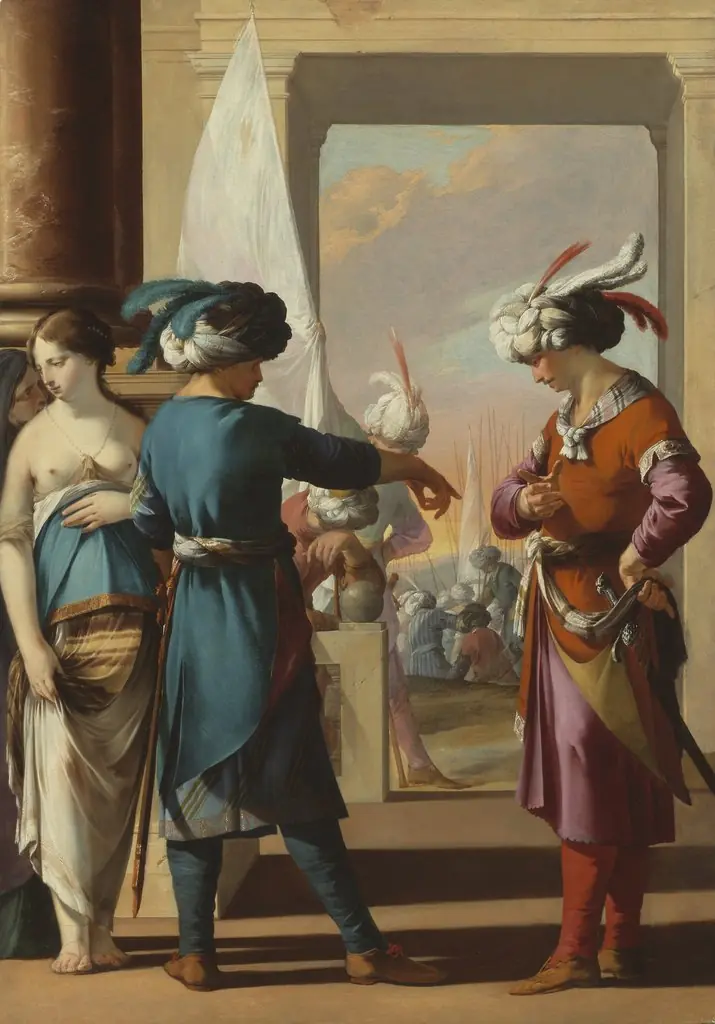
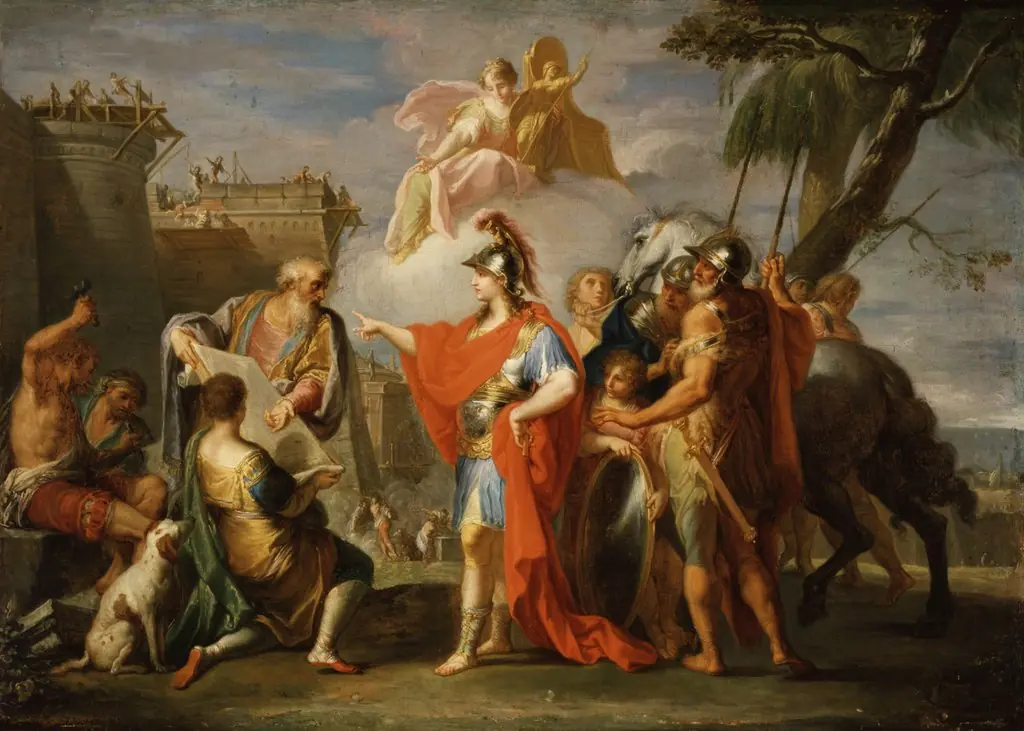
Apelles Paints Campaspa
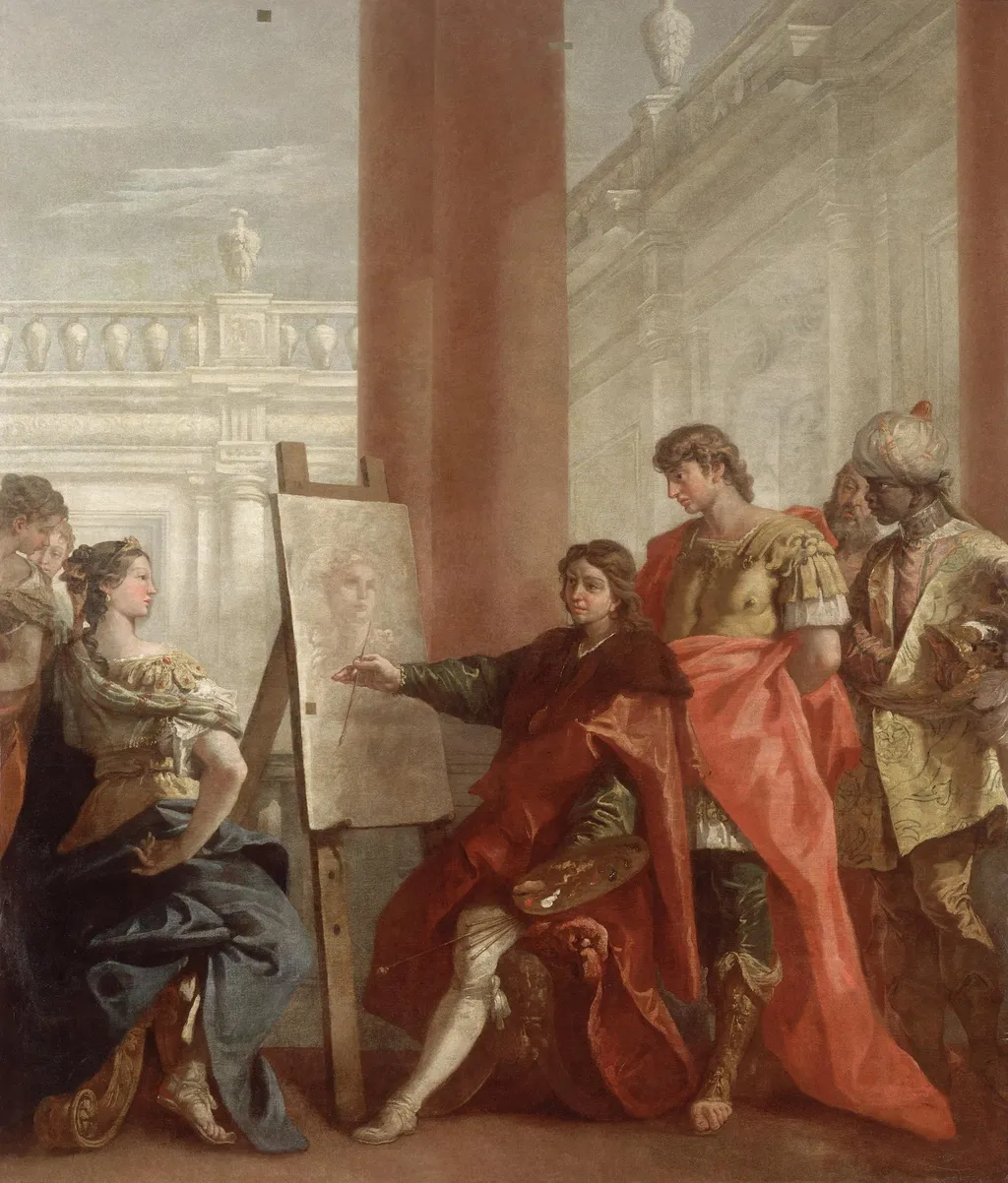
Apelles Paints Campaspa is an oil painting by the Rococo painting artist Sebastiano Ricci. It dates from 1713 and is held in the collection of the Hermitage Museum.
About this work
Overview
Apelles Paints Campaspa is an oil painting created by Italian Baroque artist Sebastiano Ricci in 1713, now part of the State Hermitage Museum's collection.
Subject & Meaning
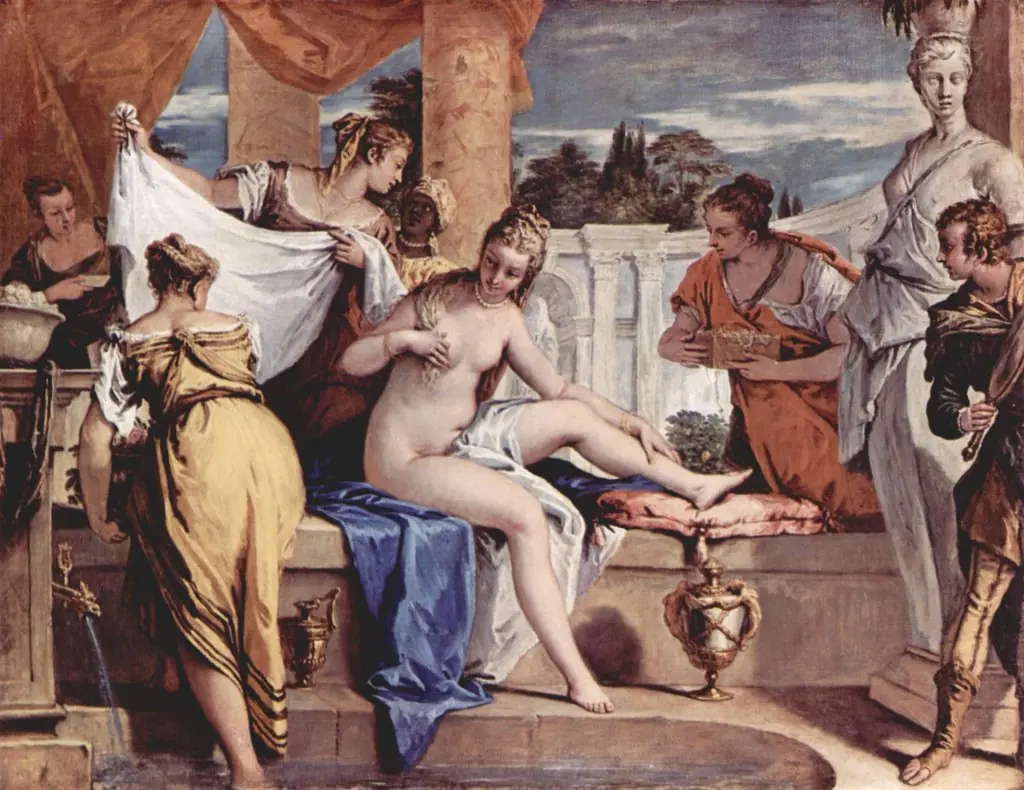
The painting depicts a scene of Apelles, a renowned ancient Greek painter, at work on a portrait of Campaspa, a slave who became his model and lover according to legend. The composition captures a moment of creative process, with Apelles dressed in red and gold, intently painting Campaspa seated in a blue dress amidst a grand, columned room.
Technique & Style
Ricci employs his characteristic luminous and vigorous style, akin to Cortone's influence, to render detailed textures and depth. Noticeable is the use of chiaroscuro, evident in the play of light on the subject's attire and the environment, enhancing the overall sense of volume and spatiality.
History & Provenance
Completed in 1713, the painting reflects Ricci's active period in the late Baroque, leaning towards Rococo sensibilities. As the uncle and mentor of Marco Ricci, Sebastiano's work often showcased a blend of traditional themes with evolving artistic trends.
Context
Within the broader artistic landscape, *Apelles Paints Campaspa* situates itself at the cusp of Baroque and Rococo, reflecting the era's fascination with classical themes reinterpreted through contemporary stylistic innovations.
Legacy
While specific lasting impacts of *Apelles Paints Campaspa* on the art world are not broadly highlighted in available records, it remains a notable example of Sebastiano Ricci's contribution to the transitional period between Baroque and Rococo styles in European painting.
Own this work as a print
Artist & collection
Artist
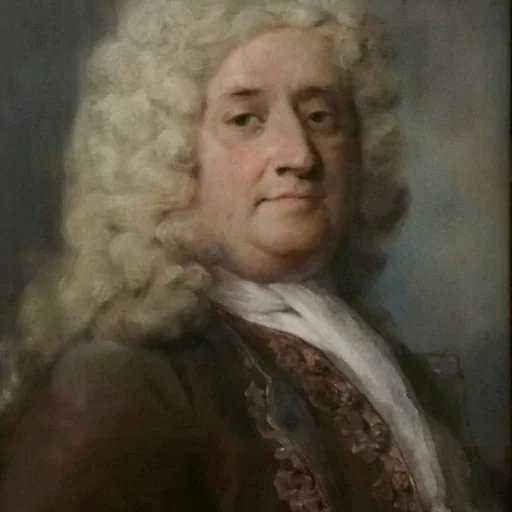
Sebastiano Ricci (1 August 1659 – 15 May 1734) was an Italian Baroque painter of the late Baroque period in Venetian painting.