Artwork
Vision of St. Teresa of Avila
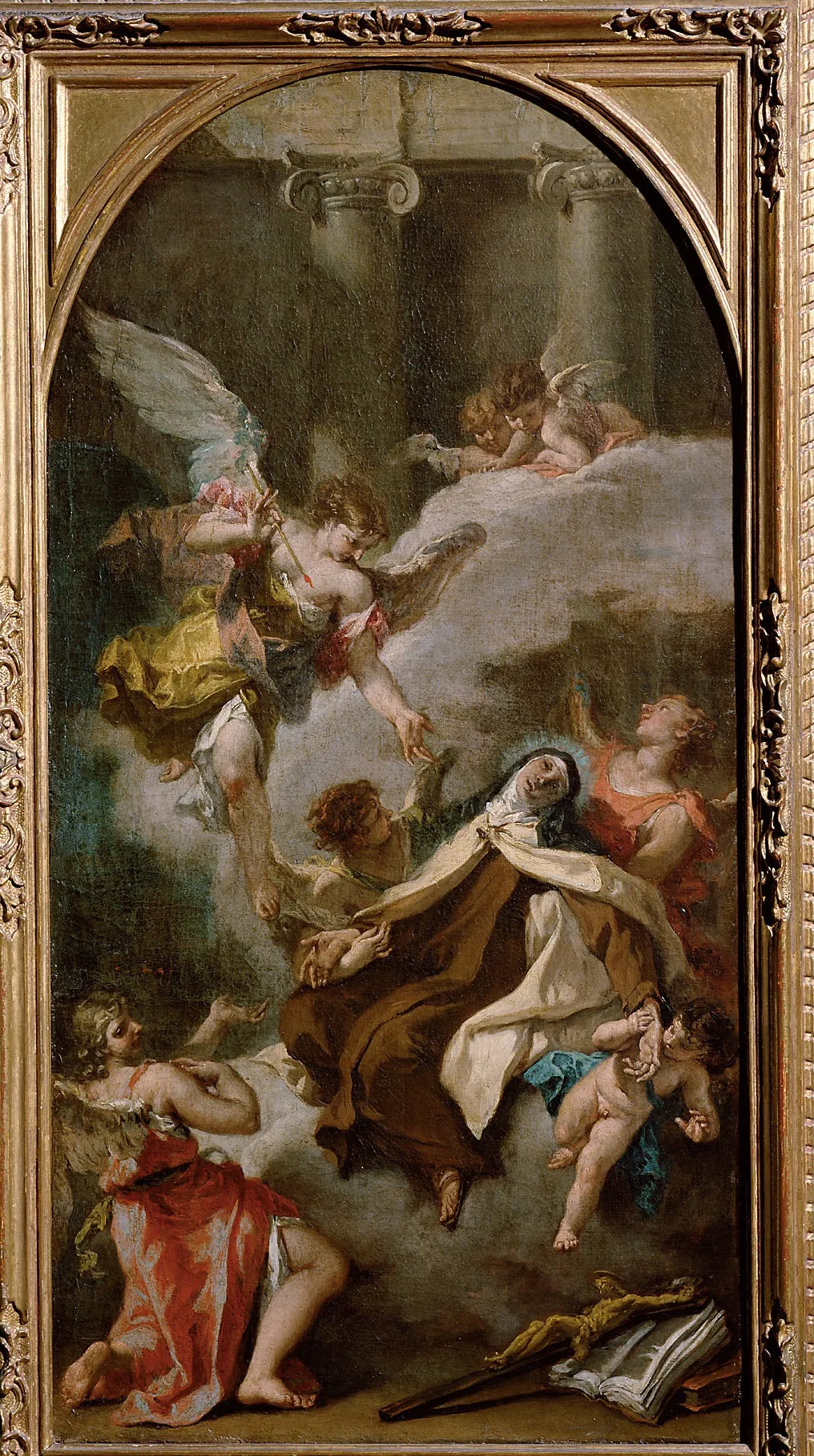
Vision of St. Teresa of Avila is an oil painting by the Rococo painting artist Sebastiano Ricci. It dates from 1727 and is held in the collection of the Kunsthistorisches Museum.
About this work
Overview
Sebastiano Ricci’s *Vision of St. Teresa of Avila* (1727) is an oil painting that exemplifies the late Baroque transition toward Rococo sensibilities. Executed in the artist’s characteristic luminous manner, the work is part of the Kunsthistorisches Museum’s collection in Vienna.
Subject & Meaning
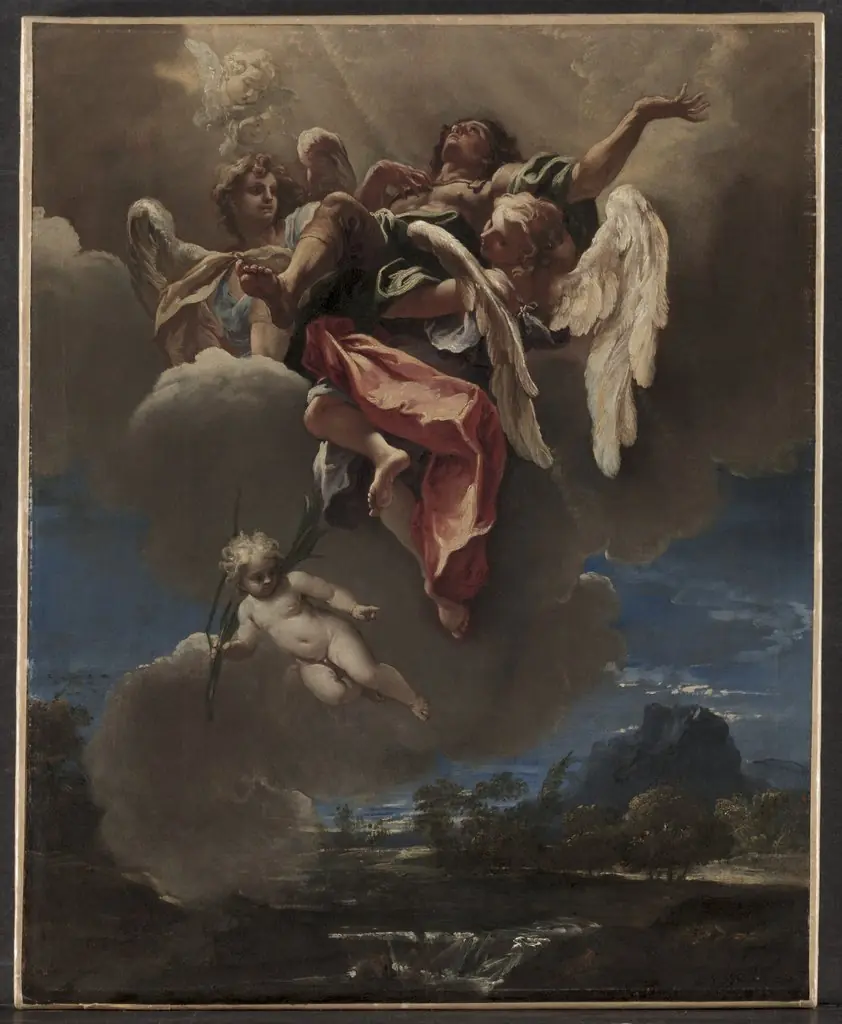
The composition portrays a female figure, identified as Saint Teresa, enveloped in a tranquil, devotional atmosphere. She is shown in a brown habit with a white veil, eyes closed and expression serene, as a group of angels and cherubs lift her upward, suggesting a mystical ascent.
Technique & Style
Ricci employs a bright palette and fluid brushwork that create a sense of movement in the angels’ billowing drapery and expansive wings. The use of atmospheric perspective, evident in the distant columns and cloud‑filled sky, adds depth and a soft, airy quality typical of the Rococo.
History & Provenance
Painted in the final year of Ricci’s life, the canvas entered the holdings of the Kunsthistorisches Museum, where it remains on display. The work reflects the artist’s mature period, during which he was celebrated for his vigorous, Cortonesque approach.
Context
Created at a time when Italian art was shifting from the dramatic intensity of the Baroque toward the lighter, decorative Rococo, the painting illustrates Ricci’s role in that stylistic evolution. It also connects to his familial legacy, as he mentored his nephew Marco Ricci, who later gained prominence in landscape painting.
Artist & collection
Artist
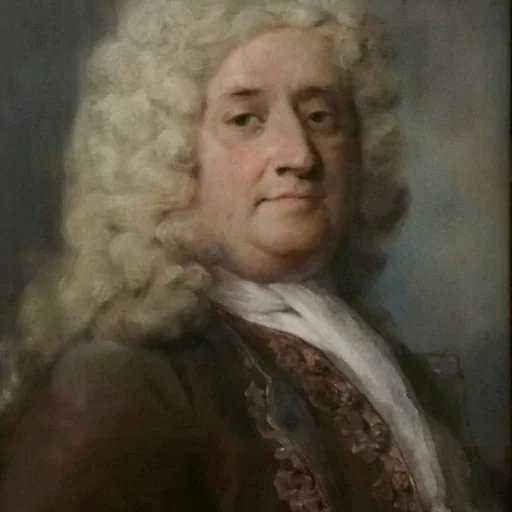
Sebastiano Ricci (1 August 1659 – 15 May 1734) was an Italian Baroque painter of the late Baroque period in Venetian painting.

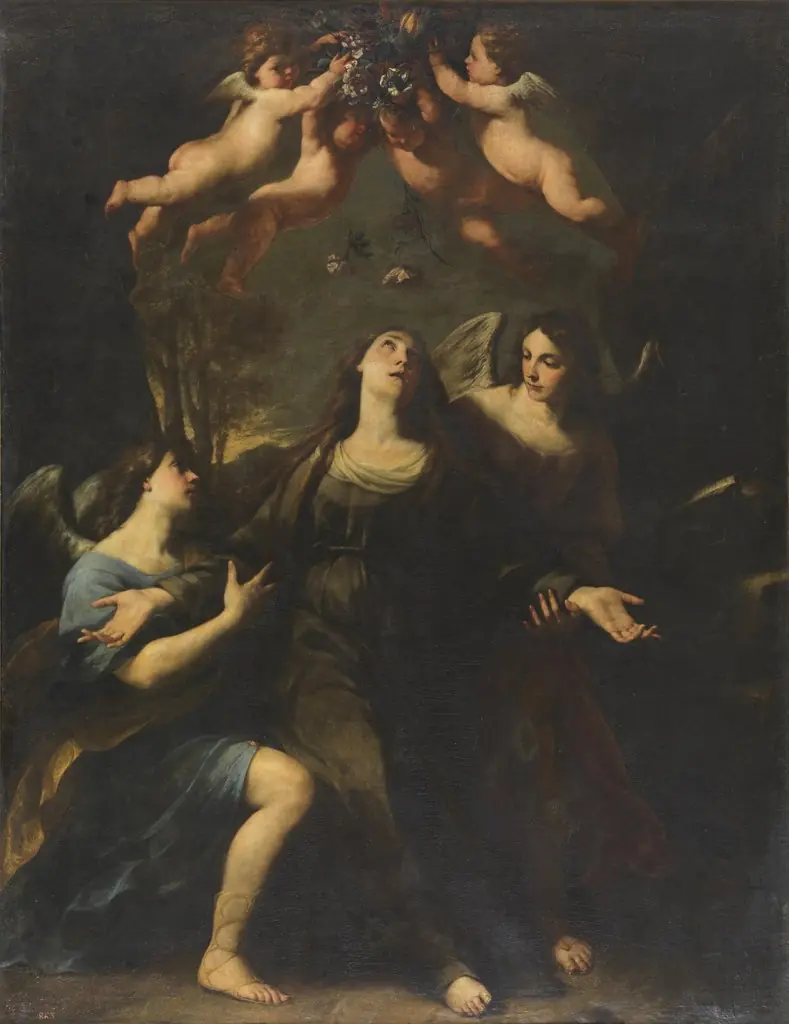 Saint Rosalie of Palermo
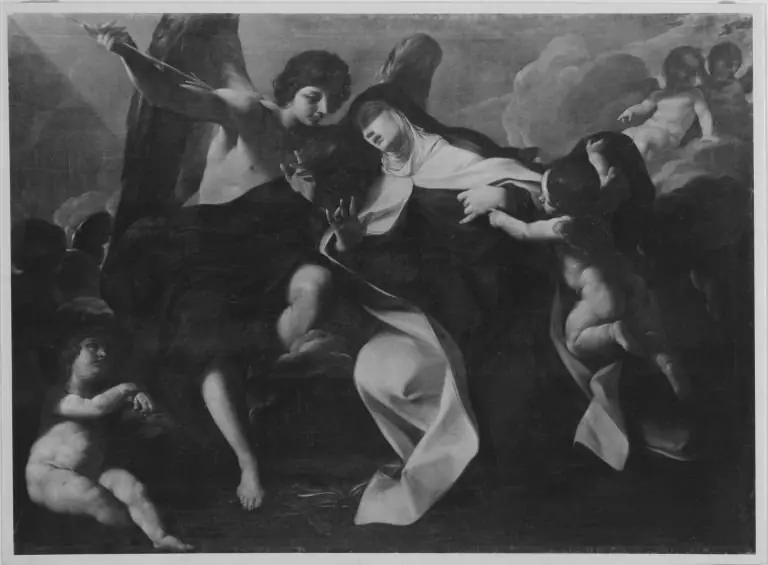 Stigmatisation der hl. Theresa
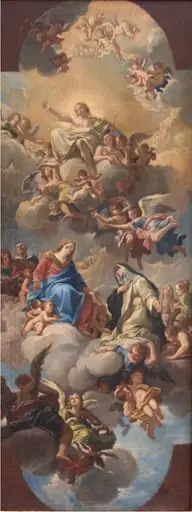 Mary Introducing St Catherine of Siena to Christ
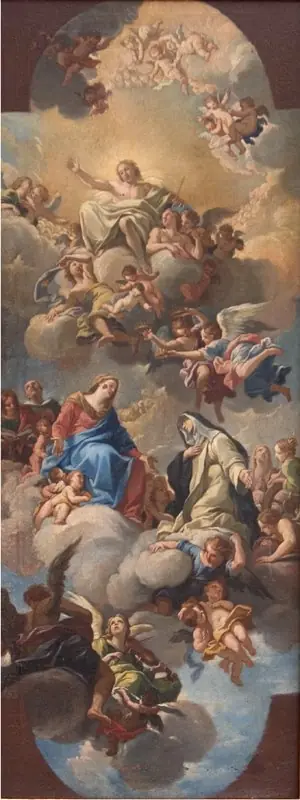 Mary Introducing St Catherine of Siena to Christ
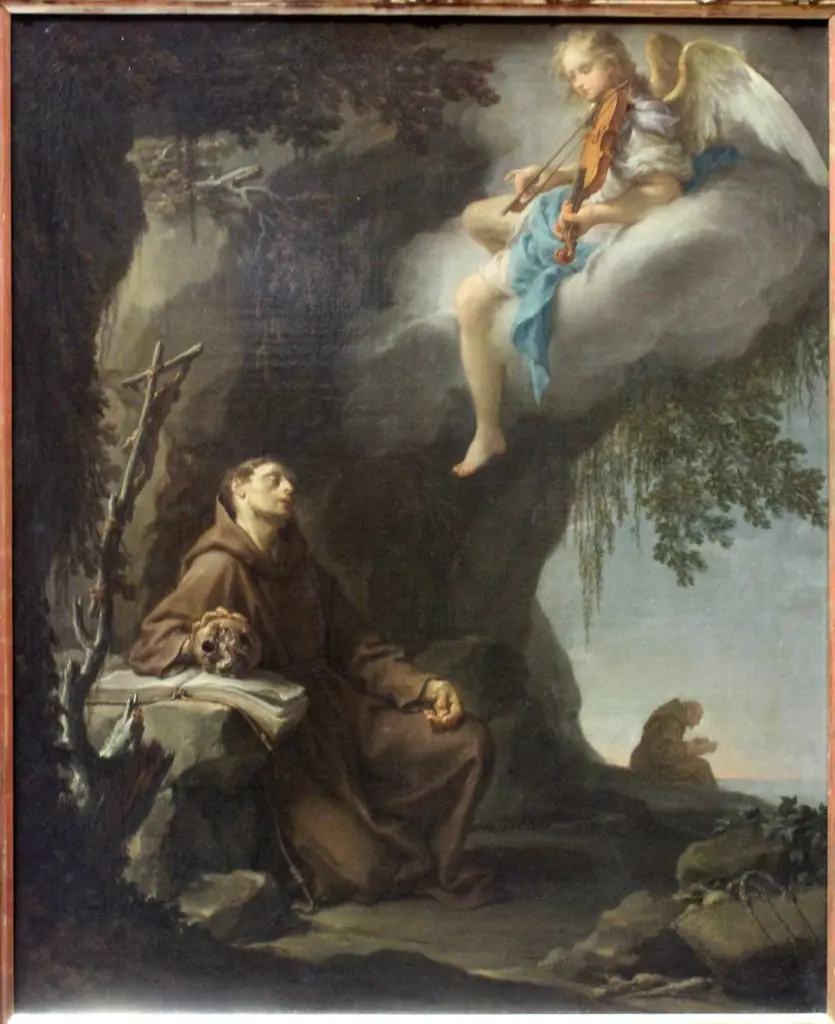 The Ecstasy of Saint Francis
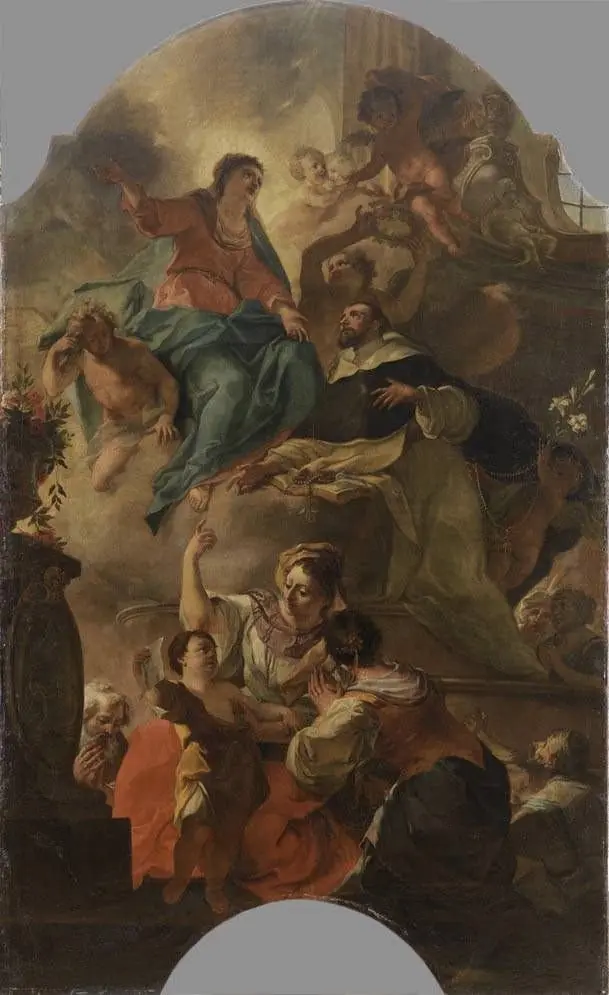 Hl. Dominikus als Fürbitter bei Maria
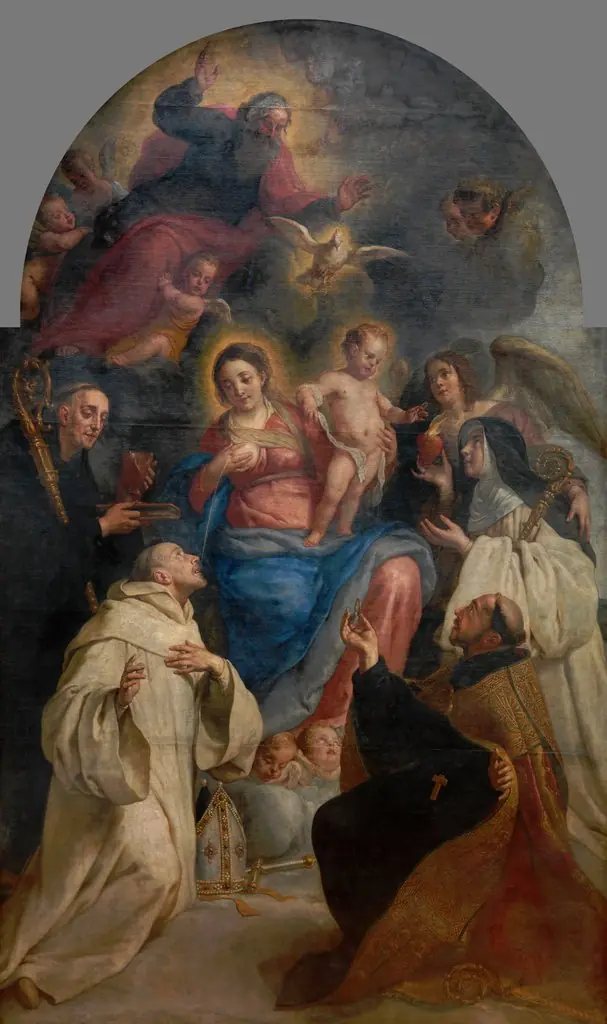 Lactatio of Saint Bernard of Clairvaux
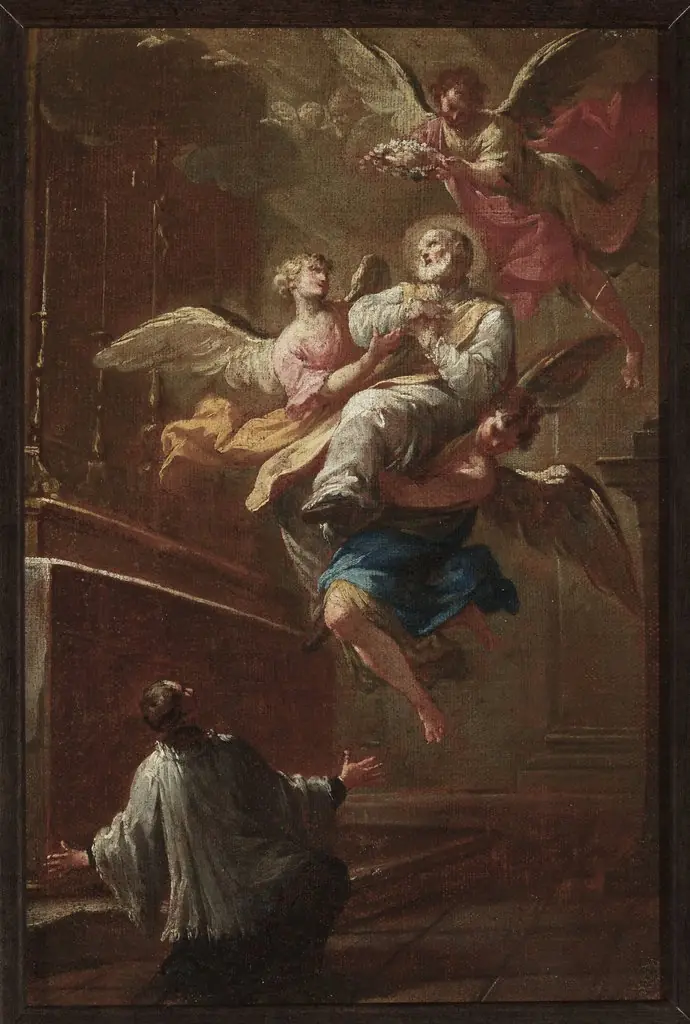 Saint elevated to heaven
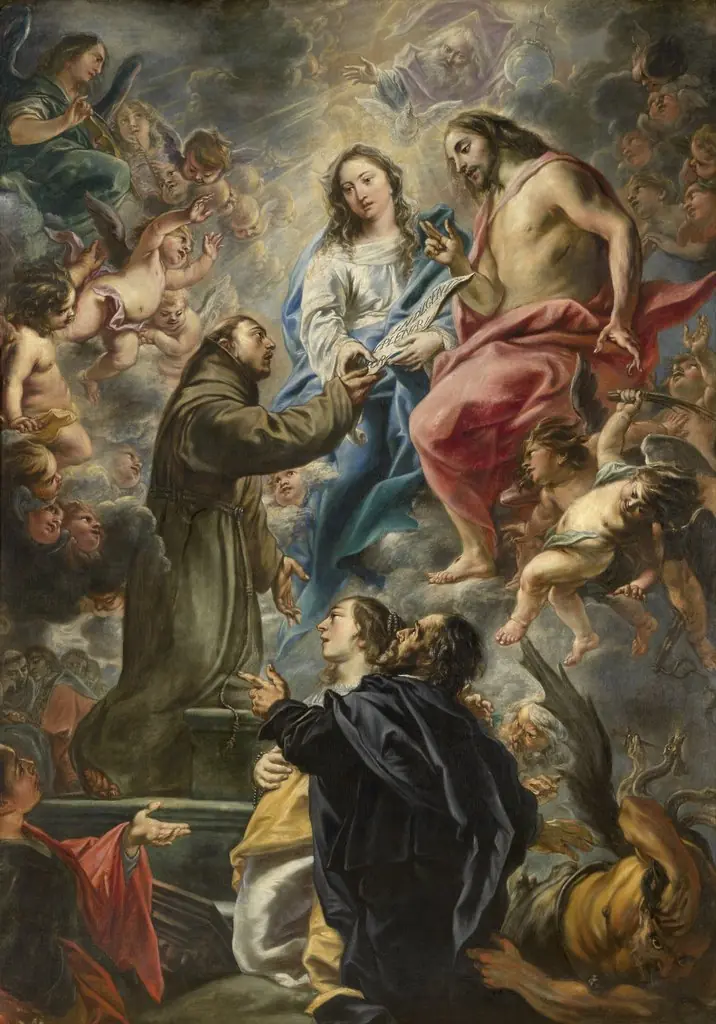 Portiuncula
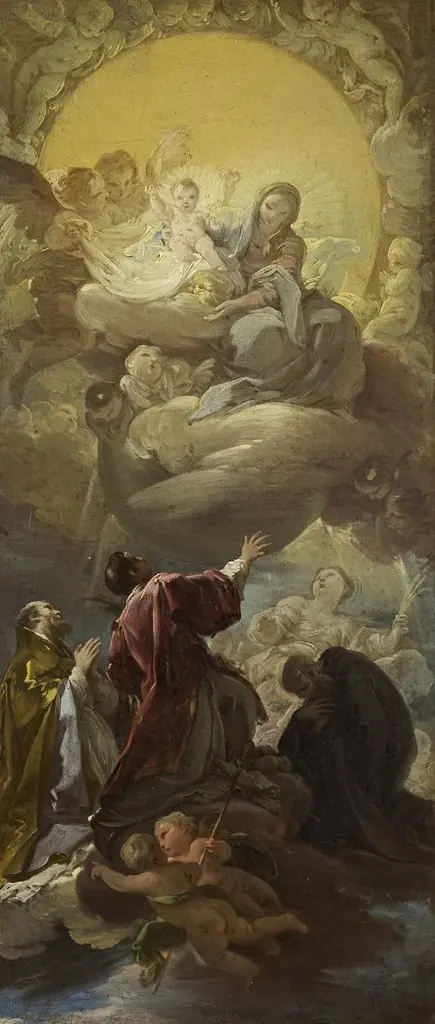 Madonna and Child in Glory appearing to St Stephen and three other Saints
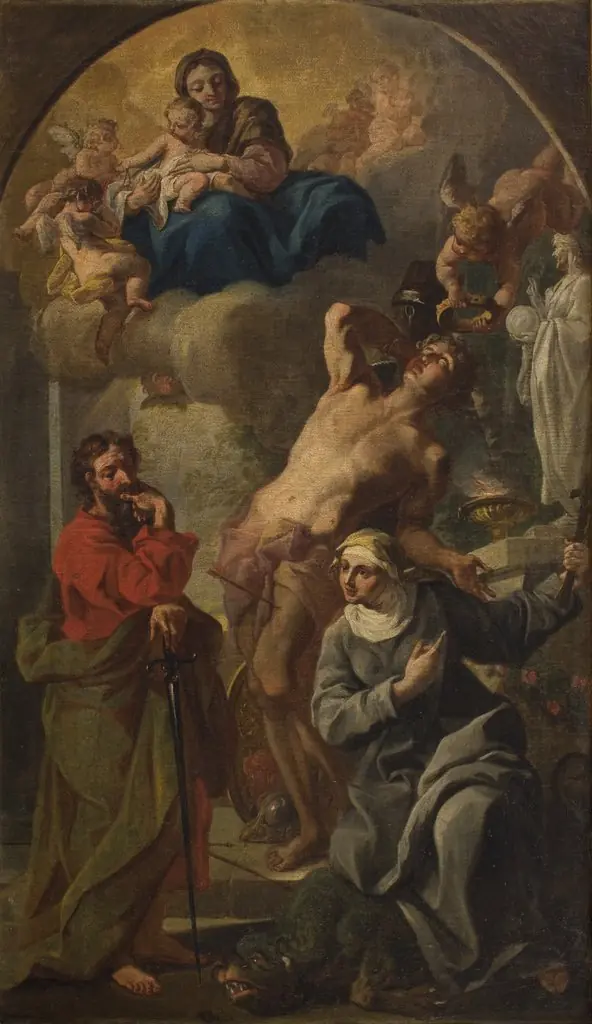 Madonna and Child with Saints Sebastian, Paul and Martha (Acceptance of Saint Sebastian Into the Group of Holy Martyrs)
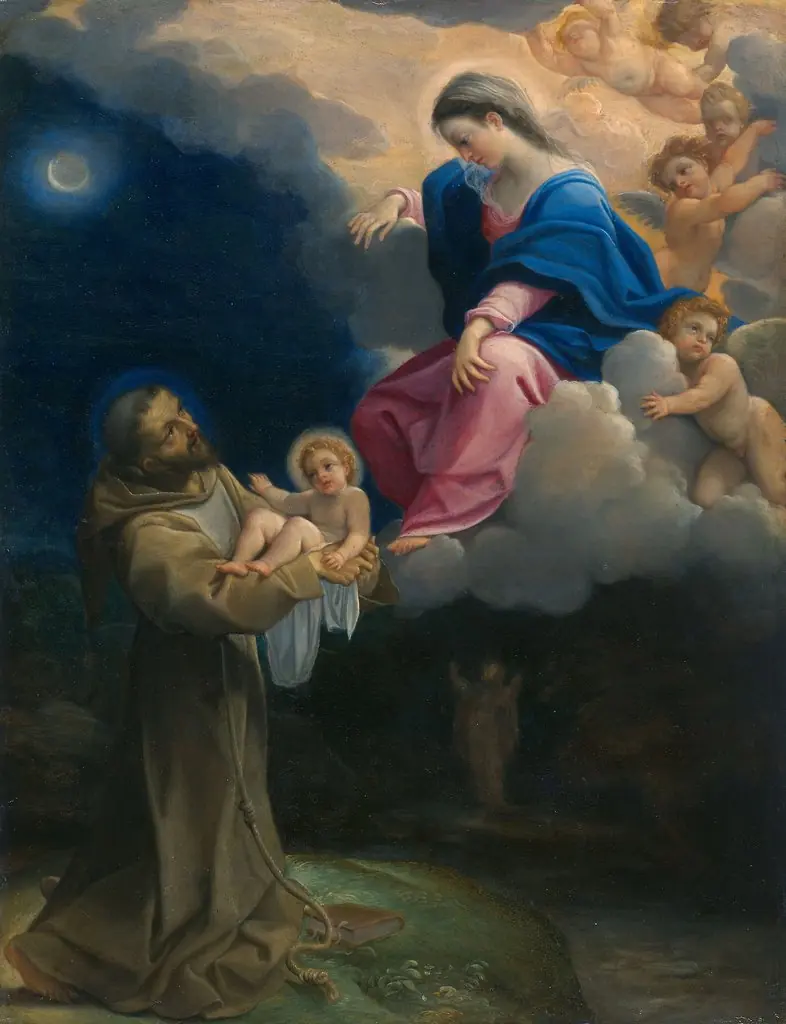 The Vision of Saint Francis