Artwork
Saint Rosalie of Palermo
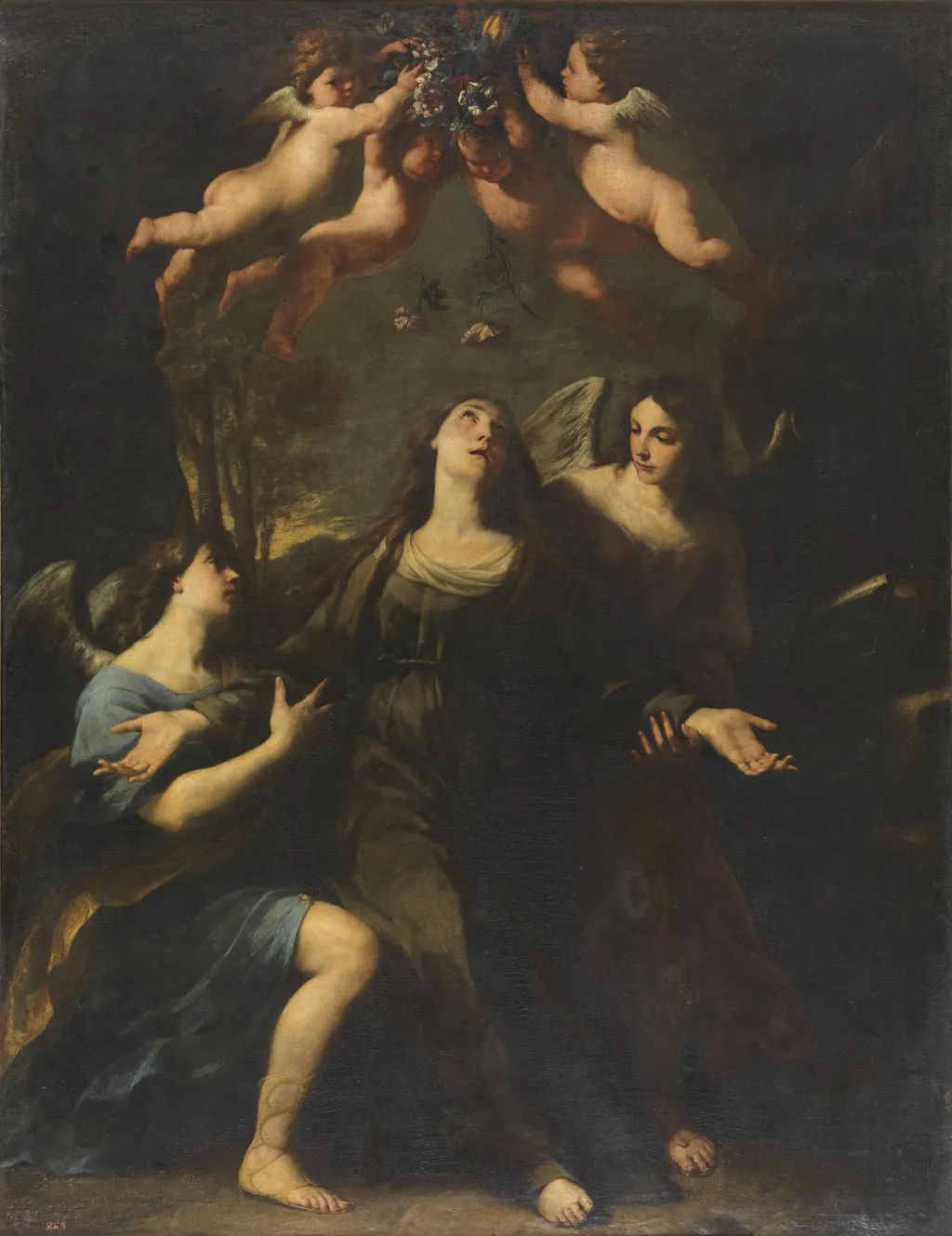
Saint Rosalie of Palermo is an oil painting by the Early Baroque Italian artist Andrea Vaccaro. It dates from 1601 and is held in the collection of the Museo del Prado.
About this work
Overview
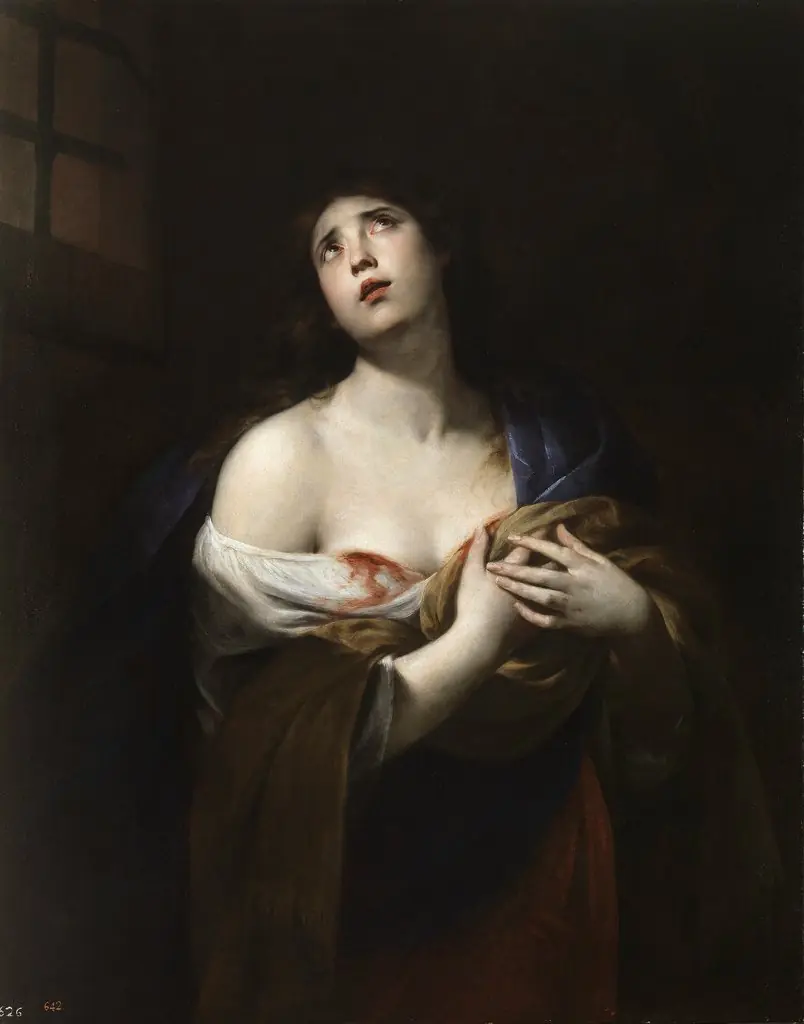
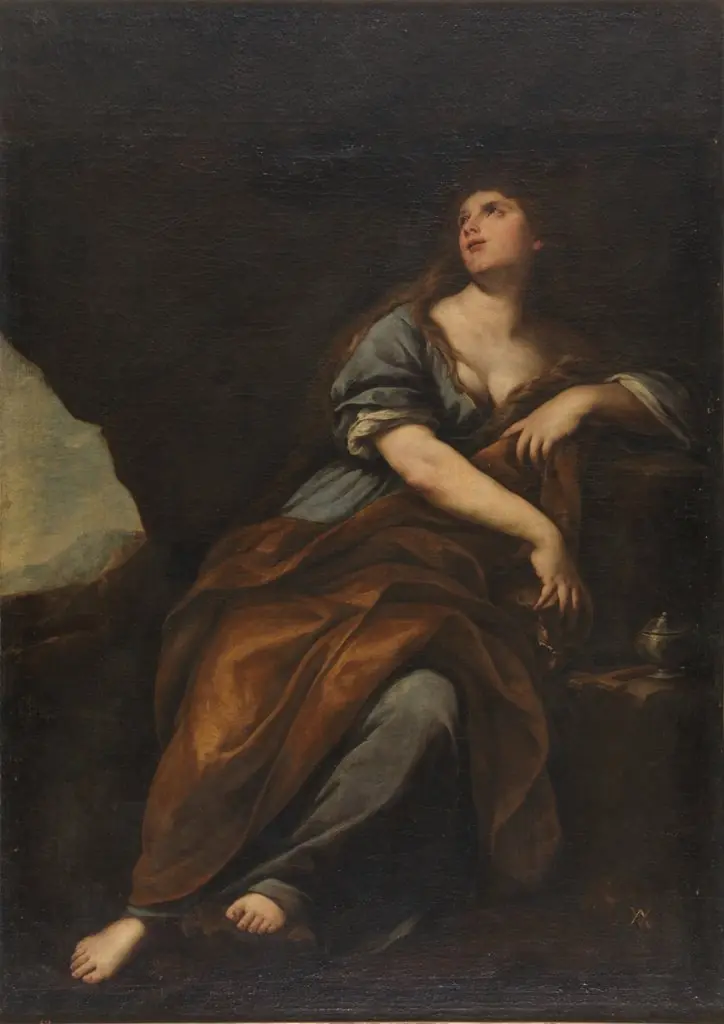
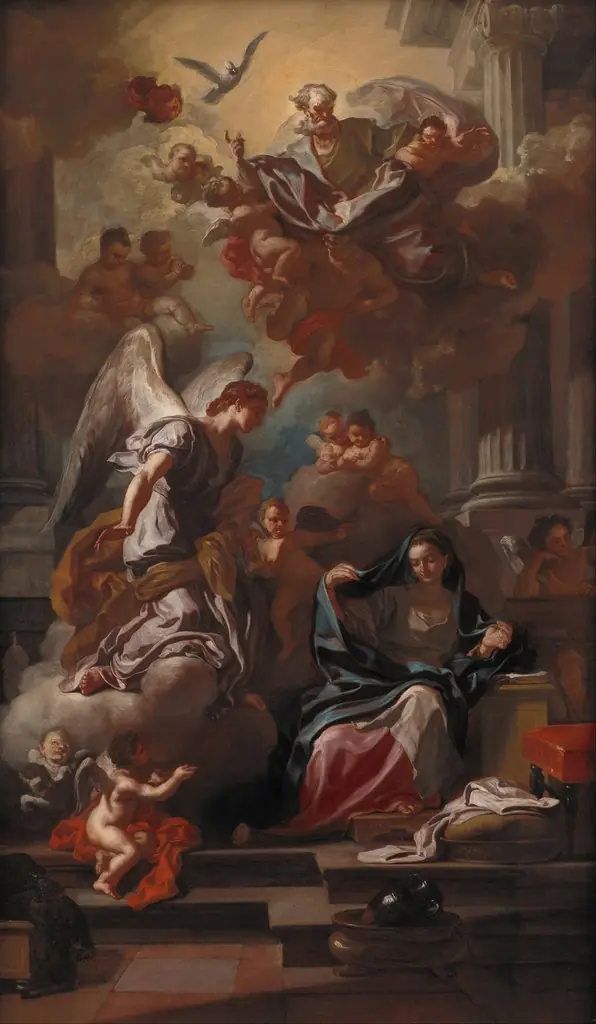
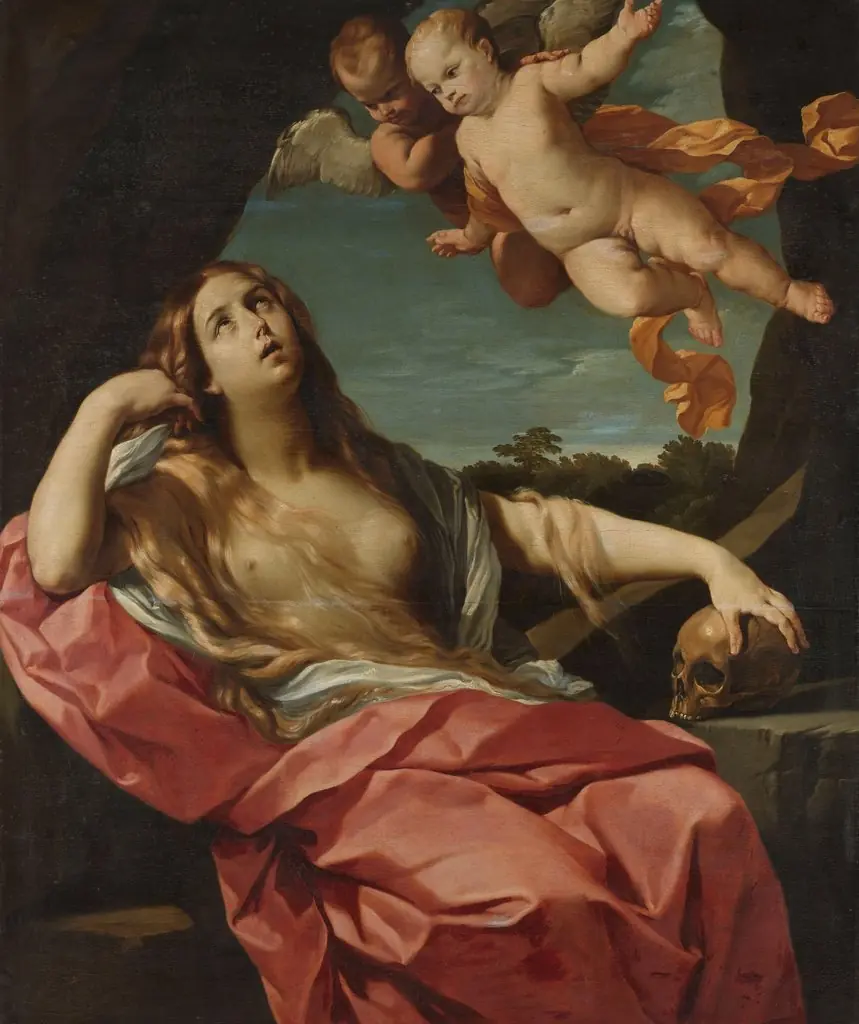
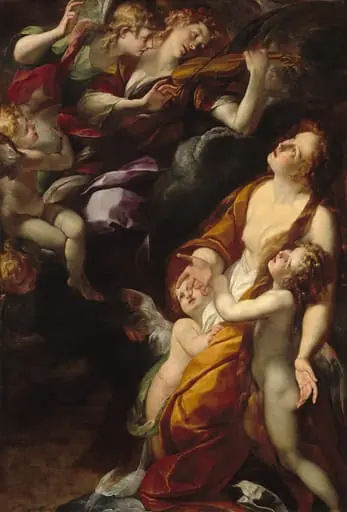
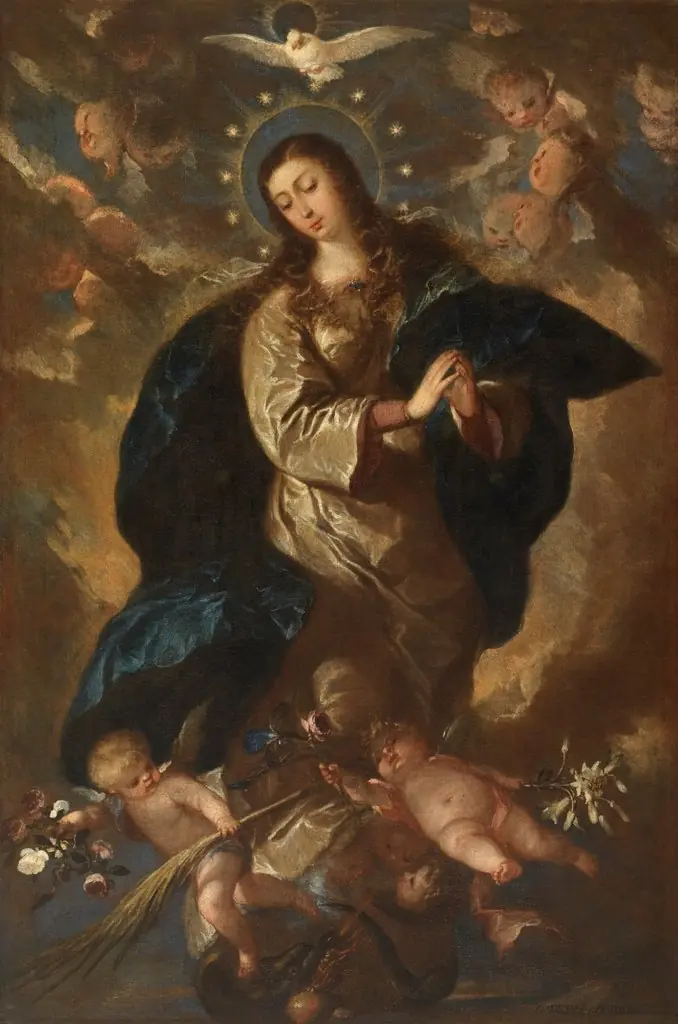
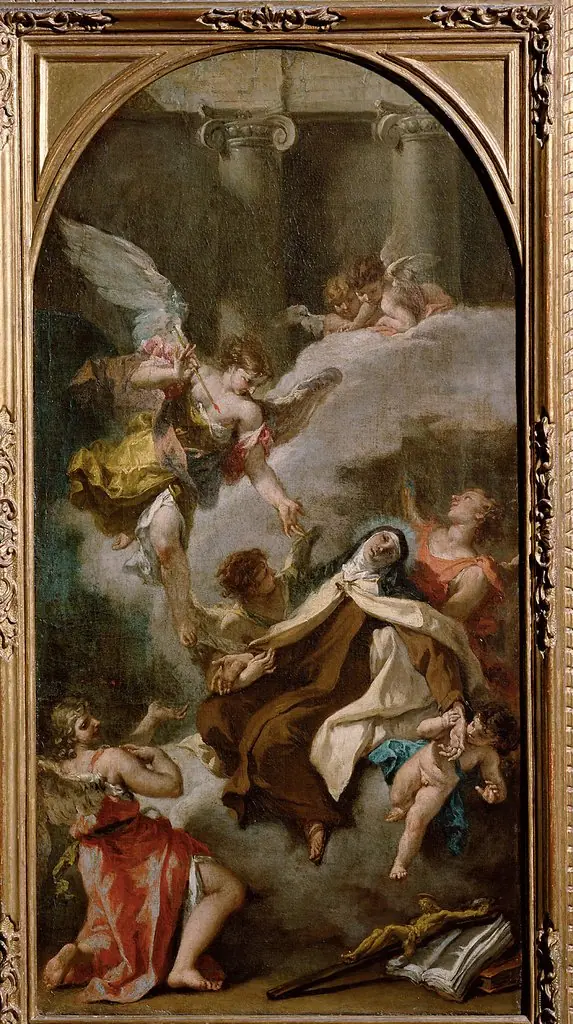
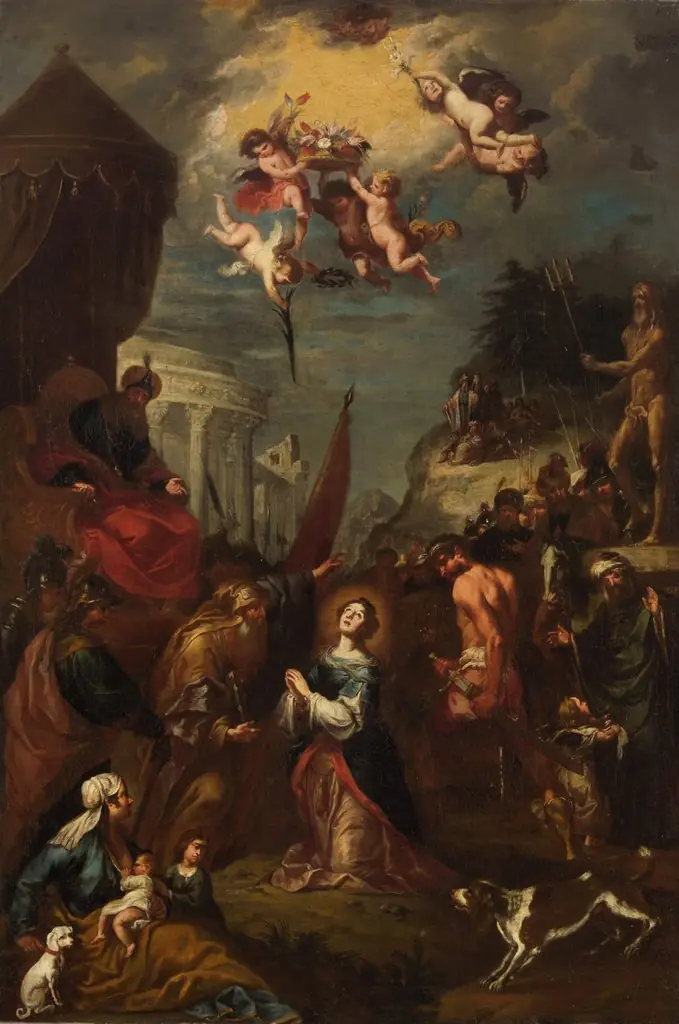
This oil painting, created in 1601, represents an early Baroque religious work by Andrea Vaccaro. Active in Naples during Spanish dominion, Vaccaro produced numerous devotional images for both local and Iberian patrons. The composition centers on a female saint, flanked by celestial figures, set against a subdued, shadowy backdrop that heightens the focal illumination.
Subject & Meaning
The painting portrays Saint Rosalie, a Sicilian virgin and recluse venerated for her intercessory power. Presented barefoot and gazing upward, she embodies humility and divine communion. Two angels gesture protectively beside her, while others above hold a floral wreath, symbolizing sanctity and heavenly reward. The serene expression and uplifted gaze suggest spiritual transcendence.
Technique & Style
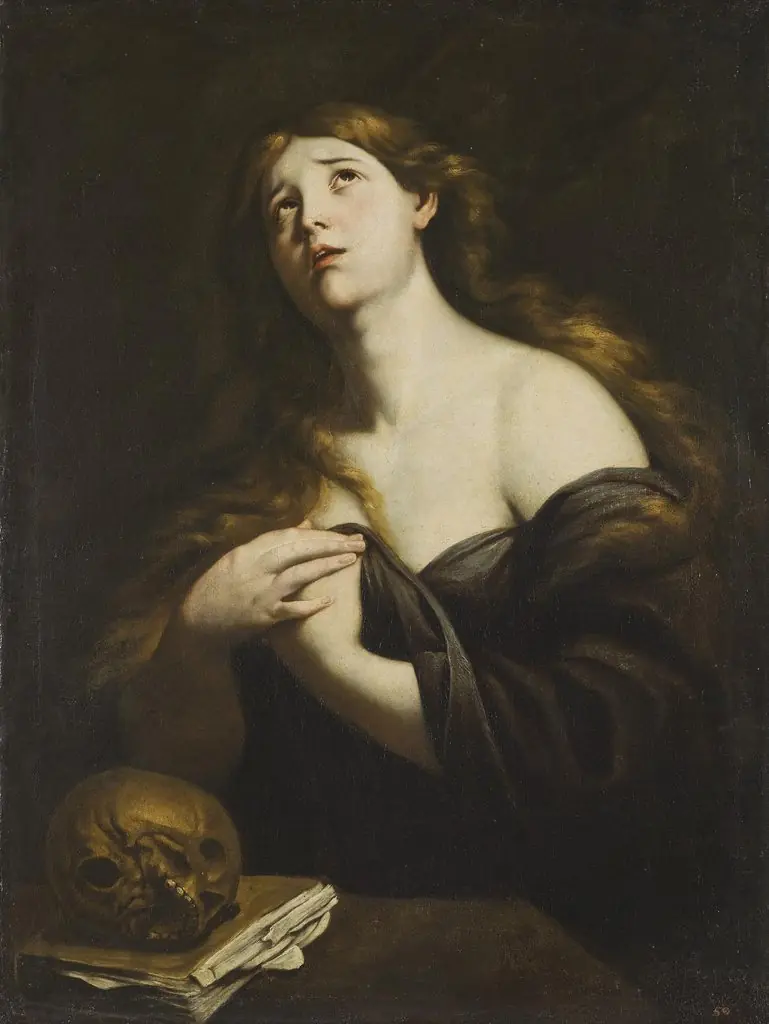
Vaccaro employs chiaroscuro, a hallmark of Caravaggesque influence, to model the saint’s features and drapery with dramatic contrast.
Vaccaro employs chiaroscuro, a hallmark of Caravaggesque influence, to model the saint’s features and drapery with dramatic contrast. The muted palette—dominated by earthy browns and grays—enhances the work’s contemplative atmosphere. Figures are rendered with anatomical precision, their forms emerging from darkness with tactile immediacy, a technique characteristic of Neapolitan Baroque painting.
History & Provenance
Executed in 1601, the painting entered Spanish collections, reflecting the close artistic exchange between Naples and Madrid during the period. It has been part of the Museo del Prado’s holdings since its establishment, serving as an example of Vaccaro’s early religious output and the broader circulation of Italian Baroque art under Habsburg patronage.
Context
Vaccaro’s work emerged within a Naples shaped by Spanish rule and Counter-Reformation piety. Religious art of the era emphasized emotional accessibility and doctrinal clarity, often depicting saints in moments of intimate devotion. The painting’s composition and lighting align with this devotional impulse, catering to patrons who valued both spiritual edification and naturalistic representation.
Legacy
Though less celebrated than contemporaries like Ribera or Caravaggio, Vaccaro’s *Saint Rosalie* exemplifies the Neapolitan Baroque’s synthesis of tenebrism and devotional clarity. Its inclusion in the Prado underscores the transnational reach of Italian religious painting during the seventeenth century, preserving a record of stylistic and iconographic trends that defined the era.
Own this work as a print
Artist & collection
Artist
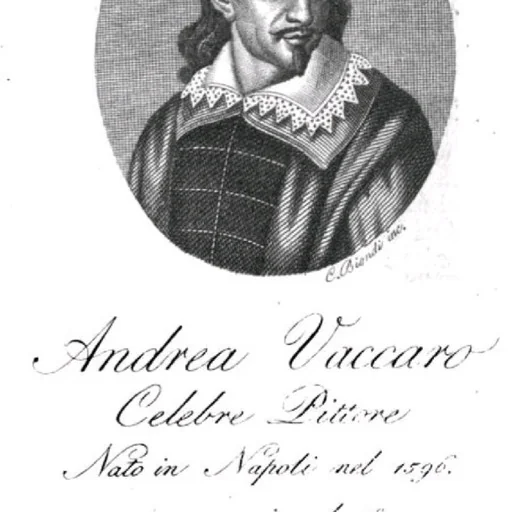
Andrea Vaccaro (baptised on 8 May 1604 – 18 January 1670) was an Italian painter of the Baroque period.