Artwork
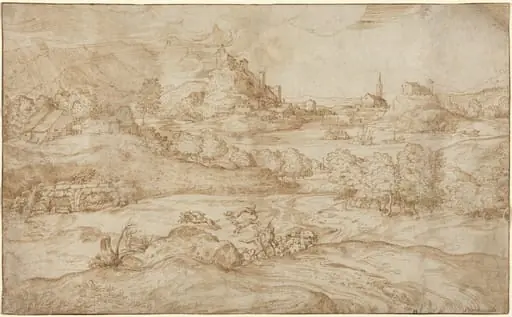
The Enclosed Valley
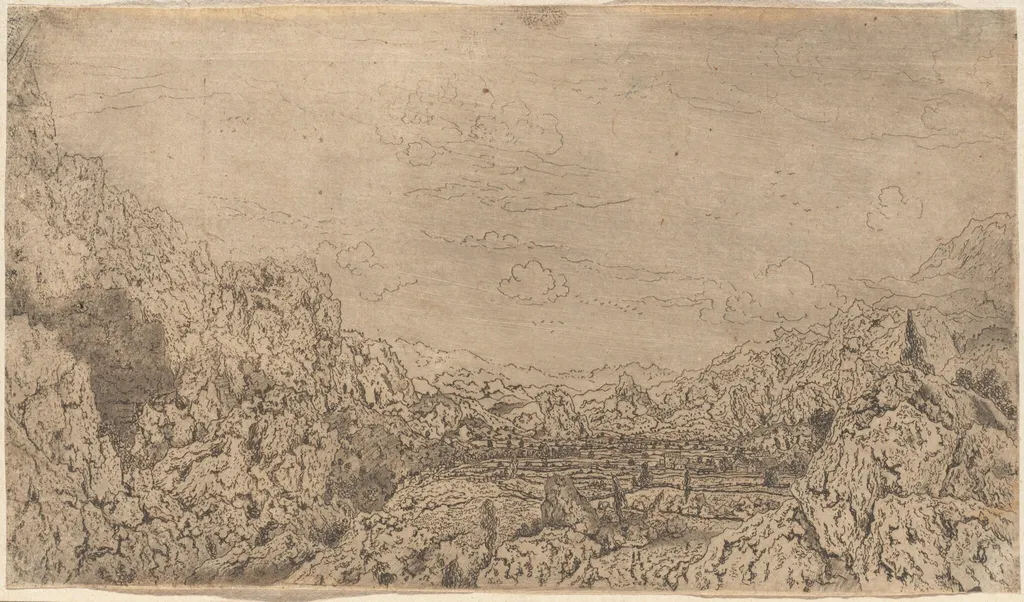
The Enclosed Valley is an ink print by the Baroque artist Hercules Seghers. It dates from 1624 and is held in the collection of the National Gallery of Art.
About this work
Overview
The Enclosed Valley is a print created around 1624 by Dutch artist Hercules Seghers. Executed in brown ink on laid paper, the work combines etching and drypoint techniques and is mounted on a later sheet of laid paper. The composition presents a compact, shadowy landscape dominated by irregular trees, rugged ground and indistinct sky, conveying a stark, sketch‑like atmosphere.
Subject & Meaning
The image depicts a secluded valley where jagged trunks and tangled undergrowth dominate the terrain, while the sky is reduced to a faint, almost erased horizon. The sparse, muted setting suggests an isolated, perhaps introspective space, inviting contemplation of nature’s raw, unrefined forms rather than an idealized pastoral scene.
Technique & Style
Seghers employed both etching and drypoint, allowing ink to settle in incised lines that contrast sharply with the light paper.
Seghers employed both etching and drypoint, allowing ink to settle in incised lines that contrast sharply with the light paper. The drypoint burr creates a velvety, uneven darkness, while the etching provides finer, controlled details. This combination yields a textured surface where the brown tones emphasize the rugged outlines of trees and rocks, characteristic of early 17th‑century printmaking.
History & Provenance
The work originates from Seghers’ productive period in the early 1620s, a time when he experimented with unconventional materials and mounting methods. The print is presently mounted on a later sheet of laid paper, a practice that reflects historical conservation efforts to preserve the delicate original surface.
Artist & collection


 The Great Landscape with the Water Mill
 Large Rock Projecting from a River
 The Column: pl.1
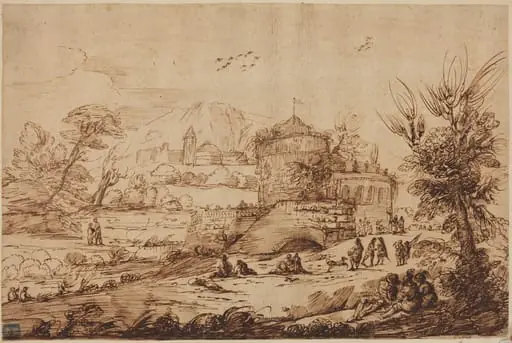 Landscape with Fortress and River
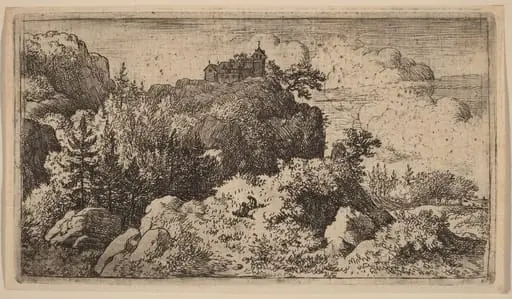 Firs in the Defile
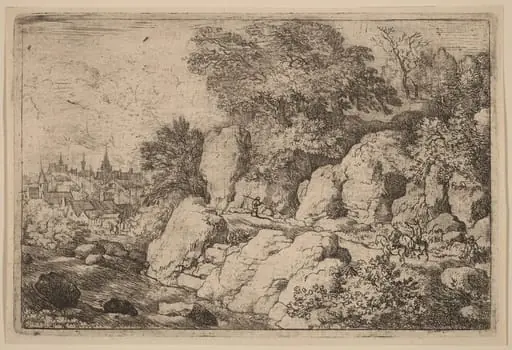 Two Horsemen on a Rocky Path
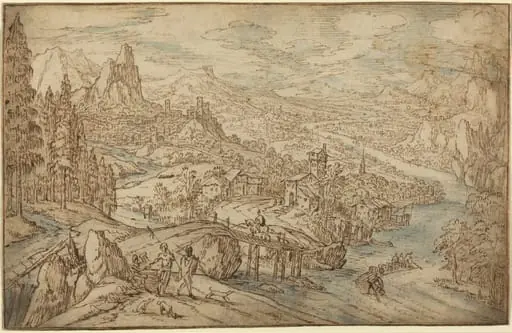 River Landscape
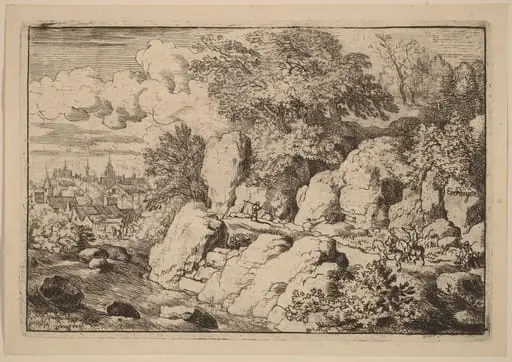 Two Horsemen on a Rocky Path
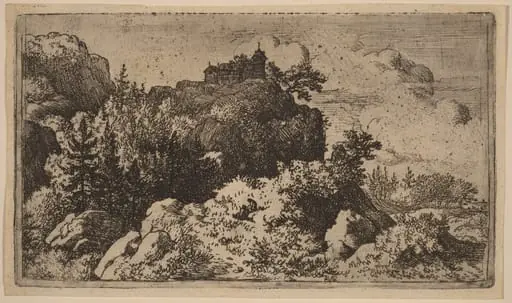 Firs in the Defile
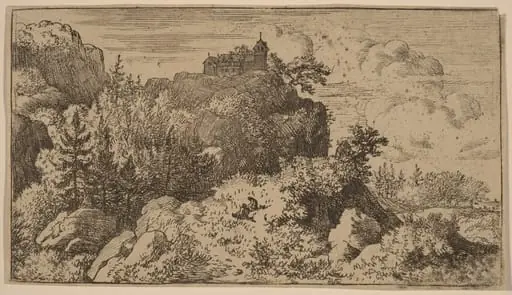 Firs in the Defile
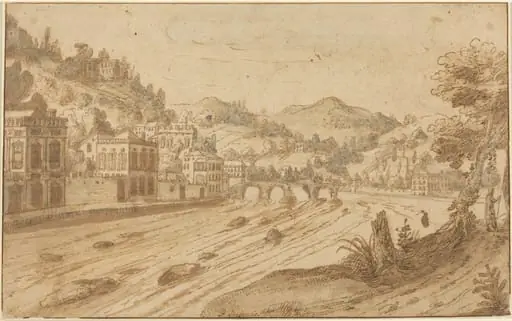 River View
 Landscape with Shepherds Driving Away a Wolf