Artwork
The White Stork
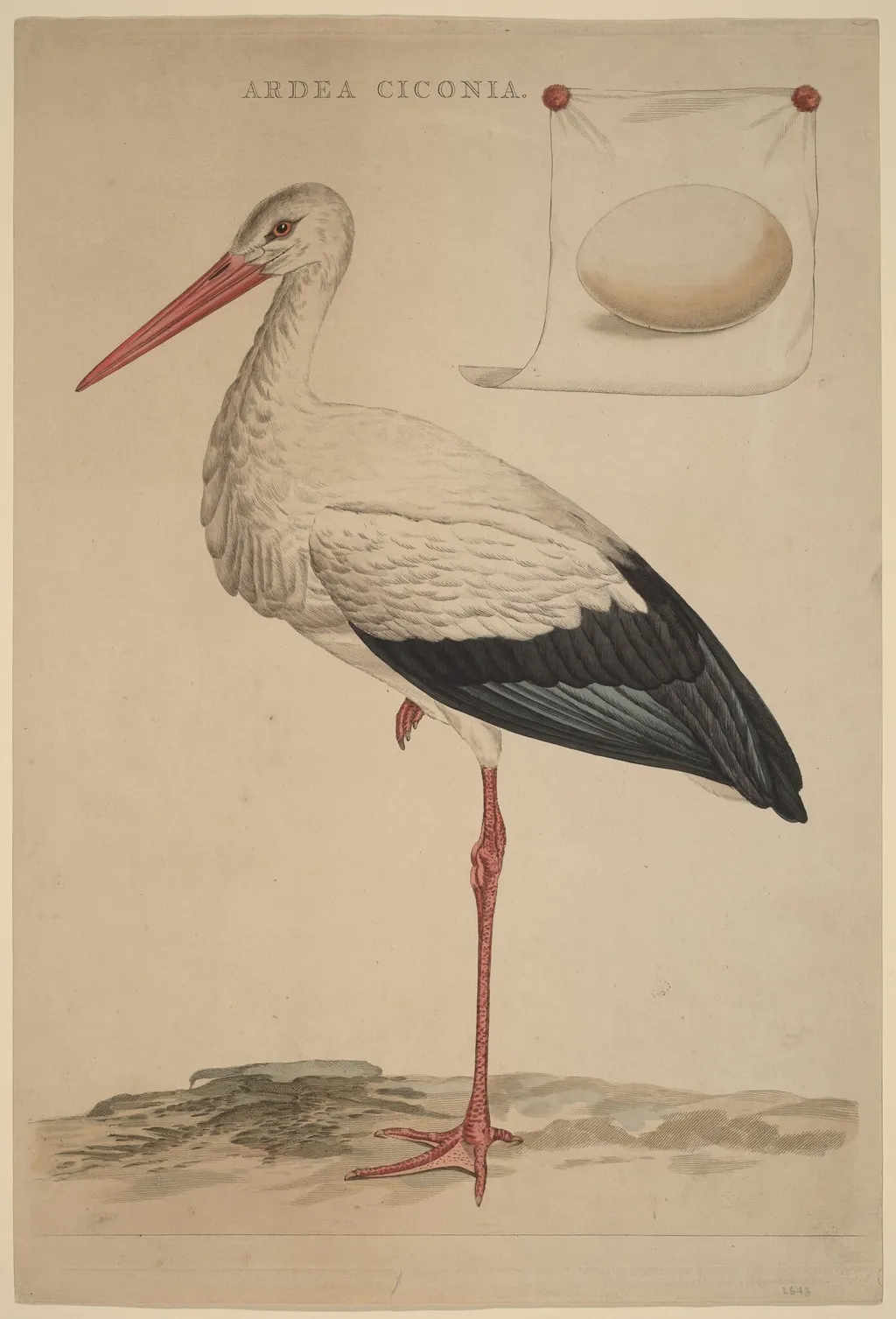
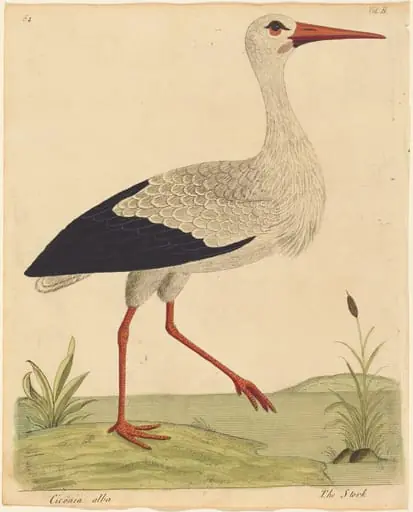
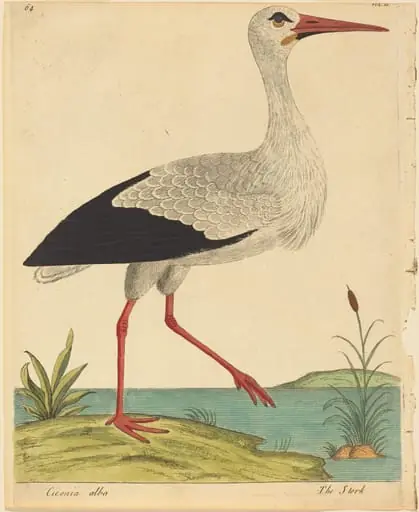
The White Stork is an ink print by the Baroque artist Jan Christiaan Sepp. It dates from 1775 and is held in the collection of the National Gallery of Art.
About this work
Overview
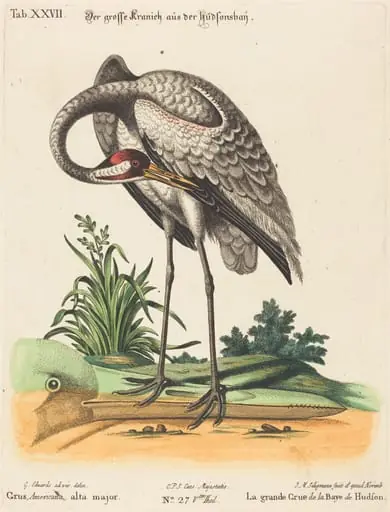
Jan Christiaan Sepp’s 1775 print, titled *The White Stork*, depicts a solitary bird poised on a single reddish‑pink leg. The stork’s elongated neck points forward, its beak sharply defined, while its plumage combines white, gray, and darker wing and tail feathers. A modest nest occupies the lower corner, cradling a single pale egg, emphasizing the bird’s natural setting.
Subject & Meaning
The work portrays the species historically recorded as *Ardea ciconia*, now identified as the white stork (*Ciconia ciconia*). By isolating the bird against a simple background and highlighting its distinctive posture and nesting habit, the image underscores the stork’s role as a symbol of seasonal migration and reproductive fidelity in European folklore.
Technique & Style
Sepp executed the image through a combination of engraving and etching on metal plates, allowing fine line work to render feather texture and anatomical detail. After printing, each impression received hand‑applied color, a labor‑intensive process that added subtle tonal variation to the bird’s plumage and the nest’s muted hues.
History & Provenance
Created in 1775, the print emerges from the Dutch tradition of natural‑history illustration that flourished in the eighteenth century. Sepp, known for his contributions to ornithological publications, likely produced the work for a scientific audience or as a collectible print, reflecting contemporary interest in cataloguing wildlife.
Context
The image belongs to a period when printmaking served both artistic and educational purposes, bridging the gap between scientific observation and aesthetic representation. Its precise rendering aligns with the Enlightenment’s emphasis on empirical study, while the hand‑coloring adds a decorative element appreciated by collectors of the era.
Artist & collection