Artwork
Wood Ibis
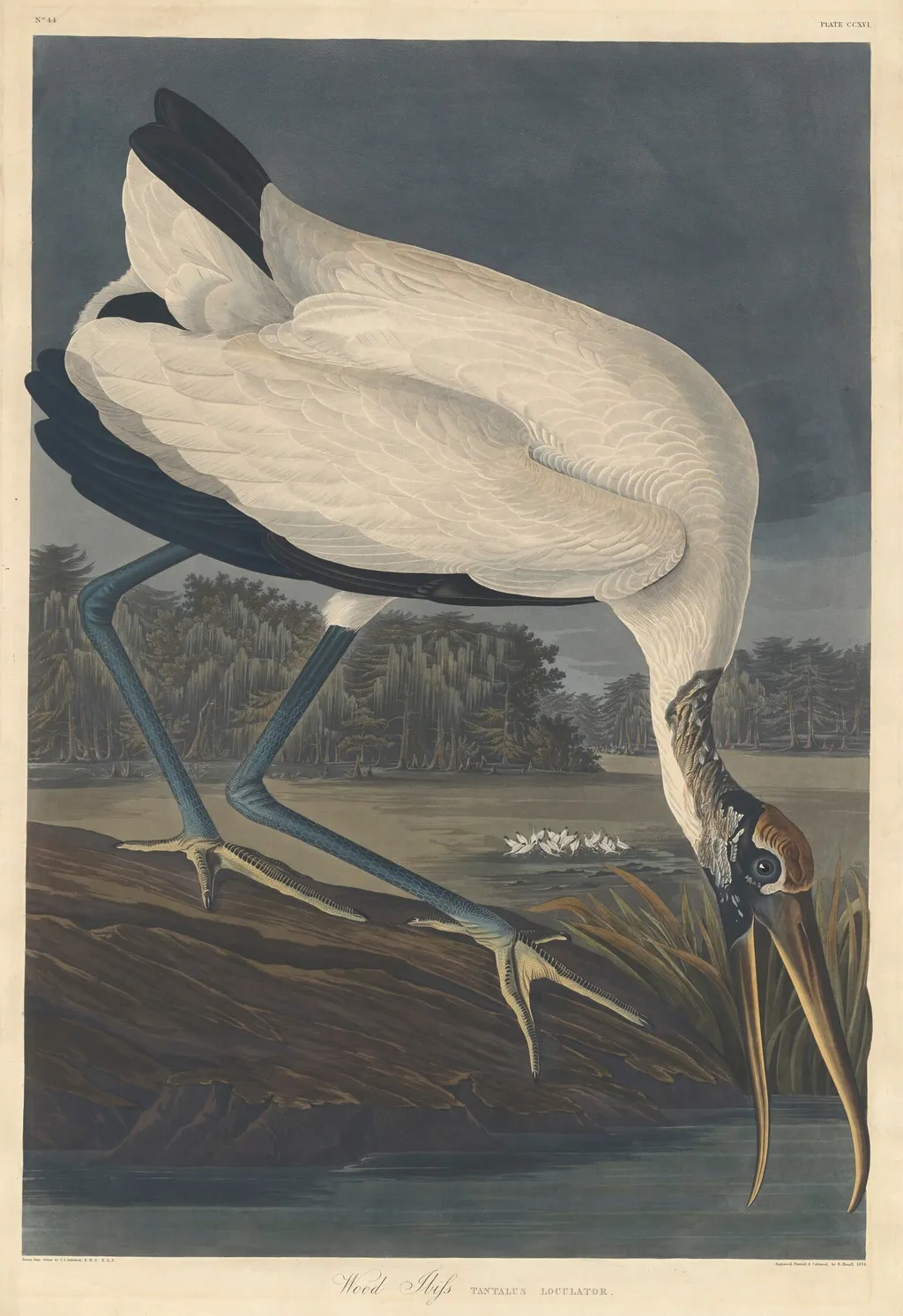
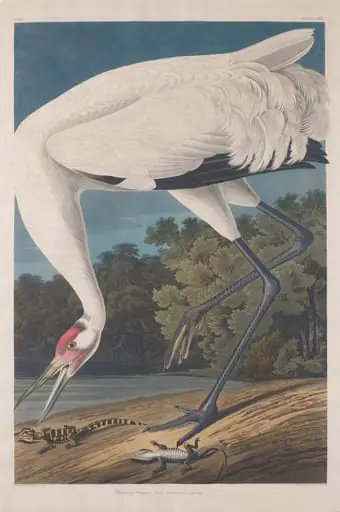
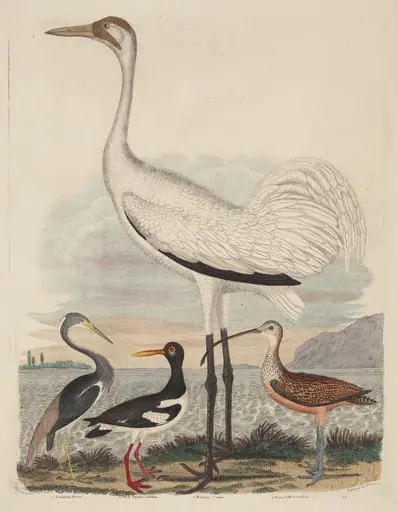
Wood Ibis is an ink print by the Romanticist artist Robert Havell Jr.. It dates from 1834 and is held in the collection of the National Gallery of Art.
About this work
Its long legs and curved beak stand out against a plain background.
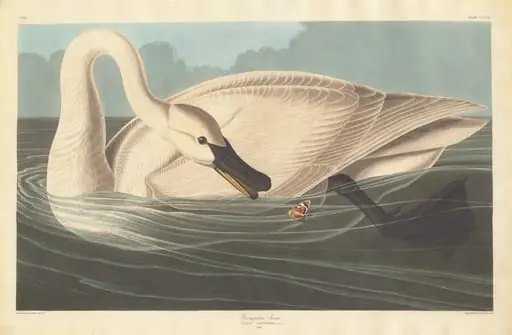
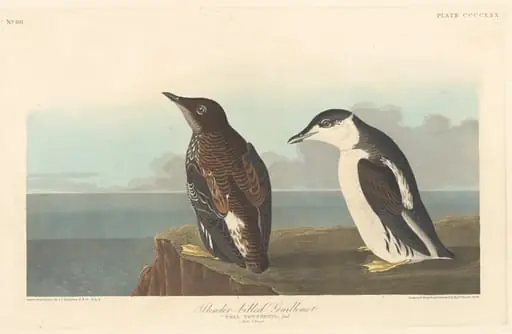
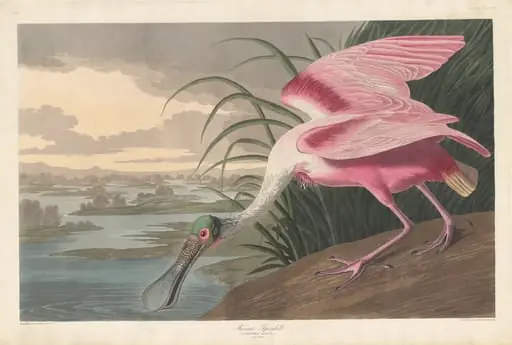
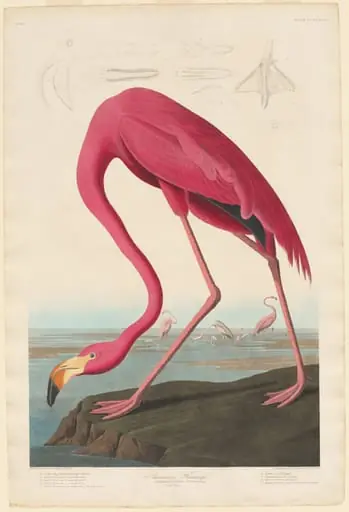
This engraving shows a tall white bird with black wing tips. Its long legs and curved beak stand out against a plain background. The lines are crisp and smooth.
Robert Havell Jr. made this in 1834. He was a top bird artist of his day. The colors are hand-added, not printed. Details like feather texture really pop.
It’s a great example of early wildlife art. You can see it at the National Gallery of Art, Washington.
Overview
Robert Havell Jr. produced this hand-colored engraving and aquatint in 1834 on Whatman wove paper, a high-quality support favored for fine prints. The work belongs to a series of ornithological illustrations developed during the early 19th century, reflecting a growing interest in natural history documentation. Havell’s technical precision and attention to avian anatomy distinguish this piece within the broader tradition of British printmaking.
Subject & Meaning
The subject is a wood ibis, a wading bird characterized by its slender form, elongated neck, and distinctive black-tipped wings. Rendered against a neutral background, the bird is isolated to emphasize its physical structure and plumage. The depiction serves a scientific purpose, capturing the species with clarity for study, while the hand-applied color enhances its naturalistic appearance without romanticizing it.
Technique & Style
Havell employed engraving for fine linear detail and aquatint to achieve subtle tonal gradations in the feathers. Each color was applied manually after printing, allowing for nuanced variation in hue and intensity. The crisp, uncluttered composition highlights texture—individual feathers are rendered with delicate lines, while the bird’s legs and beak are defined with sharp, controlled strokes, reflecting a commitment to anatomical accuracy.
History & Provenance
Robert Havell Jr. came from a family of engravers based in Reading, Berkshire, with his father, Robert Havell the Elder, active as a publisher and printmaker. The Havells were known for their work on natural history publications, particularly those related to ornithology. This print was likely produced as part of a larger project, possibly linked to the dissemination of scientific imagery in pre-photographic Europe.
Context
In the 1830s, illustrated natural history texts were vital tools for scientists and collectors, as photography did not yet exist. Artists like Havell bridged art and science, producing images that were both aesthetically refined and taxonomically useful. The emphasis on single-species portraits, devoid of habitat, aligned with contemporary practices in European ornithological publishing, prioritizing clarity over narrative.
Legacy
Havell’s prints, including this wood ibis, contributed to the standardization of visual documentation in ornithology. Their technical quality and fidelity influenced later natural history illustrators. Today, they remain valued in museum collections as artifacts of 19th-century scientific inquiry, representing the intersection of craftsmanship, observation, and the pursuit of natural knowledge.
Artist & collection

Artist
The Havell family of Reading, Berkshire, England, included a number of notable engravers, etchers and painters, as well as writers, publishers, educators, and musicians.