Artwork
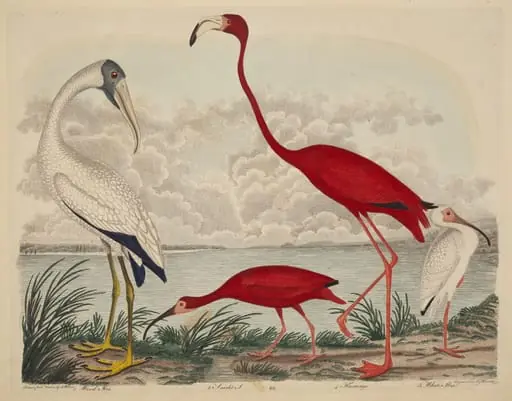
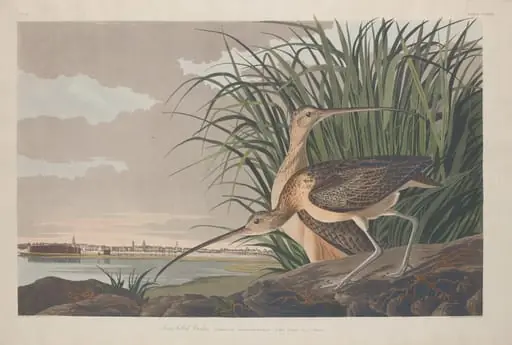
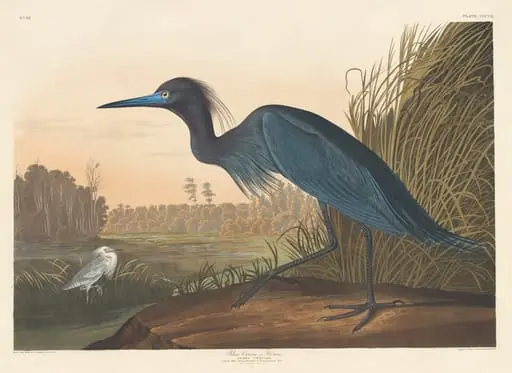
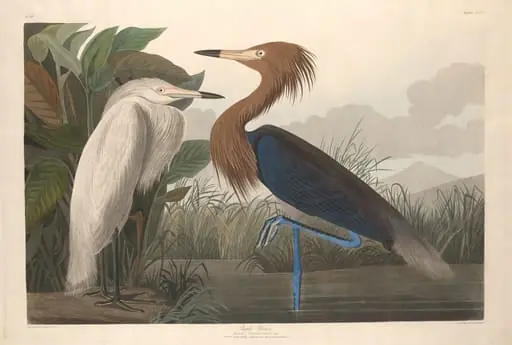
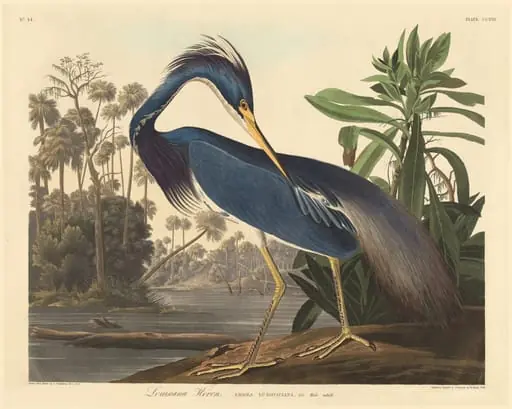
Louisiana Heron, Pied Oyster-catcher, Hooping Crane, and Long-billed Curlew
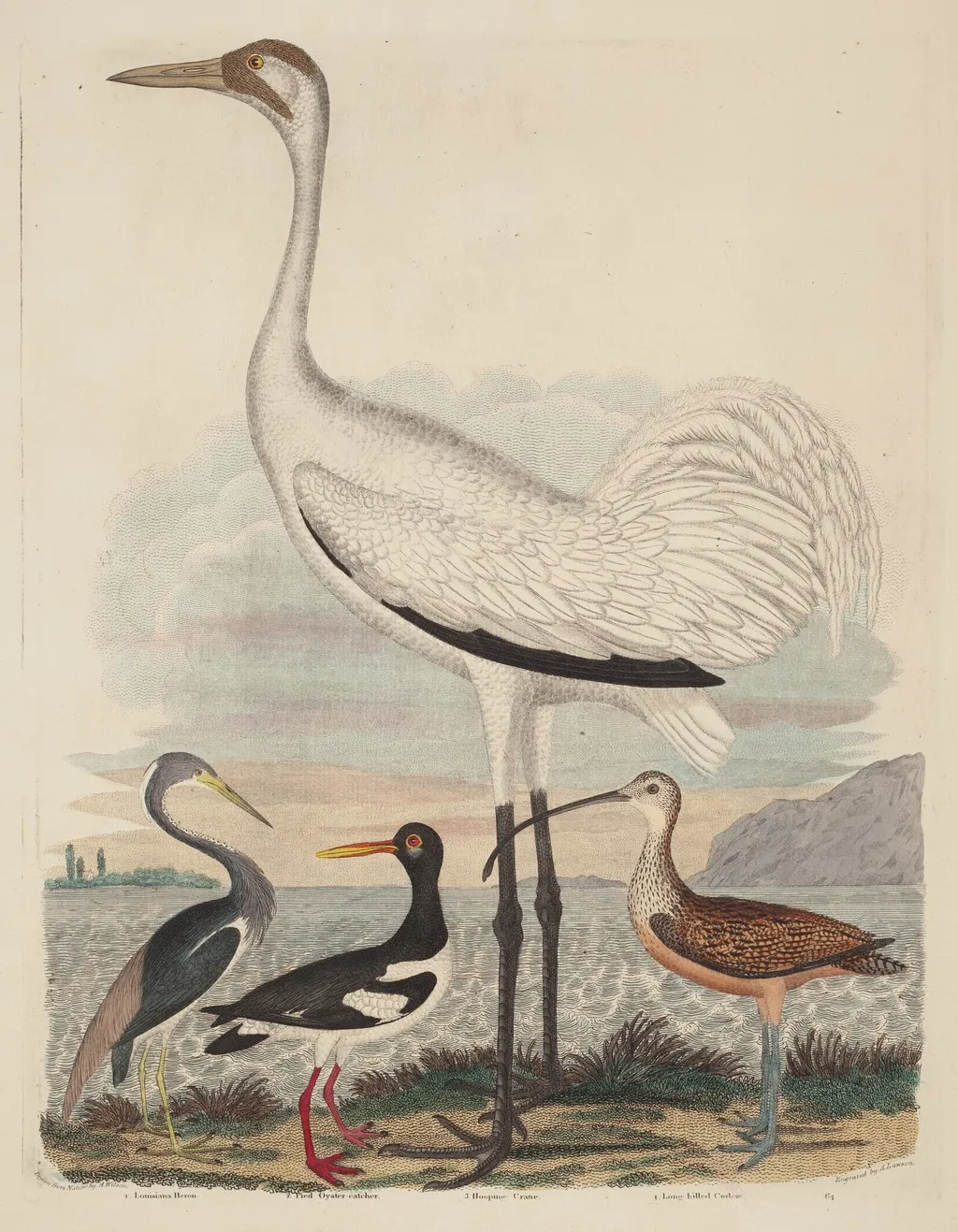
Louisiana Heron, Pied Oyster-catcher, Hooping Crane, and Long-billed Curlew is an ink print by the Romanticist artist John G. Warnicke. It dates from 1811 and is held in the collection of the National Gallery of Art. John G.
About this work
Overview
John G. Warnicke’s 1811 print presents four North American waterbirds—Louisiana heron, pied oyster‑catcher, hooping crane and long‑billed curlew—arranged on a rocky shoreline. Executed as a hand‑colored engraving on wove paper, the image combines precise line work with selective watercolor to highlight plumage and anatomical detail.
Subject & Meaning
The composition juxtaposes a tall, pink‑tinged heron in the background with a curiously curved‑beaked curlew and a vividly orange‑legged oyster‑catcher in the foreground, while the crane occupies the central space. Each bird is rendered in a naturalistic pose, suggesting an observational study of their habitats and behaviors.
Technique & Style
Warnicke employed a combination of etching and engraving to produce fine line textures, then applied hand‑coloring to differentiate species and accentuate features such as feathers and webbed feet. The meticulous approach required careful planning; any error in proportion or coloration would compromise the overall effect, a challenge typical of early 19th‑century hand‑colored prints.
History & Provenance
Hand‑colored engravings of this scale were costly to produce and primarily circulated among affluent collectors of natural history publications. The print likely formed part of a limited edition bird series, reflecting the market for scientific illustration among wealthy patrons in the United States during the post‑War of 1812 period.
Context
Warnicke’s work anticipates the later commercial success of John James Audubon’s bird illustrations, sharing a focus on lifelike representation and vivid coloration. While Audubon’s volumes appeared decades later, both artists contributed to a growing American interest in documenting native wildlife through detailed, collectible prints.
Artist & collection