Artwork
Untitled
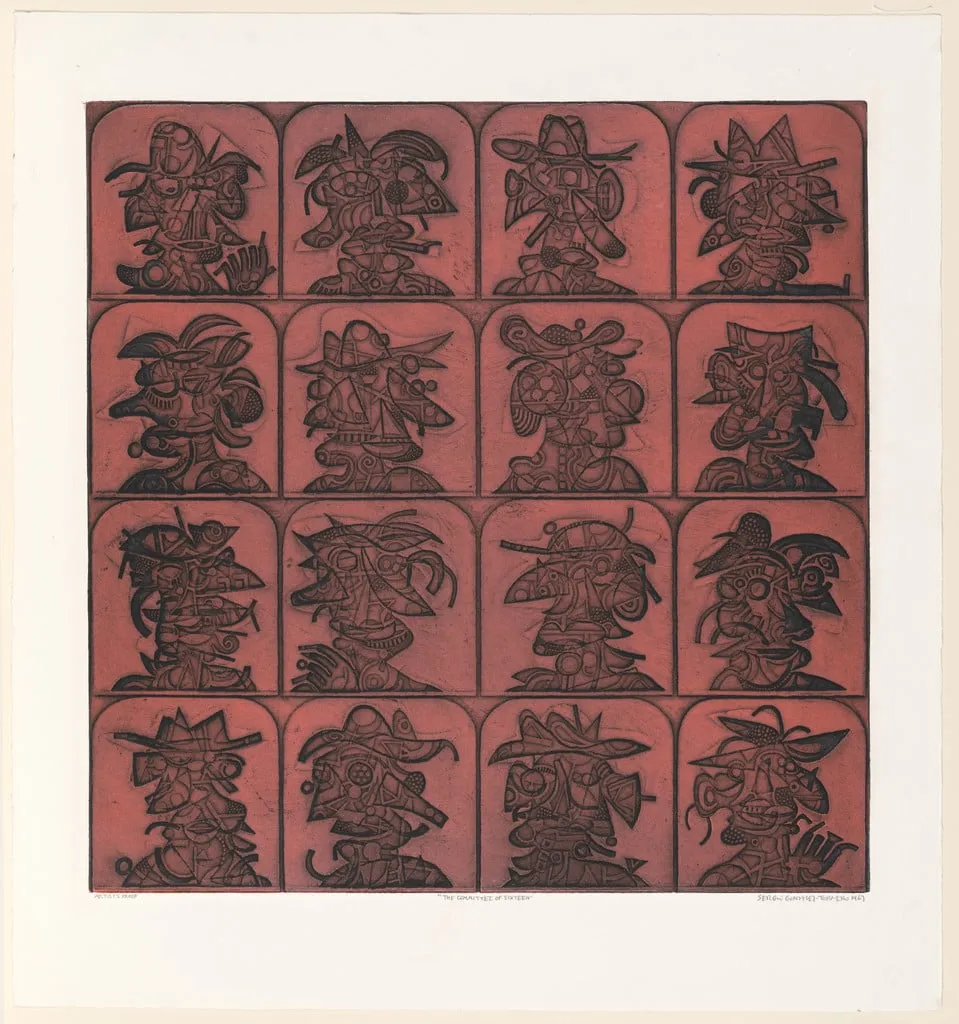
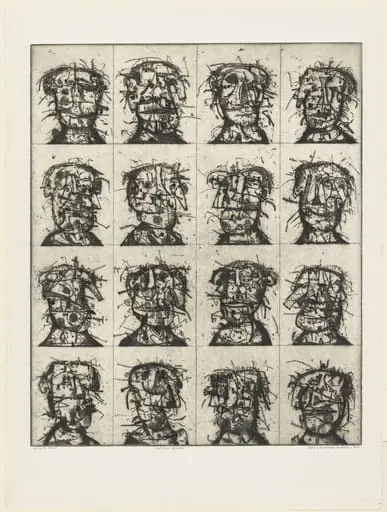
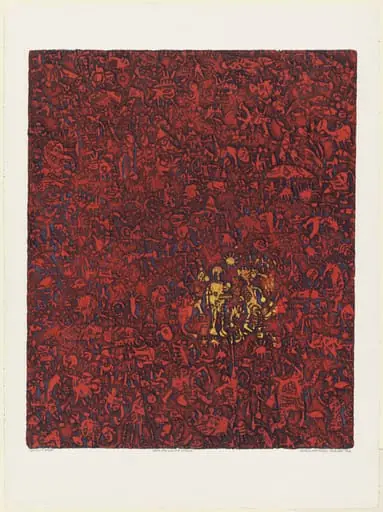
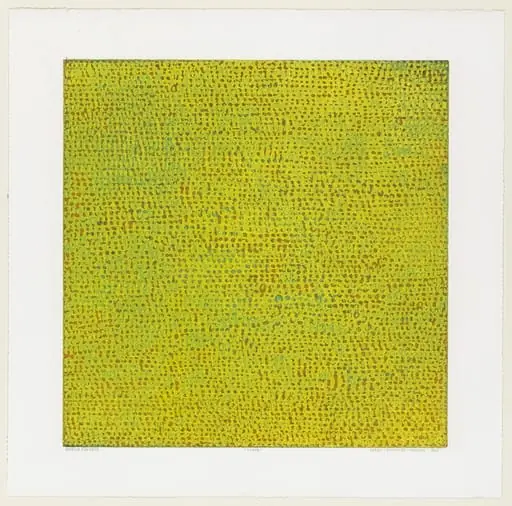
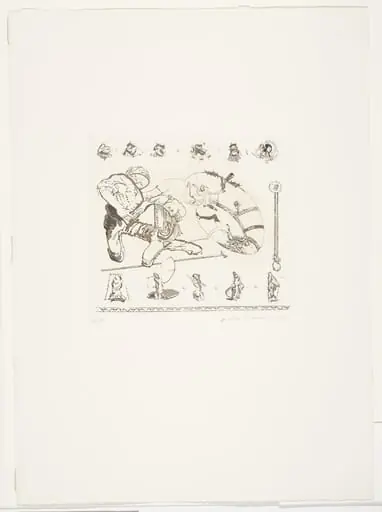
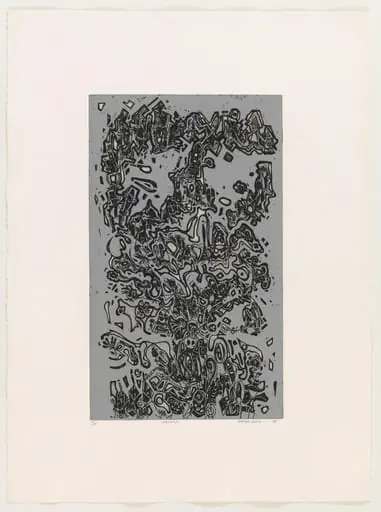
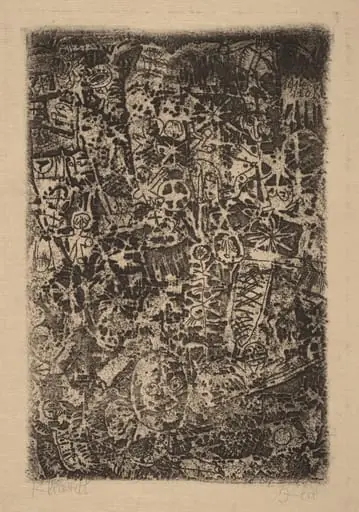
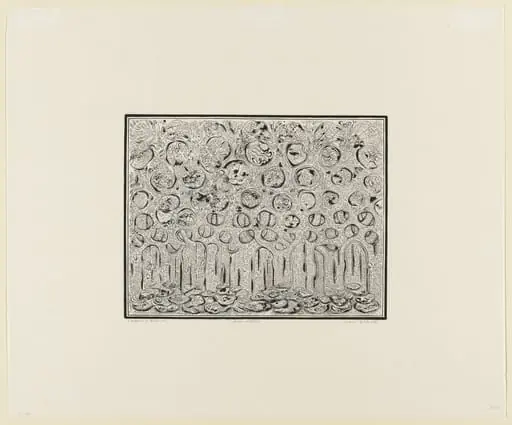
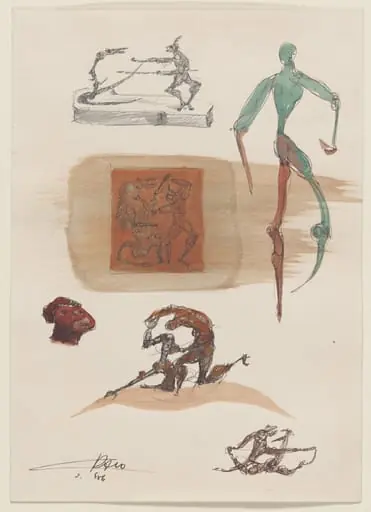
Untitled is an ink print by Sergio Gonzalez-Tornero. It dates from 1967 and is held in the collection of the Museum of Modern Art.
About this work
Overview
The composition avoids narrative progression, instead emphasizing rhythm and formal variation within a constrained structure.
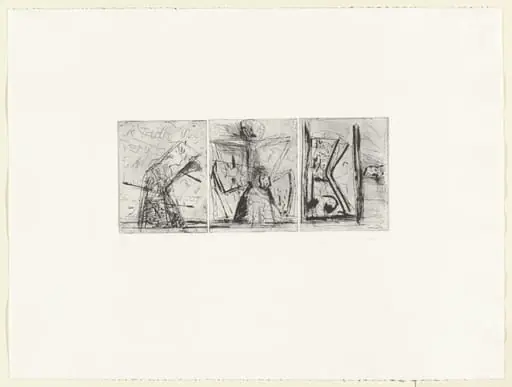
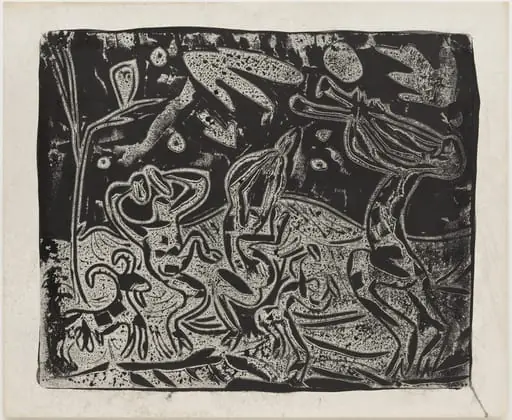
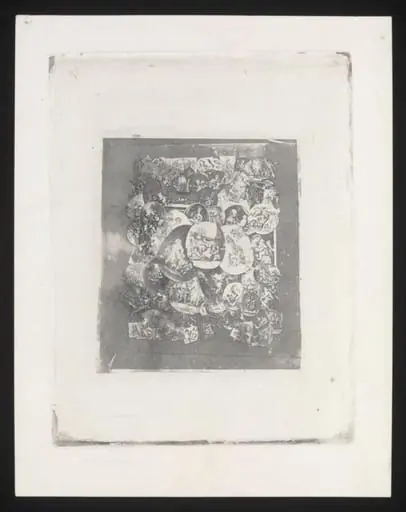
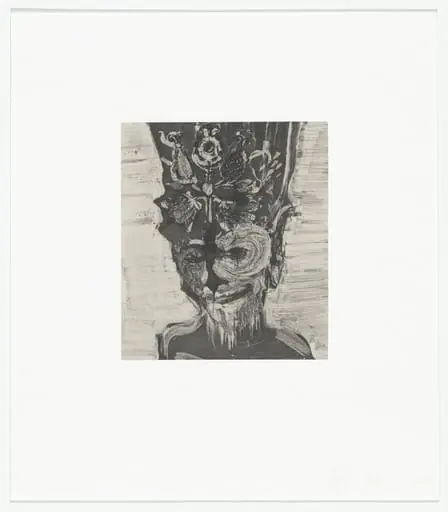
Created in 1967, this etching and aquatint by Sergio Gonzalez-Tornero is part of The Museum of Modern Art’s collection. The work presents a tightly arranged grid of sixteen small, monochromatic figures on a soft pink ground. Each figure is rendered with fine, incised lines and tonal gradients, suggesting a methodical, almost industrial repetition. The composition avoids narrative progression, instead emphasizing rhythm and formal variation within a constrained structure.
Subject & Meaning
The figures blend human anatomy with avian and bestial traits—wings, clawed feet, animal heads—suggesting hybrid beings neither fully natural nor entirely mythical. Their uniform postures and held objects, such as staffs and shields, imply ritual or ceremonial roles. The absence of context or spatial depth invites interpretation as symbolic entities, possibly representing archetypes, guardians, or coded signs drawn from imagined or ancestral systems of belief.
Technique & Style
Gonzalez-Tornero employed etching for precise line work and aquatint to achieve subtle tonal shifts across the figures’ surfaces. The sharp, carved appearance results from controlled acid biting and ink retention in the plate’s recesses. The pink background, lightly tinted, contrasts with the dense black forms, enhancing their relief-like quality. The repetition of forms across the grid reflects a fascination with seriality, echoing both ancient iconography and modernist systems of classification.
History & Provenance
The work was produced in 1967 during a period when Gonzalez-Tornero was exploring printmaking as a means to investigate identity and cultural memory. It entered The Museum of Modern Art’s collection shortly after its creation, likely acquired as part of a broader interest in Latin American printmakers working with symbolic and abstract forms. Its preservation in a major institution underscores its significance within mid-century experimental print practices.
Context
Emerging in the late 1960s, the piece aligns with broader artistic inquiries into myth, ritual, and non-Western symbolism, particularly among Latin American artists responding to political and cultural upheaval. While not overtly political, its use of repetitive, enigmatic figures resonates with contemporaneous movements seeking to reclaim indigenous or pre-Columbian visual languages through abstraction and symbolic form.
Legacy
This print contributes to a lineage of 20th-century printmaking that prioritizes symbolic density over literal storytelling. Its influence can be seen in later artists who use serial imagery to explore collective identity and cultural hybridity. Though not widely exhibited, its presence in MoMA’s collection ensures its continued reference within scholarly discussions of Latin American printmaking and postwar visual symbolism.
Artist & collection