Artwork
Exp. 670: Composite of oval portrait prints and engravings
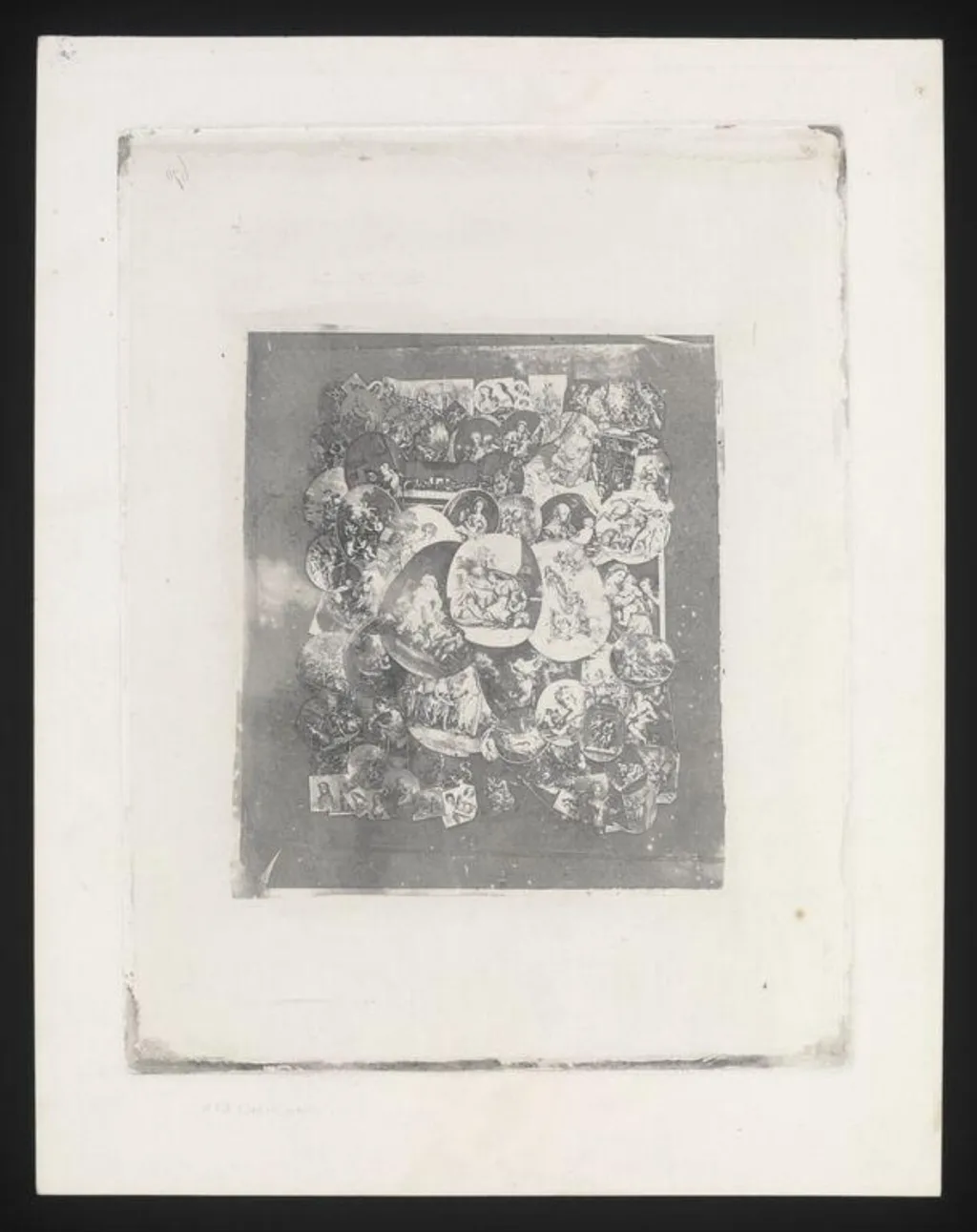
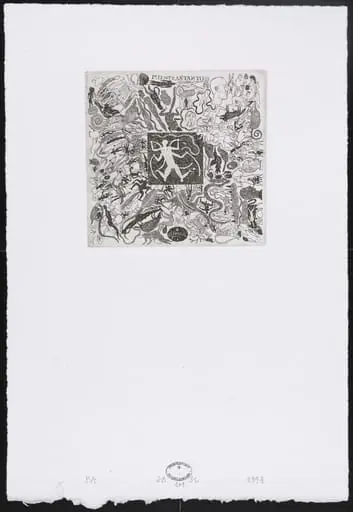
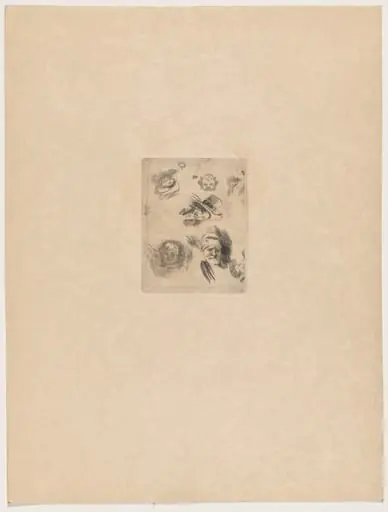
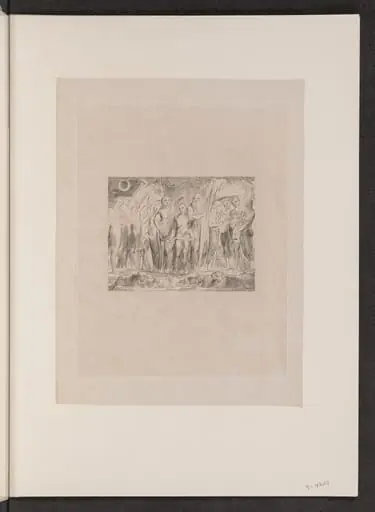
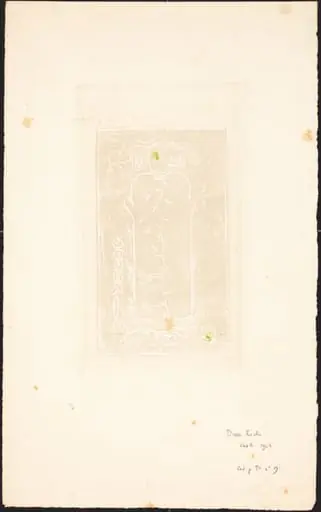
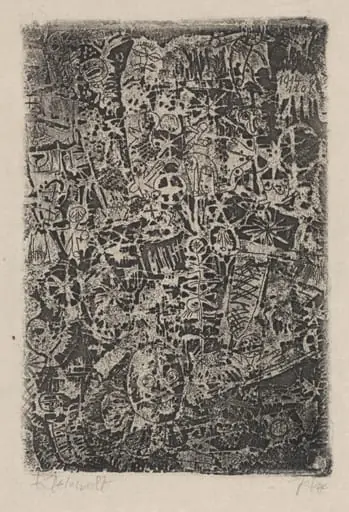
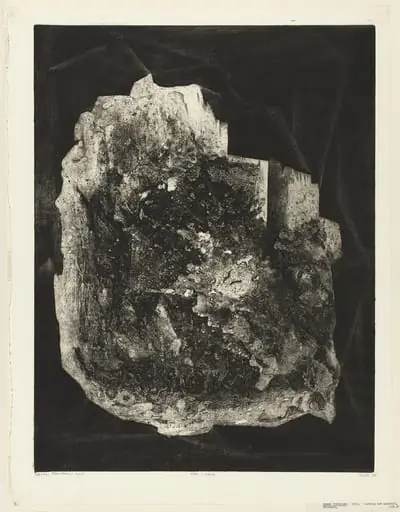
Exp. 670: Composite of oval portrait prints and engravings is a print by the Impressionist artist William Henry Fox Talbot. It dates from 13 and is held in the collection of the Victoria and Albert Museum. The work is a monochrome composition formed by assembling numerous small oval portraits and figurative studies onto a single sheet.
About this work
Overview
The work is a monochrome composition formed by assembling numerous small oval portraits and figurative studies onto a single sheet. The individual images intersect and overlap, creating a dense, layered field where some faces emerge sharply while others recede into a muted background. The overall effect is a crowded tableau of heads and attire rendered in black and white.
Technique & Style
Each oval segment originates from separate prints, likely produced through early photographic processes, and was glued in place to build the larger collage.
The piece was produced by physically affixing printed portrait fragments onto paper, rather than by drawing or painting. Each oval segment originates from separate prints, likely produced through early photographic processes, and was glued in place to build the larger collage. The resulting texture shows variations in ink density and paper thickness, emphasizing the experimental, assemblage nature of the work.
History & Provenance
Created in the mid‑19th century, the collage is attributed to William Henry Fox Talbot, a pioneer of photographic invention. It represents one of his exploratory projects in which he combined multiple photographic prints to investigate the possibilities of image composition. The work has been preserved as part of collections documenting Talbot’s lesser‑known experimental output.
Context
During the 1840s and 1850s, photographers and inventors were testing the limits of the new medium, often employing unconventional methods. Talbot’s collage aligns with this period of trial, reflecting a curiosity about how discrete photographic images could be merged to form a new visual narrative. The piece illustrates the transitional phase between traditional portraiture and the emerging language of photographic montage.
Artist & collection
Artist
William Henry Fox Talbot kept a scrapbook of broken lace and fern fronds pressed between glass slides—not for the flowers, but to capture their fleeting shadows.