Artwork
Man with a Hoe
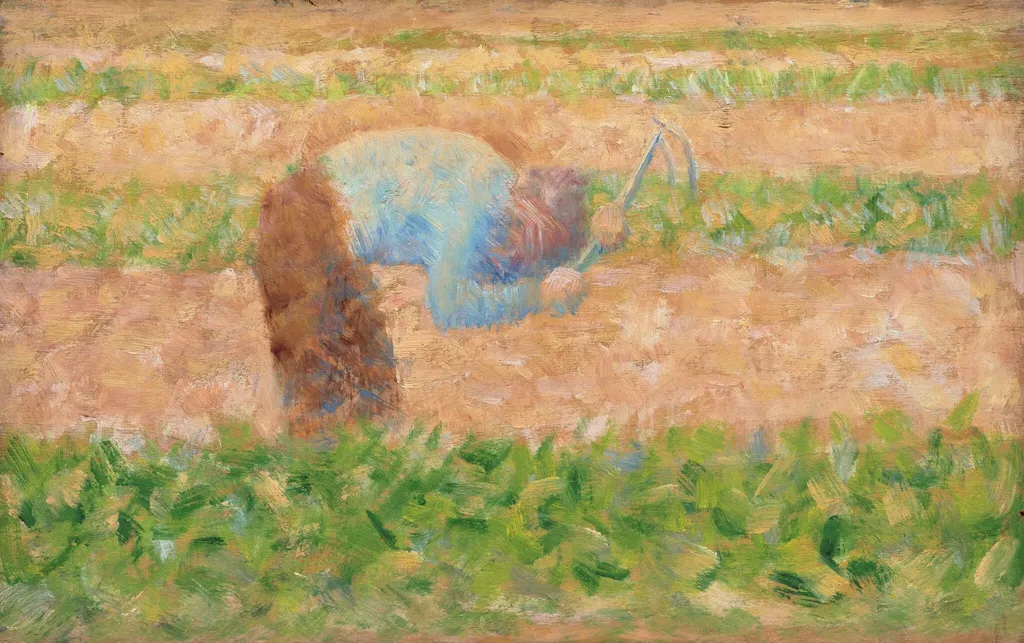
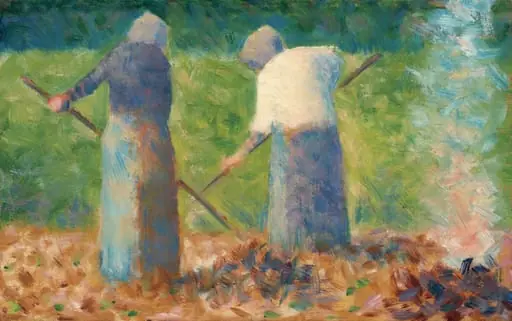
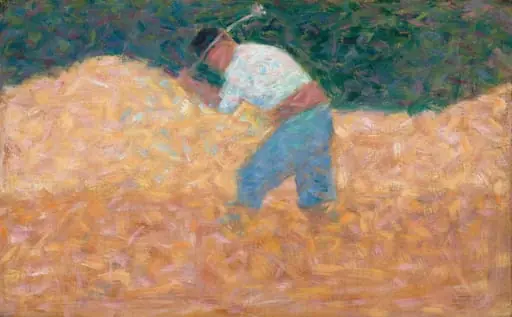
Man with a Hoe is an oil painting by the Impressionist artist Georges Seurat. It dates from 1882 and is held in the collection of the National Gallery of Art.
About this work
Overview
Georges Seurat’s early work Man with a Hoe, executed in oil on a wooden panel around 1882, presents a solitary agricultural figure. The composition centers on a laborer bent over a furrow, his back turned to the viewer, set against a muted landscape of grass and earth. The painting’s modest scale and restrained palette emphasize the everyday nature of the scene.
Subject & Meaning
The canvas captures a moment of manual toil: a man in a blue shirt and brown trousers works the soil with a hoe. By omitting the face, Seurat universalizes the figure, allowing the viewer to contemplate the dignity of rural labor. The tranquil posture and still surroundings suggest a quiet rhythm inherent to agrarian life.
Technique & Style
Seurat applies oil with loose, expressive strokes that reveal the texture of the wood support. A limited chromatic range of greens, browns, and blues creates a subdued atmosphere, while subtle variations in tone model form through light and shadow. The handling anticipates the artist’s later pointillist experiments, yet retains a more gestural, painterly quality here.
History & Provenance
Created in the early 1880s, Man with Hoe belongs to Seurat’s formative period before his systematic division of color. Documentation of its ownership is sparse, and the work has largely remained in private collections, offering limited exhibition history. Its early date provides insight into the development of Seurat’s approach to composition and tonal modeling.
Own this work as a print
Artist & collection