Artwork
Peasant with a Hoe
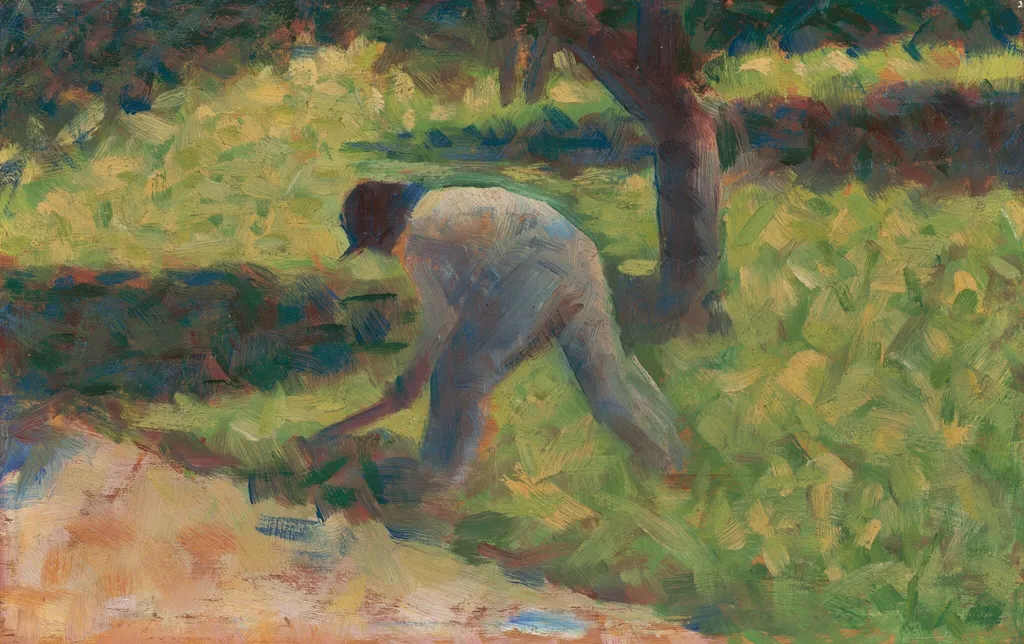
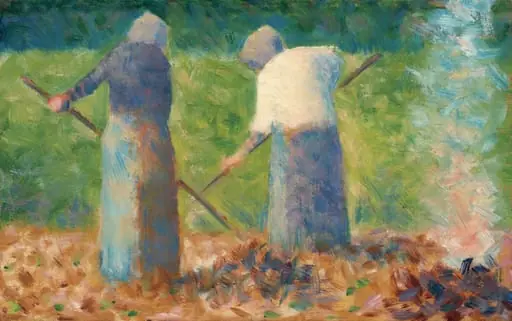
Peasant with a Hoe is an oil painting by the Impressionist artist Georges Seurat. It dates from 1882 and is held in the collection of the National Gallery of Art.
About this work
Overview
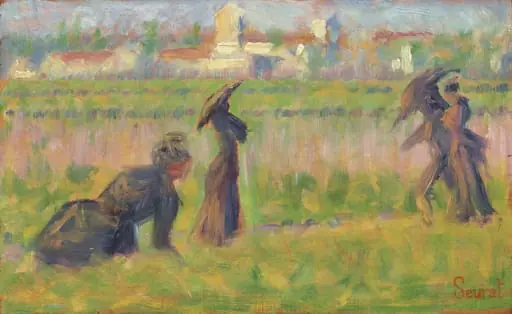
Georges Seurat’s early work Peasant with a Hoe, executed in oil on wood around 1882, presents a solitary agricultural figure within a verdant landscape. The composition centers on a laborer bent over a furrow, his posture and tools emphasizing the physicality of field work. The painting’s modest dimensions and muted palette convey a restrained, observational tone.
Subject & Meaning
The canvas captures a rural laborer attired in plain, earth‑colored garments, engaged in the act of hoeing. By focusing on a single figure amid a lush setting, Seurat highlights the intimate relationship between human effort and the natural environment, inviting contemplation of everyday toil and its place within the broader landscape.
Technique & Style
Seurat employs his characteristic application of short, broken brushstrokes, allowing individual marks to coalesce into form when viewed from a distance. This method renders subtle variations of light and shadow across the figure and foliage, creating a sense of atmospheric depth while maintaining a flat, decorative surface typical of his early experiments.
Context
Created during the early 1880s, the work predates Seurat’s more famous pointillist pieces and reflects his transitional phase from traditional academic training toward the systematic study of color and optics. The subject matter aligns with contemporary French interest in depicting rural life, while the technique anticipates the analytical approach that would define his later oeuvre.
Own this work as a print
Artist & collection