Artwork
Alphonse Legros
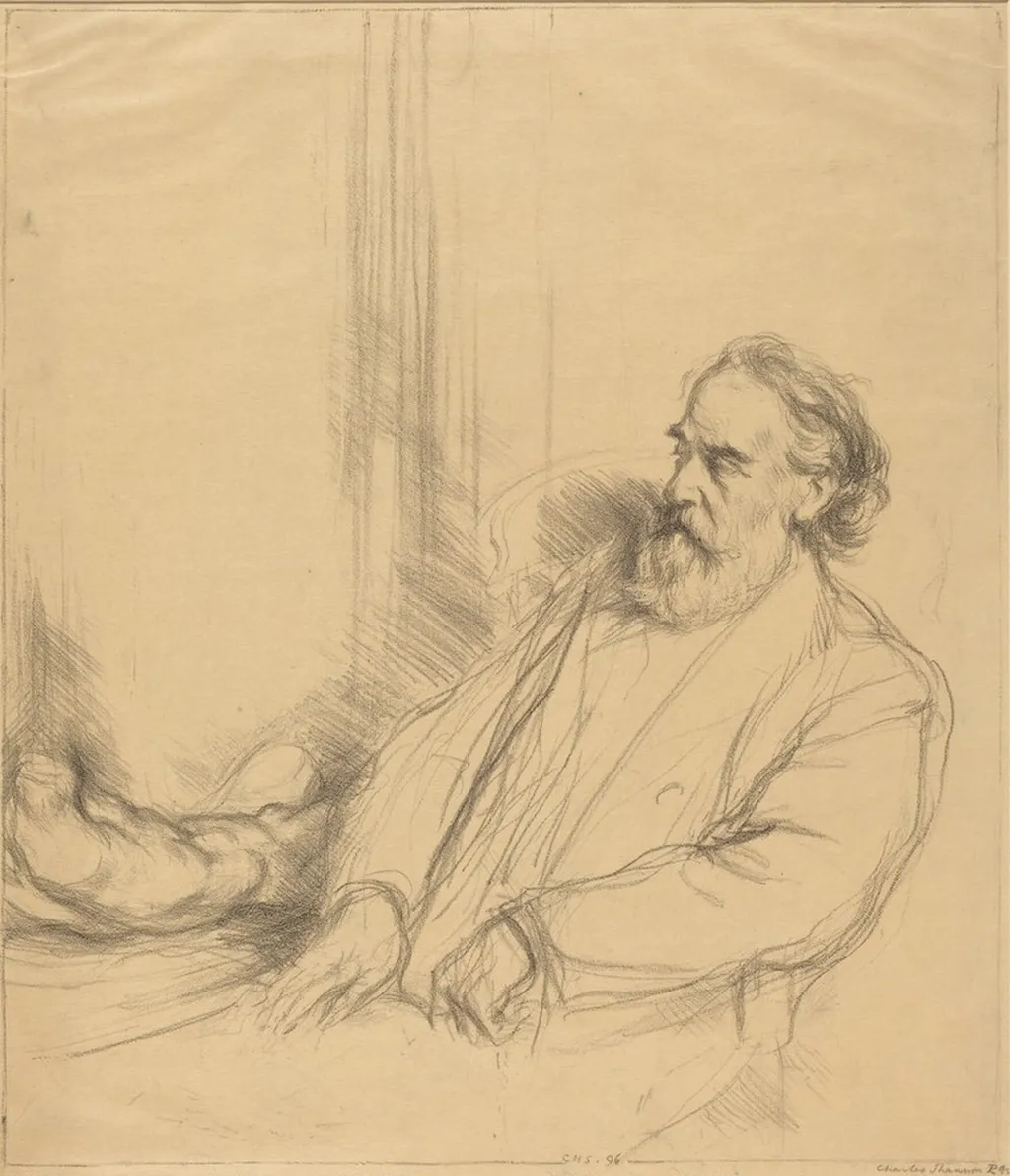
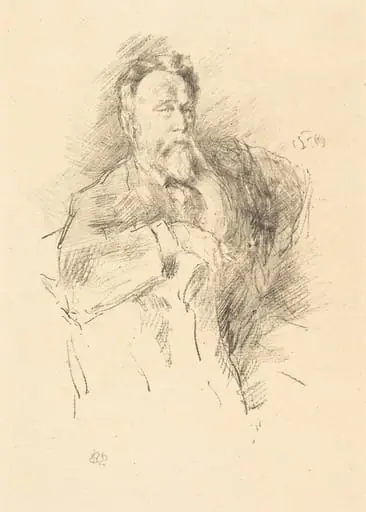
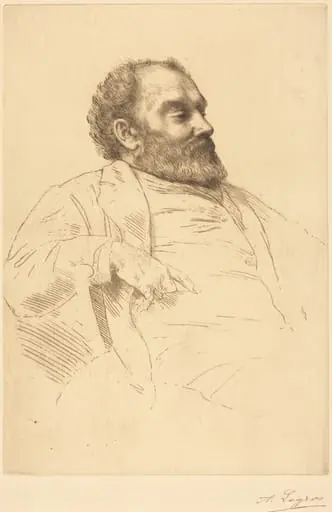
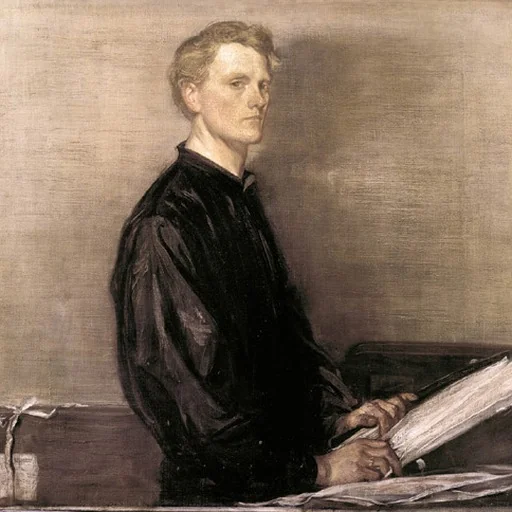
Alphonse Legros is an ink print by the Impressionist artist Charles Haslewood Shannon. It dates from 1900 and is held in the collection of the National Gallery of Art.
About this work
Overview
This lithograph by Charles Haslewood Shannon depicts Alphonse Legros, a French-born artist active in England during the late 19th century.
This lithograph by Charles Haslewood Shannon depicts Alphonse Legros, a French-born artist active in England during the late 19th century. Created in 1900, the work is a portrait rendered in lithographic technique, capturing Legros in a candid, informal pose. Shannon, known for his portraiture and printmaking, chose a medium that allowed for expressive, spontaneous mark-making, aligning with the intimate character of the image.
Subject & Meaning
The portrait shows Legros as an elderly man with a full beard and curly hair, seated with one arm resting on his knee and the other holding a small, indistinct object. His gaze is directed away from the viewer, suggesting introspection or quiet concentration. The composition avoids formal grandeur, instead emphasizing the subject’s presence as a working artist, grounded and unadorned.
Technique & Style
Shannon employed lithography to achieve a sketchlike quality, with loose, visible pencil strokes and soft tonal gradations. The lines are fluid and unpolished, conveying immediacy rather than finish. The background and clothing are suggested with minimal shading, allowing the texture of the stone and the artist’s hand to remain evident. This approach reflects a preference for spontaneity over refinement, characteristic of late 19th-century printmaking experimentation.
History & Provenance
The lithograph was produced in 1900 by Shannon, who was well connected within British and European artistic circles. Legros, a respected teacher and member of the Royal Academy, had been a significant figure in London’s art scene since the 1860s. The work likely originated from their personal or professional association, and it entered institutional collections through Shannon’s established reputation as a printmaker.
Context
In the late 19th century, lithography experienced a revival among artists seeking alternatives to traditional engraving. Shannon, influenced by the Aesthetic Movement and French printmakers, embraced the medium for its capacity to capture gesture and mood. Legros, trained in France and active in England, represented a bridge between continental and British art traditions, making this portrait a quiet testament to transnational artistic exchange.
Legacy
The portrait endures as an example of how lithography could convey psychological depth without idealization. It reflects Shannon’s interest in the artist’s inner life and the broader trend among his contemporaries to treat portraiture as a personal, rather than ceremonial, act. The work remains in public collections, valued for its technical honesty and its documentation of a key figure in Victorian-era art education.
Artist & collection
Artist
Charles Haslewood Shannon (26 April 1863 – 18 March 1937) was an English artist best known for his portraits.