Artwork
Beauty (Bijin) in the Snow
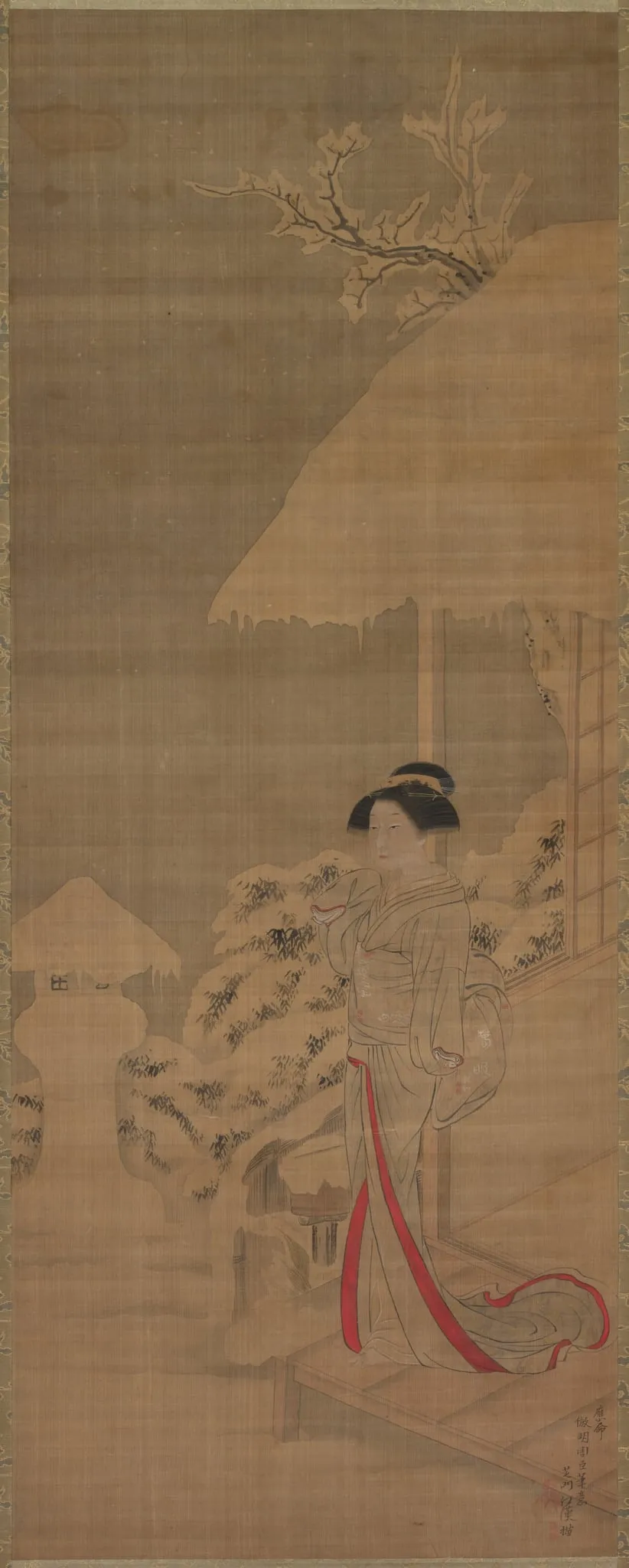
Beauty (Bijin) in the Snow is an unspecified painting by the Romanticist artist Shiba Kōkan. It dates from 1796 and is held in the collection of the Cleveland Museum of Art.
About this work
Overview
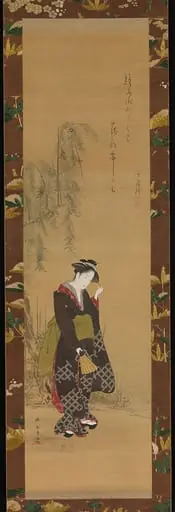
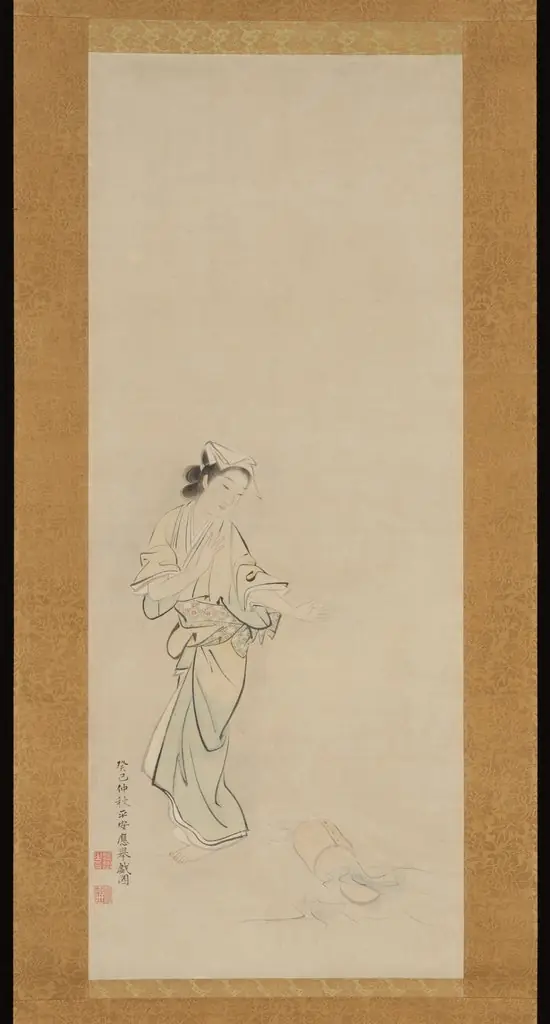
Painted in 1796 by Shiba Kōkan, this work depicts a solitary woman in a snowy landscape. It is part of the collection at The Cleveland Museum of Art. The composition emphasizes stillness and restraint, using minimal detail to evoke a quiet moment in nature. Unlike many contemporary bijin-ga, it avoids ornate settings, focusing instead on the figure’s presence against a subdued winter environment.
Subject & Meaning
The stillness and isolation may reflect themes of transience, common in Edo-period aesthetics, though no specific identity is given.
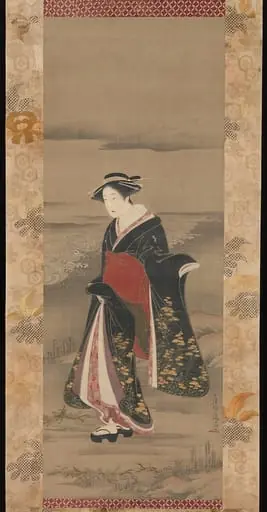
The figure is a woman dressed in a muted gold robe with a vivid red sash and sleeve, standing alone on a snow-covered slope. Her black hat and pulled-back hair suggest formality or seasonality. The scene conveys solitude rather than narrative, inviting contemplation rather than storytelling. The stillness and isolation may reflect themes of transience, common in Edo-period aesthetics, though no specific identity is given.
Technique & Style
Shiba Kōkan employed soft, flattened forms and a restrained palette of muted gold, gray, and accents of red. The brushwork is deliberate but unembellished, avoiding the fine detailing typical of ukiyo-e. Snow is suggested through washes rather than texture, and the background trees and structure are rendered with sparse lines. The effect is one of quiet harmony, blending Japanese sensibility with subtle Western-influenced perspective.
History & Provenance
Created in 1796 during the late Edo period, the painting entered The Cleveland Museum of Art’s collection through documented acquisition. Its provenance prior to the 20th century is not fully recorded, but its style aligns with Kōkan’s known experiments beyond traditional ukiyo-e. It has been exhibited periodically since its acquisition, recognized for its departure from conventional bijin-ga conventions of the time.
Context
Shiba Kōkan was known for blending Japanese traditions with Western techniques learned through Dutch sources. This painting reflects his interest in naturalism and atmospheric tone, diverging from the bustling urban scenes typical of bijin-ga. While most portraits of beauties emphasized fashion and leisure, this work turns inward, aligning more with literati ideals of solitude and seasonal reflection.
Legacy
The painting stands as an example of Kōkan’s personal artistic evolution, bridging Edo-period aesthetics and emerging modern sensibilities. It is not widely reproduced, but among scholars, it is noted for its quiet innovation. Its understated approach influenced later artists seeking emotional depth over decorative flourish, marking a subtle shift in how beauty was represented in Japanese painting.
Artist & collection

Artist
Shiba Kōkan , born Andō Kichirō (安藤吉次郎) or Katsusaburō (勝三郎), was a Japanese painter and printmaker of the Edo period, famous both for his Western-style yōga paintings, in imitation of Dutch oil painting styles,…