Artwork
「扇屋内花扇図」|The Courtesan Hanaōgi of the Ōgiya Brothel in Yoshiwara (Ōgiya uchi Hanaōgi, Yoshino, Tatsuta)
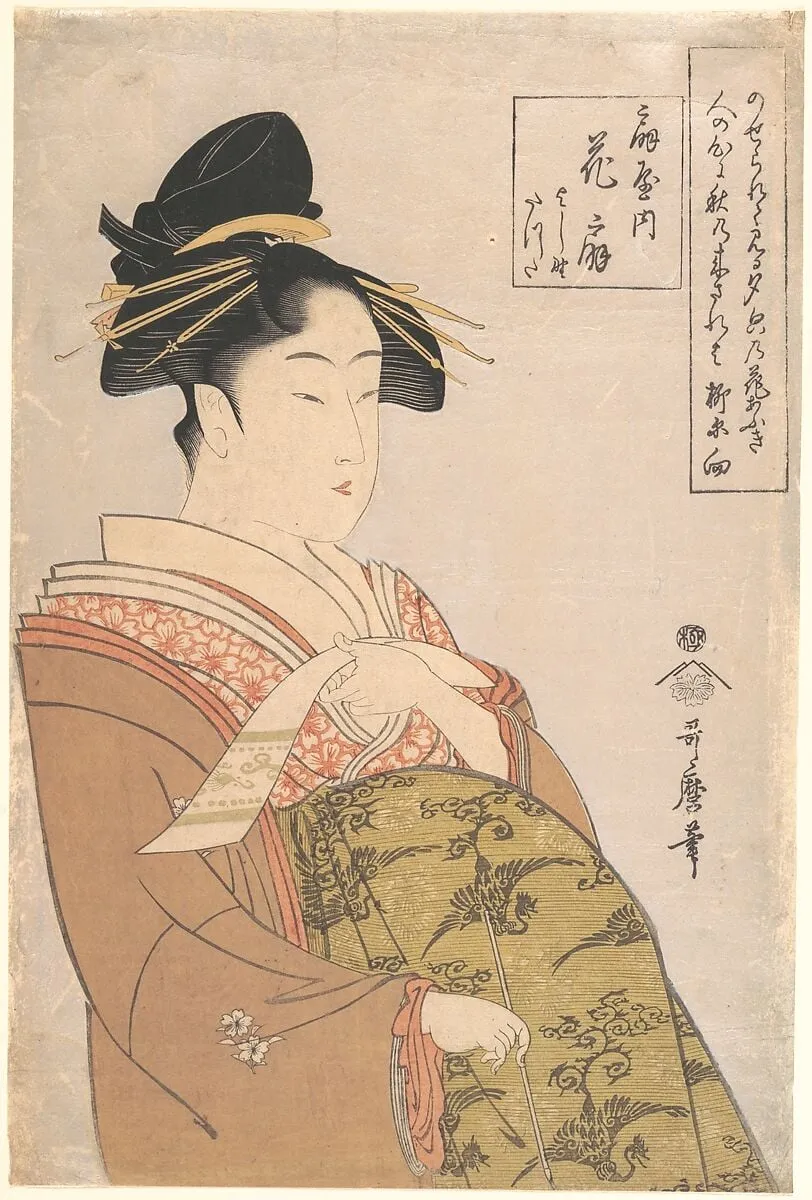
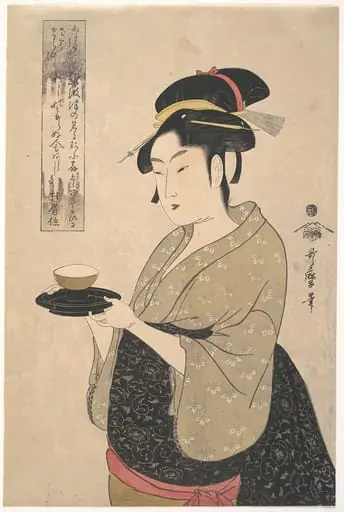
「扇屋内花扇図」|The Courtesan Hanaōgi of the Ōgiya Brothel in Yoshiwara (Ōgiya uchi Hanaōgi, Yoshino, Tatsuta) is an ink print by the Romanticist artist Kitagawa Utamaro. It dates from 1794 and is held in the collection of the Metropolitan Museum of Art.
About this work
Overview
The composition centers on the figure in a half-length pose, isolated against a plain background to emphasize her presence and attire.
Created around 1794, this woodblock print by Kitagawa Utamaro depicts a courtesan from the Ōgiya brothel in Edo’s Yoshiwara district. Rendered in ink and color on paper, it belongs to the ukiyo-e tradition of popular visual culture. The composition centers on the figure in a half-length pose, isolated against a plain background to emphasize her presence and attire. The work exemplifies Utamaro’s focus on individualized portraiture within the pleasure quarters.
Subject & Meaning
The subject is Hanaōgi, a named courtesan associated with the Ōgiya establishment. Her identity as a high-ranking courtesan is signaled by her elaborate attire and poised demeanor. The fan she holds is both a prop of refinement and a symbol of social performance. The image does not idealize but captures a specific person within a highly regulated social world, reflecting the era’s fascination with the lives of courtesans as cultural icons.
Technique & Style
Utamaro employed fine, controlled lines to define the textures of fabric and the brim of the hat, using subtle gradations to suggest volume and shadow. The layered robes are rendered with precision, their patterns and folds carefully delineated. Color areas are flat yet carefully bounded, typical of woodblock printing, while the absence of background detail directs attention to the figure’s facial expression and costume. The technique reflects the refinement of the nishiki-e style at its peak.
History & Provenance
The print was produced during Utamaro’s most prolific period, when he specialized in portraits of courtesans and beauties. It entered the collection of The Metropolitan Museum of Art through established channels of early 20th-century acquisitions of Japanese prints. Its survival in good condition reflects its enduring value among collectors and institutions interested in Edo-period visual culture.
Context
In late 18th-century Edo, woodblock prints of courtesans served as both entertainment and status symbols, akin to celebrity portraiture. Yoshiwara was a licensed district where social norms were suspended, and courtesans became subjects of artistic and literary fascination. Utamaro’s portraits, including this one, contributed to a broader visual lexicon that documented the aesthetics and hierarchies of the pleasure quarters.
Legacy
This print remains a representative example of Utamaro’s contribution to the evolution of the bijin-ga genre. Its emphasis on psychological presence and detailed costume influenced later generations of printmakers and Western artists drawn to Japanese aesthetics. Though produced for mass consumption, its technical precision and intimate focus continue to inform scholarly and artistic engagement with ukiyo-e.
Artist & collection


 Untitled
 Untitled
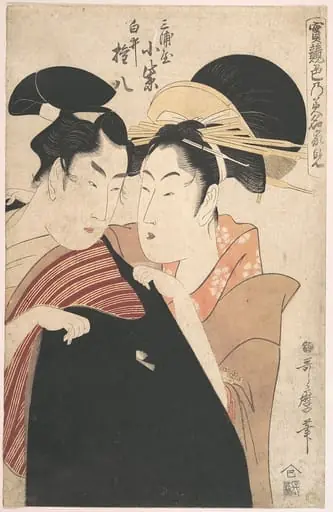 実競色乃美名家見 三浦屋小紫 白井権八|The Lovers Miura-ya Komurasaki and Shirai Gonpachi.
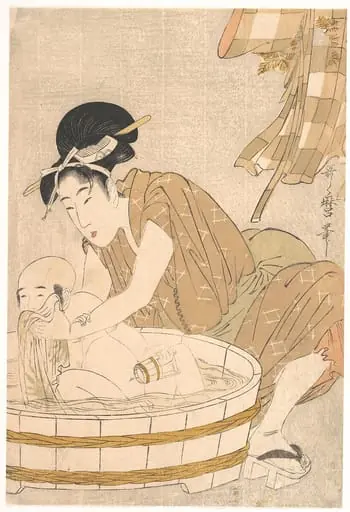 行水|Bathtime (Gyōzui)
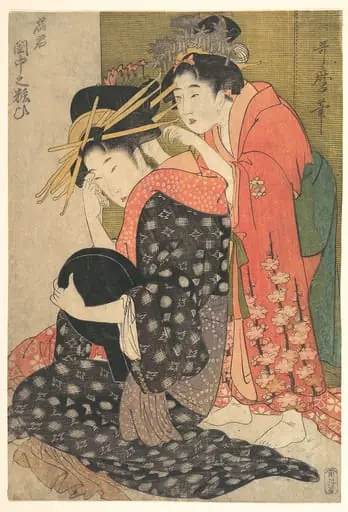 名君 閨中の粧ひ|The Oiran Yoso-oi Seated at Her Toilet
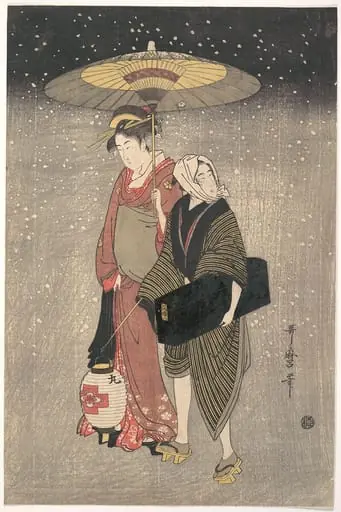 Untitled
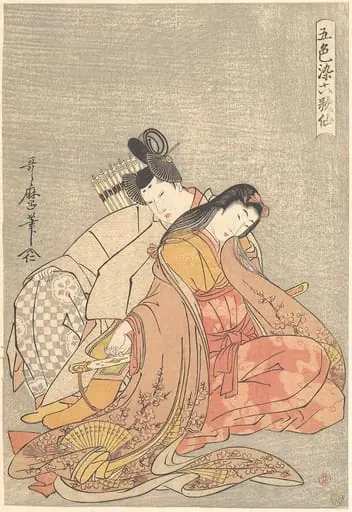 『五色染六歌仙』 在原業平と小野小町|“The Poet Ariwara no Narihira (825–880) and Ono no Komachi,” from the series Five Colors of Love for the Six Poetic Immortals (Goshiki-zome rokkasen)
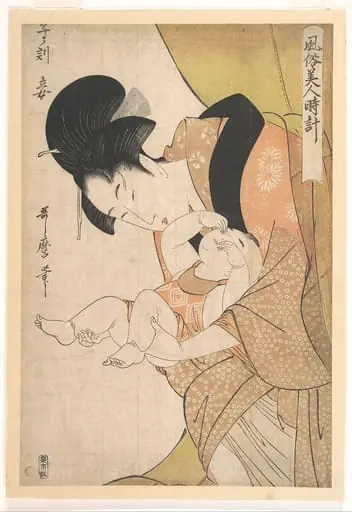 風俗美人時計 子ノ刻 妾|Midnight: Mother and Sleepy Child
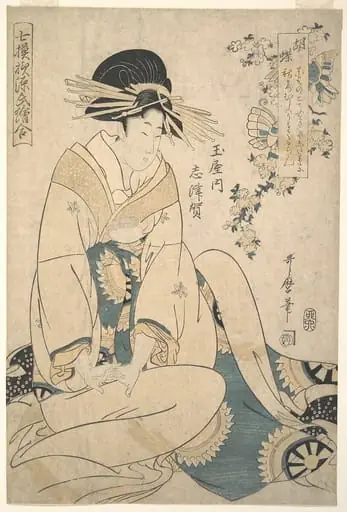 玉屋内 志津賀|A Courtesan
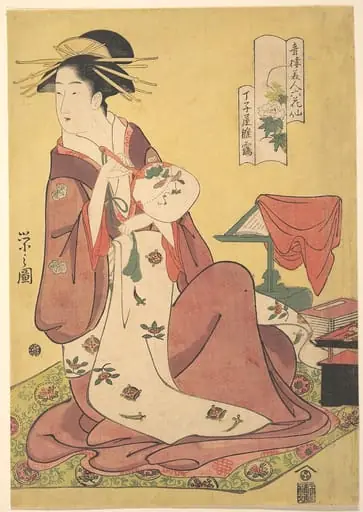 鳥文斎栄之画 「青楼美人六花仙 丁子屋雛鶴鸖」|The Courtesan Hinazuru of the Chōjiya Brothel (Chōjiya Hinazuru), from the series Beauties of the Pleasure Quarters as Six Floral Immortals (Seirō bijin rokkasen)
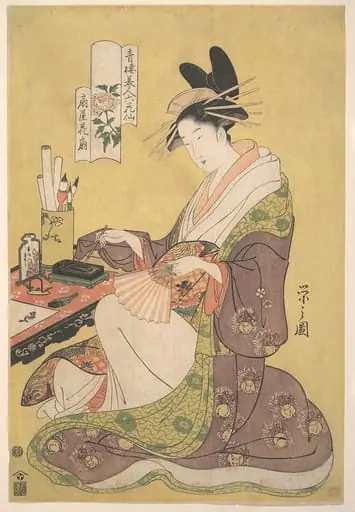 「青楼美人六花仙 扇屋花扇」|The Courtesan Hanaōgi of the Ōgiya Brothel (Ōgiya Hanaōgi), from the series Beauties of the Pleasure Quarters as Six Floral Immortals (Seirō bijin rokkasen)
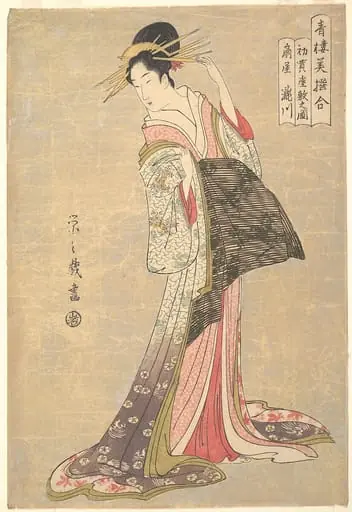 鳥文斎栄之画 「青楼美撰合 初売座敷之図 扇屋滝川」|Takigawa of the Ōgiya Brothel: The First Reception Room Appointment of the New Year (Hatsu-uri zashiki no zu: Ōgiya Takigawa), from the series A Comparison of Selected Beauties of the Pleasure Quarters (Seirō bisen awase)
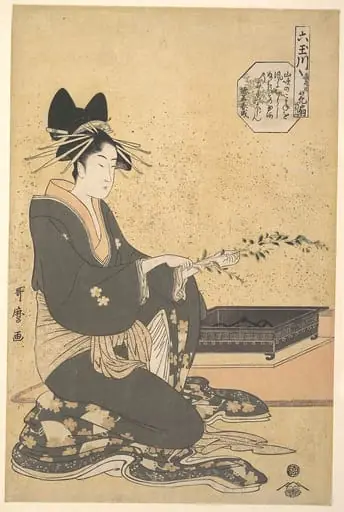 喜多川歌麿画 六玉川 扇屋内 花扇 扇屋内花扇|The Oiran Hanaogi of Ogiya, from the series “Six Jewel Rivers” (Mutamagawa)
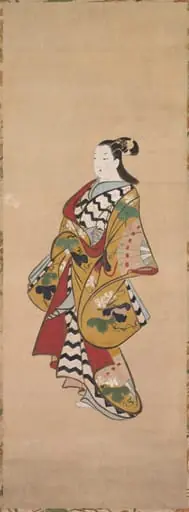 Courtesan
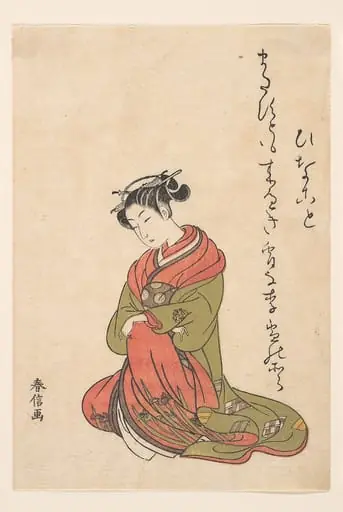 青楼美人合|The Courtesan Itsuhata with Her Pipe
 難波屋おきた|Okita of the Naniwa-ya Tea-house