Artwork
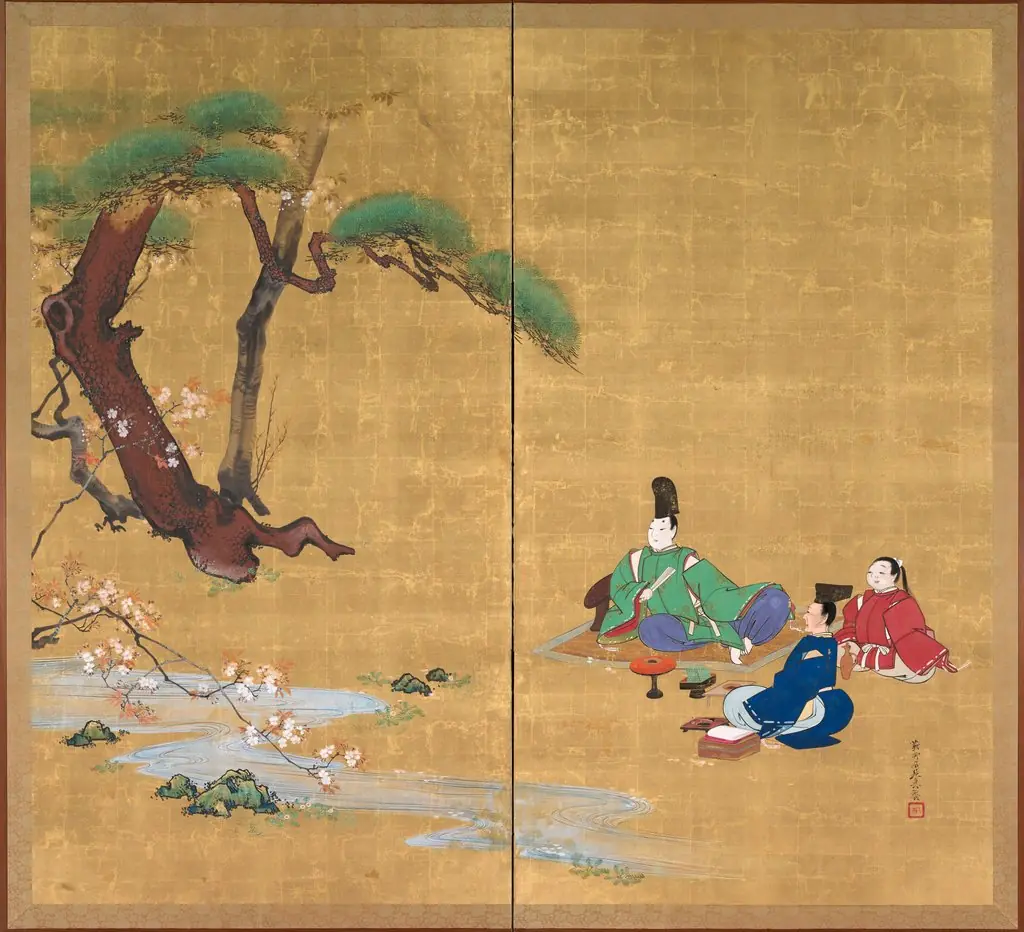
Nagisa Palace from the Tales of Ise
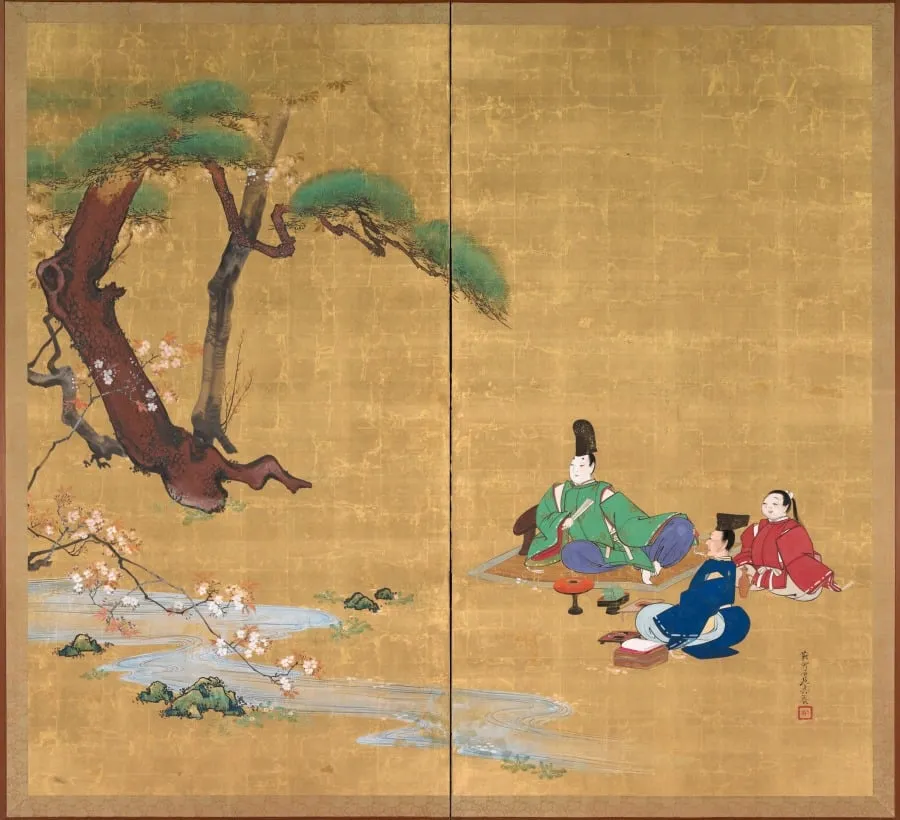
Nagisa Palace from the Tales of Ise is an unspecified painting by the Impressionist artist Shibata Zeshin. It dates from 1804 and is held in the collection of the Cleveland Museum of Art. The folding screen presents a scene drawn from the tenth‑century literary work *Tales of Ise*.
About this work
Overview
The folding screen presents a scene drawn from the tenth‑century literary work *Tales of Ise*. Central to the composition is a gentleman reclining on a shoulder‑rest, his gaze fixed on blooming cherry trees. He holds a lacquered sake dish, while a young attendant watches the service and a companion prepares writing tools, suggesting a moment of poetic contemplation.
Subject & Meaning
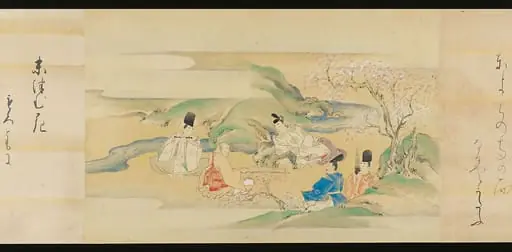
The narrative illustrates a verse from the *Tales of Ise* in which the protagonist muses that the world would find a quieter spring if the cherry blossoms vanished. The relaxed pose, the act of sipping sake, and the readiness of ink and brush all underscore the intertwining of nature, drink, and poetry as avenues for reflecting on transience and serenity.
Technique & Style
Executed as a painted screen, the work employs the flat, decorative surfaces typical of Japanese narrative painting, with delicate coloration for the blossoms and lacquered objects. The figures are rendered with minimal shading, emphasizing line and pattern over three‑dimensional modeling, a visual strategy that foregrounds the literary episode rather than realistic space.
Context
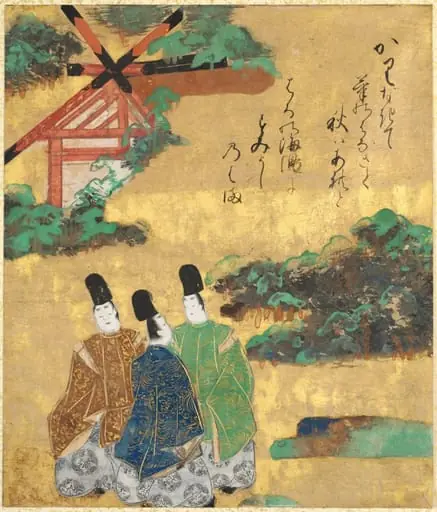
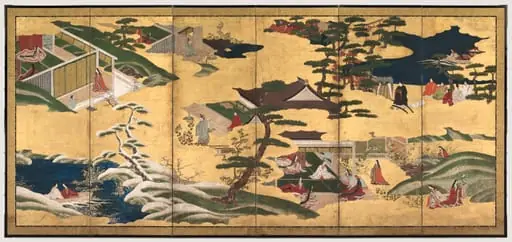
The *Tales of Ise* was a popular source for visual artists during the Heian period and later, serving as a cultural touchstone for courtly aesthetics. By portraying a scene of poetry‑making amid cherry blossoms, the screen aligns with the aristocratic practice of *uta* gatherings, where seasonal appreciation and verse composition were central to elite social life.
Artist & collection