Artwork
The Beach at Sumiyoshi from the Tales of Ise
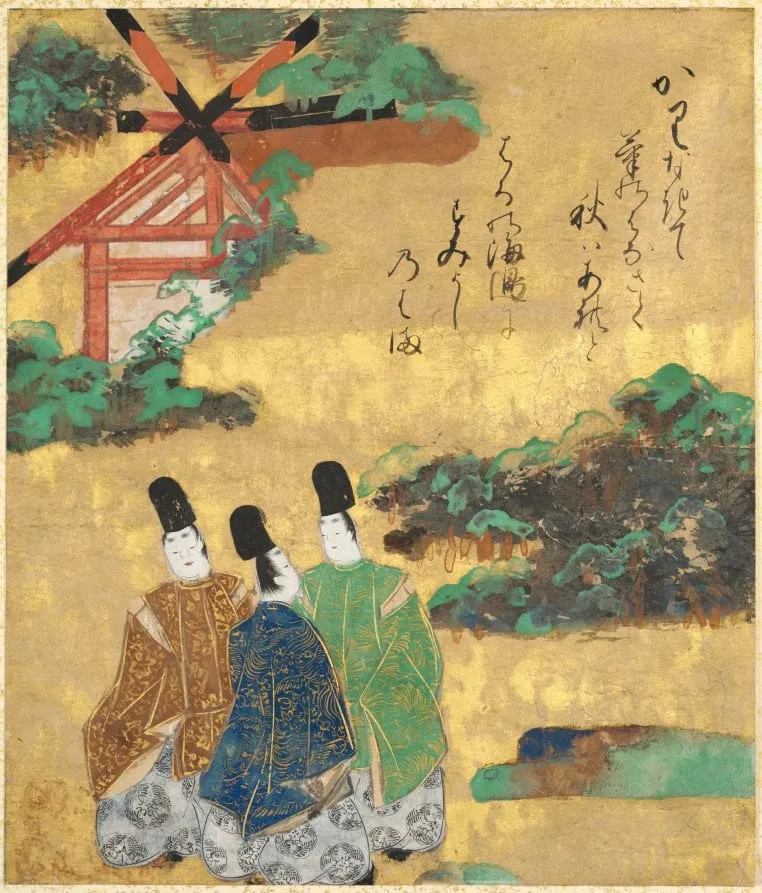
The Beach at Sumiyoshi from the Tales of Ise is an unspecified painting by the Baroque artist Tawaraya Sōtatsu. It dates from 1634 and is held in the collection of the Cleveland Museum of Art.
About this work
You see a long, narrow scroll of waves, sand, and sky—gold clouds, a few black rocks, and tiny figures walking along the shore.
You see a long, narrow scroll of waves, sand, and sky—gold clouds, a few black rocks, and tiny figures walking along the shore.
The poem at the top is from a 1,000-year-old love story. It says autumn is beautiful, but spring by the sea is best. The artist painted the words and the scene together, so you read and look at the same time.
If you like how words and pictures mix, try looking up *Japan, Edo period (1615–1868)*.
Overview
The Beach at Sumiyoshi is a narrow scroll painting depicting a serene coastal scene, accompanied by a poem from The Tales of Ise, a 10th-century Japanese poetic narrative.
Subject & Meaning
The artwork juxtaposes a visual representation of a spring beach scene with a poem that contrasts the beauty of autumn (wild geese, chrysanthemums) with the preferred serenity of spring by the sea, as expressed in the poem’s final line.
Technique & Style
Characterized by a long, narrow format, the painting features gold clouds, sparse black rocks, and minute figures along the shore, blending calligraphic poetry at the top with the illustrated landscape below.
History & Provenance
While the poem originates from a 10th-century source, the painting’s creation date aligns with the Edo period (1615–1868), though specific artist or ownership history is not detailed here.
Context
This work exemplifies the Edo period’s appreciation for integrating literature and art, particularly the tradition of illustrating classical poems, a hallmark of Japanese artistic culture during this time.
Artist & collection
Artist
Tawaraya Sōtatsu (俵屋 宗達; c. 1570 – c. 1640) was a Japanese furniture designer and painter of the Rinpa school. Sōtatsu is best known for his decorations of calligraphic works by his partner Hon'ami Kōetsu (1558–1637),…

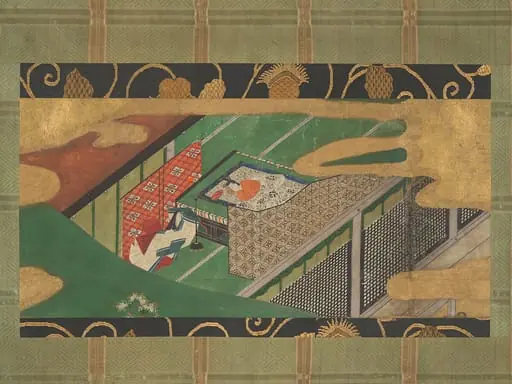 伝俵屋宗達筆 源氏物語図「宿木」 |“Trees Encoiled in Vines of Ivy” (Yadorigi)
 Untitled
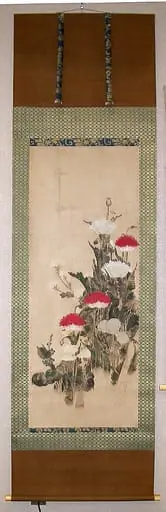 Untitled
 Selections from the New Collection of Japanese Poems from Ancient and Modern Times (Shinkokin wakashū) with Printed Designs of Chinese Lions and Crab Finger Grass
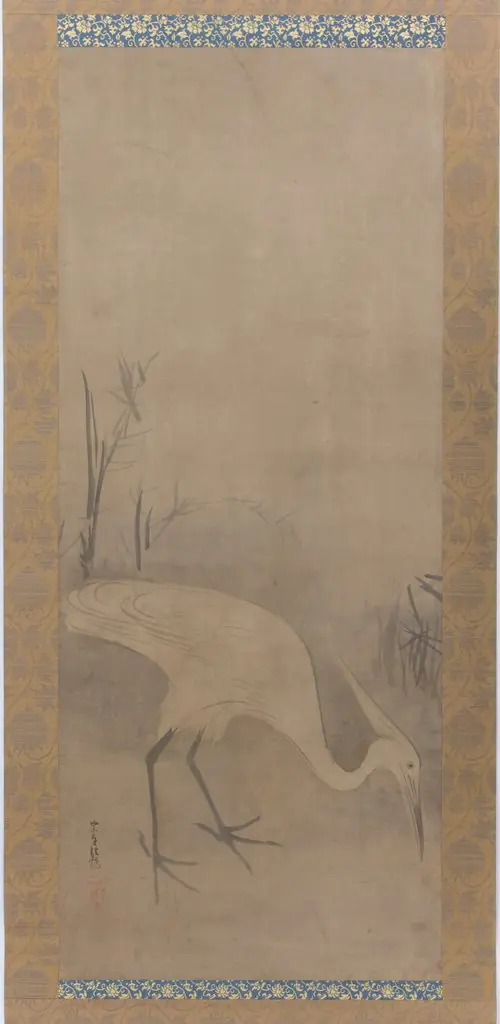 White Heron (Shirosagi zu)
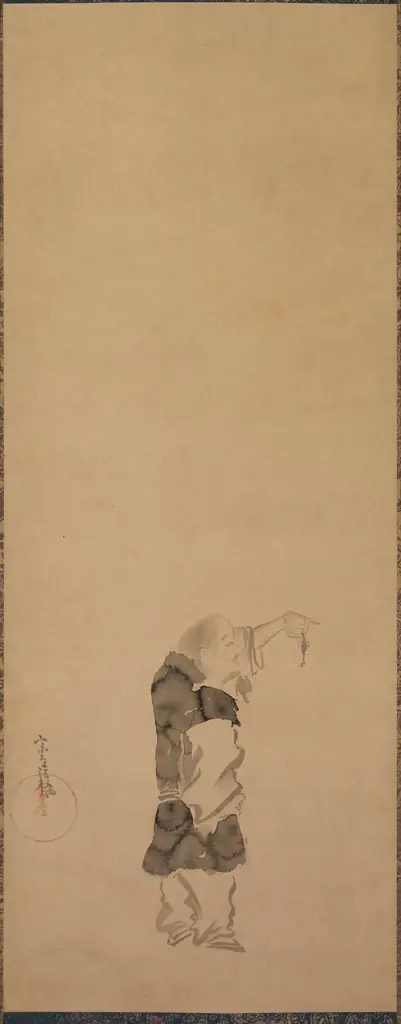 Kenshu, Monk with Shrimp
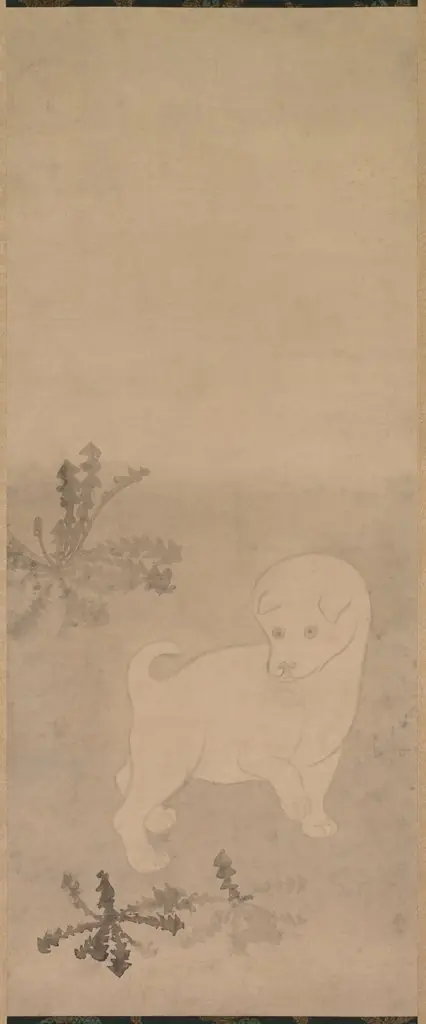 Puppy with Dandelions
 Crossing at Sano