Artwork
Nascimento de São João Baptista
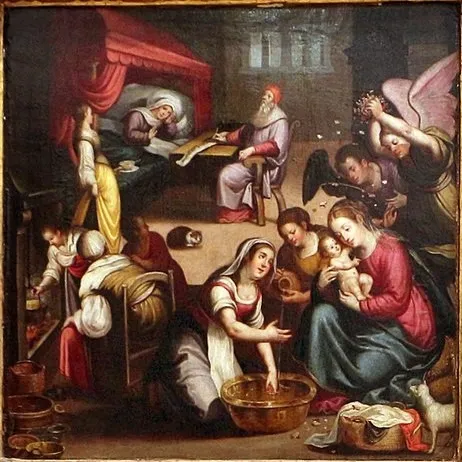
Nascimento de São João Baptista is an unspecified painting by the Mannerist artist Simão Rodrigues. It dates from 1596 and is held in the collection of the National Museum of Ancient Art.
About this work
Overview
The composition centers on a domestic moment of ritual and care, rendered with restrained color and careful attention to spatial depth.
Painted in 1596 by Simão Rodrigues, this work portrays the birth of John the Baptist, a subject drawn from the Gospel of Luke. Executed in oil on panel, it is part of the collection at the National Museum of Ancient Art in Lisbon. The composition centers on a domestic moment of ritual and care, rendered with restrained color and careful attention to spatial depth. Its quiet intensity reflects the devotional tone common in late 16th-century Portuguese religious art.
Subject & Meaning
The scene captures the immediate aftermath of John’s birth, with a woman in red cradling the infant while another washes his feet—a gesture symbolizing purification and humility. Surrounding figures, some seated in quiet observation, suggest a community witnessing a sacred event. The inclusion of everyday actions elevates the divine into the realm of domestic life, reinforcing the belief that holiness manifests in ordinary acts.
Technique & Style
Rodrigues employs a muted palette dominated by earth tones—ochres, browns, and deep reds—enhancing the painting’s somber, introspective mood. Forms are rendered with soft modeling and minimal contrast, avoiding dramatic lighting in favor of even, ambient illumination. The background’s dark wall, pierced by a single architectural opening, creates a sense of intimacy, focusing attention on the central figures without distraction.
History & Provenance
The painting has remained in Portugal since its creation, likely commissioned for a private chapel or religious institution. It entered the National Museum of Ancient Art’s collection in the 19th century during a broader effort to preserve and catalog national artistic heritage. Its continuous presence in Portuguese collections underscores its recognition as a significant example of late Renaissance religious painting in the region.
Context
Created during the Counter-Reformation, the work aligns with Church efforts to emphasize biblical narratives through accessible, emotionally grounded imagery. Portuguese art of this period often blended Northern European attention to detail with Iberian solemnity. Rodrigues, though less documented than contemporaries, contributed to a local tradition that prioritized quiet devotion over theatricality, reflecting broader spiritual values of the time.
Legacy
While Simão Rodrigues did not achieve widespread fame, this painting remains a key reference for understanding regional religious art in late 16th-century Portugal. Its restrained composition and emphasis on domestic sanctity influenced later devotional works in the country. Today, it is studied for its subtle narrative economy and its role in shaping a uniquely Portuguese visual language of piety.
Artist & collection

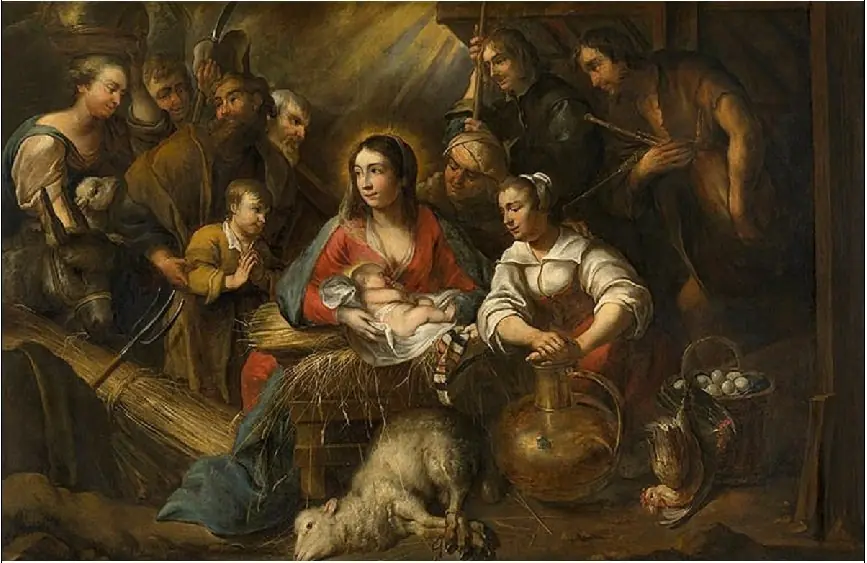 The Adoration of the Shepherds
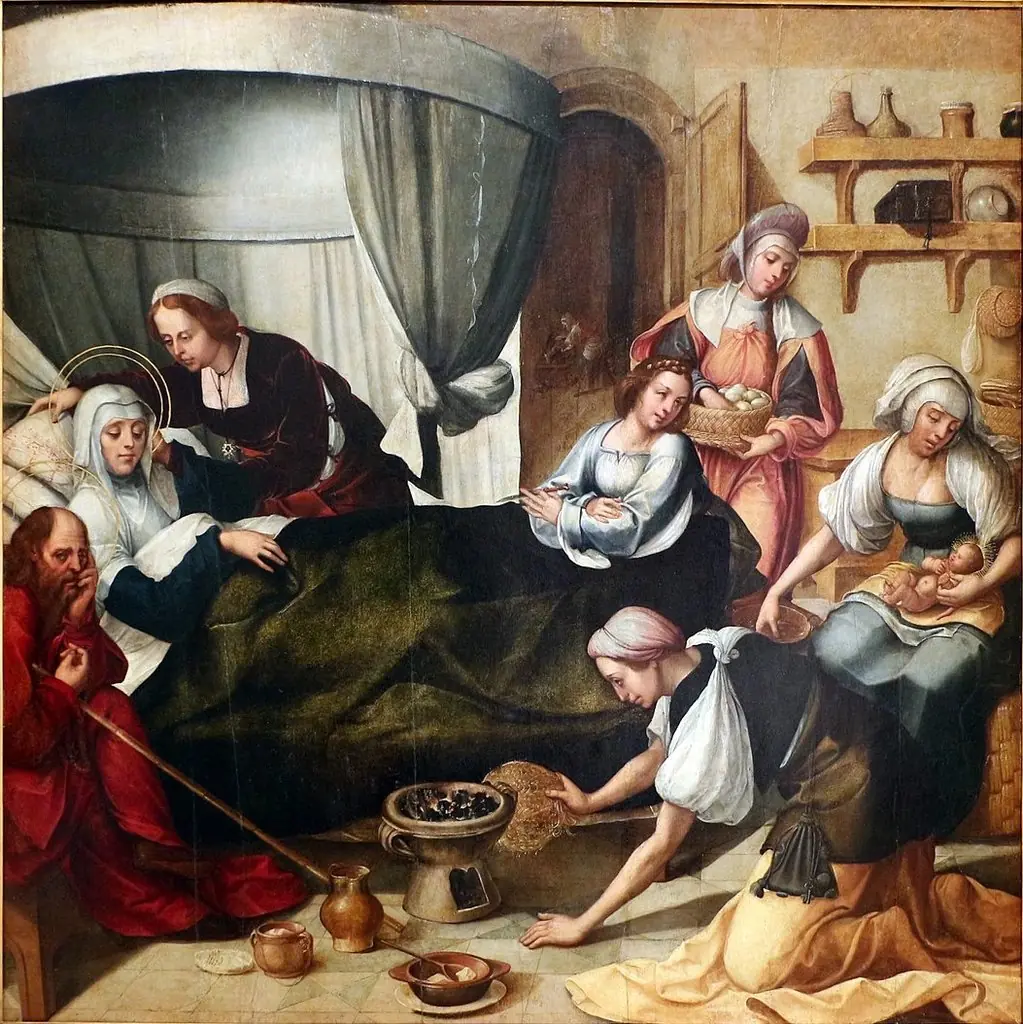 Birth of the Virgin Mary
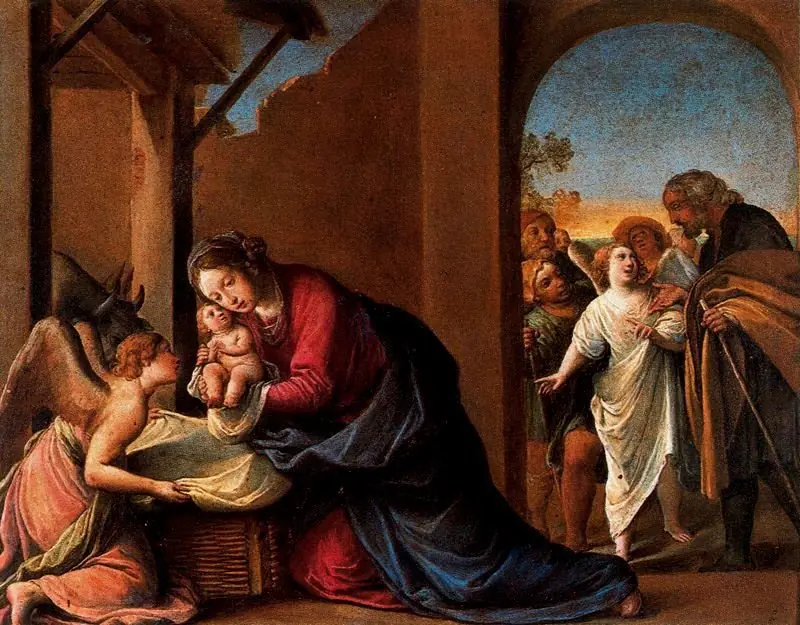 Nativity
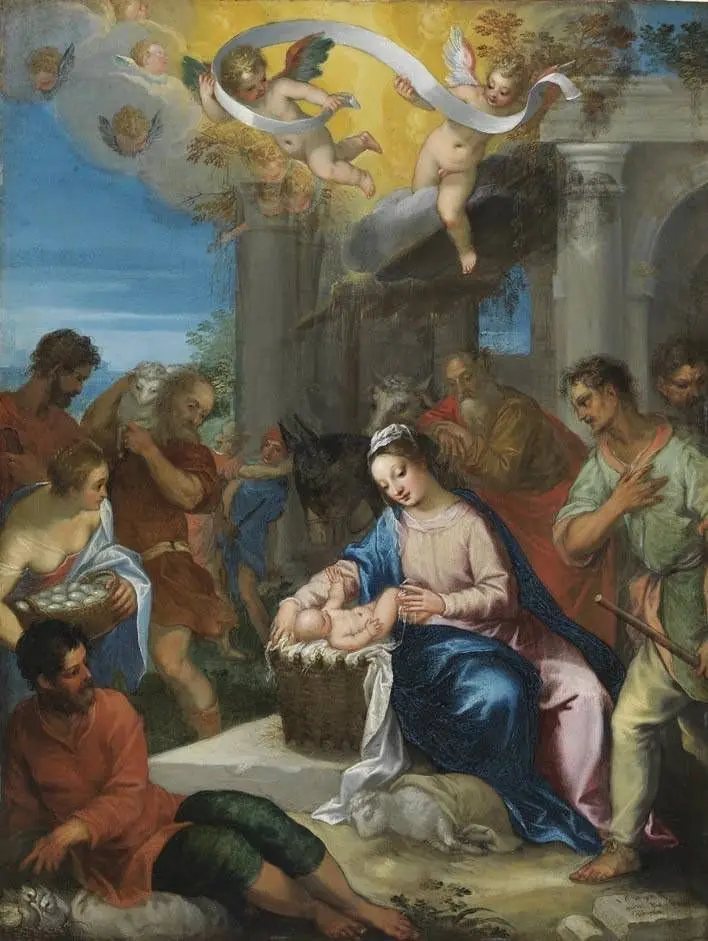 Anbetung der Hirten
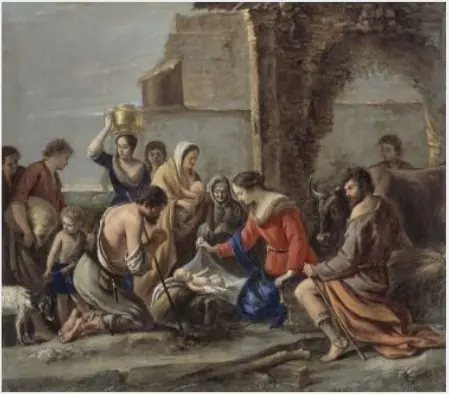 The Adoration of the Shepherds
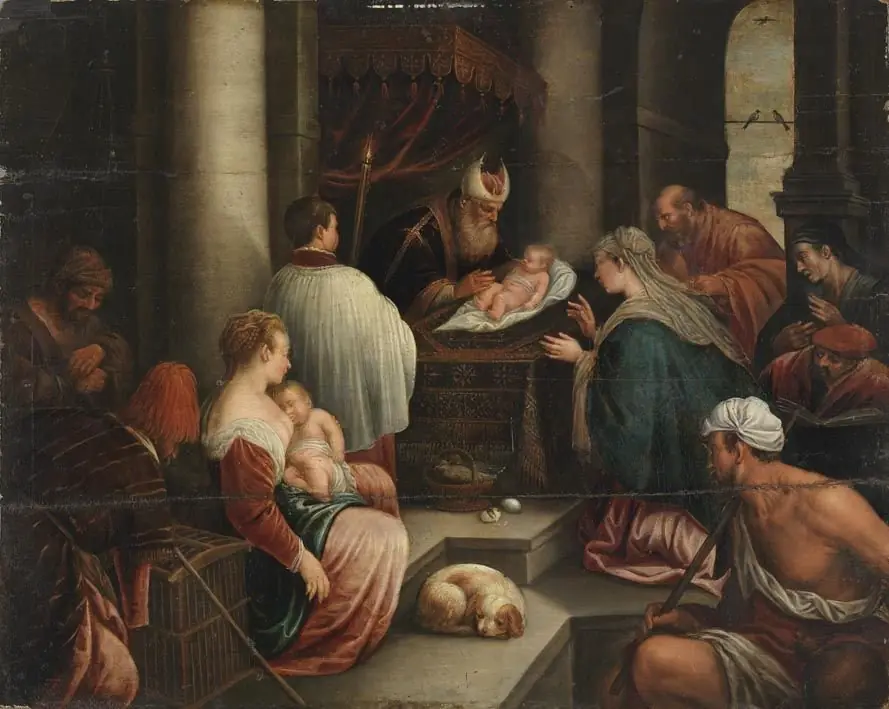 The presentation of Christ in the temple
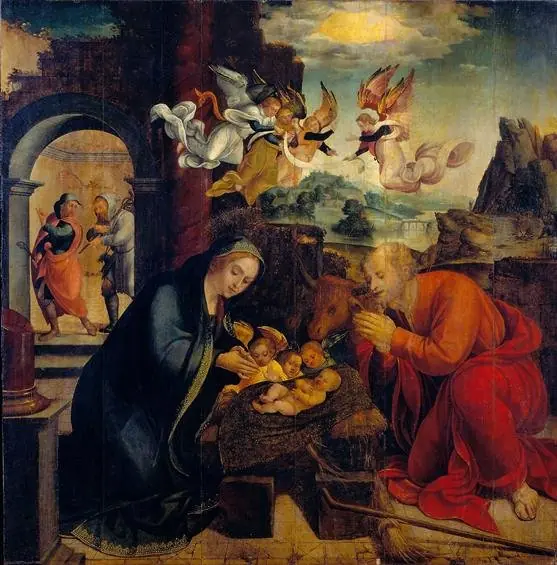 Natividade
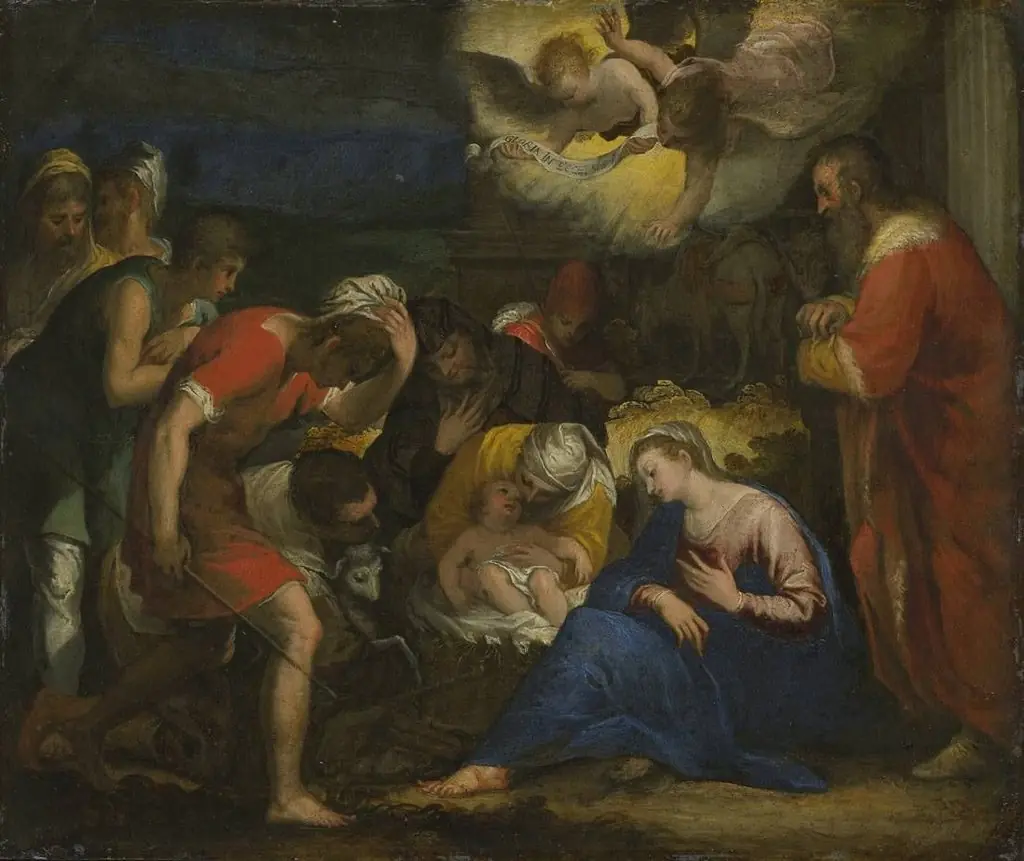 Die Anbetung der Hirten
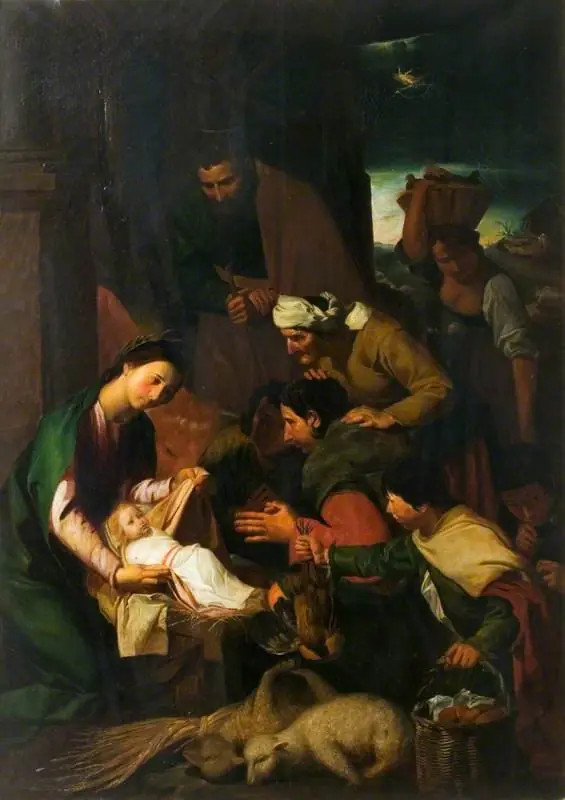 The Adoration of the Shepherds (after Diego Velázquez)
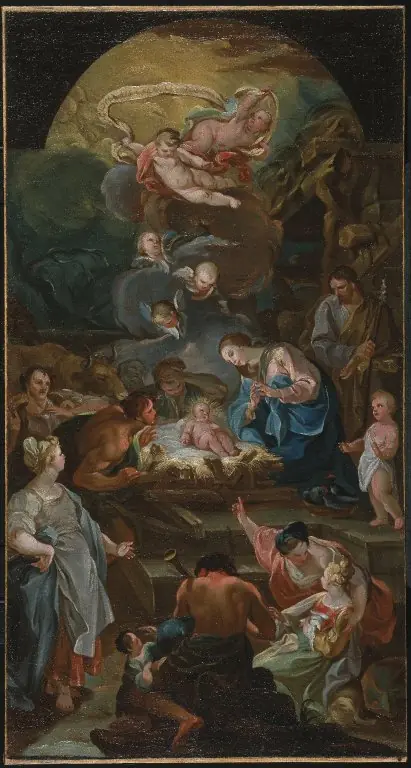 The Adoration of the Shepherds
 Adoração dos Pastores e dos Magos
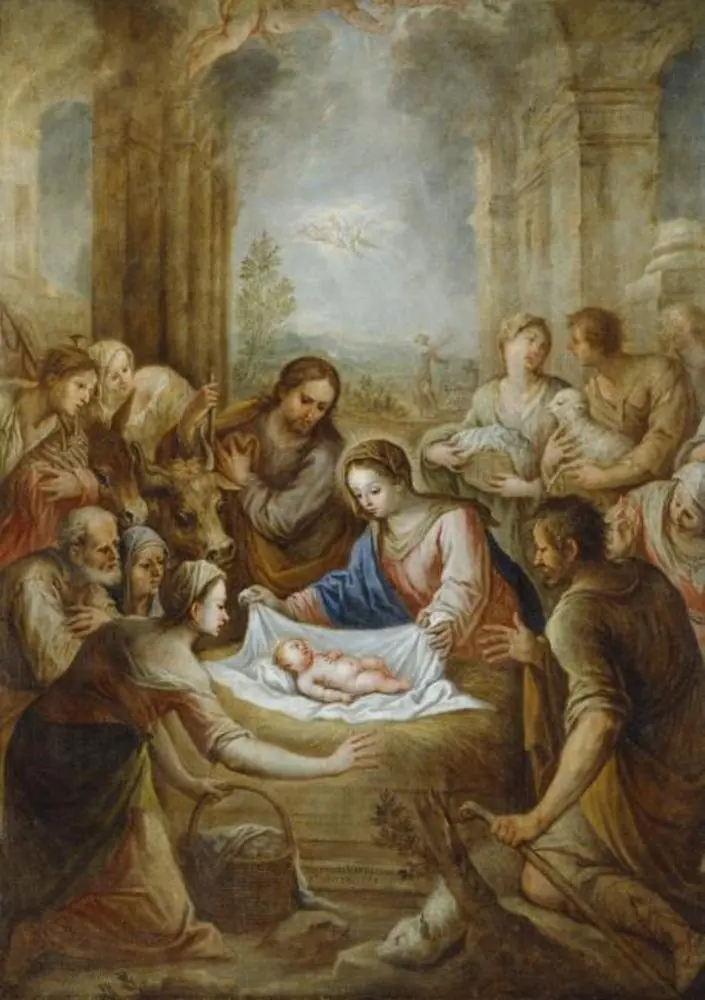 The Adoration of the Shepherds