Artwork
Saint John the Baptist before Herod Antipas and Herodias
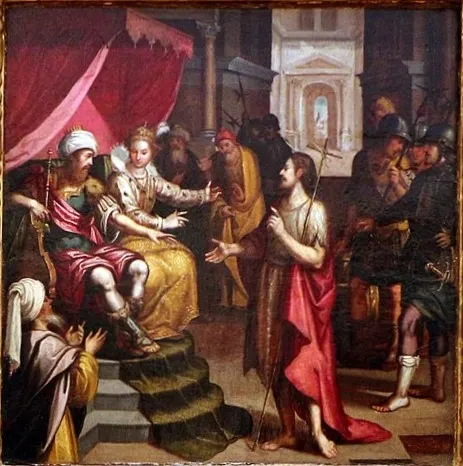
Saint John the Baptist before Herod Antipas and Herodias is an unspecified painting by the Mannerist artist Simão Rodrigues. It dates from 1596 and is held in the collection of the National Museum of Ancient Art.
About this work
Overview
Painted in 1596 by Simão Rodrigues, this work portrays the biblical moment when John the Baptist stands before Herod Antipas and Herodias.
Painted in 1596 by Simão Rodrigues, this work portrays the biblical moment when John the Baptist stands before Herod Antipas and Herodias. Executed in oil on panel, it is part of the collection at the National Museum of Ancient Art in Lisbon. The composition centers on a tense confrontation between the prophetic figure and the ruling elite, rendered with attention to spatial depth and symbolic contrast.
Subject & Meaning
The scene captures John the Baptist’s moral rebuke of Herod’s union with Herodias, his brother’s former wife, as recounted in the Gospels. His upright posture and direct gaze convey moral authority, while Herod and Herodias, seated in regal attire, appear passive yet uneasy. The painting underscores the conflict between spiritual conviction and worldly power, a common theme in Counter-Reformation religious art.
Technique & Style
Rodrigues employs rich, saturated pigments to distinguish the figures: John’s plain red robe contrasts with the elaborate silks and gold embroidery of the court. The grand hall is suggested through architectural elements and a crimson canopy, while the background crowd adds narrative scale. Brushwork is precise but not overly detailed, favoring clarity and emotional resonance over ornamental flourish.
History & Provenance
The painting entered the collection of the National Museum of Ancient Art in the 19th century, likely from a Portuguese religious institution. Its date and attribution to Simão Rodrigues are supported by stylistic comparisons with other documented works from his Lisbon workshop. No earlier records of its commission or ownership have been identified, though its quality suggests patronage by a wealthy ecclesiastical or noble source.
Context
Created during the height of Portugal’s Counter-Reformation, the painting reflects the Church’s emphasis on moral clarity and biblical authority. Scenes of John the Baptist were popular in devotional art for their themes of repentance and divine judgment. Rodrigues, active in Lisbon, worked within a tradition that blended Northern European detail with Iberian solemnity, catering to both liturgical and aristocratic tastes.
Legacy
Though not widely known outside Portugal, the painting remains a significant example of late 16th-century Portuguese religious art. It preserves the visual language of moral confrontation favored by Catholic reformers and offers insight into how biblical narratives were adapted for local audiences. Its preservation in a national collection ensures continued scholarly access and contextual study.
Artist & collection

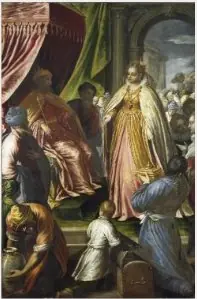 The Visit of the Queen of Sheba to Solomon
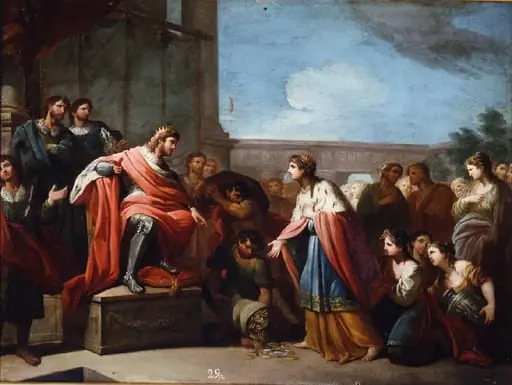 La Emperatriz Marta de Constantinopla ante Alfonso X el Sabio. óleo sobre lienzo
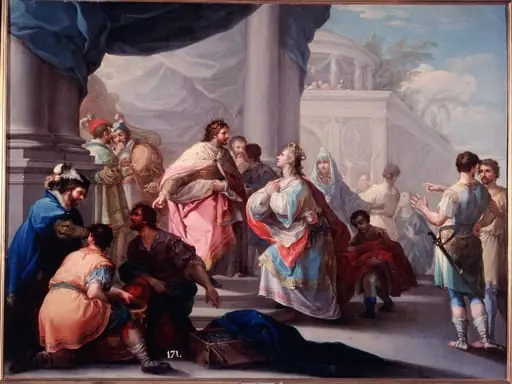 The Empress Marta de Constantinople before Alfonso X. Ramón Bayeu and Subías
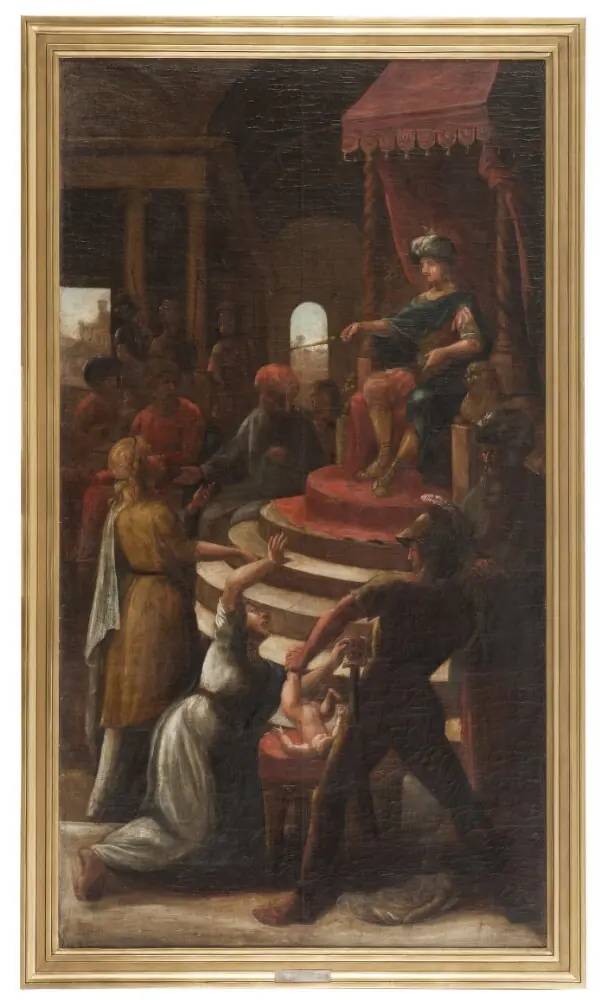 Salomos dom
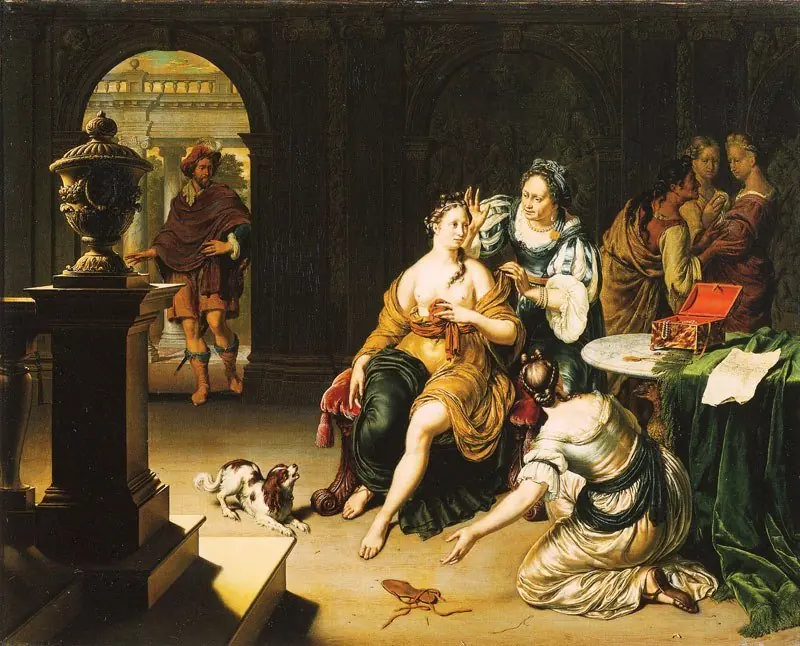 Preciosa
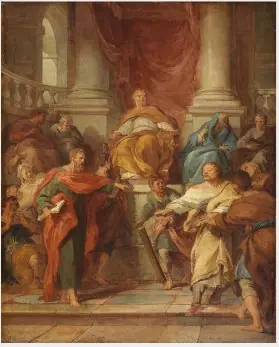 Elymas the Sorcerer Struck with Blindness, sketch
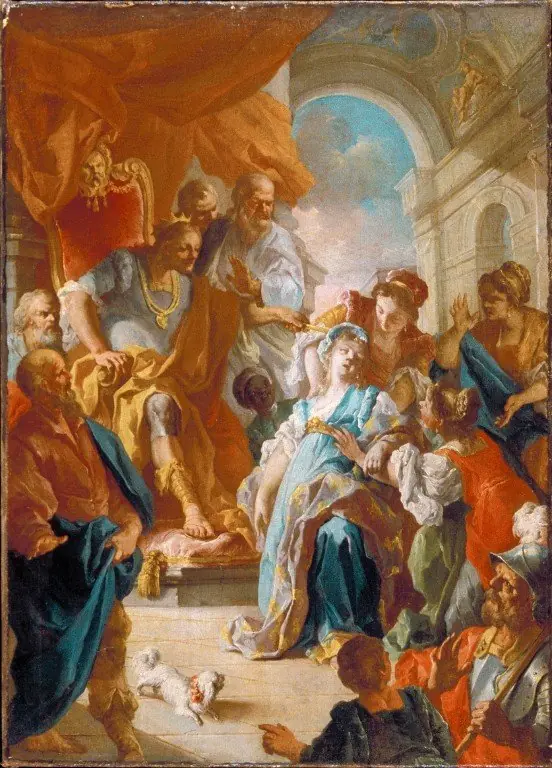 Esther Before Ahasuerus
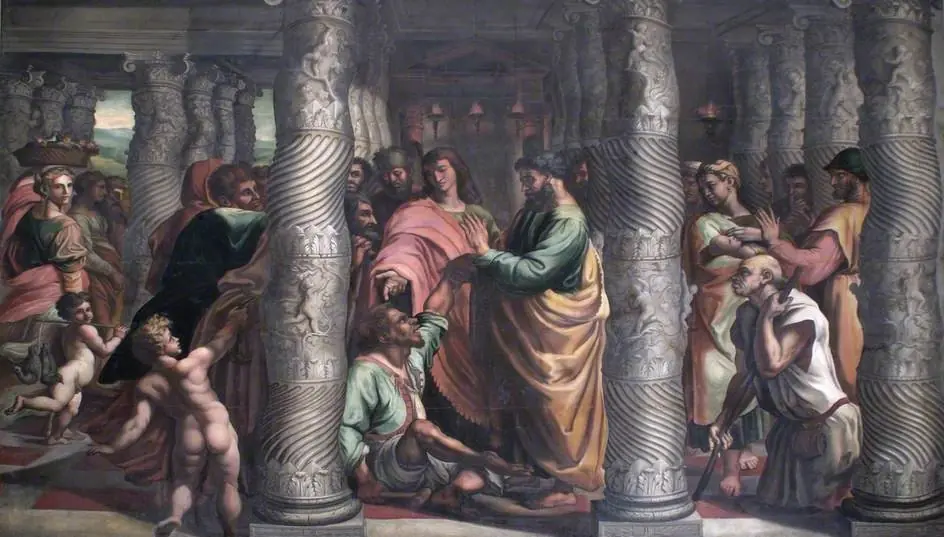 Sts Peter and John at the beautiful Gate
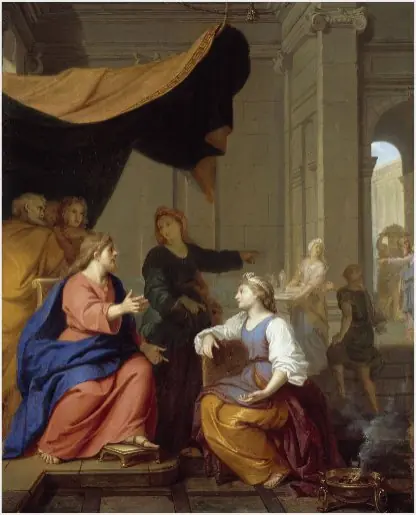 Christ in the House of Martha and Mary
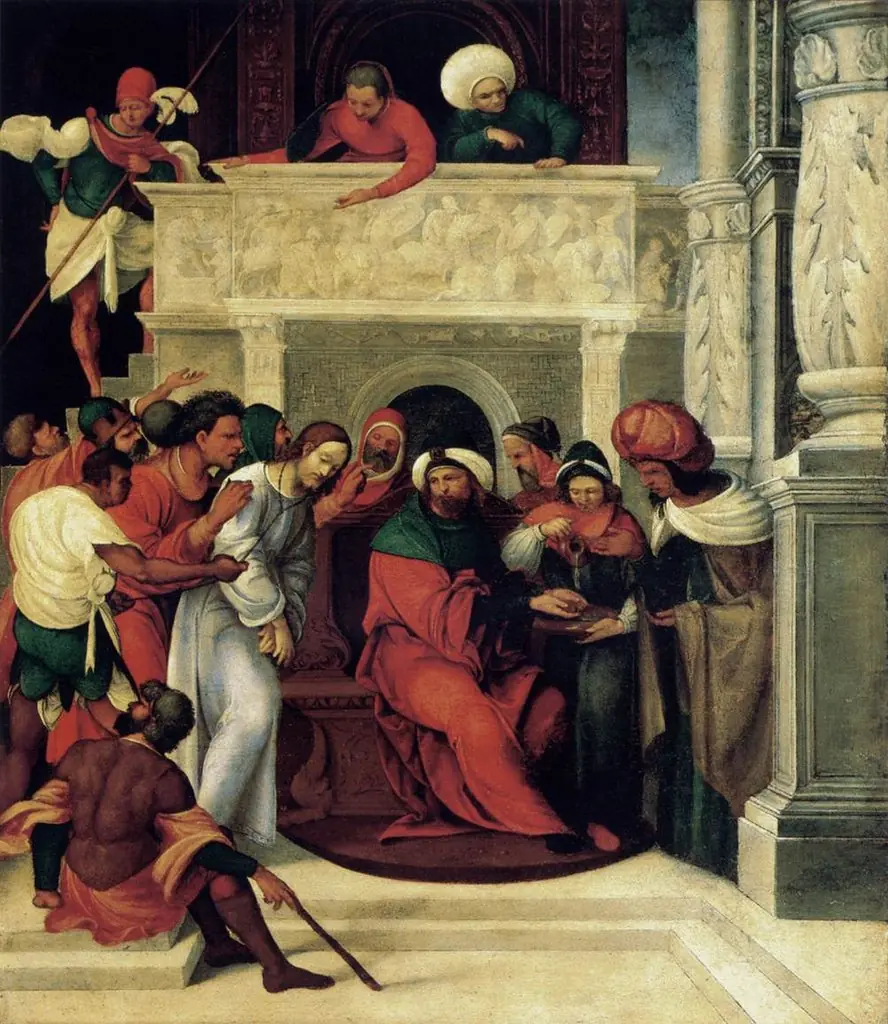 Christ before Pilate
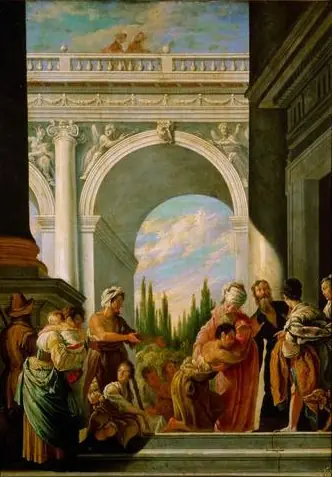 Gleichnis vom verlorenen Sohn
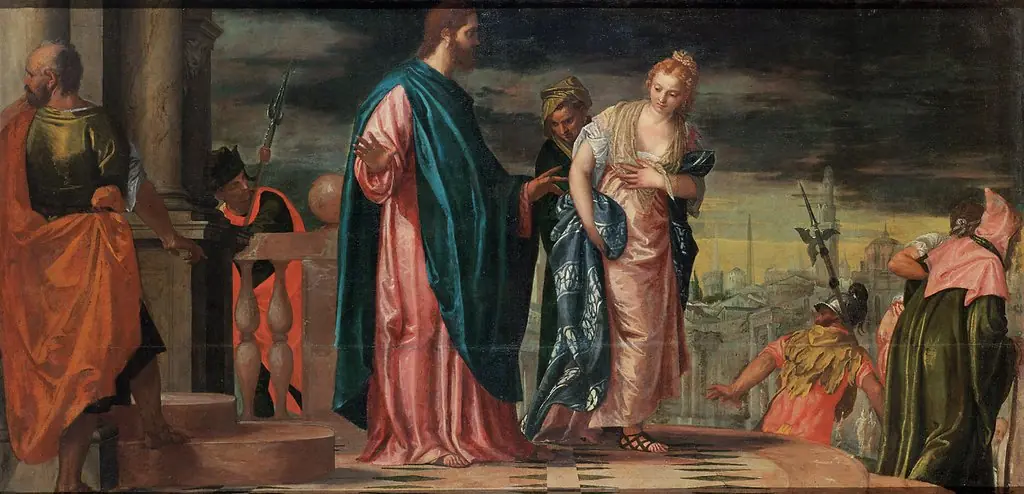 Christ and the Adulteress