Artwork
Buddhist Masonry, Jellalabad Valley
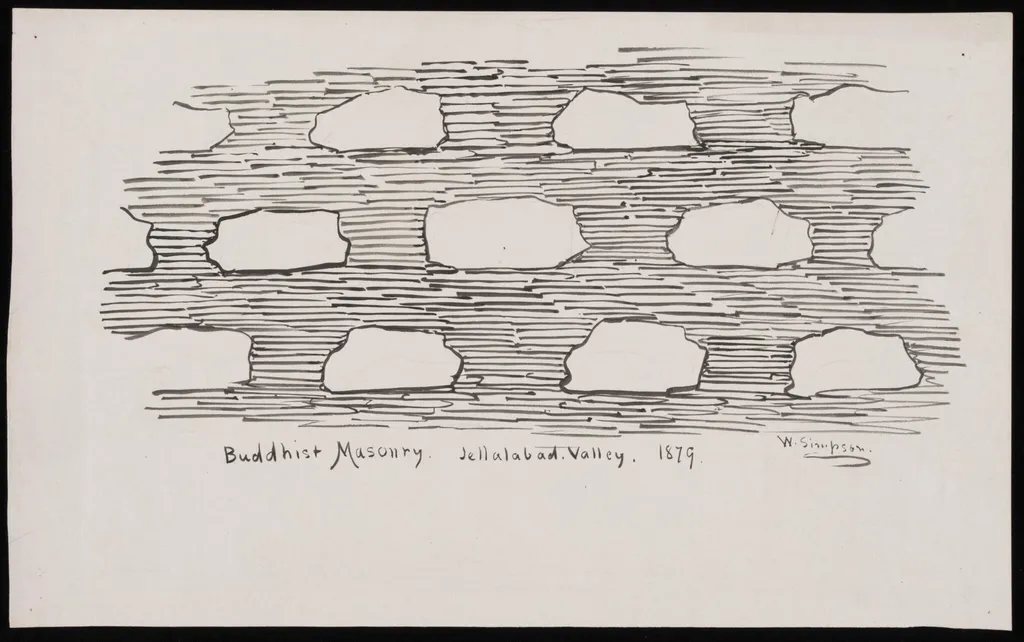
Buddhist Masonry, Jellalabad Valley is a drawing by the Impressionist artist William R.I. F.R.G.S. Simpson. It dates from 1879 and is held in the collection of the Victoria and Albert Museum.
About this work
This drawing shows rows of smooth, rounded shapes stacked like blocks, all outlined with fine, crisscrossed lines.
This drawing shows rows of smooth, rounded shapes stacked like blocks, all outlined with fine, crisscrossed lines. The background is mostly empty, with just a few faint marks to suggest texture. The whole thing looks like it’s made with quick, precise strokes—no shading, just lines on white paper.
The title says it’s Buddhist masonry from the Jellalabad Valley, drawn in 1879. The artist used a technique where lines overlap to create shadows and depth without color.
If you like this style, check out cross-hatching.
Overview
Buddhist Masonry, Jellalabad Valley is a drawing created by William R.I. F.R.G.S. Simpson in 1879, held at the Victoria and Albert Museum.
Technique & Style
The drawing features rows of rounded shapes outlined with fine, crisscrossed lines, achieved through a technique where overlapping lines create shadows and depth without color. The artist's use of quick, precise strokes and lack of shading emphasizes the linear quality of the work.
Subject & Meaning
The title suggests the drawing depicts Buddhist masonry from the Jellalabad Valley, implying a representation of architectural or archaeological elements associated with Buddhist sites in the region.
Artist & collection
Artist
William Simpson drew travel scenes in watercolor and pencil during the 1800s. He sketched A Doorway in Cairo in 1884, showing arched doorways and sunlight on stone. His 1855 Sebastopol: View from the Victoria Redoubt…

 Cintra
 The Court of the Lions, Alhambra
 Milianah Algeria
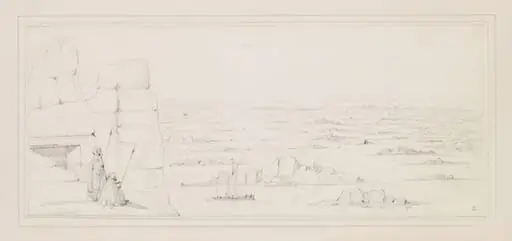 Cataracts of Nubia - Looking North
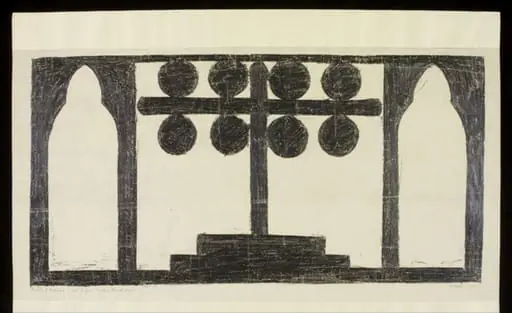 Sculptured ornament
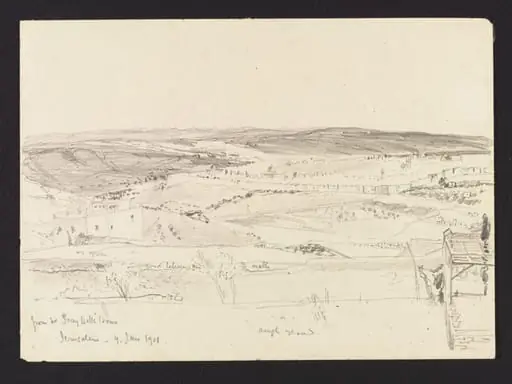 From Mr Gray Hill's House, Jerusalem
 Untitled
 Landscapes in Various Styles after Old Masters
 明 卞文瑜 谿山秋靄圖 卷|Streams and Mountains in Autumn Mist
 Untitled
 The main entrance to the A-Ma Temple, Macau
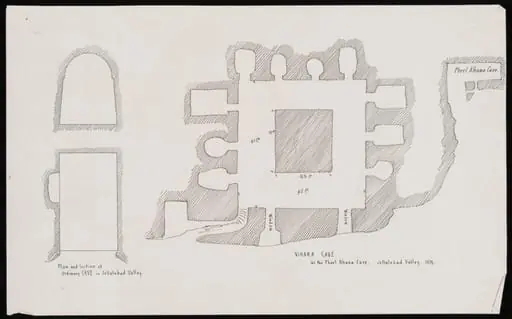 Vihara Cave at the Pheel Khana Cave, Jellalabad Valley