Artwork
The Court of the Lions, Alhambra
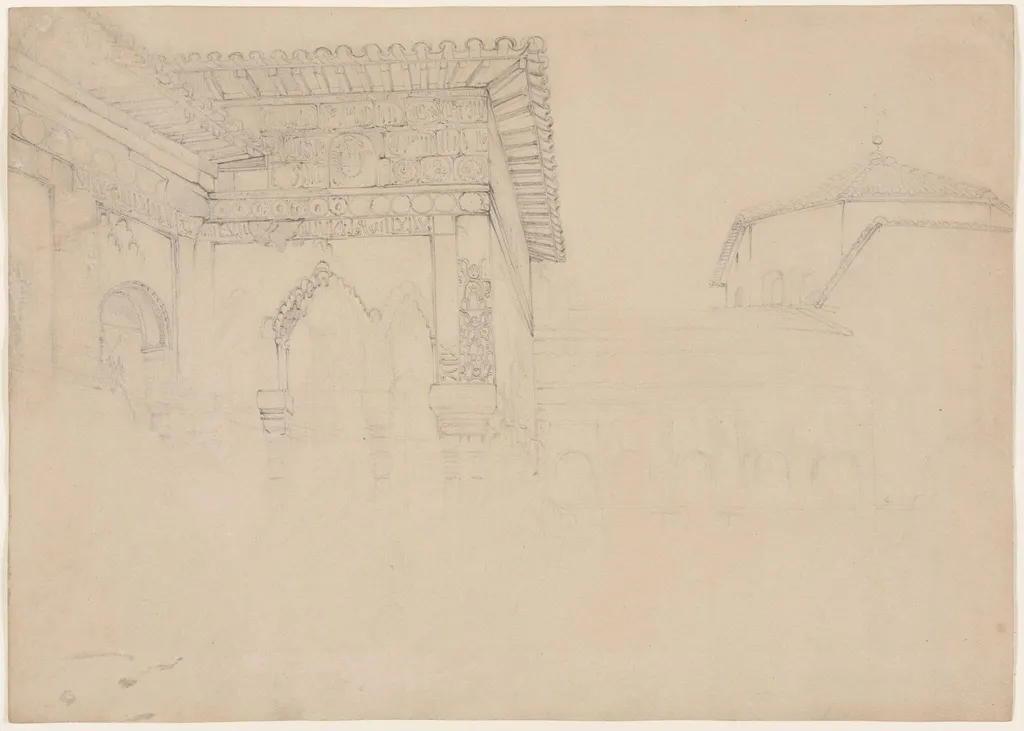
The Court of the Lions, Alhambra is a drawing by the Romanticist artist John Lewis. It dates from 1832 and is held in the collection of the Victoria and Albert Museum.
About this work
The Court of the Lions, Alhambra is a drawing by John Lewis.
It was created in 1832.
The drawing is part of a series Lewis made while living in Spain, where he was inspired by the local architecture and culture.
He produced many drawings and watercolours of Spanish life during this time.
You can learn more about this style by looking at Romanticism.
Overview
John Lewis created this drawing in 1832 during a stay in Spain, where he documented architectural sites with careful observation. It is one of several preliminary studies made before producing lithographs of the Alhambra. The work belongs to a broader series capturing Spanish monuments and daily life, reflecting Lewis’s interest in recording cultural heritage through direct sketching.
Subject & Meaning
Known for its slender columns and intricate stonework, the space symbolized the sophistication of Nasrid-era Islamic design.
The drawing depicts the Court of the Lions, a central courtyard in the Alhambra palace complex in Granada. Known for its slender columns and intricate stonework, the space symbolized the sophistication of Nasrid-era Islamic design. Lewis’s focus on its architecture suggests an interest in preserving structural detail rather than romanticizing the site, aligning with scholarly documentation of the period.
Technique & Style
Executed in pencil or ink, the drawing employs precise linear rendering to capture the arcade’s rhythm and the play of light on carved surfaces. While Lewis later used watercolor and lithography for finished works, this study prioritizes clarity and structural accuracy over decorative effect. Its restrained palette and attention to proportion reflect a topographical approach common among 19th-century travelers documenting architecture.
History & Provenance
The drawing originated as part of Lewis’s fieldwork during his year-long residence in Spain (1832–1833). Several preliminary sketches from this period survive, held in institutional collections. This particular sheet was likely used to inform his published lithographs of the Alhambra, which appeared shortly after his return to England, contributing to European awareness of Islamic architectural forms.
Context
Lewis’s work emerged during a wave of European interest in Islamic art, fueled by travel and colonial expansion. Romanticism influenced his choice of subject, but his method remained observational rather than idealized. His drawings contributed to a growing body of visual records that helped shift perceptions of Islamic architecture from exotic curiosity to respected historical heritage.
Legacy
Lewis’s Alhambra studies provided reference material for later architects and scholars interested in Moorish design. Though less celebrated than his lithographs, these drawings remain valuable as firsthand records of the site’s condition in the early 1830s. They represent an early effort to systematically document Islamic monuments in Spain, influencing subsequent archaeological and artistic engagement with the Alhambra.
Artist & collection

Artist
John Robert Lewis was an American civil rights activist and statesman who served in the United States House of Representatives for Georgia's 5th congressional district from 1987 until his death in 2020.


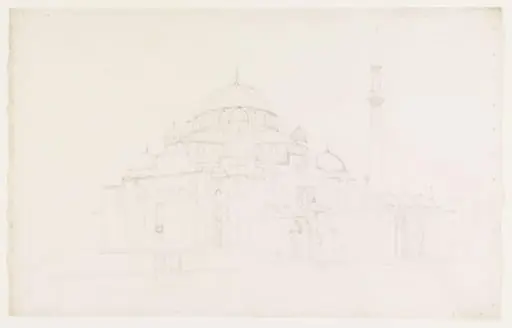 Sehzade Camii, Constantinople
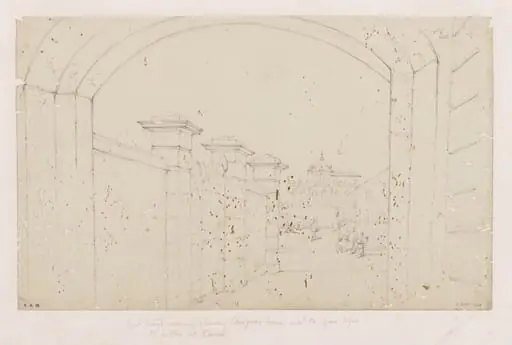 Chungqua's premises seen from the portico of the East India Company's 'factory' at Guangzhou (Canton)
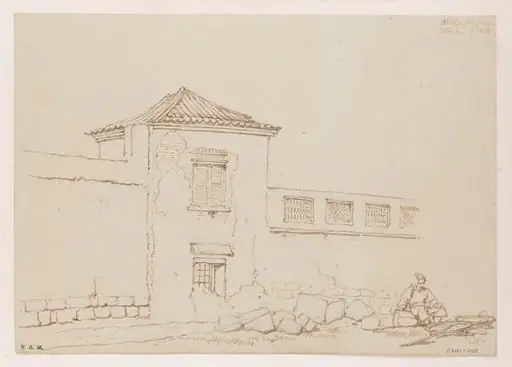 A building in Macau
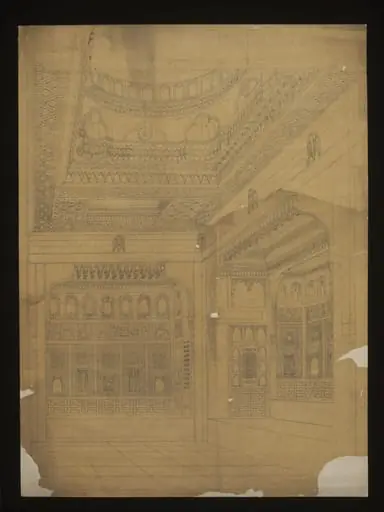 Drawing of the House of Sheik Sadat, Cairo
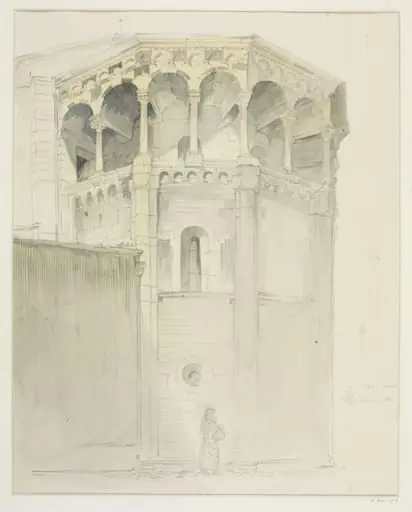 Architectural drawing
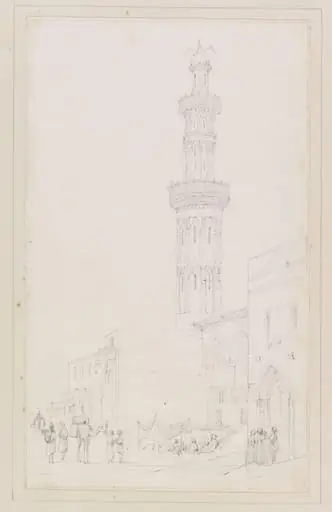 Minaret of the Mosque of Ali al-Amri
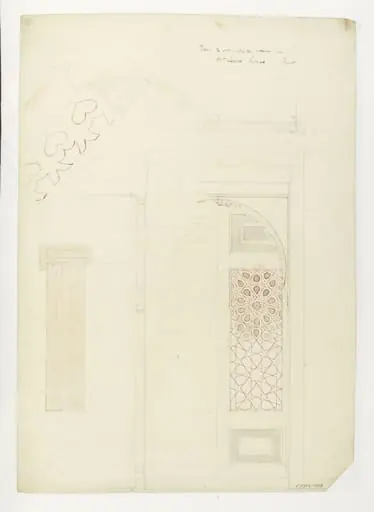 Drawing of a door, John Frederick Lewis house in Cairo
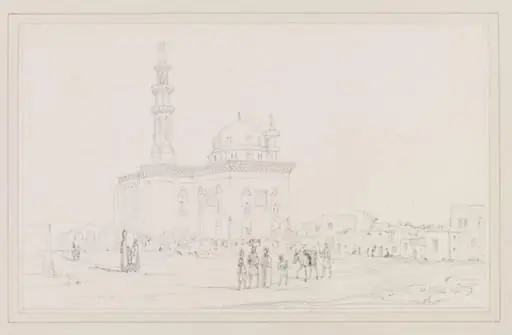 Exterior of the Mosque Sultan Hassan, Cairo
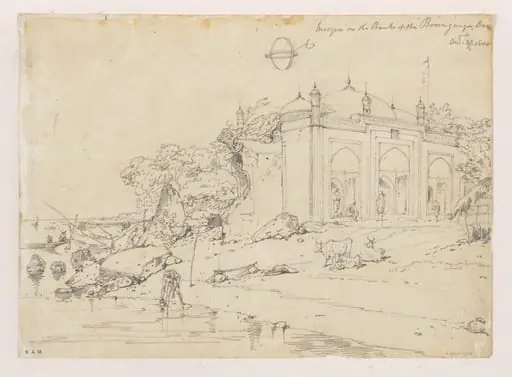 A mosque on the banks of the Buriganga River, Dhaka, Bangladesh
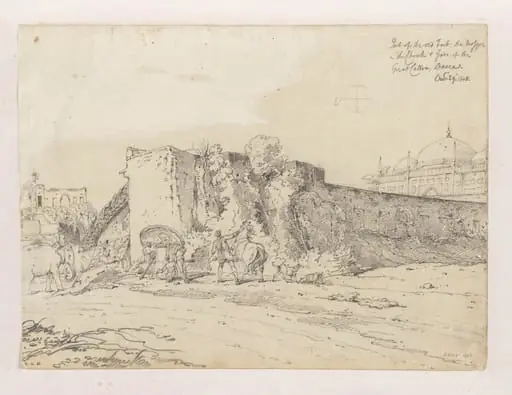 Part of the old fort: the mosque in the chowk and gate of the Great Katra, Dhaka (Dacca)
 Classical Buildings above a Wall