Artwork
Bivouac of Russian Soldiers
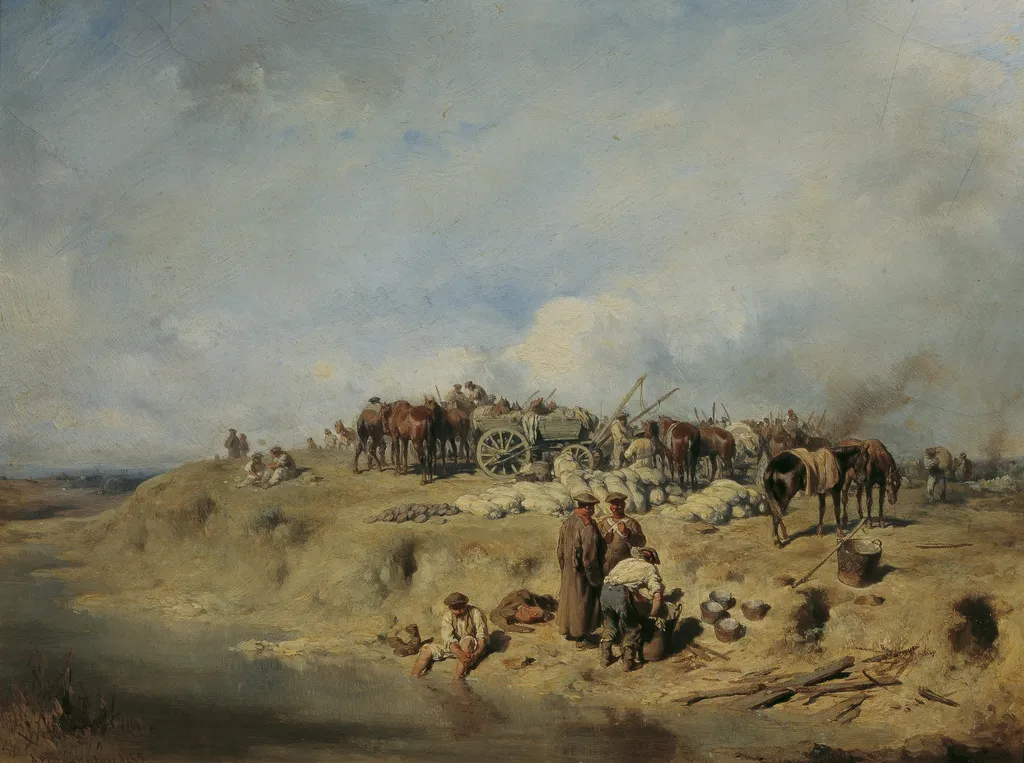
Bivouac of Russian Soldiers is an unspecified painting by August von Pettenkofen. It dates from 1852 and is held in the collection of the Kunsthistorisches Museum.
About this work
Overview
Painted in 1852 by August von Pettenkofen, this work depicts a quiet moment among Russian troops resting in a forested landscape.
Painted in 1852 by August von Pettenkofen, this work depicts a quiet moment among Russian troops resting in a forested landscape. The scene captures soldiers gathered near a campfire, their forms illuminated by its glow against the surrounding darkness. Executed in oil, the painting reflects Pettenkofen’s interest in military life and naturalistic observation, and it remains part of the Kunsthistorisches Museum’s collection in Vienna.
Subject & Meaning
The painting portrays Russian soldiers in a moment of repose, not in battle but in the stillness of night. Their postures suggest fatigue and camaraderie, emphasizing the human side of military service. The absence of narrative action shifts focus to atmosphere and shared endurance, inviting contemplation of the quiet resilience found in temporary refuge amid hardship.
Technique & Style
Pettenkofen employs bold, textured brushwork to convey the flickering light of the fire and the dense, shadowed woods. Warm hues of amber and orange contrast with cool blues and greens of the night, creating depth and emotional tone. The composition is tightly focused, drawing attention to the soldiers’ faces and gestures, while loose handling in the background enhances the sense of encroaching darkness.
History & Provenance
Completed in 1852, the painting entered the collection of the Kunsthistorisches Museum in Vienna, where it has remained since. Pettenkofen, an Austrian artist known for military and equestrian subjects, likely drew on contemporary reports or sketches from the region, though no record confirms direct observation of Russian troops. Its acquisition reflects 19th-century European interest in Eastern European military life.
Context
Created during a period of heightened European awareness of Russian military presence, the painting aligns with a broader trend of genre scenes depicting soldiers in everyday settings. Unlike heroic battle paintings, this work avoids glorification, instead offering a grounded view of military routine. It reflects the Romantic era’s fascination with mood, nature, and the dignity of ordinary moments.
Legacy
Though not widely exhibited outside Austria, the painting contributes to Pettenkofen’s reputation as a chronicler of military life with psychological nuance. It stands as an example of how 19th-century artists moved beyond grand narratives to capture the quiet humanity of soldiers, influencing later realist depictions of war and rest in European art.
Own this work as a print
Artist & collection

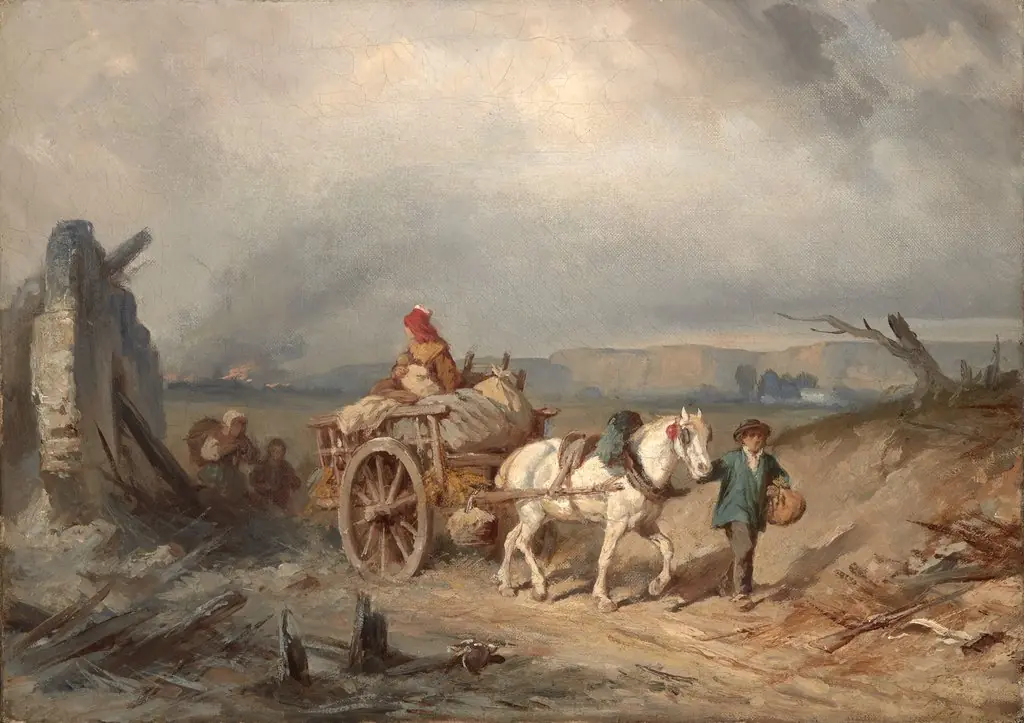 Escape
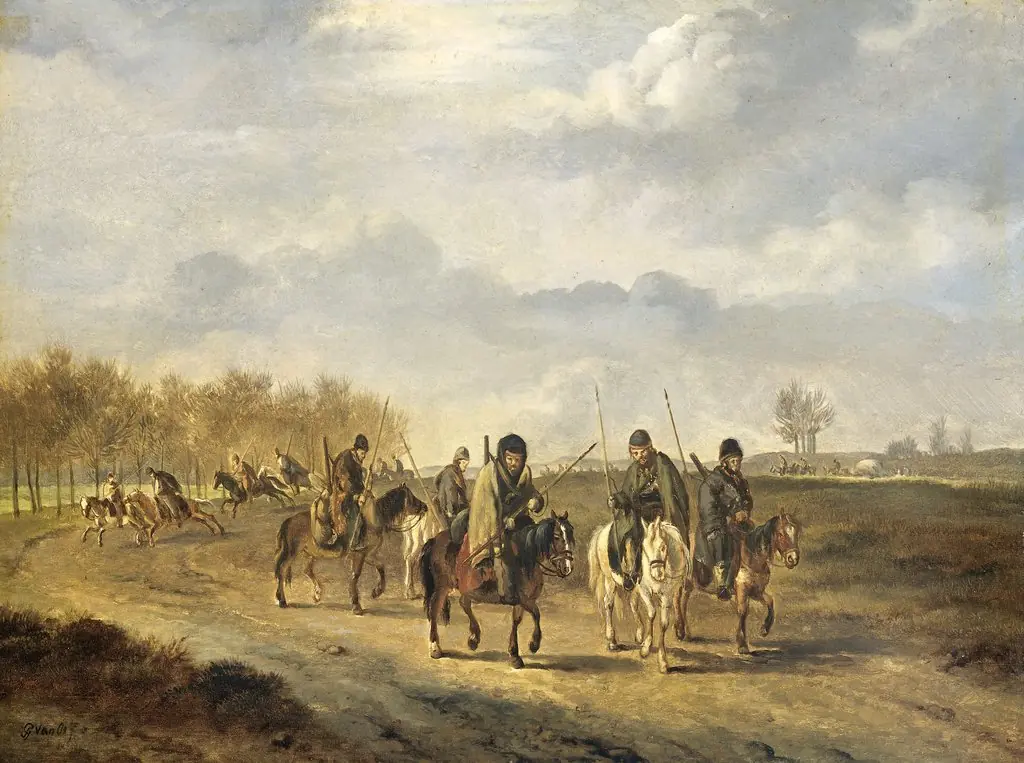 Cossacks on a country Road near Bergen in North Holland, 1813
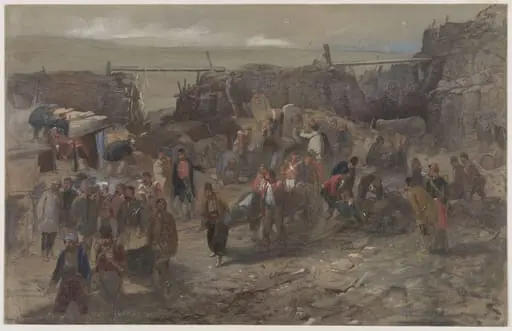 Interior of the Redan Battery after the Fall of Sebastopol, 1855
 Landscape With Figures
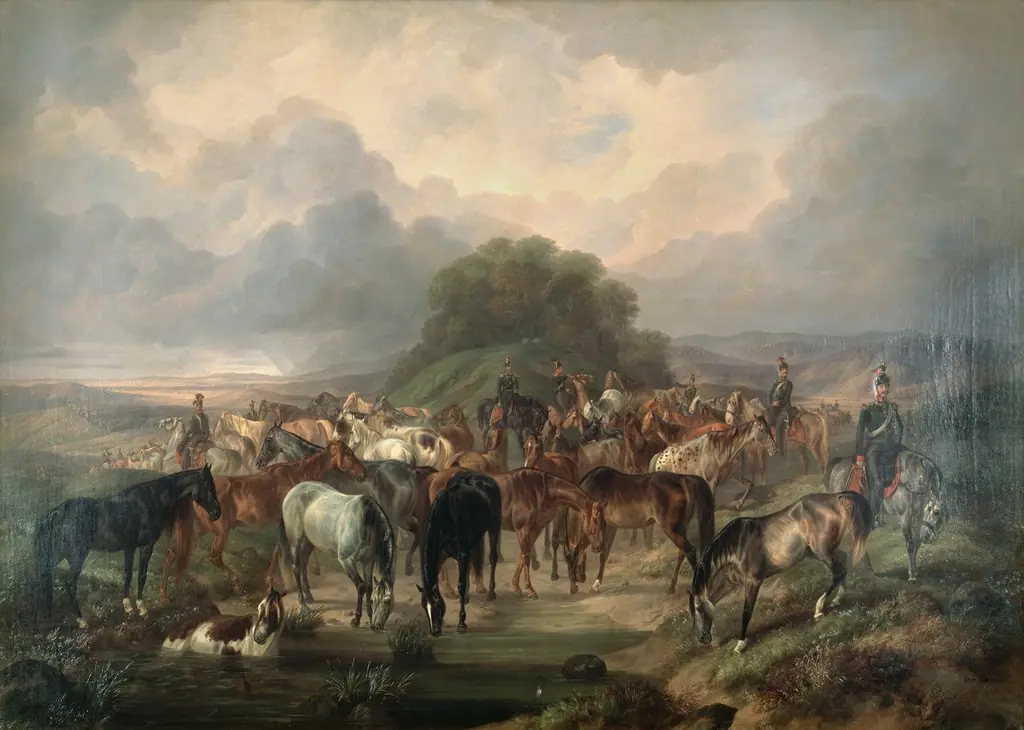 Von Ulanen geführter Transport
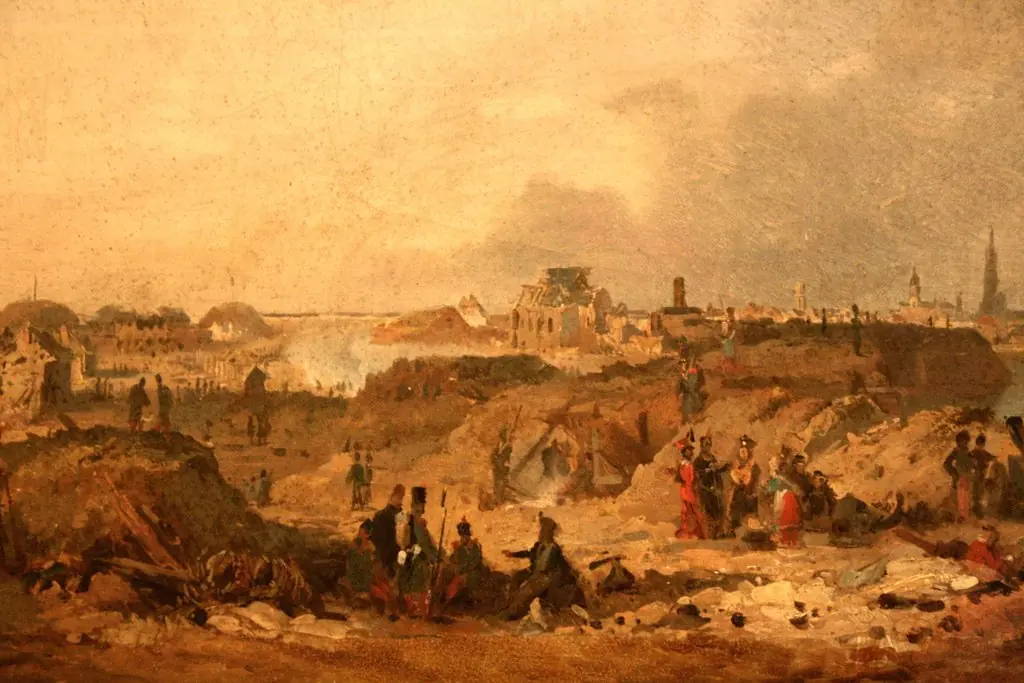 Sight of the citadelle of Antwerp after the bombardement of 1832
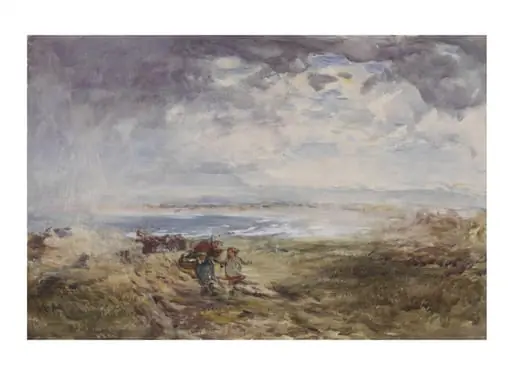 On the Scottish Shore, Coast Scene with Figures
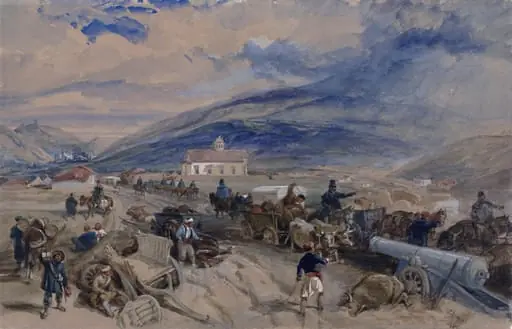 Commissariat Difficulties: scene during the Crimean War, 1854-1856
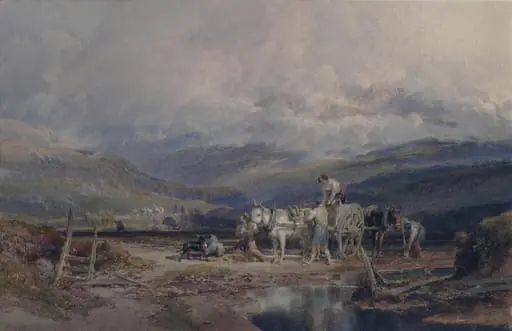 The Peat Cutters
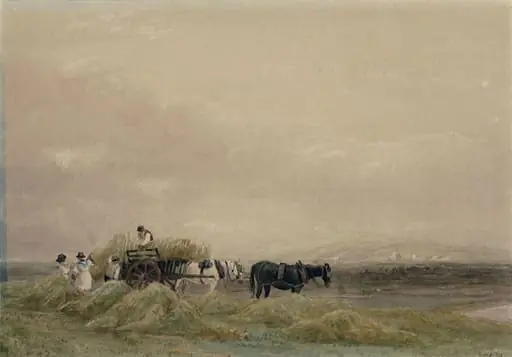 Hay Field
 Branch Hill Pond, Hampstead
 The Broken Plough