Artwork
Țărani la cosit (amiază)
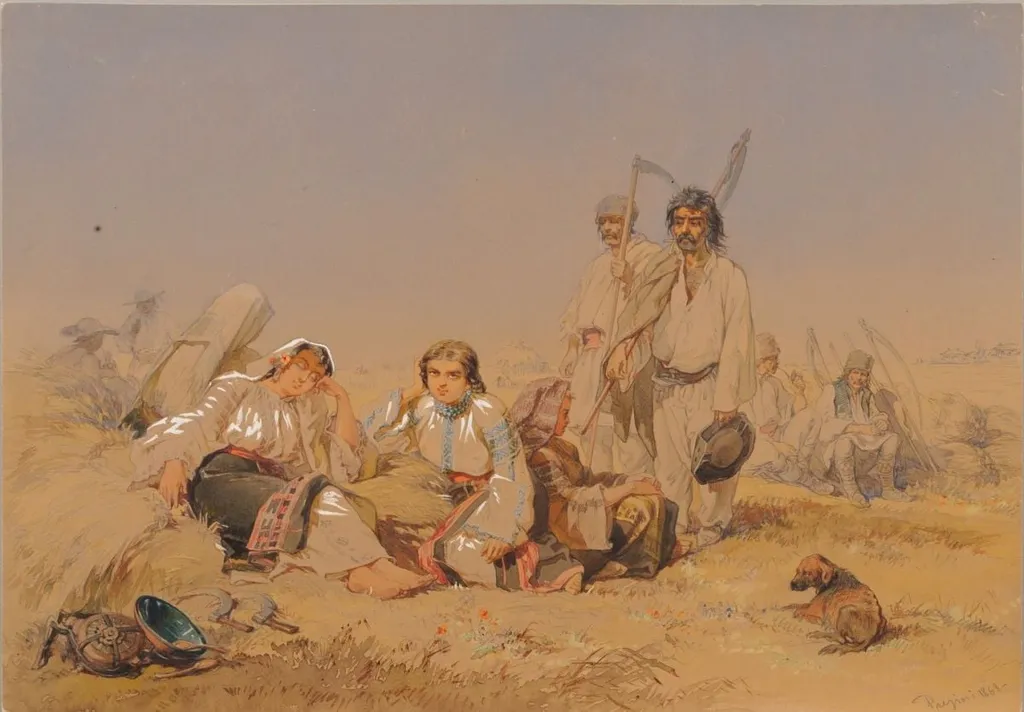
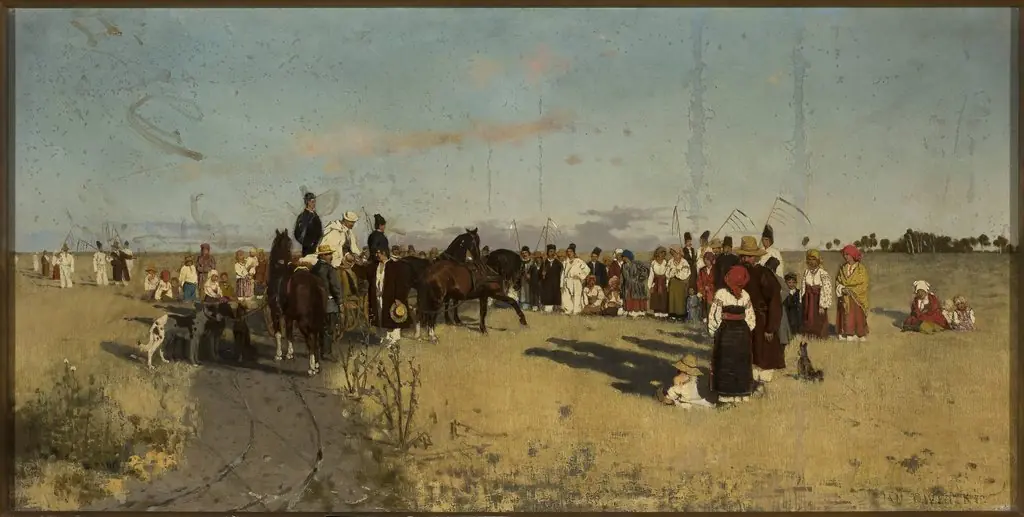
Țărani la cosit (amiază) is a print by the Impressionist artist Amedeo Preziosi. It dates from 1868 and is held in the collection of the National Museum of Art of Romania.
About this work
Overview
Painted in 1868 by Amedeo Preziosi, Țărani la cosit (amiază) depicts a midday scene of rural laborers engaged in hay harvesting.
Painted in 1868 by Amedeo Preziosi, Țărani la cosit (amiază) depicts a midday scene of rural laborers engaged in hay harvesting. The composition centers on a group of figures in traditional dress, scattered across a field under an open sky. Preziosi, an artist of Maltese-Italian descent active in the Balkans, rendered this moment with attention to the rhythms of peasant life, avoiding idealization in favor of observed detail.
Subject & Meaning
The painting portrays peasants at work during the height of day, their postures and tools suggesting the physical demands of seasonal labor. Figures sit in rest or stand with scythes, capturing a pause in the cycle of harvest. The absence of narrative drama or symbolic elements grounds the scene in everyday reality, reflecting a quiet dignity in manual toil rather than romanticizing rural existence.
Technique & Style
Preziosi employed sharp lateral lighting to define forms, casting strong shadows that model the bodies and ground with clarity. The contrast between illuminated and shaded areas enhances spatial depth without softening edges, distinguishing this approach from the atmospheric effects of Impressionism. Brushwork remains precise, favoring structure over loose pigment, aligning more closely with academic realism than emerging modern styles.
History & Provenance
Created during Preziosi’s time in Romania, the work emerged from his broader project of documenting regional life in the Balkans. It was likely painted for European collectors interested in ethnographic scenes. The painting’s early ownership is undocumented, but it entered public collections in the 20th century, where it is now held as part of Romania’s national artistic heritage.
Context
In the late 19th century, Eastern European artists increasingly turned to peasant life as subject matter, responding to nationalist movements and changing social structures. Preziosi’s work, though produced by a foreign artist, aligned with this trend by recording local customs with observational fidelity. His depictions contributed to a visual archive of rural Romania during a period of modernization.
Legacy
Though not widely known outside Romania, the painting remains a significant example of 19th-century ethnographic realism in Southeastern Europe. It influenced later Romanian painters who sought to depict national identity through rural scenes. Its enduring presence in museum collections underscores its role as a documented record of labor, dress, and landscape at a specific historical moment.
Artist & collection
Artist
Born in Malta, Amedeo Preziosi spent years in Romania painting the daily life and landscapes of the 19th century Orient.

 In the field
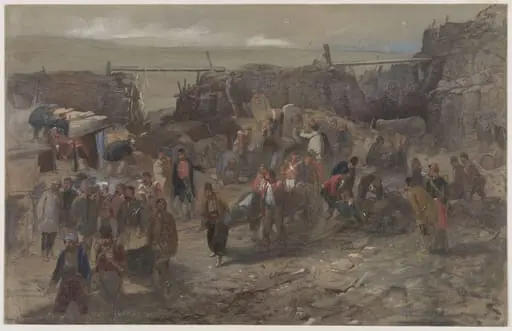 Interior of the Redan Battery after the Fall of Sebastopol, 1855
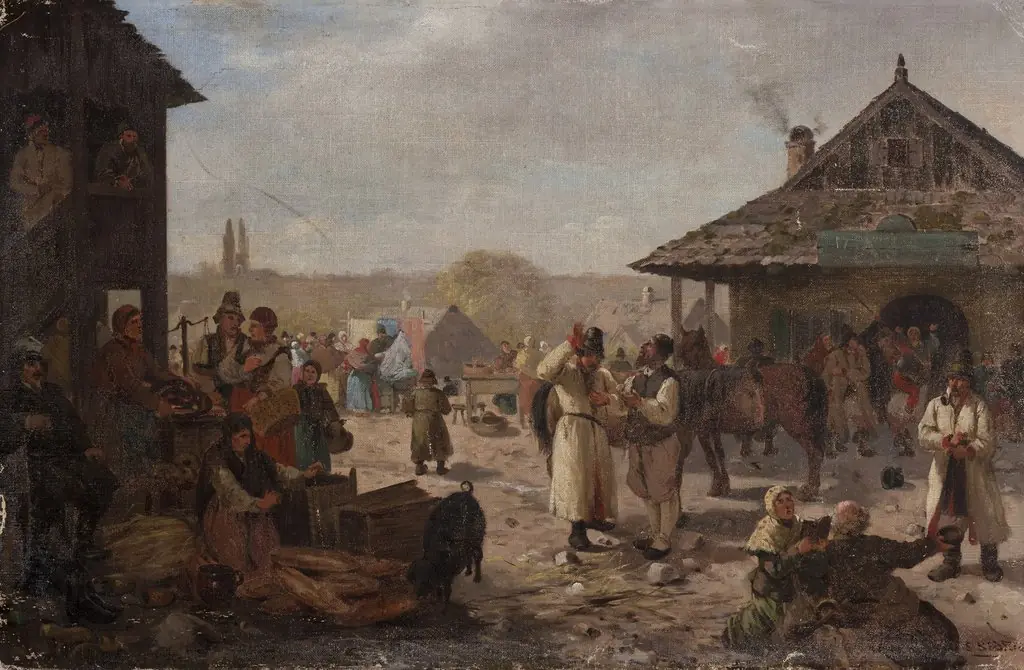 Fair in a Small Town
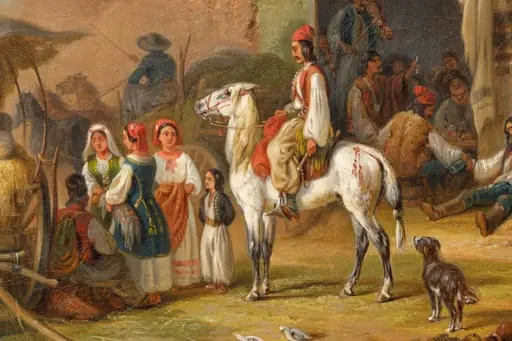 Bâlciul
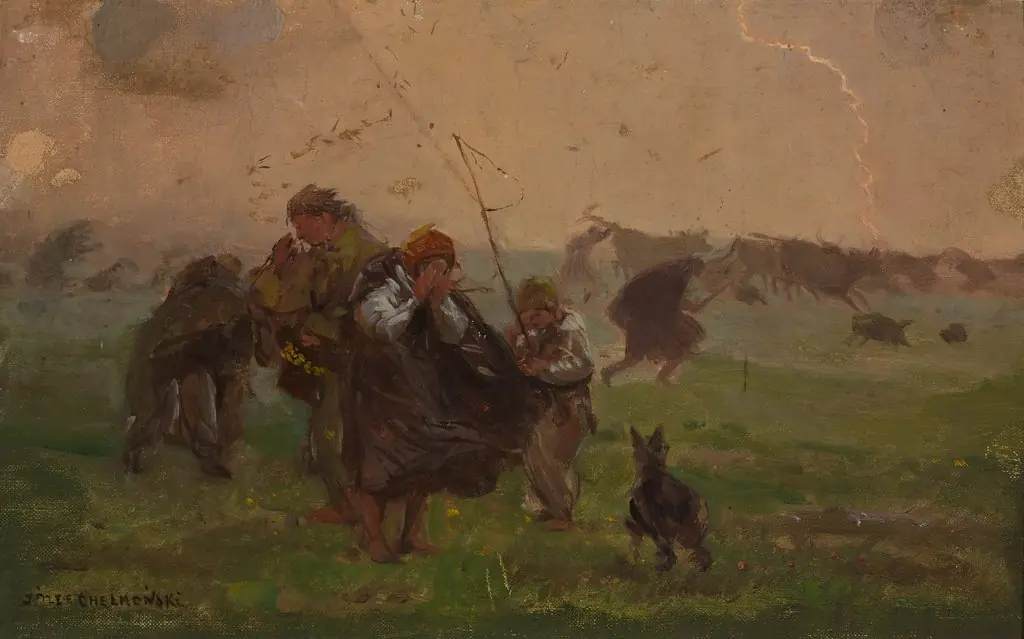 Before the storm, sketch for the painting “Storm”
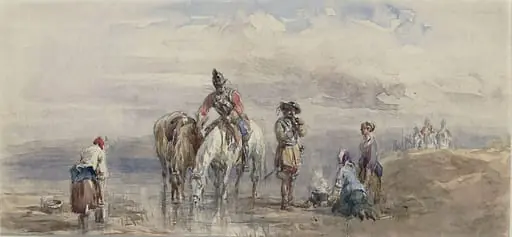 Troopers Watering Horses
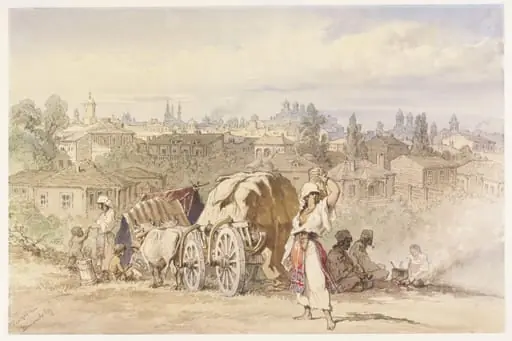 A Gipsy Encampment at Filaret outside Bucharest
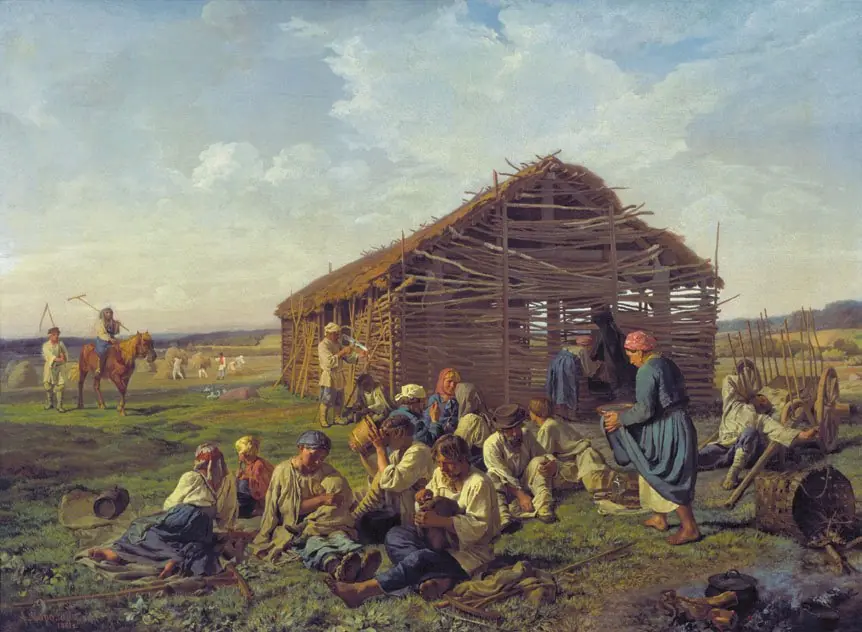 Rest At Haymaking
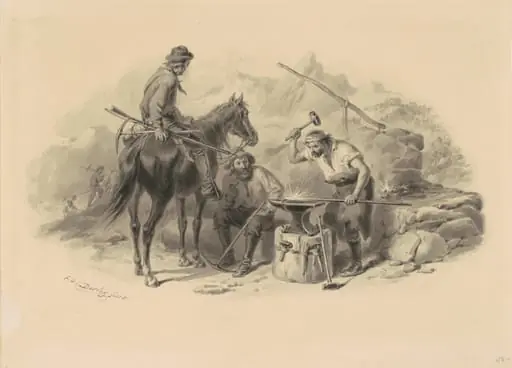 Blacksmith in the Goldfields
 The Brierwood Pipe
 Harvesters Resting (Ruth and Boaz)
 Popas
Popas