Artwork
The Great Khan, Damascus
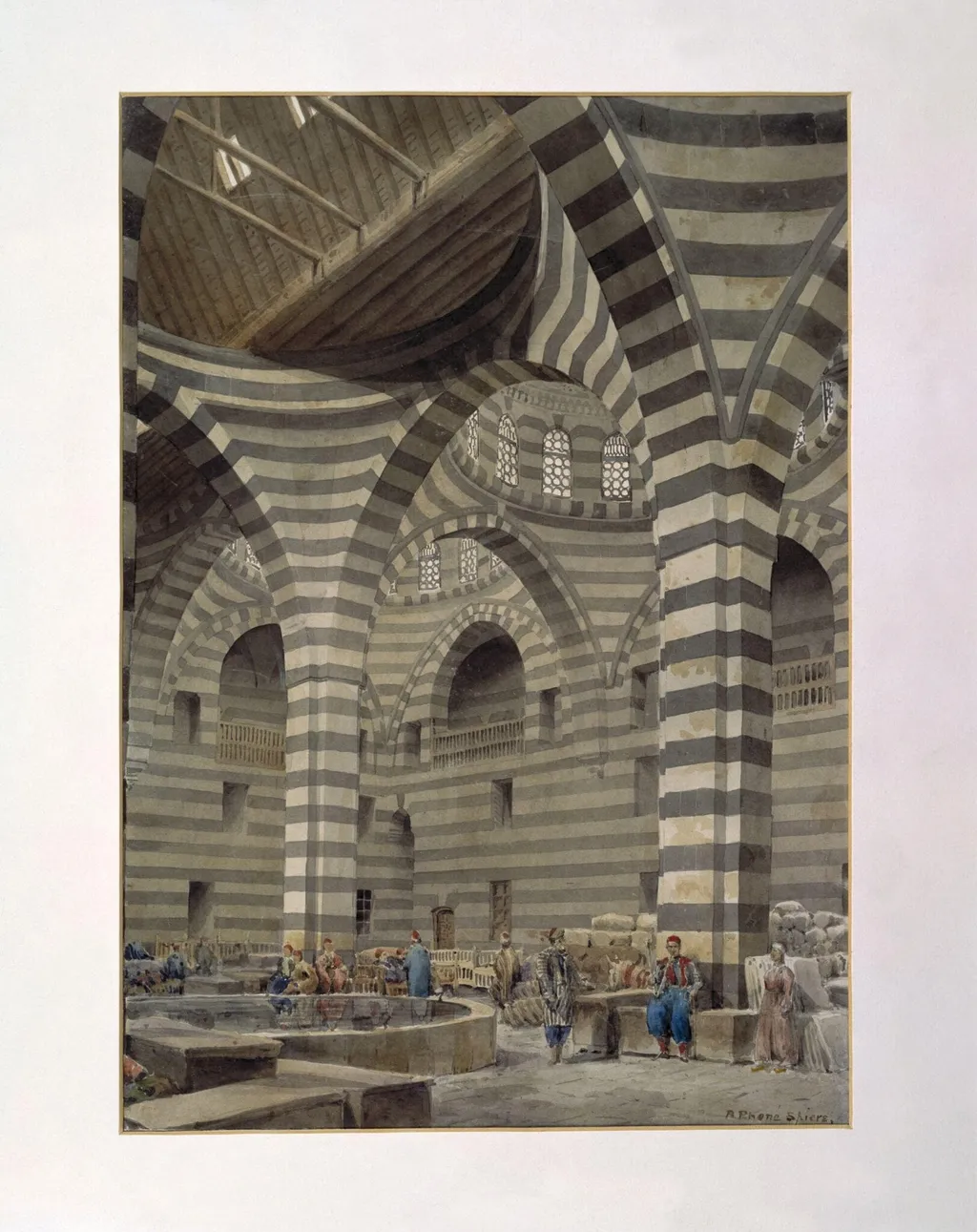
The Great Khan, Damascus is a watercolor work on paper by the Impressionist artist Richard Phené FRIBA FSA Spiers. It dates from 1866 and is held in the collection of the Victoria and Albert Museum.
About this work
Overview
The watercolour titled “The Great Khan, Damascus” depicts a mid‑18th‑century caravanserai built in Damascus under the patronage of Governor Assad Pasha al‑Azam. Completed in 1753, the khan served as a fortified lodging and market for merchants, showcasing the region’s characteristic polychrome stonework.
Subject & Meaning
The composition records the khan’s alternating bands of coloured stone, a hallmark of Ottoman‑era architecture that emphasized visual rhythm and durability. By rendering this interior, the artist highlights the functional and aesthetic qualities of Islamic commercial spaces, inviting viewers to consider their role in trade networks.
Technique & Style
Executed in watercolour, the work employs delicate washes to convey the texture of stone and the play of light within the vaulted interior. The artist’s precise line work and subtle tonal variations reflect the 19th‑century British practice of documenting exotic architecture for scholarly purposes.
History & Provenance
Created by architect‑scholar Thomas Spiers after his 1865‑66 Royal Academy scholarship tour of the Middle East, the painting was likely shown at the Royal Academy alongside other Eastern subjects. Spiers, better known for his teaching and publications, used such images to promote the study of non‑European building traditions among British architects.
Context
During the 19th century, British architects increasingly turned to foreign models as they sought new stylistic vocabularies for contemporary construction. Detailed drawings of structures like the Damascus khan served both as records of endangered architecture and as sources of inspiration for the emerging eclecticism in British design.
Artist & collection
Artist
Richard Phené FRIBA FSA Spiers
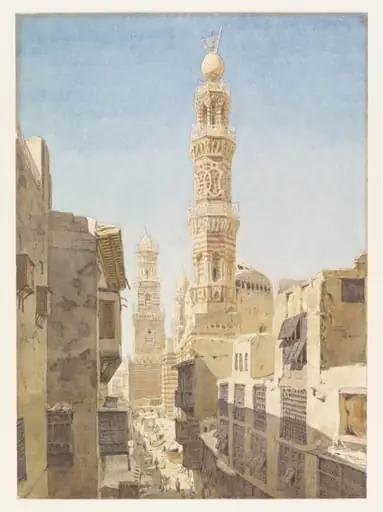
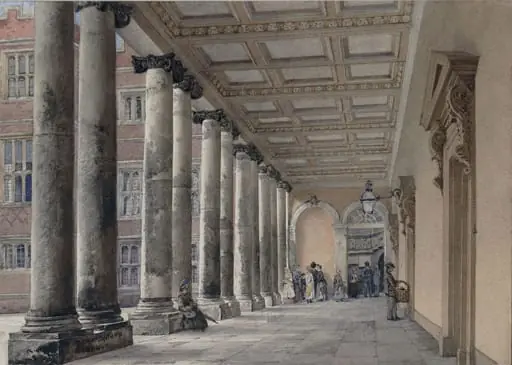
Richard Phené painted watercolours of grand old buildings in the 1800s. His brush captured places like Cairo’s Suq al-Nahhasin (1866) and the Great Khan in Damascus (1865–66). He also turned his eye to Hampton Court…

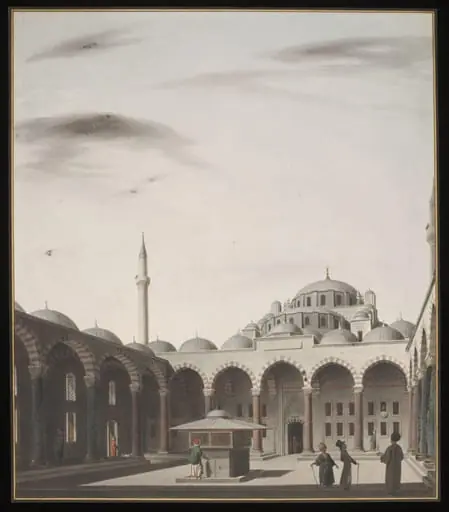 View of the Courtyard of the Fatih Mehmet Camii
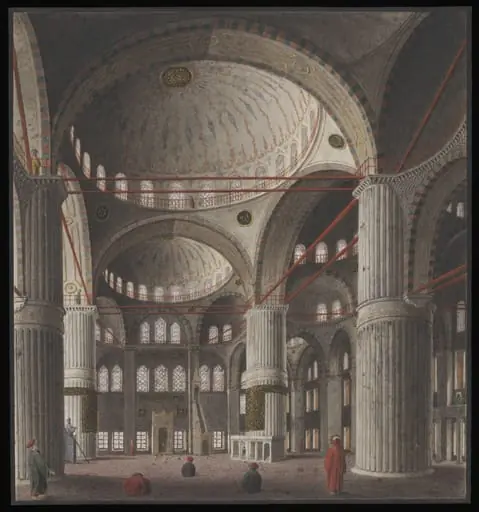 The interior of Sultan Ahmet Camii
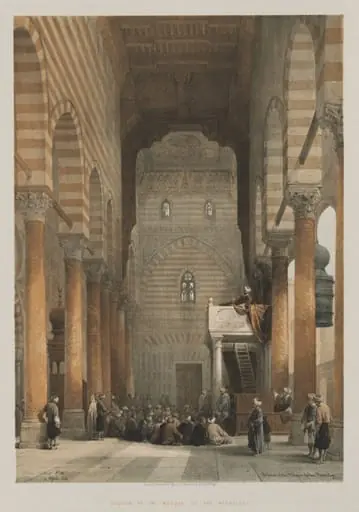 Egypt and Nubia, Volume III: Interior of the Mosque of the Metwalys
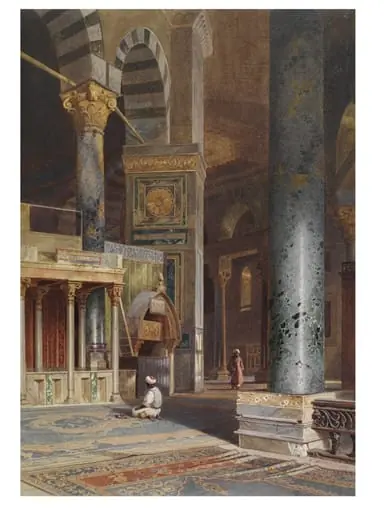 Interior of the Dome of the Rock, Jerusalem
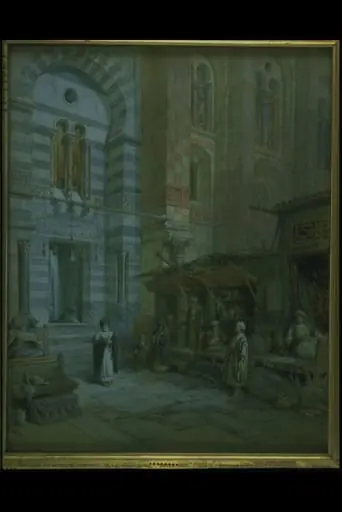 The Mâristan or Mosque-Hospital of Kalaun, Cairo
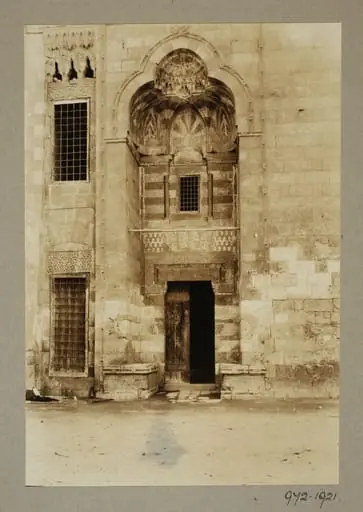 Entrance portal of the mosque of Qadi Yahya Zayn al-Din (Habbaniyya), Cairo
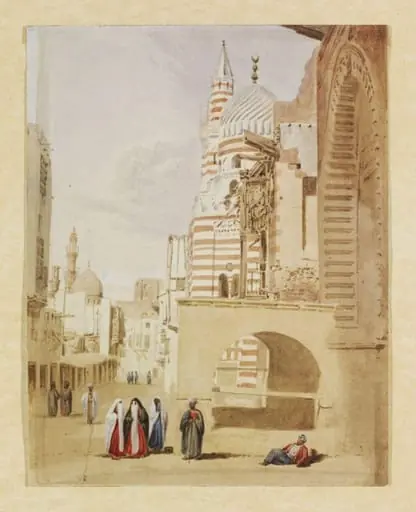 Bab al-Wazir street and the mosque of Aytmish al-Bajasi, Cairo
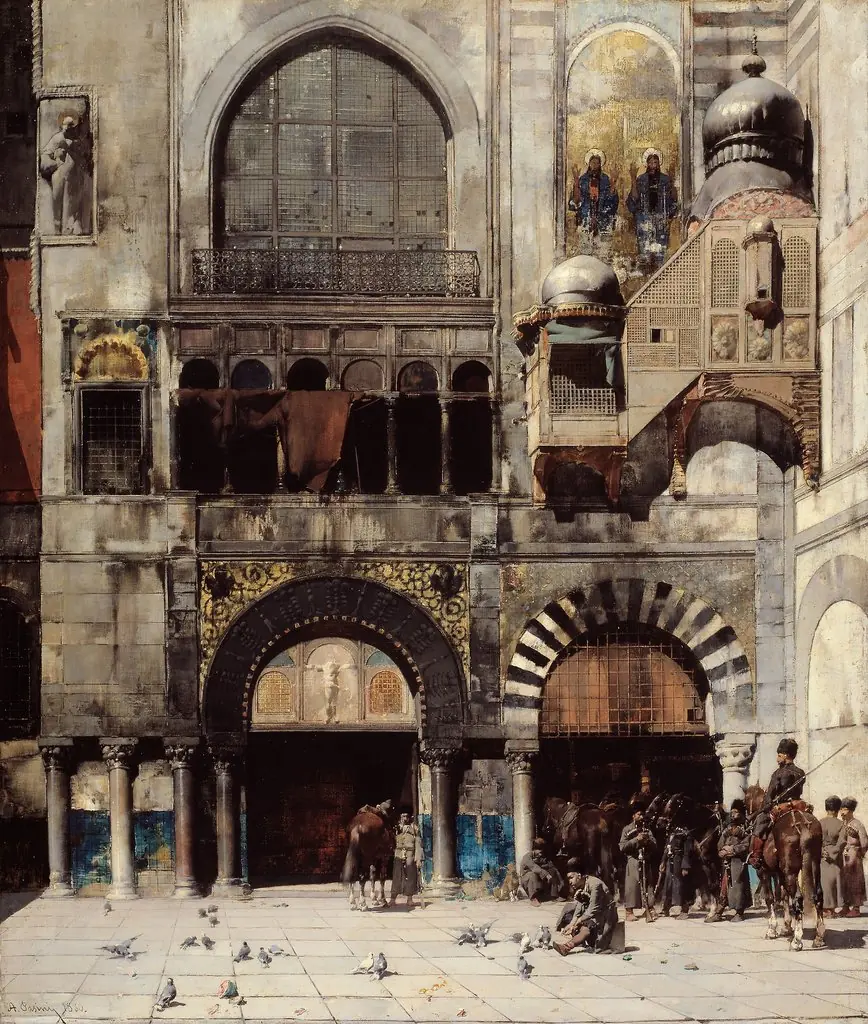 Circassian Cavalry Awaiting their Commanding Officer at the Door of a Byzantine Monument; Memory of the Orient