Artwork
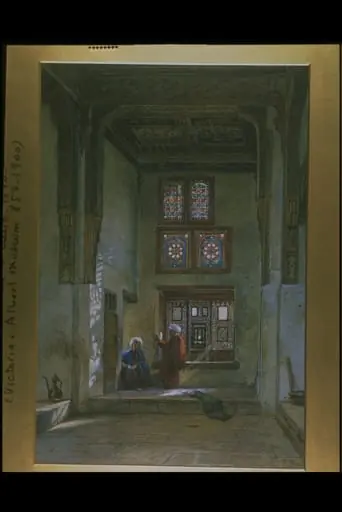
A room in the house of Shayk Sadat, Cairo
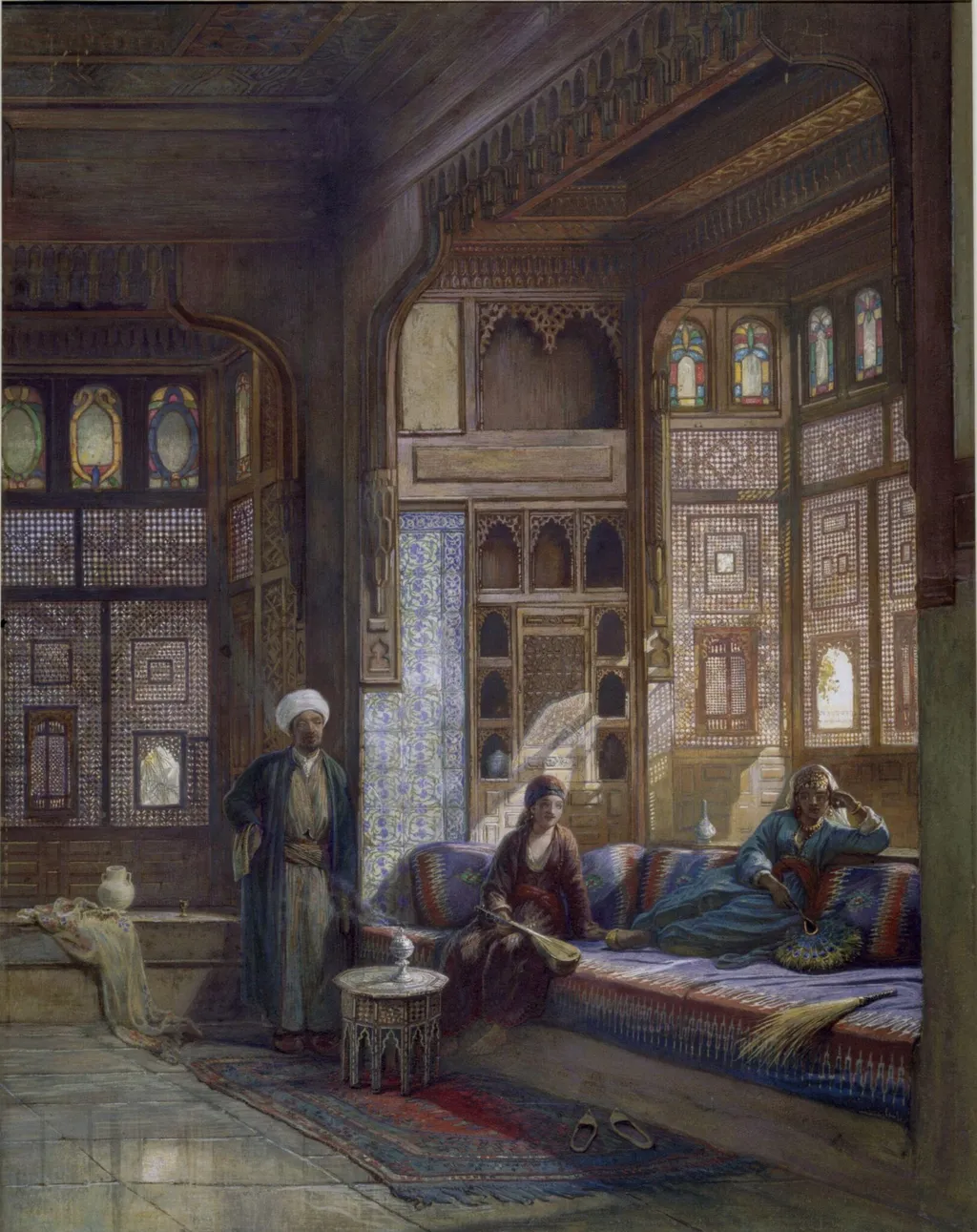
A room in the house of Shayk Sadat, Cairo is a watercolor work on paper by the Impressionist artist Frank Dillon. It dates from 1875 and is held in the collection of the Victoria and Albert Museum. Painted around 1875, this watercolour depicts the qaah, the principal sitting room in the women’s quarters of the Bayt al-Sadat in Cairo.
About this work
This picture doubles as proof and advertisement for the architect’s campaign.
This is a watercolour from about 1875. It shows the main sitting room in a grand Cairo home built for women. The artist wanted to record the space before modern changes took it away.
British architects hunted for fresh design ideas abroad in the 1800s. They also feared old styles would vanish as cities grew. This picture doubles as proof and advertisement for the architect’s campaign.
Look up the next artist: Dillon, Frank (RI).
Overview
Painted around 1875, this watercolour depicts the qaah, the principal sitting room in the women’s quarters of the Bayt al-Sadat in Cairo. Created by British architect and artist Frank Dillon, the work belongs to a broader 19th-century effort to document non-European domestic architecture before it was altered by urban modernization. Dillon’s precise rendering serves both as a record and a tool for cultural advocacy.
Subject & Meaning
The scene captures the interior of a private domestic space, typically reserved for women in a wealthy Cairo household. Furnishings, textiles, and architectural details reflect local craftsmanship and social customs. By including figures in traditional dress, Dillon provides scale and cultural context, emphasizing the lived quality of the space rather than treating it as a mere specimen. The room’s preservation in paint underscores its significance as a vanishing cultural form.
Technique & Style
Executed in watercolour, the painting employs delicate washes and fine linear detail to convey texture and light. Dillon’s approach is observational rather than romanticized, with careful attention to architectural proportions, tilework, and woven surfaces. The composition is balanced and grounded, avoiding theatricality in favor of documentary clarity, aligning with the aesthetic principles of design reformers like Owen Jones.
History & Provenance
Frank Dillon (1823–1909) was associated with the circle of Owen Jones and shared his interest in non-Western decorative arts. He traveled extensively across North Africa, the Iberian Peninsula, and Japan, documenting interiors as part of a preservationist agenda. The Bayt al-Sadat, though threatened by urban change, still stands near Sharia al-Gammamiz, lending historical weight to Dillon’s record. His watercolours were used to support advocacy for the conservation of Islamic architectural heritage.
Context
In the 19th century, European architects increasingly looked beyond Europe for design inspiration, particularly in Islamic and Oriental traditions. As cities expanded and older structures were demolished, there was growing concern among designers and scholars to preserve these forms through visual documentation. Dillon’s work emerged from this milieu, positioning architectural illustration as both scholarly act and cultural intervention.
Legacy
Dillon’s watercolours contributed to a growing archive of Islamic domestic architecture, influencing design education and conservation efforts in Europe. His focus on interiors—often overlooked in favor of monuments—helped shift attention toward everyday spaces as culturally significant. Though not widely exhibited in his lifetime, his works remain valuable references for historians studying 19th-century Cairo and the transnational exchange of architectural ideas.
Artist & collection

Artist
Frank Edward Dillon, known in later years as Pop Dillon, was an American baseball player and manager.


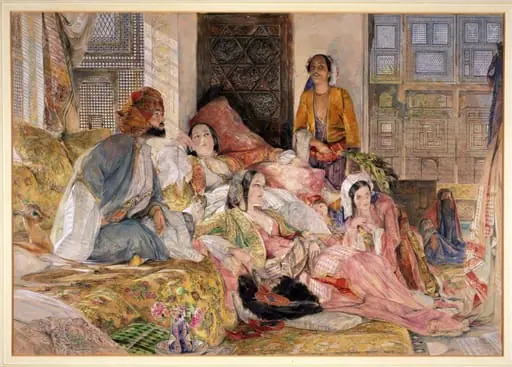 The Hhareem, Cairo
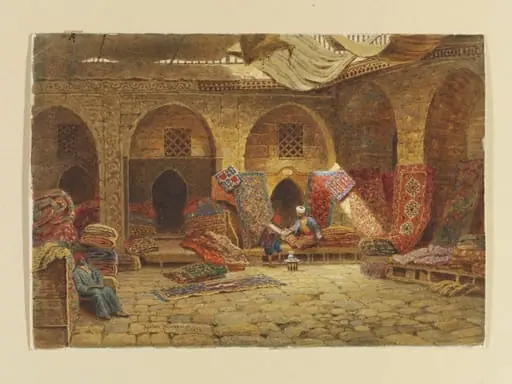 Carpet Merchant's Shop Cairo
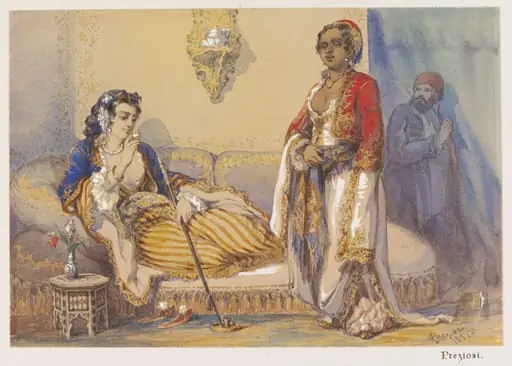 Interior of a Harem
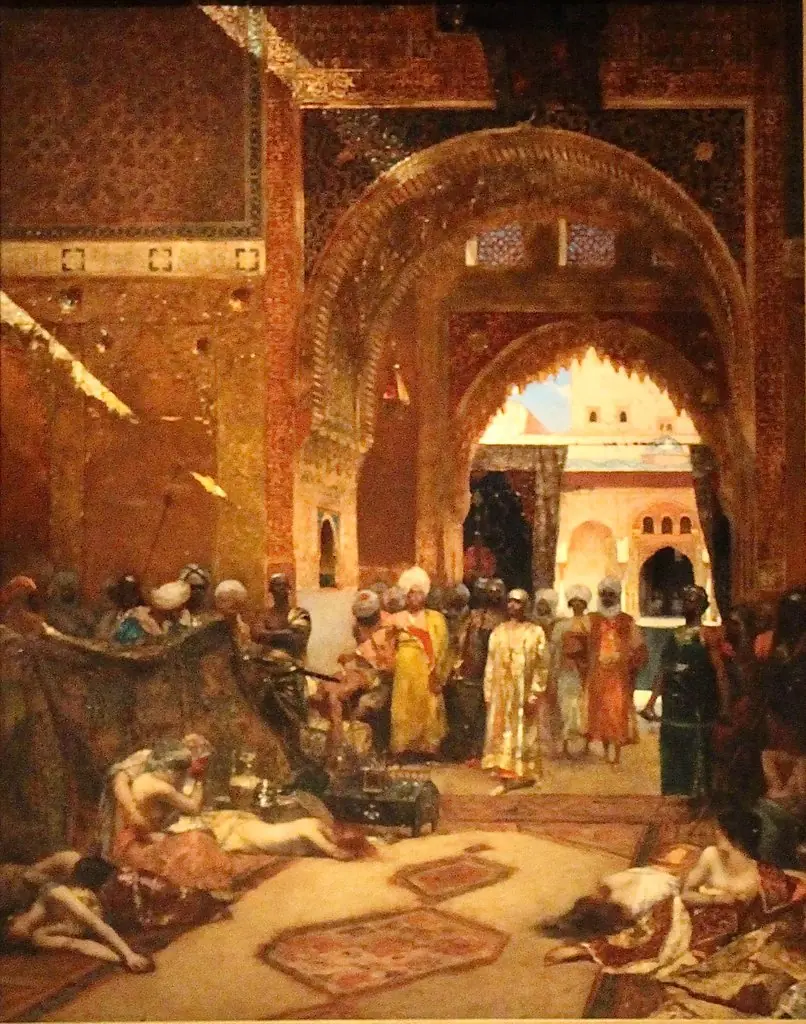 Le lendemain d'une victoire à l'Alhambra
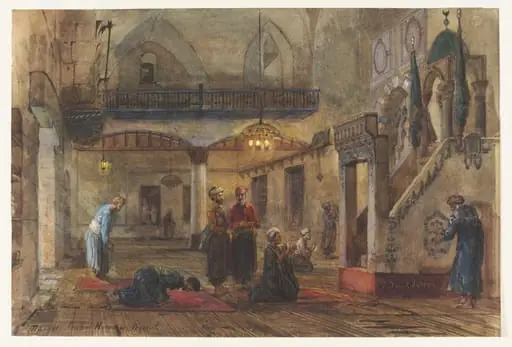 Mosque. Souk el Hommos. Byrout
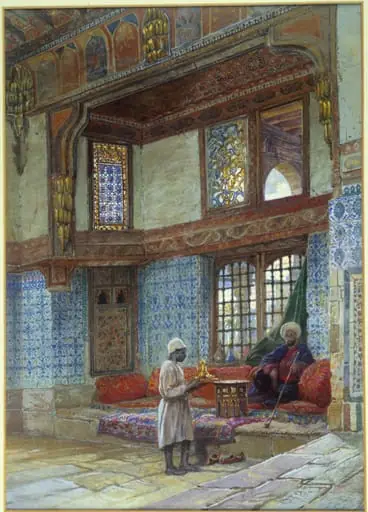 Recess in the reception room in the house of the Mufti Sheikh el Mahadi, Cairo
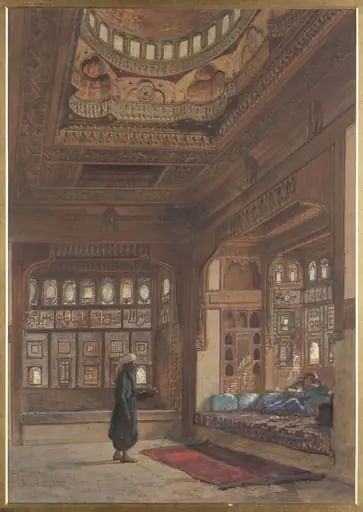 Untitled
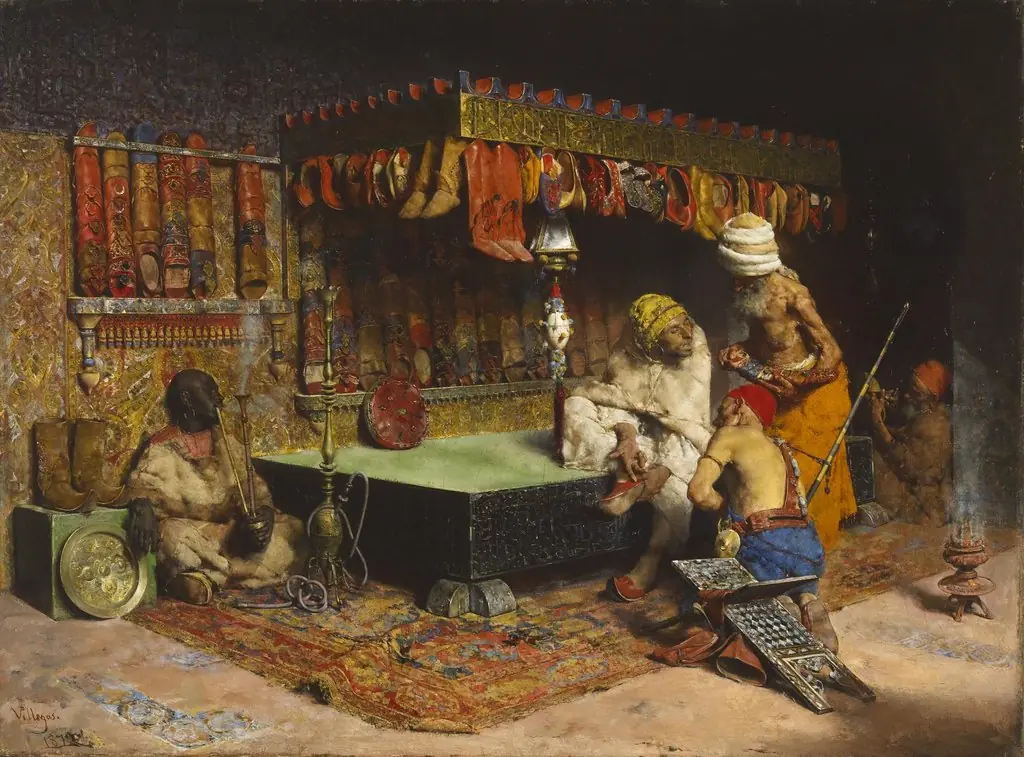 The Slipper Merchant in Morocco
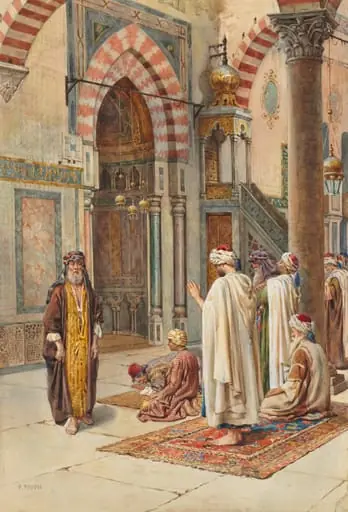 Moslems at Prayer
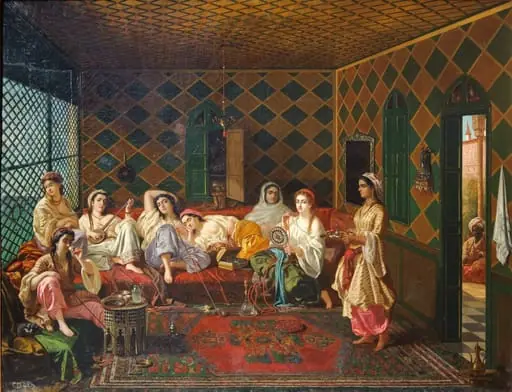 Interior de serai
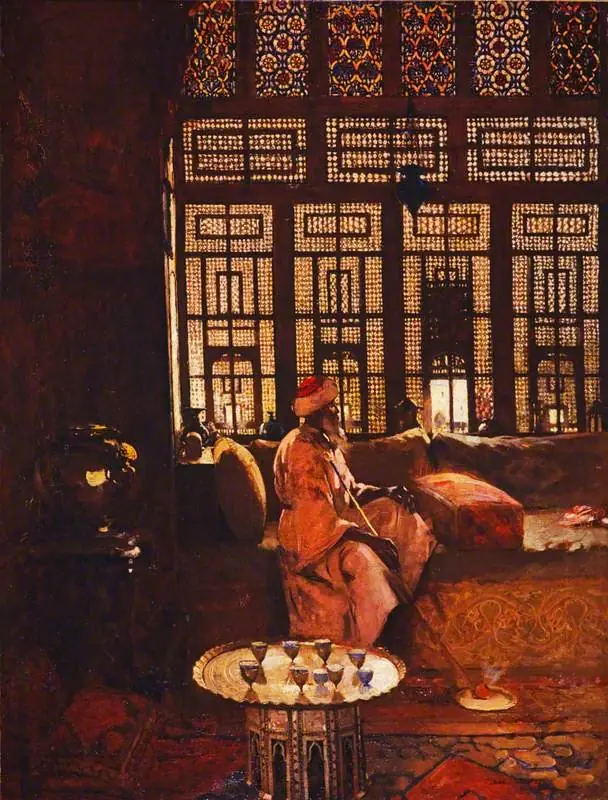 An Arab Interior
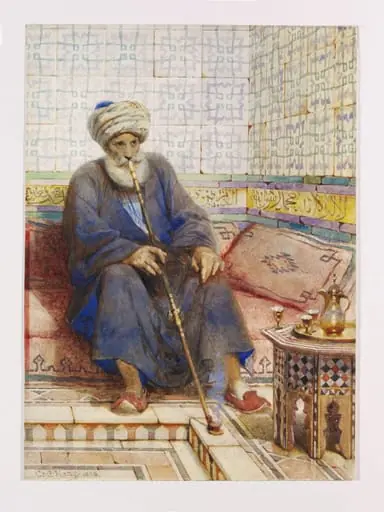 Abu Daood, Shaikh of the Coptic Quarter, in Cairo