Artwork
Untitled
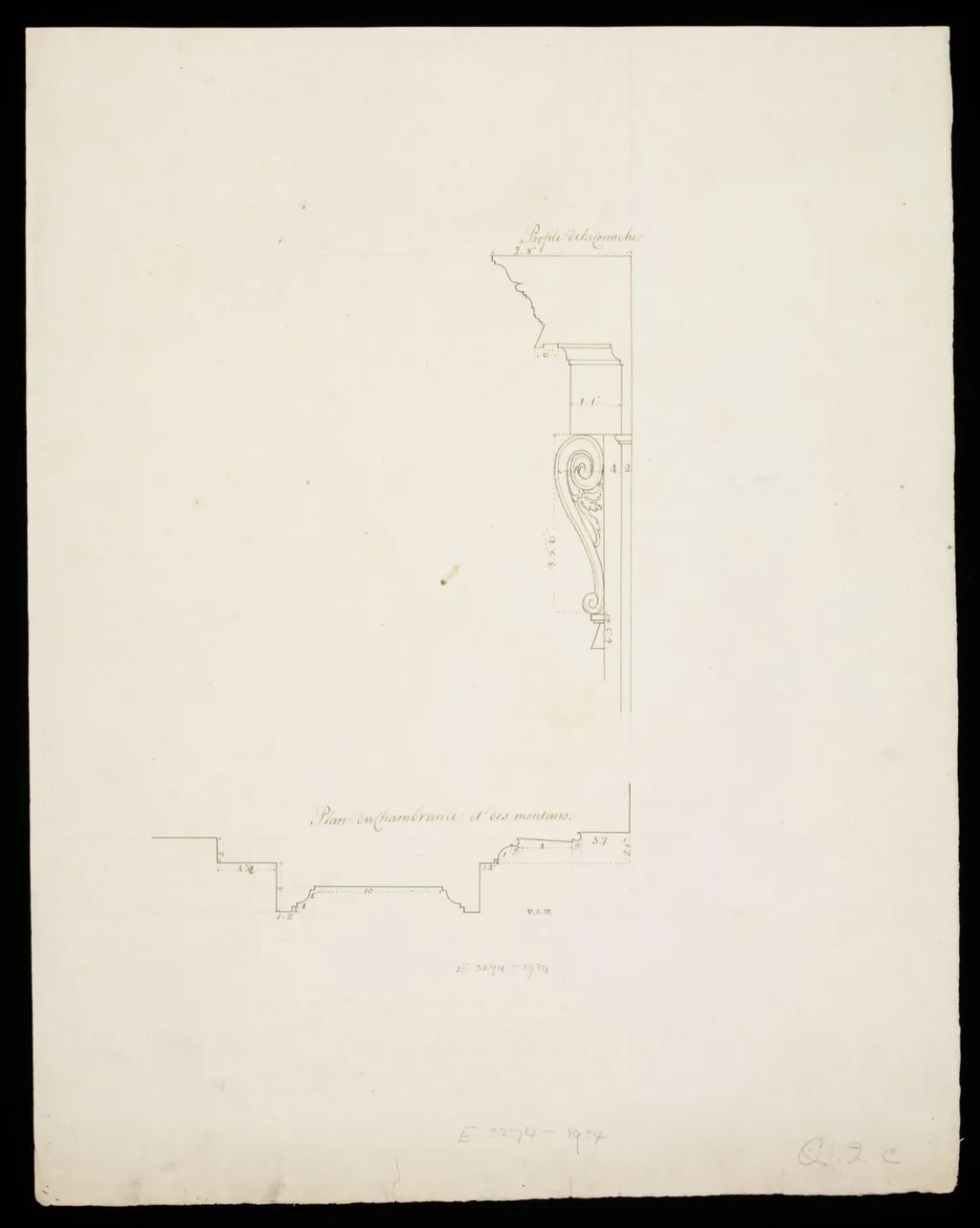
Untitled is a drawing by Sir William Chambers. It dates from 1750 and is held in the collection of the Victoria and Albert Museum.
About this work
Overview
This architectural drawing by Sir William Chambers presents a measured elevation of a doorway, executed with technical precision in brown ink.
This architectural drawing by Sir William Chambers presents a measured elevation of a doorway, executed with technical precision in brown ink. The recto captures the full vertical composition, while the verso includes a profile of the cornice and a lateral section of the door frame. The work reflects Chambers’ disciplined approach to documentation, typical of his role as a practicing architect and surveyor of built forms.
Subject & Meaning
The doorway features decorative elements including a winged angel’s head above the opening and an ornate bracket beneath. These motifs suggest a classical or Palladian influence, common in 18th-century British architecture. The inclusion of such sculptural details indicates the drawing’s purpose was not merely functional but also intended to convey aesthetic intent, bridging structural design and artistic embellishment.
Technique & Style
Chambers rendered the elevation and profiles in fine brown ink, emphasizing clarity and proportion. The lines are deliberate and measured, characteristic of architectural drafting of the period. The verso’s complementary sections demonstrate a methodical approach to recording all components of a single architectural element, ensuring accuracy for construction or replication.
History & Provenance
Created during Chambers’ active career in London after 1755, the drawing likely served as a working document for a private or public commission. Though its specific architectural context is unrecorded, its style aligns with projects from his early years, such as Gower House or garden structures at Kew. The drawing’s survival suggests it was preserved within his professional archive.
Context
Chambers operated at the intersection of theory and practice, publishing his Treatise on Civil Architecture in 1759 and later serving as Surveyor-General of the King’s Works. His drawings, including this one, reflect the era’s emphasis on classical order and refined detail. They were tools for both design development and professional authority, circulating among patrons and craftsmen.
Legacy
This drawing exemplifies the precision and intellectual rigor that defined Chambers’ contribution to British architecture. As a key figure in shaping Georgian design, his working drawings remain valuable for understanding the transition from conceptual sketch to built form. They continue to inform scholarly study of 18th-century architectural practice.
Artist & collection

Artist
Sir William Chambers was a Swedish-born British architect. Among his best-known works are Somerset House, the Gold State Coach and the pagoda at Kew. Chambers was a founder member of the Royal Academy.

 'Panells of Drawing room'
 Untitled
 Study of Moldings
 Untitled
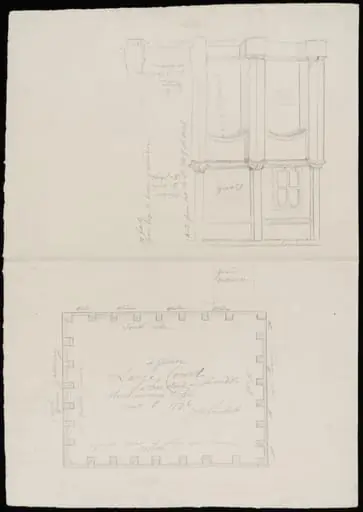 Plan, and elevation of two bays, of Green Court.
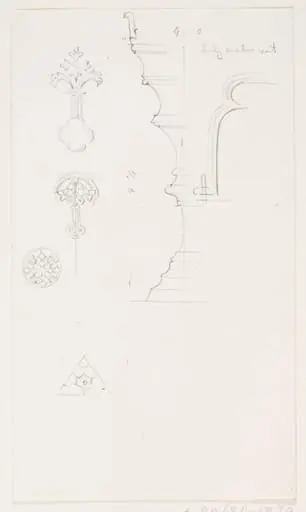 Topographical drawing
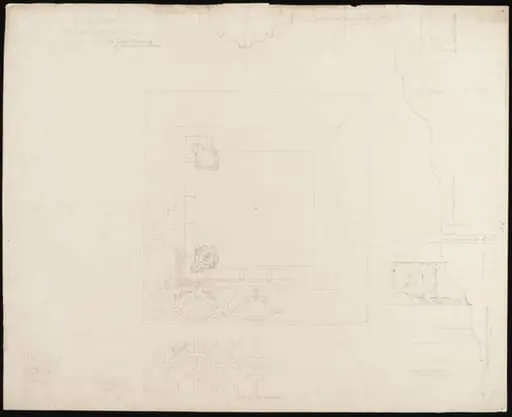 Kinmel Hall, drawing no. 348 and 354, plan of ceiling for principal staircase
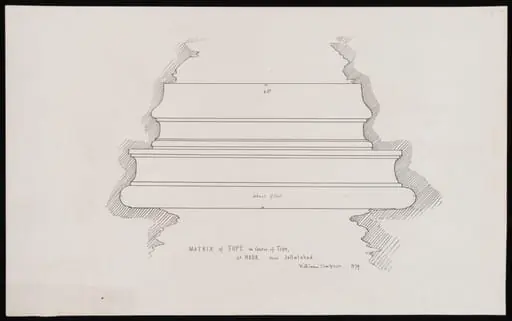 Matrix of Tope in centre of Tope, at Hada, near Jellalabad
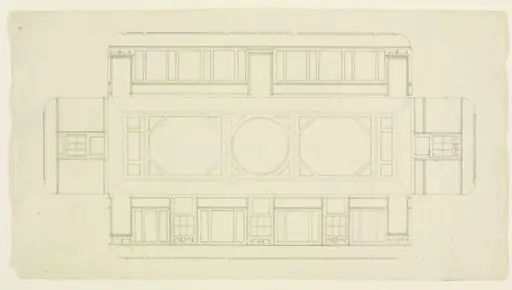 Elevations of the interior wall of Combe Bank
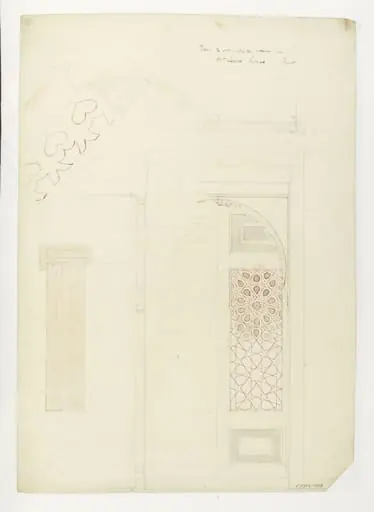
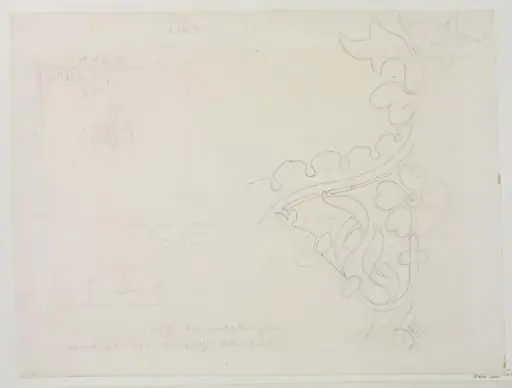
![Study of an Interior [verso], by Walter Shirlaw](https://artifactworldgallery.com/img/walter-shirlaw--study-of-an-interior-verso--ae90136ae4907dbf-w320.webp)