Artwork
Landscape with Rocky Stream
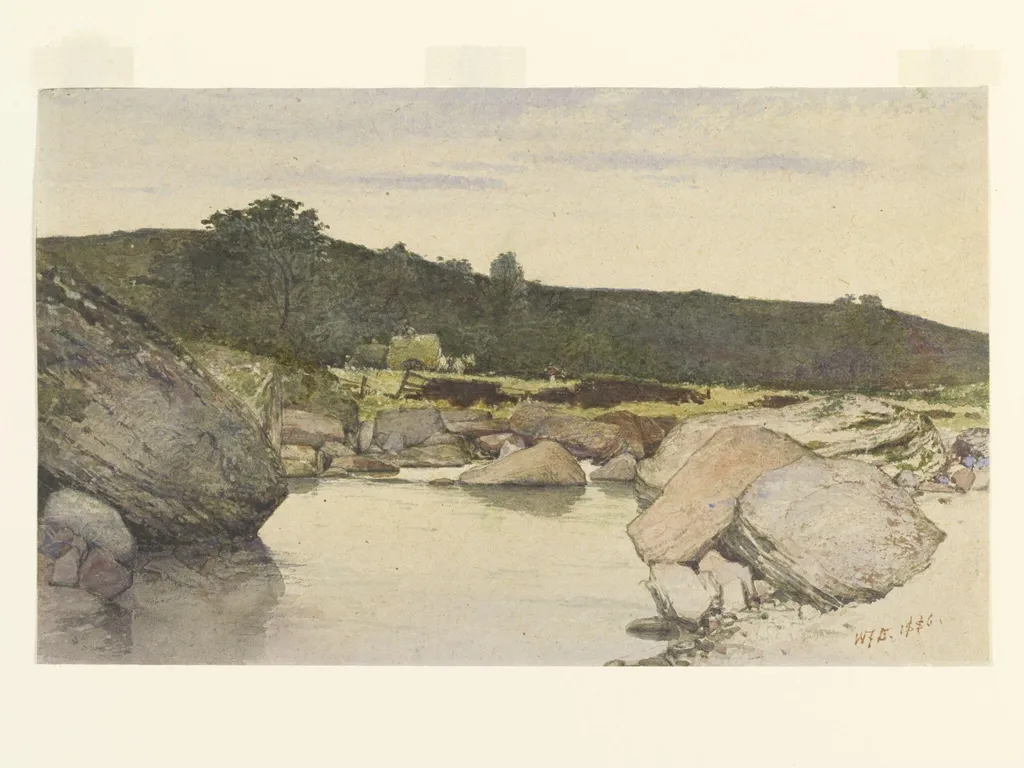
Landscape with Rocky Stream is a watercolor work on paper by the Impressionist artist William Fettes Douglas. It dates from 1886 and is held in the collection of the Victoria and Albert Museum. Created in 1886, this watercolour captures a tranquil rural stream winding through a rocky terrain.
About this work
Overview
Created in 1886, this watercolour captures a tranquil rural stream winding through a rocky terrain. The artist signed and dated the work, affirming its completion in that year. The composition emphasizes quiet naturalism, with no dramatic elements, instead focusing on subtle shifts in light and texture across stone, water, and vegetation.
Subject & Meaning
The scene presents an unassuming rural landscape: a shallow stream flows over smooth, rounded stones, flanked by a gently sloping grassy bank. In the distance, a small stone structure, a horse-drawn cart, and a few figures suggest quiet human presence without intrusion. The work conveys stillness and harmony, reflecting an observational approach to nature rather than narrative or symbolic intent.
Technique & Style
The artist employed transparent watercolour washes to achieve soft transitions between tones. Light is suggested through delicate gradations, particularly on the wet rocks and surface of the stream. Brushwork is restrained, avoiding sharp lines; edges blend naturally, reinforcing the sense of a spontaneous outdoor study rather than a polished studio piece.
History & Provenance
The work was completed in 1886 and bears the artist’s initials, indicating personal authorship. While its early ownership is undocumented, it entered the collection of the Victoria and Albert Museum, where it remains accessible for study. Its preservation suggests recognition of its quiet artistic merit within the tradition of British watercolour practice.
Context
In the late 19th century, watercolour was widely used by British artists for plein air studies and topographical records. This piece aligns with a broader trend of intimate landscape observation, distinct from grand Romantic vistas. It reflects a shift toward everyday naturalism, valued for its sincerity over spectacle.
Legacy
Though not widely exhibited outside institutional collections, the work exemplifies the quiet discipline of Victorian watercolour practice. Its enduring presence in the Victoria and Albert Museum underscores its role as a representative example of observational landscape art from the period, valued for its restraint and technical clarity.
Artist & collection

Artist
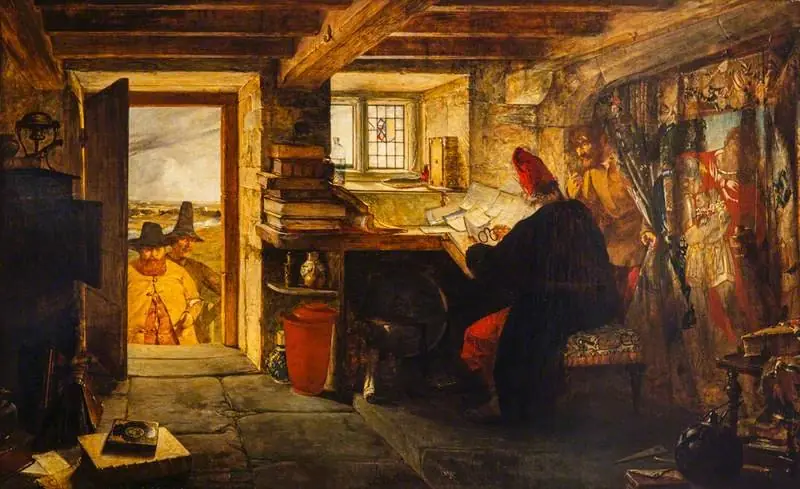
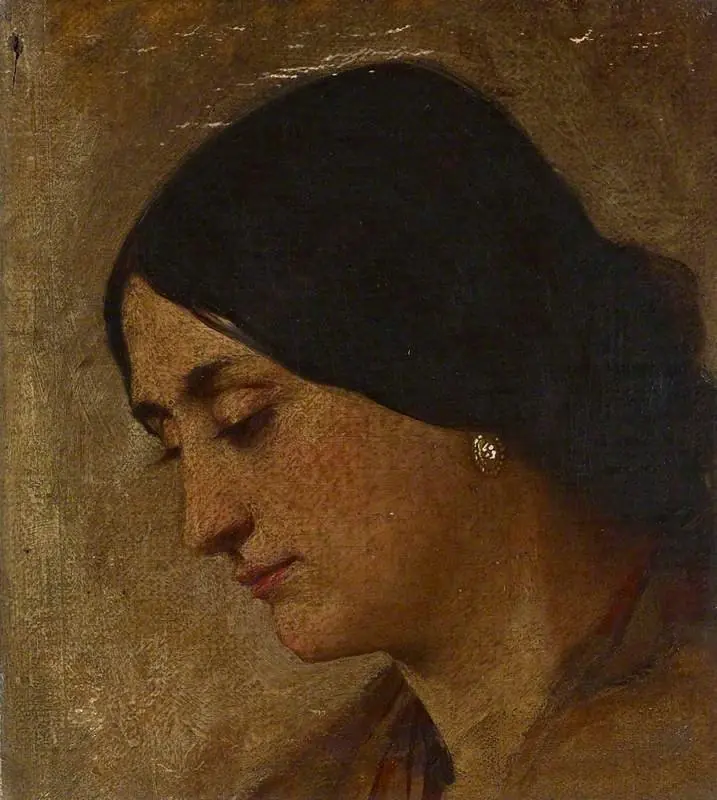
Sir William Fettes Douglas (1822–1891) was a Scottish painter and art connoisseur, rising to be President of the Royal Scottish Academy.




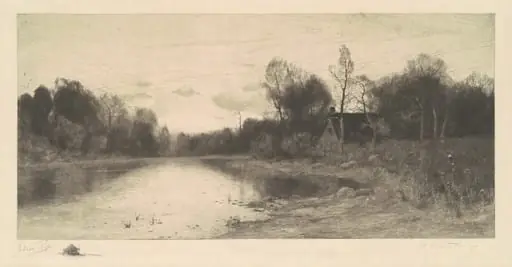 On the Wanaque
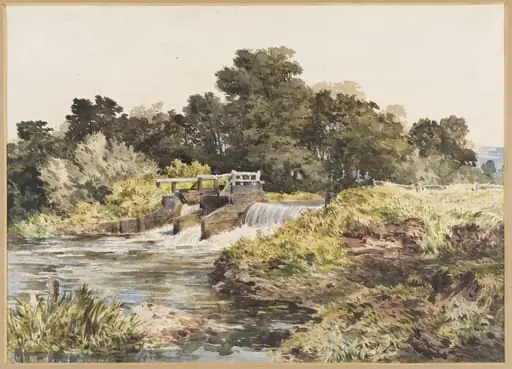 Study from nature: The Weir
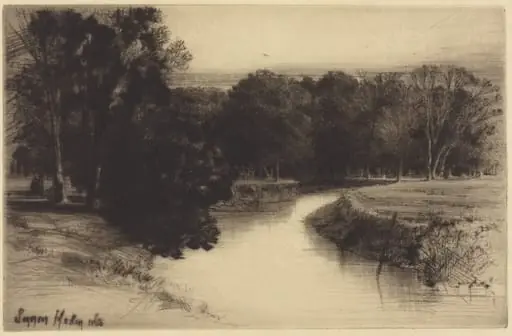 A Sunset in Ireland
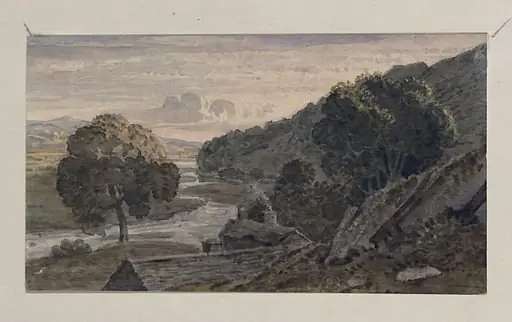 Landscape, with a wiinding river - evening
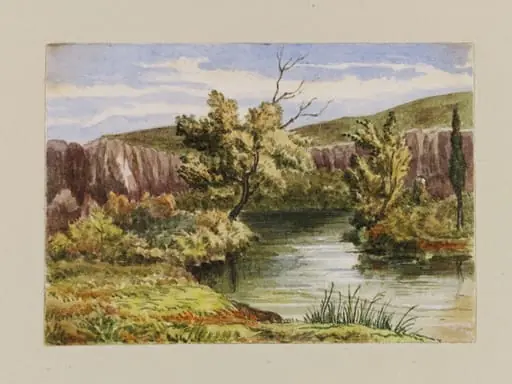 Jordan
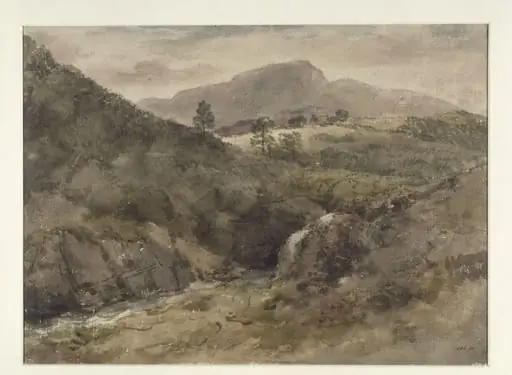 View in the Lake District
 The Stepping-stones near Bettws-y-Coed, North Wales
 Figures in a Landscape
 An Old Dam Near Montrose
 Bed of a Stream
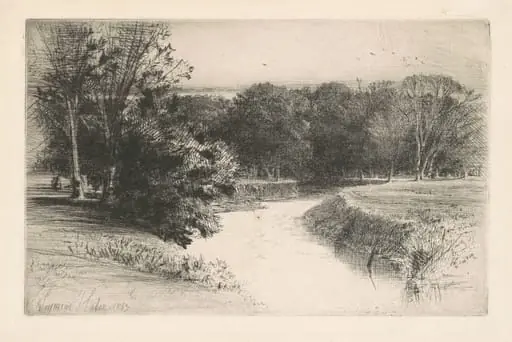 Sunset in Ireland
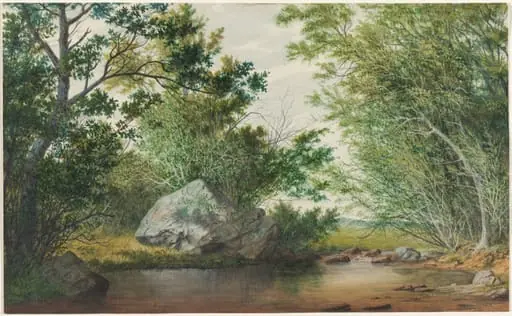 Landscape with Wooded Stream and Boulder