Artwork
Muscular tissue of the hand
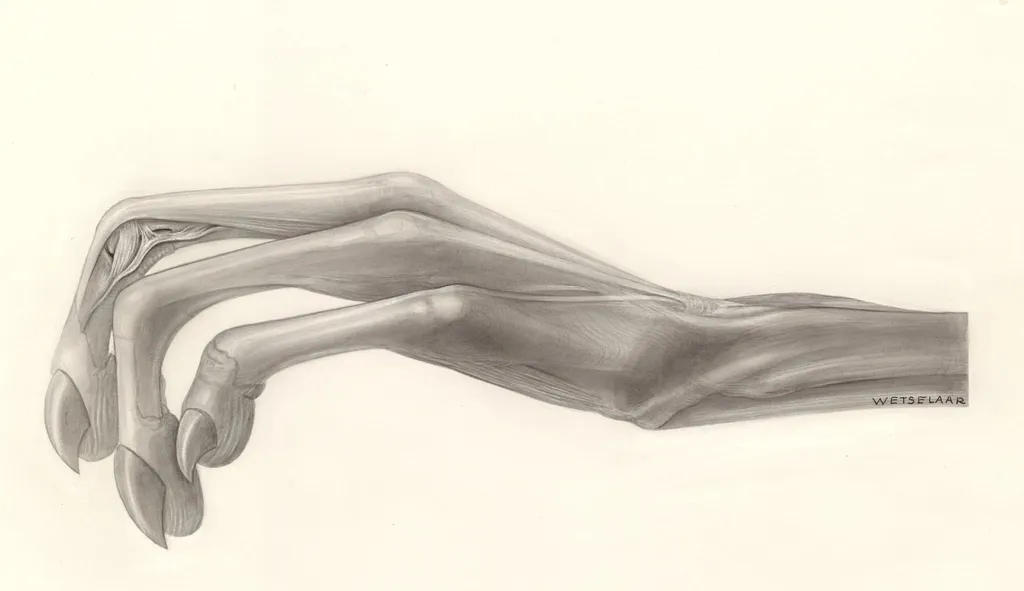
Muscular tissue of the hand is an unspecified work on paper by H.G, Wetselaar. It dates from 1972 and is held in the collection of the Leiden University Libraries. Created in 1972 by H.
About this work
The level of detail in the painting is impressive, with each muscle and tendon carefully rendered to create a lifelike image.
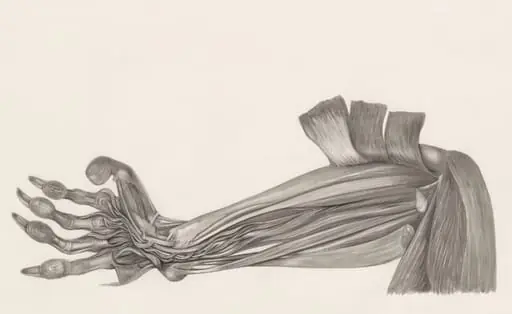
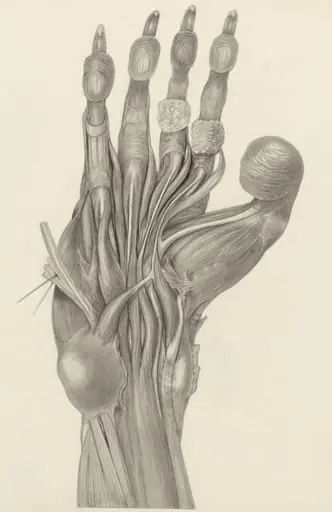
This painting depicts a detailed, realistic image of a human hand, showcasing the muscles and tendons beneath the skin. The hand is positioned with the fingers curled inward, and the wrist is slightly bent. The entire piece is rendered in shades of gray, with varying levels of shading to create a sense of depth and dimension.
The level of detail in the painting is impressive, with each muscle and tendon carefully rendered to create a lifelike image. The use of gray tones adds a sense of realism to the piece, making it feel almost like a medical illustration.
The painting's attention to detail and realistic portrayal of the human body make it a compelling piece. If you're interested in learning more about the artist behind this work, you might want to look up Wetselaar, H.G, (1926-).
Overview
Created in 1972 by H.G. Wetselaar, this grayscale image presents a precise anatomical study of the human hand. Executed as a detailed drawing or painting, it focuses exclusively on the musculature and tendons visible beneath the skin. The work is part of the collection at the Museum of Ethnography, where it serves as a reference for biological form rather than aesthetic expression.
Subject & Meaning
The subject is the interior structure of the hand, rendered without context or narrative. Fingers are curled, wrist slightly flexed, suggesting a natural resting position. The absence of skin tone, blood, or environmental cues strips the image of individuality, transforming the hand into a universal model of human anatomy. Its purpose is observational, not symbolic.
Technique & Style
The image employs a monochromatic palette of grays to simulate light and shadow across complex tissue layers. Shading is meticulously graded to distinguish between tendons, muscle bellies, and connective tissue. Lines are precise but not outlined; form emerges through tonal variation alone. The style aligns with scientific illustration, prioritizing accuracy over artistic flourish.
History & Provenance
The work was produced in 1972 and entered the Museum of Ethnography’s collection shortly thereafter. Its origin as a standalone study suggests it may have been created for educational or research purposes, possibly linked to medical or anthropological documentation. No record of public exhibition prior to its institutional acquisition is documented.
Context
In the early 1970s, anatomical studies remained vital in both medical training and ethnographic documentation. Wetselaar’s work reflects a period when visual precision was essential for cross-cultural biological comparison. Unlike clinical photographs, this hand-drawn image allowed selective emphasis on structures relevant to functional anatomy, bridging art and science.
Legacy
The piece endures as a quiet example of mid-20th-century anatomical representation within ethnographic collections. It is not widely reproduced or cited in art historical discourse, but remains a functional artifact within the museum’s educational resources. Its value lies in its clarity, not its fame, continuing to serve as a reference for the study of human form.
Artist & collection
Artist
H.G. Wetselaar spent his days hunched over microscopes in a quiet Leiden lab, sketching what most people ignore. His pencil caught the raw architecture of bodies we pretend are smooth—like the knotted muscles of a…
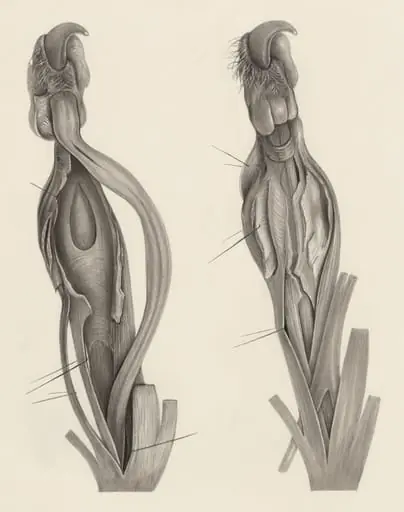
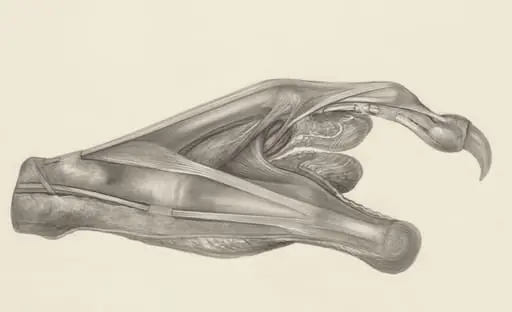
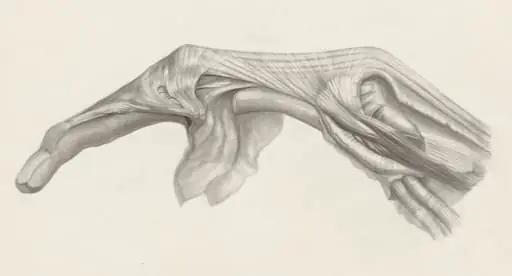 Muscular tissue of the finger
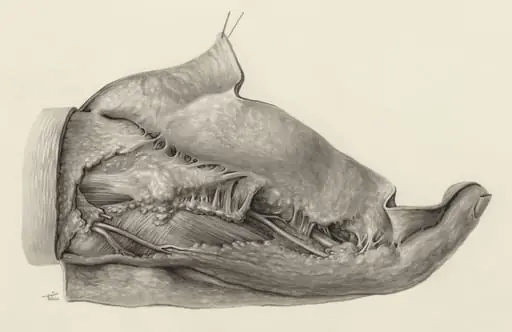 Muscular tissue of the hand and finger
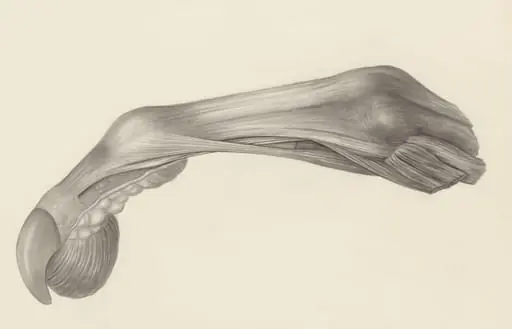 Muscular tissue of the finger of a rhesus macaque
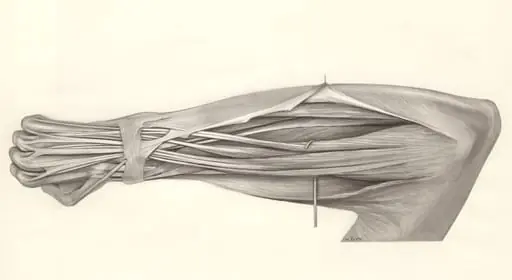 Muscular tissue of the lower arm
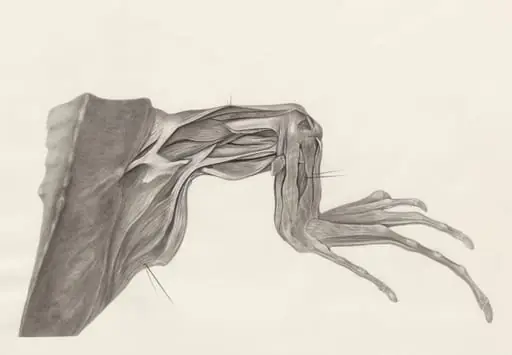 Muscular tissue of a lizards leg and claw
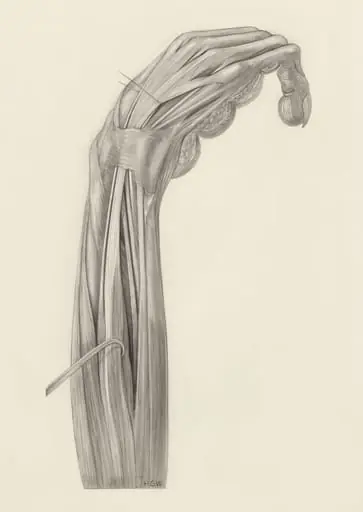 Muscular tissue of the arm of a rhesus macaque
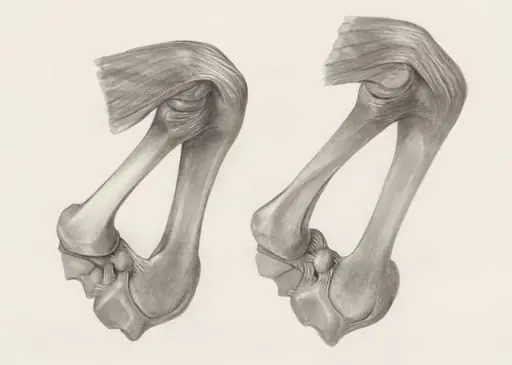 Muscular and bone tissue of the hand or fingers
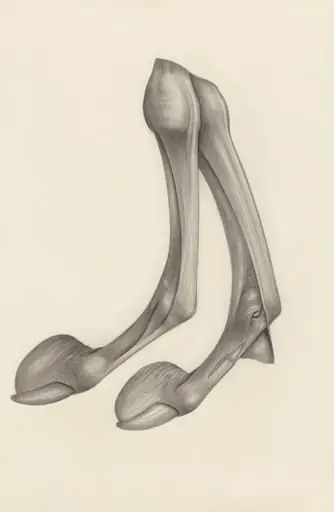 Muscular tissue of a mammal's finger
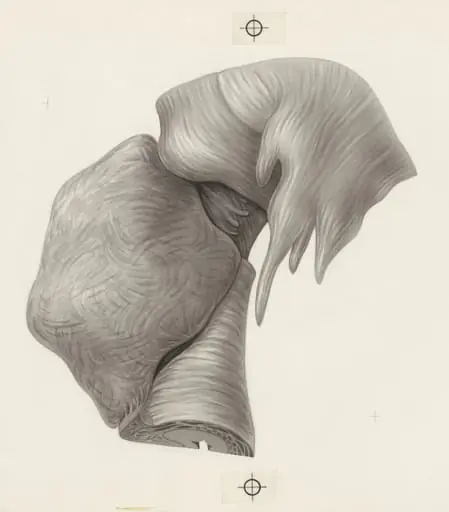 Human tissue