Artwork
H Beard Print Collection
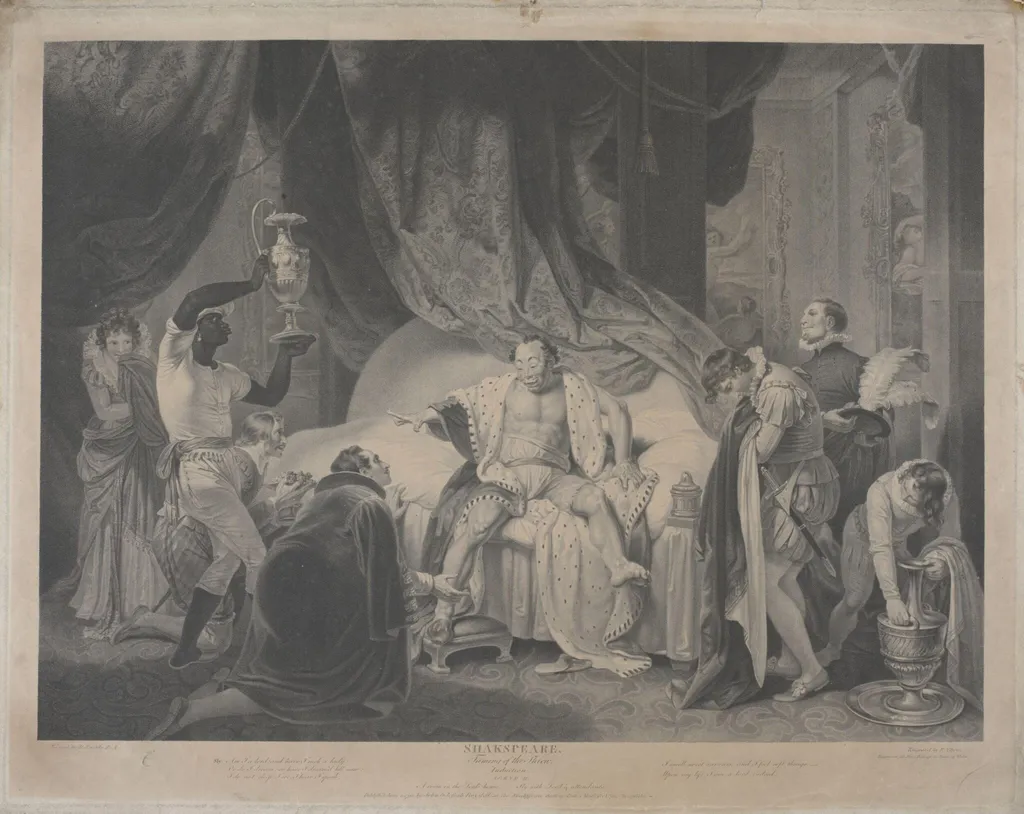
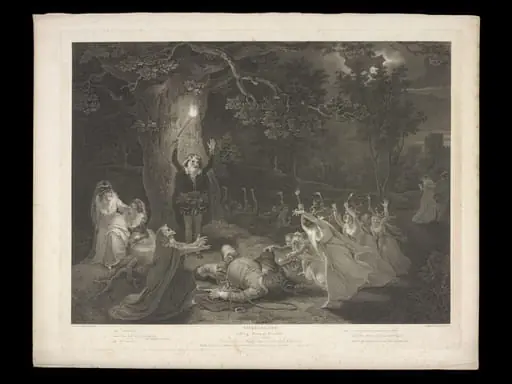
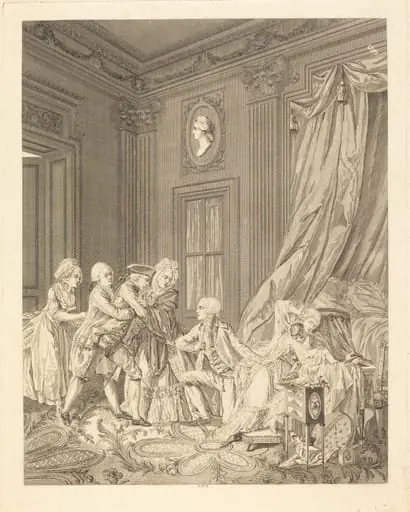
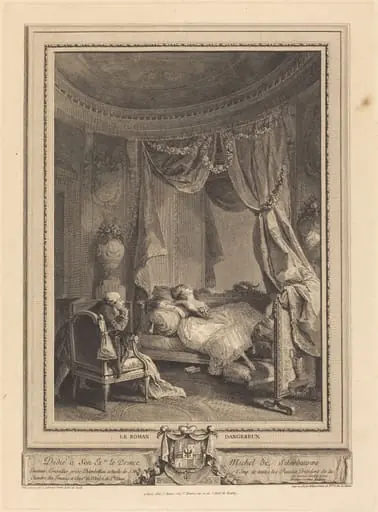
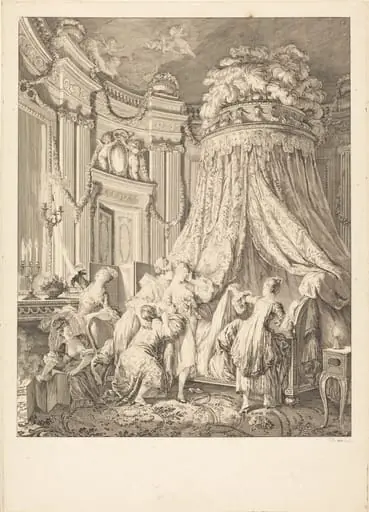
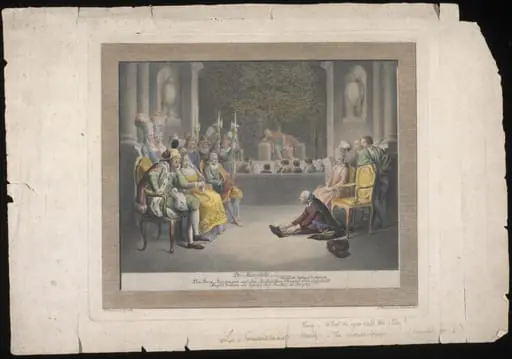
H Beard Print Collection is a print by the Romanticist artist Robert Smirke. It dates from 4 and is held in the collection of the Victoria and Albert Museum. This print captures a moment from Act I, Scene 1 of Shakespeare’s The Taming of the Shrew, published on June 1, 1791.
About this work
Overview
This print captures a moment from Act I, Scene 1 of Shakespeare’s The Taming of the Shrew, published on June 1, 1791. Part of the Harry Beard Collection, it is a theatrical engraving derived from a live performance, offering a documented snapshot of late 18th-century stage presentation. The work reflects the era’s practice of translating theatrical events into printed form for wider circulation.
Subject & Meaning
It does not illustrate the text literally but rather interprets how the play was performed on stage, highlighting theatrical conventions of the period.
The scene depicts the opening of Shakespeare’s comedy, where Petruchio arrives in Padua and encounters Baptista and his suitors. The print preserves the staging choices of its time, emphasizing costume, posture, and spatial arrangement to convey character dynamics. It does not illustrate the text literally but rather interprets how the play was performed on stage, highlighting theatrical conventions of the period.
Technique & Style
Executed as a line engraving, the print employs fine, controlled strokes to render figures and drapery with clarity. Details in facial expression and gesture are simplified but legible, typical of theatrical prints meant for quick recognition. The composition is tightly framed, focusing attention on the central group of characters, consistent with stage design practices of the time.
History & Provenance
The print originates from the Harry Beard Collection, a significant archive of British theatrical imagery assembled in the 19th century. It was produced shortly after the performance it depicts, likely by an artist associated with the London stage. The attribution to Robert Smirke, a noted painter and illustrator of theatrical subjects, aligns with his documented work in this genre during the 1790s.
Context
In the late 18th century, printed theatrical scenes served as both souvenirs and promotional tools, bridging the gap between live performance and public memory. This print reflects a growing market for visual records of drama, as audiences sought to relive or imagine productions they had not seen. Such images helped standardize popular interpretations of Shakespeare’s plays before photographic documentation.
Legacy
As part of the Beard Collection, this print contributes to the historical record of how Shakespeare was staged in the Georgian era. It remains a resource for scholars studying performance history, costume, and the evolution of theatrical representation. Its existence underscores the role of print in preserving ephemeral art forms long after the curtain fell.
Artist & collection