Artwork
Hôtel de Ville, Place des Terreaux, Lyons
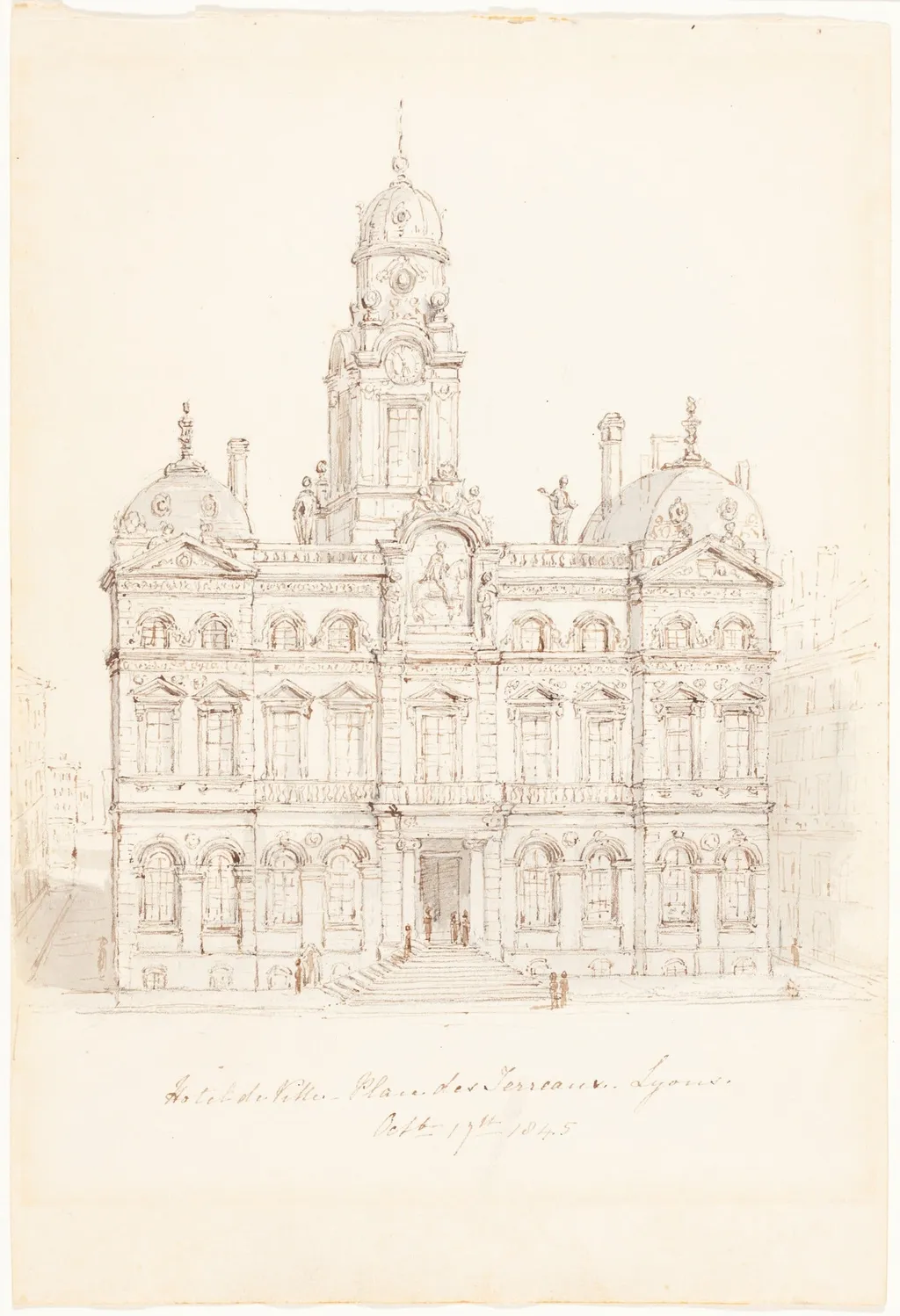
Hôtel de Ville, Place des Terreaux, Lyons is an ink drawing by the Romanticist artist Robert Smirke. It dates from 1845 and is held in the collection of the National Gallery of Art.
About this work
The painting is titled Hôtel de Ville, Place des Terreaux, Lyons.
It was created by Robert Smirke in 1845.
The artist used pen, brown ink, and gray wash over graphite on wove paper to create this work.
This painting is part of the Romanticism movement, which focused on emotion and individualism.
To learn more about this style, check out the movement: Romanticism.
Overview
Executed on wove paper, the work presents a cityscape rendered in pen, brown ink and a subtle gray wash applied over an initial graphite sketch.
Robert Smirke’s 1845 drawing records the municipal building and adjoining Place des Terreaux in Lyon. Executed on wove paper, the work presents a cityscape rendered in pen, brown ink and a subtle gray wash applied over an initial graphite sketch. The composition captures the architectural massing of the Hôtel de Ville against the open square, offering a concise visual document of mid‑nineteenth‑century urban space.
Subject & Meaning
The drawing focuses on the Hôtel de Ville, Lyon’s city hall, positioned within the expansive Place des Terreaux. By foregrounding the civic architecture amid the surrounding public space, Smirke emphasizes the relationship between municipal authority and communal gathering places, reflecting contemporary interest in the civic identity of French cities during a period of rapid urban change.
Technique & Style
Smirke employed a layered approach: a graphite underdrawing establishes form, followed by pen lines inked in brown to define structure, and a gray wash that unifies the scene with tonal depth. This restrained palette and emphasis on atmospheric effect align the work with Romantic sensibilities, where mood and individual perception of the urban environment are foregrounded.
Context
Created in the mid‑1840s, the drawing emerges amid the Romantic movement’s fascination with historic and picturesque subjects. While many Romantic artists turned to exotic or natural landscapes, Smirke applied the movement’s emotive approach to an urban setting, documenting a French city’s architectural heritage at a time when industrialization was reshaping urban forms.
History & Provenance
The piece is catalogued as a drawing by Robert Smirke, dated 1845. It remains part of a collection that records 19th‑century European cityscapes, though specific ownership history beyond its attribution to Smirke is not detailed in the available records.
Artist & collection


 Presentation Drawing of the Hôtel de Camondo
 Angers-Maison duc D'Anjou
 Untitled
 Library, San Lorenzo
 Grande Place, Brussels
 Brunswick Terrace, Hove
 House at the E. end of the Cathedral, Ypres.
 The Old Corcoran Gallery of Art
 Place de la Pucelle in Rouen
 Untitled
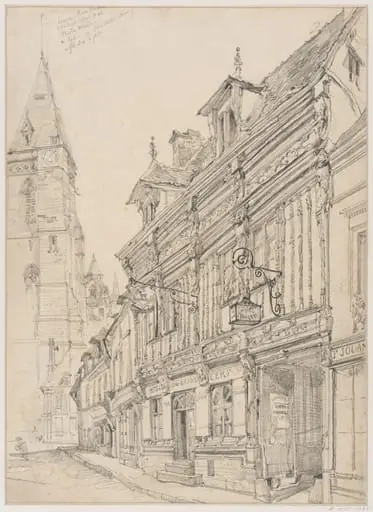 Hôtel du Grand Cerf, Les Andelys
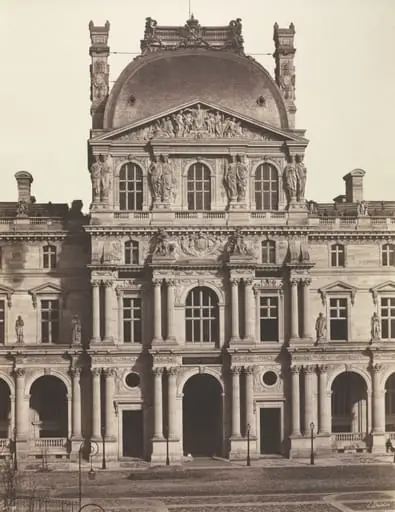 Pavilion Richelieu, Louvre, Paris