Artwork
Dragon
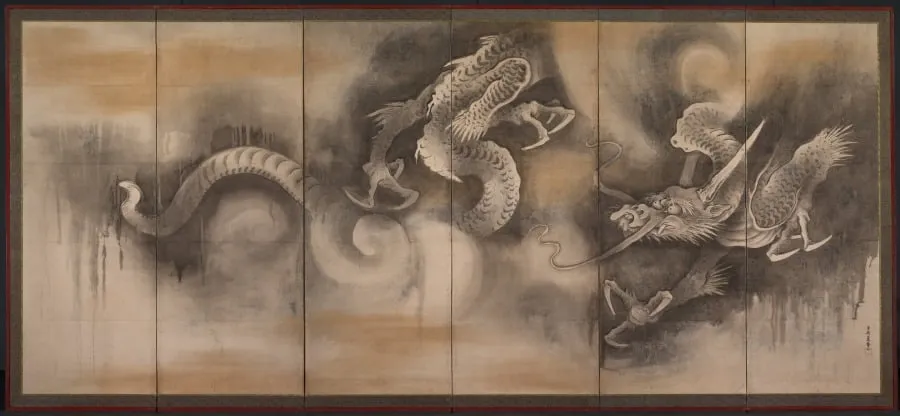
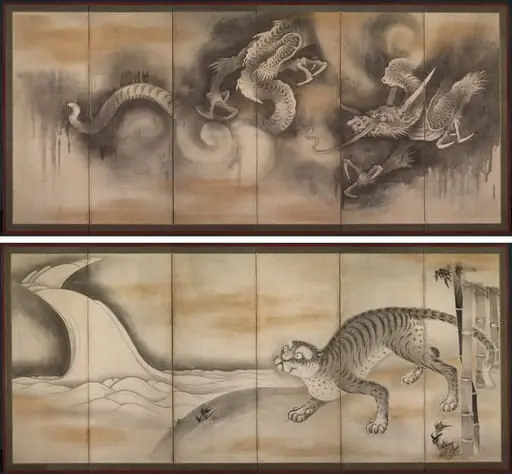
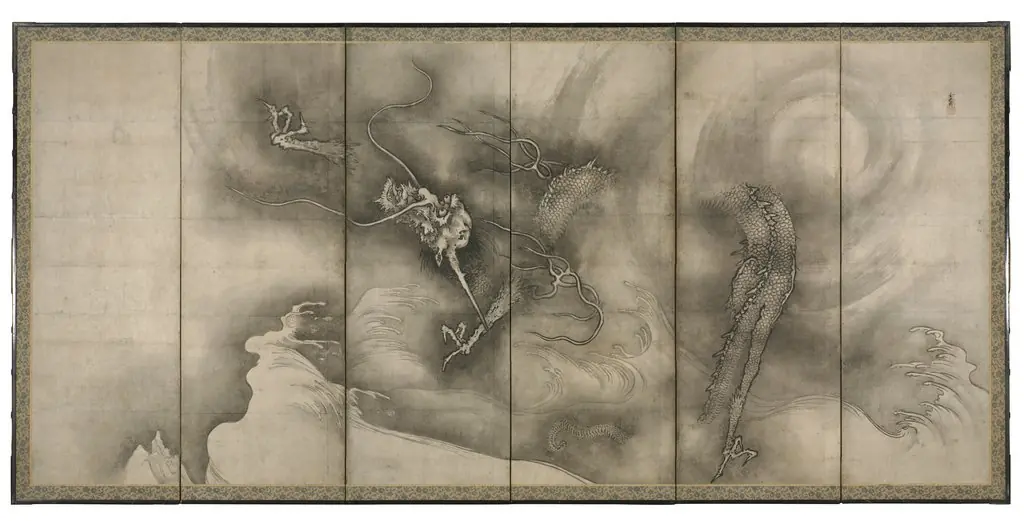
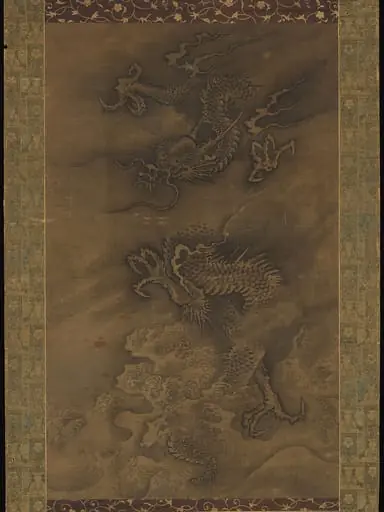
Dragon is an unspecified painting by the Baroque artist Soga Nichokuan. It dates from 1604 and is held in the collection of the Cleveland Museum of Art.
About this work
Overview
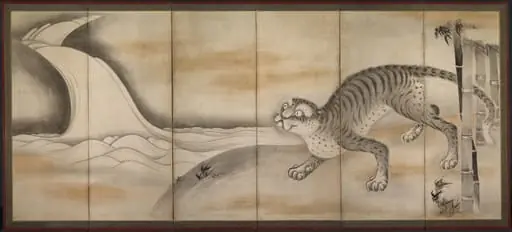
The two-panel painting presents a dynamic contrast: one screen depicts a sinuous dragon soaring amid billowing clouds, while the opposite screen shows a tiger emerging from a bamboo thicket to gaze at a cascading waterfall. Executed in ink on paper, the work balances vigorous movement with tranquil landscape, embodying a traditional visual dialogue between two emblematic creatures.
Subject & Meaning
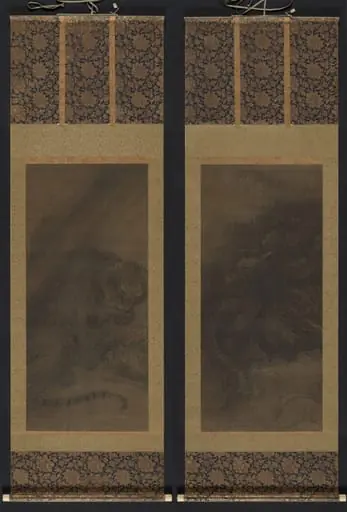
In East Asian symbolism, the dragon and tiger represent complementary cosmic forces—dragon as yang, embodying celestial change, and tiger as yin, signifying earthly strength. Their juxtaposition on paired screens conveys a philosophical equilibrium, suggesting that transformation in the heavens and vigor on the ground together sustain universal harmony.
Technique & Style
The artist employs swift, assured brushwork to render the dragon’s elongated body in stark black lines, set against soft gray‑white washes that suggest swirling clouds. The tiger is rendered with a combination of bold outlines and delicate shading, capturing the animal’s muscular form and the surrounding foliage with a sense of immediacy and vigor.
History & Provenance
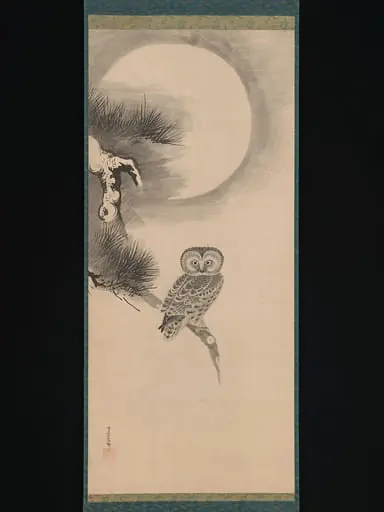
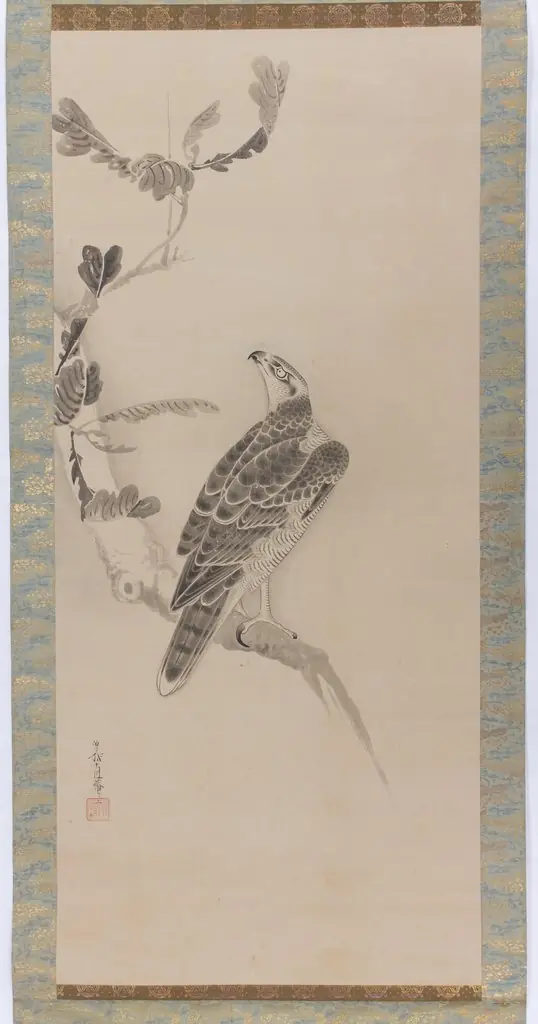
Signed and sealed by Soga Nichokuan, the painting can be dated to the early 17th century. Nichokuan, a painter associated with Sakai near Osaka, is chiefly known for his depictions of hawk‑eagles. The presence of his signature is unusual for the period, providing a rare documented link to his oeuvre.
Context
During the early Edo period, pairing dragons with tigers on folding screens was a common motif used to illustrate the balance of yin and yang. Such compositions were often displayed in reception rooms or tea houses, where the contrasting yet harmonious imagery reinforced ideals of order and natural balance.
Artist & collection