Artwork
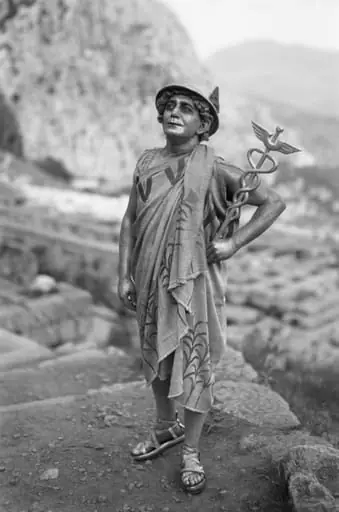
O Ηλίας Δεστούνης (πιθανόν) στον ρόλο του βασιλιά του Άργους, 1930. Αισχύλου Ικέτιδες, Δεύτερες Δελφικές Εορτές
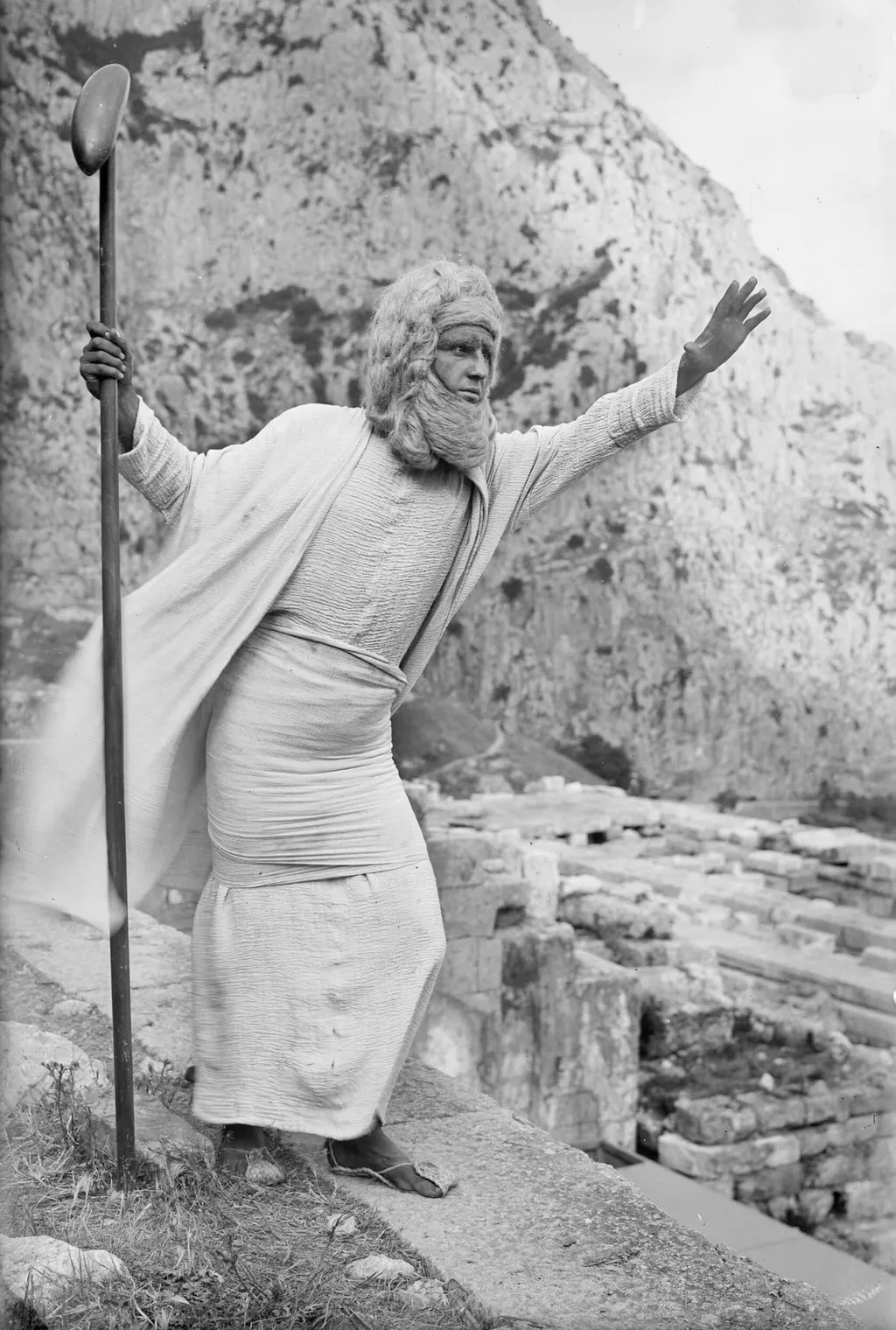
O Ηλίας Δεστούνης (πιθανόν) στον ρόλο του βασιλιά του Άργους, 1930. Αισχύλου Ικέτιδες, Δεύτερες Δελφικές Εορτές is a photography by Elly (Nelly’s) Sougioultzoglou-Seraidari. It dates from 1930 and is held in the collection of the Metropolitan Organisation of Museums of Visual Arts of Thessaloniki – MOMus. The black‑and‑white image, taken in 1930, captures a male figure in classical‑style costume standing on a rugged hillside.
About this work
They’re holding a tall staff with a rounded top in one hand and raising the other arm wide open, as if addressing someone.
This black-and-white photo shows a person dressed in flowing robes, standing on a rocky hillside. They’re holding a tall staff with a rounded top in one hand and raising the other arm wide open, as if addressing someone. The background has rough cliffs and a narrow path below, giving a sense of height.
The person’s costume looks like ancient Greek clothing, maybe for a play. This photo was taken in 1930 as part of a theater performance.
If you like this, check out the Museum of Ethnography for more historical photos.
Overview
The black‑and‑white image, taken in 1930, captures a male figure in classical‑style costume standing on a rugged hillside. He holds a tall, rounded‑top staff in one hand while extending the other arm outward, suggesting a theatrical gesture. The composition includes steep cliffs and a narrow path that emphasize the height of the setting.
Subject & Meaning
The costumed individual is identified as Ilias Despoudinis, likely portraying the mythic king of Argos. The pose and regalia align with ancient Greek theatrical conventions, indicating a performance that dramatizes historical or legendary narratives.
Technique & Style
Photographed in monochrome, the work employs stark contrasts to delineate the figure against the craggy landscape. The image’s framing isolates the performer, while the natural terrain provides a dramatic backdrop, a common approach in early twentieth‑century documentary theatre photography.
History & Provenance
Created by photographer Elly Sougioultzoglou‑Seraidari, the picture documents a staging of Aeschylus’ Iktides during the Second Delphic Festivals. The print is presently part of the collection of the Museum of Ethnography, where it is conserved as a visual record of Greek cultural revival activities of the period.
Context
The Second Delphic Festivals, organized in the 1930s, sought to revive classical Greek arts and rituals. Performances such as the one depicted were staged to reconnect contemporary audiences with ancient myth and drama, reflecting broader nationalist cultural policies of interwar Greece.
Artist & collection
Artist
Elly (Nelly’s) Sougioultzoglou-Seraidari
Elly Sougioultzoglou-Seraidari (1899–1998) was an artist.
Museum
Metropolitan Organisation of Museums of Visual Arts of Thessaloniki – MOMus
Continue through works from the same source collection.