Artwork
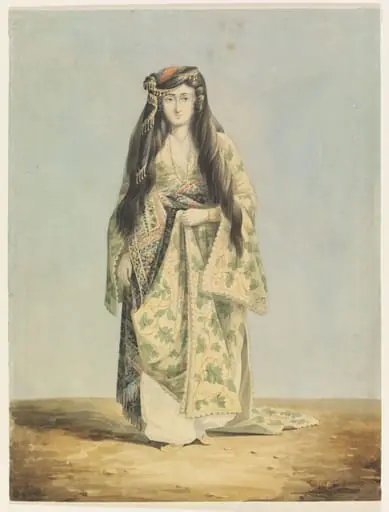
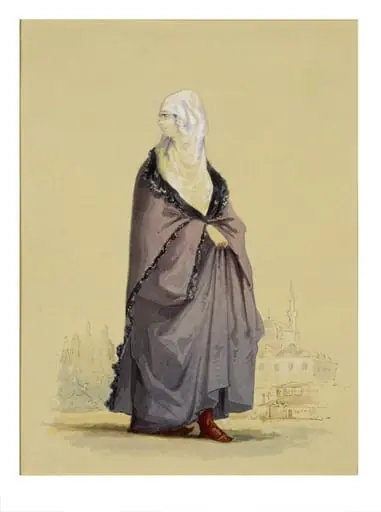
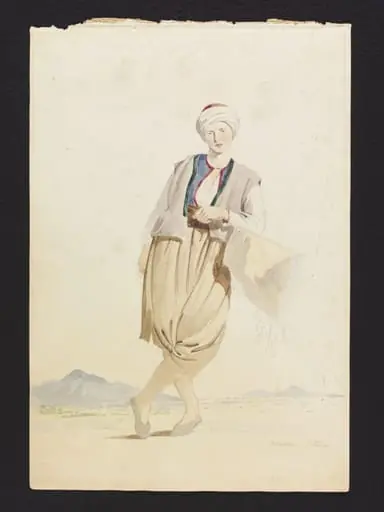
A Turkish lady in Walking Dress
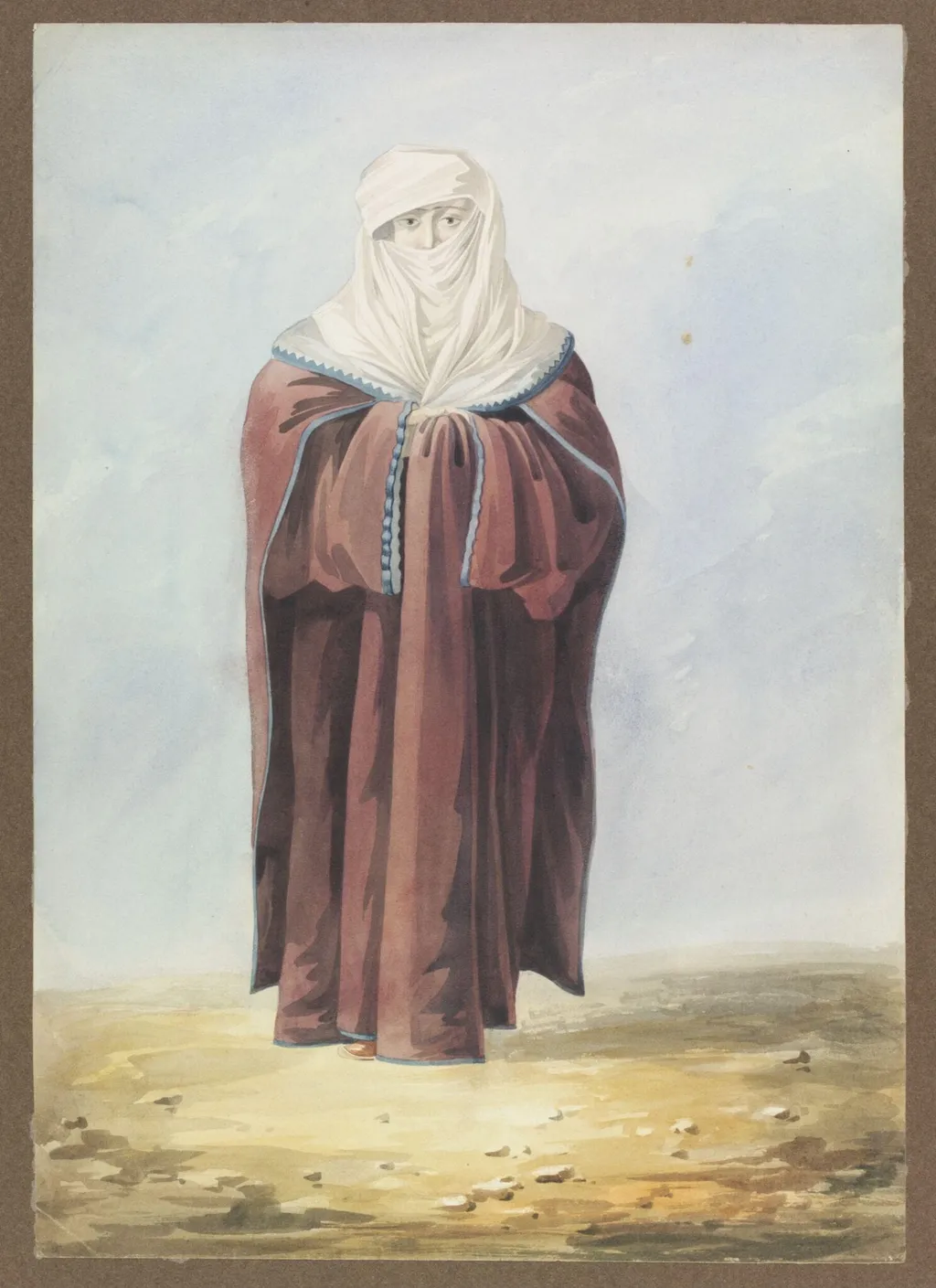
A Turkish lady in Walking Dress is a watercolor work on paper by the American Impressionist artist William Page. It dates from 1820 and is held in the collection of the Victoria and Albert Museum.
About this work
Overview
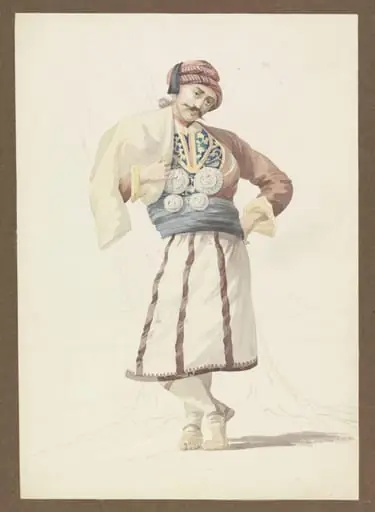
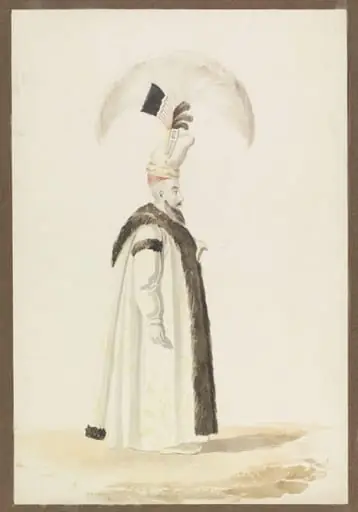
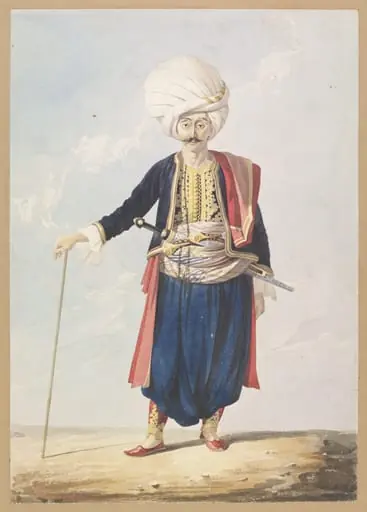
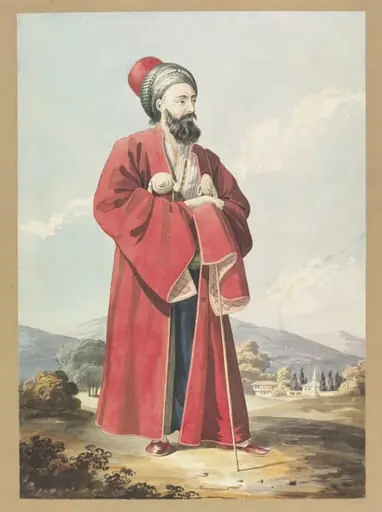
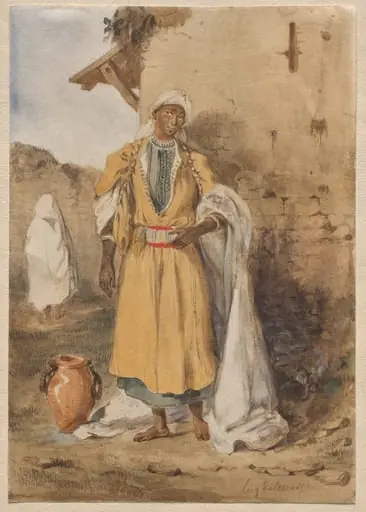
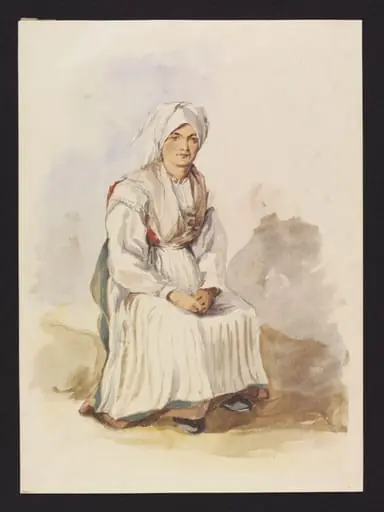
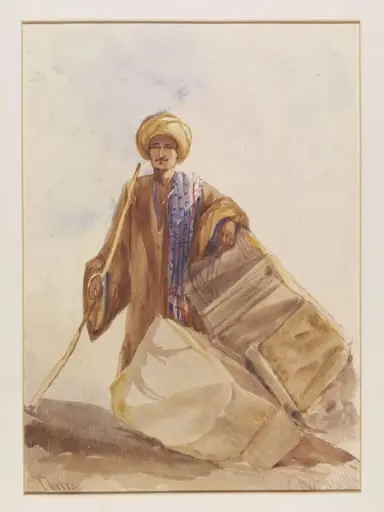
A Turkish lady in walking dress is the subject of this watercolour, created by William Page circa 1820. The work is one of a series of costume studies, reflecting the artist’s stylistic evolution during his Near East travels.
Subject & Meaning
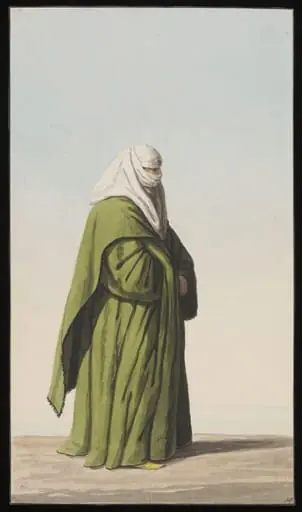
The painting portrays a woman in a brown robe with blue trim and a white headscarf covering her face, set against a desert landscape with a muted blue sky and sandy dune. Only her eyes are visible, conveying a sense of modesty or anonymity.
Technique & Style
Executed in watercolour, the piece features elegant drapery and a soft, dreamy quality characteristic of Romantic-era art, with the medium’s transparency and fluidity enhancing the overall ethereal effect.
History & Provenance
The work remained unpublished until acquisition by Maggs in June 1967, later entering a private collection. It is one of several similar studies, with only one other from the series having been previously reproduced.
Context
Created during Page’s time in the Near East, the work blends direct observation with possible secondary sources, illustrating the artist’s development amidst cross-cultural influences.
Legacy
As an unpublished work in a private collection, its impact on the broader artistic discourse is limited, though it contributes to understanding Page’s stylistic growth and interest in Orientalist themes.
Artist & collection