Artwork
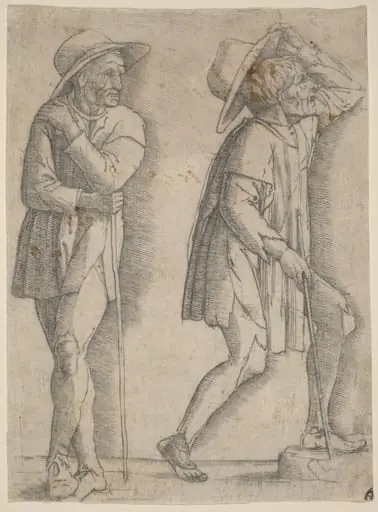
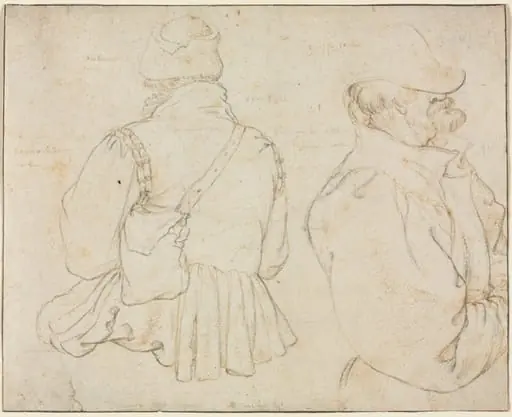
Bust of Two Men [recto]
![Bust of Two Men [recto], by Sperandio, ink, 1468](https://artifactworldgallery.com/img/sperandio--bust-of-two-men-recto--aa76f84e77b8c1b2-w1024.webp)
Bust of Two Men [recto] is an ink drawing by the Renaissance artist Sperandio. It dates from 1468 and is held in the collection of the National Gallery of Art. Created in 1468, the drawing titled Bust of Two Men (recto) is executed with pen and black and brown ink on laid paper.
About this work
Overview
Created in 1468, the drawing titled Bust of Two Men (recto) is executed with pen and black and brown ink on laid paper. A light underdrawing made with a stylus underlies the composition, providing a faint framework for the final lines. The work is a small-scale study, catalogued as a drawing rather than a finished painting or sculpture.
Subject & Meaning
The juxtaposition may reflect a comparative study of age, status, or facial features rather than a narrative scene.
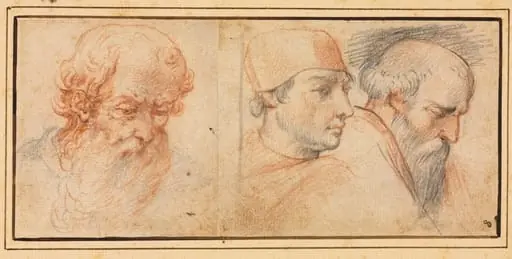
The image presents two male busts rendered in profile, each turned away from the other. The figure on the left is distinguished by a flat cap and a ruffled collar, suggesting contemporary dress, while the right-hand figure appears older, with a balding head and a loosely draped shirt. The juxtaposition may reflect a comparative study of age, status, or facial features rather than a narrative scene.
Technique & Style
Sperandio employs a restrained line quality, combining precise contour work with subtle shading achieved through cross‑hatching. Overlapping strokes of ink generate tonal variation, allowing the artist to suggest texture in clothing and hair without resorting to heavy coloration. The underlying stylus underdrawing remains visible in places, indicating a methodical approach that balances draftsmanship with finished detail.
History & Provenance
The drawing is attributed to the Italian artist Sperandio and dates to the late fifteenth century, a period when pen and ink studies were commonly used for preparatory work or independent portraiture. Its survival on laid paper, a material typical of the era, suggests it was kept in a personal collection rather than a formal archive, though specific ownership records prior to modern acquisition are not documented.
Artist & collection