Artwork
Three Head Studies
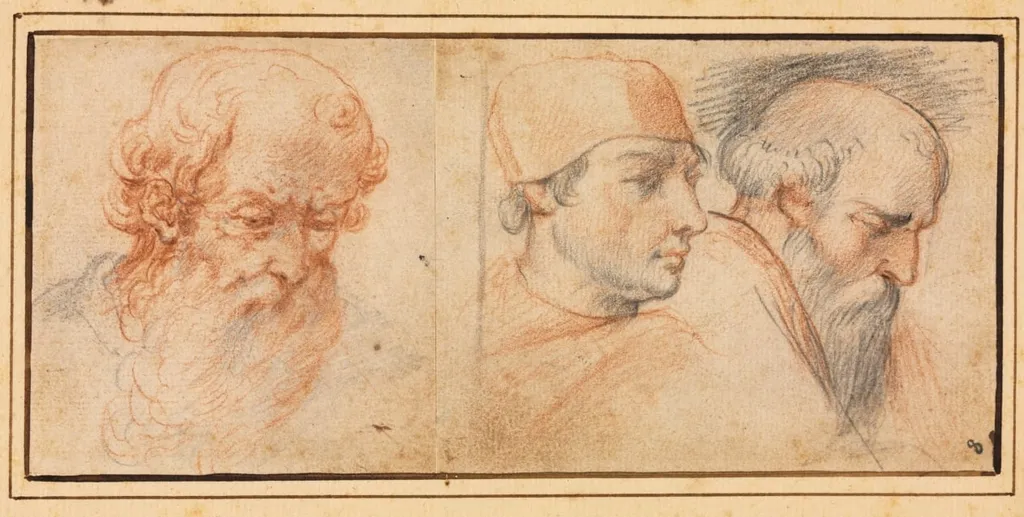
Three Head Studies is a drawing by the Baroque artist Unknown. It dates from 1604 and is held in the collection of the Cleveland Museum of Art.
About this work
Overview
Three Head Studies is a sheet of paper bearing three quick pencil or charcoal sketches of elderly men with beards. Rendered in muted browns and grays, the lines are light and fluid, suggesting spontaneous observation rather than polished finish. The paper shows signs of age and handling, reinforcing the impression of a working sketch rather than a finished work.
Subject & Meaning
The subjects are three distinct male profiles—frontal, three-quarter, and profile views—each emphasizing age through wrinkled skin and sparse, textured hair.
The subjects are three distinct male profiles—frontal, three-quarter, and profile views—each emphasizing age through wrinkled skin and sparse, textured hair. No narrative or symbolic context is given; the focus is on the physical presence and individuality of the sitters. The sketches suggest an artist studying human form, possibly preparing for a larger composition involving portraiture or biblical figures.
Technique & Style
The artist uses minimal, economical strokes to suggest volume and texture. Wrinkles and beard hairs are indicated with faint, overlapping lines rather than detailed rendering. Subtle tonal gradations create a sense of light falling across faces, demonstrating an intuitive grasp of form through shadow and contour. The looseness of the lines conveys immediacy and observation over refinement.
History & Provenance
The drawing’s origin is not definitively recorded, but its style and medium align with preparatory studies from the late Renaissance or early Baroque period. It likely belonged to an artist’s private sketchbook, used for practice or reference. Its survival suggests it was valued as a record of artistic process, though its exact provenance before modern collection remains unclear.
Context
During the 16th and 17th centuries, artists routinely made studies of heads to refine their understanding of anatomy, expression, and lighting. Such sketches were essential training, especially for painters working on religious or historical scenes requiring believable figures. This sheet reflects a common studio practice, where observation of real models preceded monumental works.
Legacy
Though unsigned and unattributed, the drawing exemplifies how artists of the period approached portraiture through direct observation. Its unpolished quality reveals the working methods behind more finished paintings, offering insight into the transition from study to final composition. It remains a quiet testament to the discipline of seeing and recording the human face.
Artist & collection

 Domestic Scene
 Giacomo and Cardinal Marco, investing Andrea, Abbot of San Zeno, with his Benefice
 The Nymph of Fontainebleau
 Portrait of a Woman
 Madonna and Child with Saints in the Enclosed Garden
 Venus and Minerva
 Family Group of Four on Sofa
 Wall painting from Room H of the Villa of P. Fannius Synistor at Boscoreale
 Three Heads and Other Sketches (verso)
![Sheet of Studies [recto], by Leonardo da Vinci](https://artifactworldgallery.com/img/leonardo-da-vinci--sheet-of-studies-recto--1bdf3f81c9affbae-w320.webp) Sheet of Studies [recto]
Sheet of Studies [recto] Head of a Man
 Sketch of Two Men and Other Various Figures (verso)
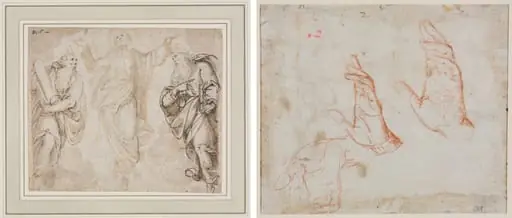 The Transfiguration (recto); Study of Hands (verso)
![Bust of Two Men [recto], by Sperandio](https://artifactworldgallery.com/img/sperandio--bust-of-two-men-recto--aa76f84e77b8c1b2-w320.webp) Bust of Two Men [recto]
Bust of Two Men [recto]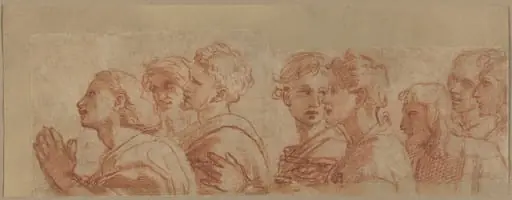 Eight Apostles
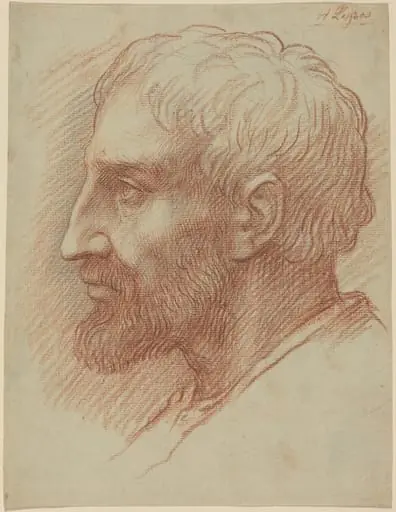 Head of a Man
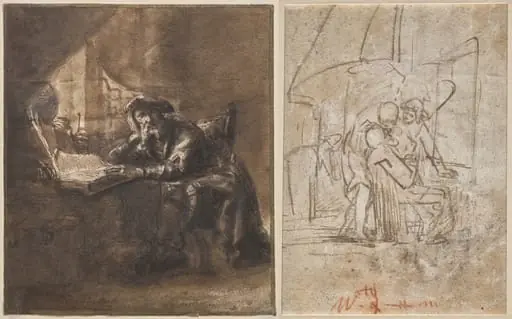 An Old Man Seated at a Table, His Head Resting on His Right Hand (recto); The Healing of Tobit (verso)
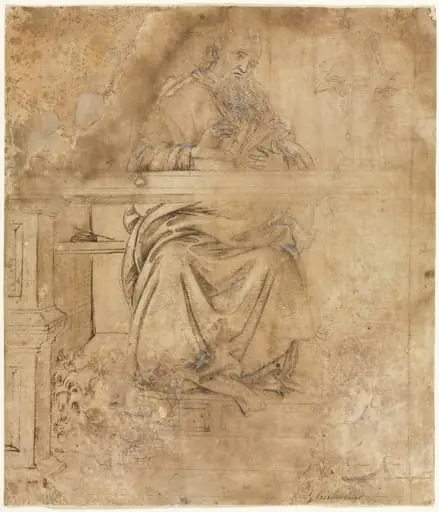 St. Jerome in His Study