Artwork
Collection of Various Caprices and New Designs of Cartouches and Ornaments: No 14
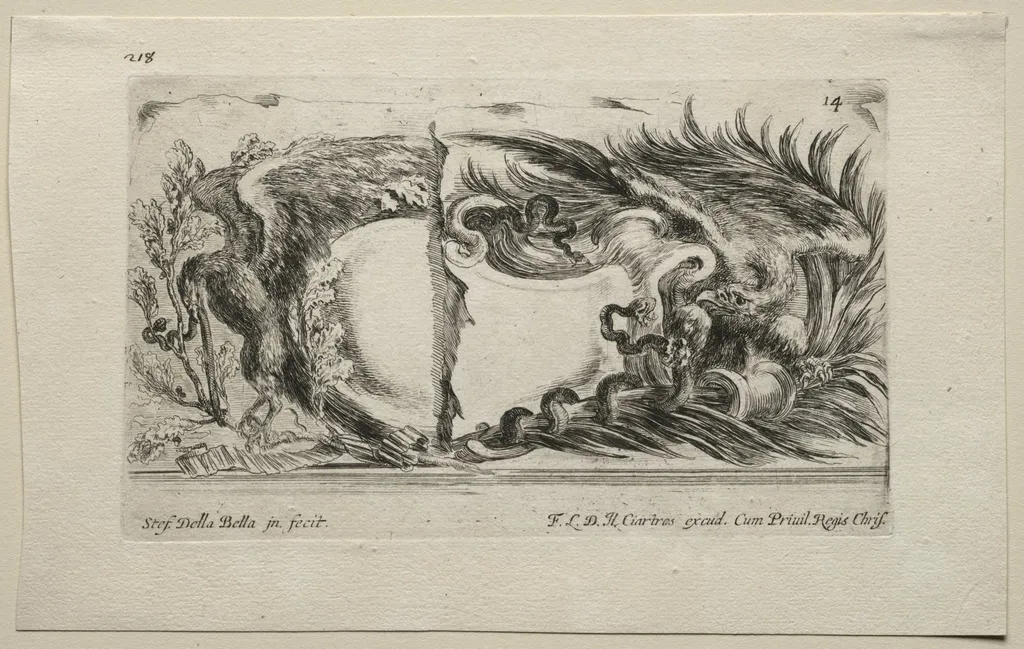
Collection of Various Caprices and New Designs of Cartouches and Ornaments: No 14 is a print by the Baroque artist Stefano Della Bella. It dates from 1646 and is held in the collection of the Cleveland Museum of Art.
About this work
Overview
Created in 1646 by Stefano della Bella, this print is one of many in a series of ornamental designs that showcase his command of etching.
Created in 1646 by Stefano della Bella, this print is one of many in a series of ornamental designs that showcase his command of etching. Unlike his more narrative works, this piece focuses on dynamic, fantastical compositions intended as decorative models. The composition avoids clear narrative, instead emphasizing motion and texture through bold, expressive lines. Its purpose was likely to serve as a source for artisans and designers working in applied arts.
Subject & Meaning
The scene depicts a chaotic encounter between a rearing horse entangled in ropes and a man grappling with a net and a snarling dog. No clear story is told; instead, the imagery evokes tension and primal energy. The figures appear as symbolic elements—wildness, struggle, control—rendered without literal context. The intent seems to be aesthetic rather than allegorical, inviting viewers to appreciate the visual intensity rather than decode a message.
Technique & Style
Della Bella employed etching with thick, incised lines to generate dramatic contrast and movement. The background is filled with agitated, swirling strokes that suggest turbulence, while the figures are rendered with sharp, angular contours. The absence of tone or shading emphasizes line as the primary vehicle of expression. This approach reflects his training in draftsmanship and his interest in capturing kinetic energy through precise, hand-drawn marks.
History & Provenance
The print originated in Florence, where della Bella worked during a period of intense artistic exchange between Italy and Northern Europe. It was likely produced for circulation among craftsmen, architects, and collectors interested in ornamental design. No specific early ownership records are documented, but similar plates from the series appear in institutional collections, suggesting widespread dissemination among design circles in the mid-seventeenth century.
Context
This work emerged during the Baroque era, a time when decorative arts flourished alongside grander pictorial traditions. Artists like della Bella bridged fine and applied arts, producing designs that fed into furniture, architecture, and metalwork. The emphasis on movement and emotional intensity aligns with broader Baroque sensibilities, though this print’s function was utilitarian rather than monumental, serving as a template for ornamentation.
Legacy
Della Bella’s ornamental prints influenced generations of designers in Europe, particularly in the use of expressive line to convey motion and texture. Though not widely exhibited as fine art in his lifetime, his collections became reference materials for decorative studios well into the eighteenth century. His ability to translate dynamic compositions into reproducible forms helped shape the visual language of Baroque ornamentation beyond painting and sculpture.
Artist & collection
Artist
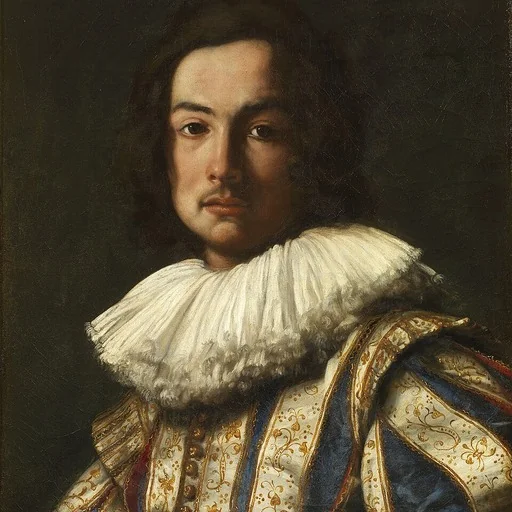
Stefano della Bella (18 May 1610 – 12 July 1664) was an Italian draughtsman and printmaker known for etchings of a great variety of subjects, including military and court scenes, landscapes, and lively genre scenes.

![The Flight into Egypt [verso], by Stefano Della Bella](https://artifactworldgallery.com/img/stefano-della-bella--the-flight-into-egypt-verso--3a100db72e6d25e3-w320.webp)
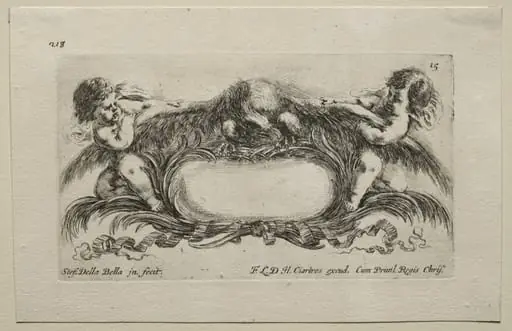 Collection of Various Caprices and New Designs of Cartouches and Ornaments: No 15
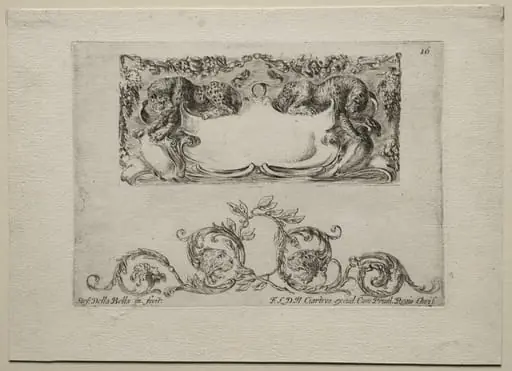 Collection of Various Caprices and New Designs of Cartouches and Ornaments: No 16
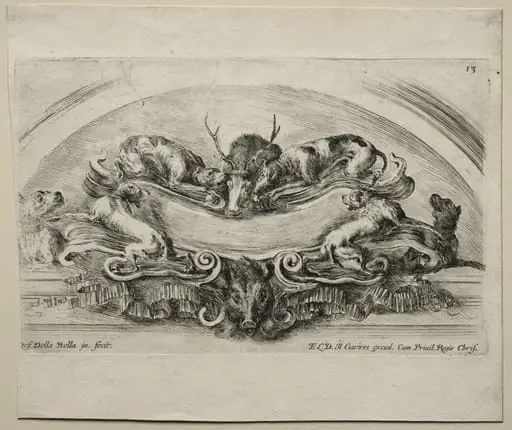 Collection of Various Caprices and New Designs of Cartouches and Ornaments: No 13
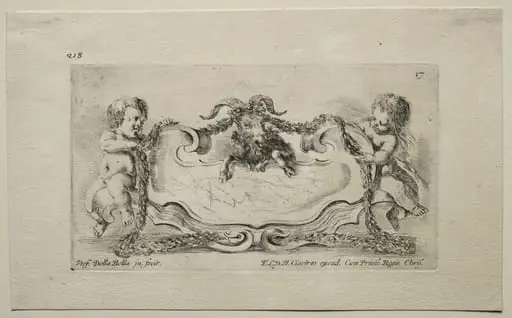 Collection of Various Caprices and New Designs of Cartouches and Ornaments: No 17
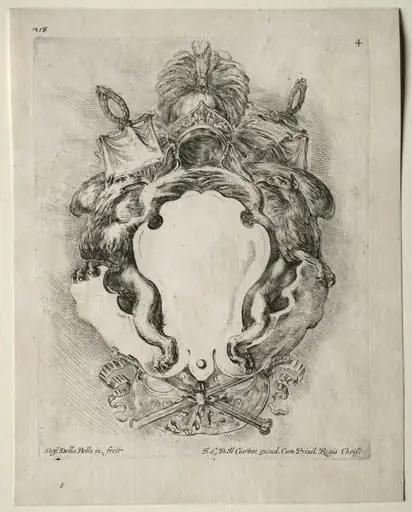 Collection of Various Caprices and New Designs of Cartouches and Ornaments: No. 4
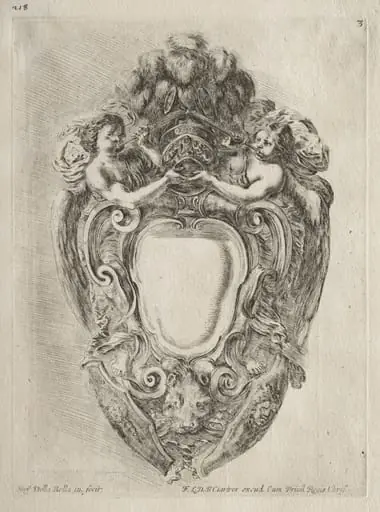 Collection of Various Caprices and New Designs of Cartouches and Ornaments: No. 3