Artwork
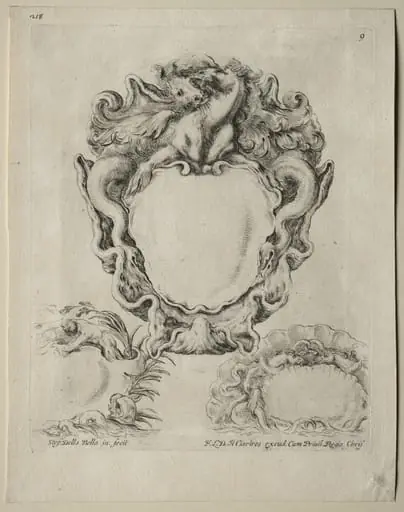
Collection of Various Caprices and New Designs of Cartouches and Ornaments: No 13
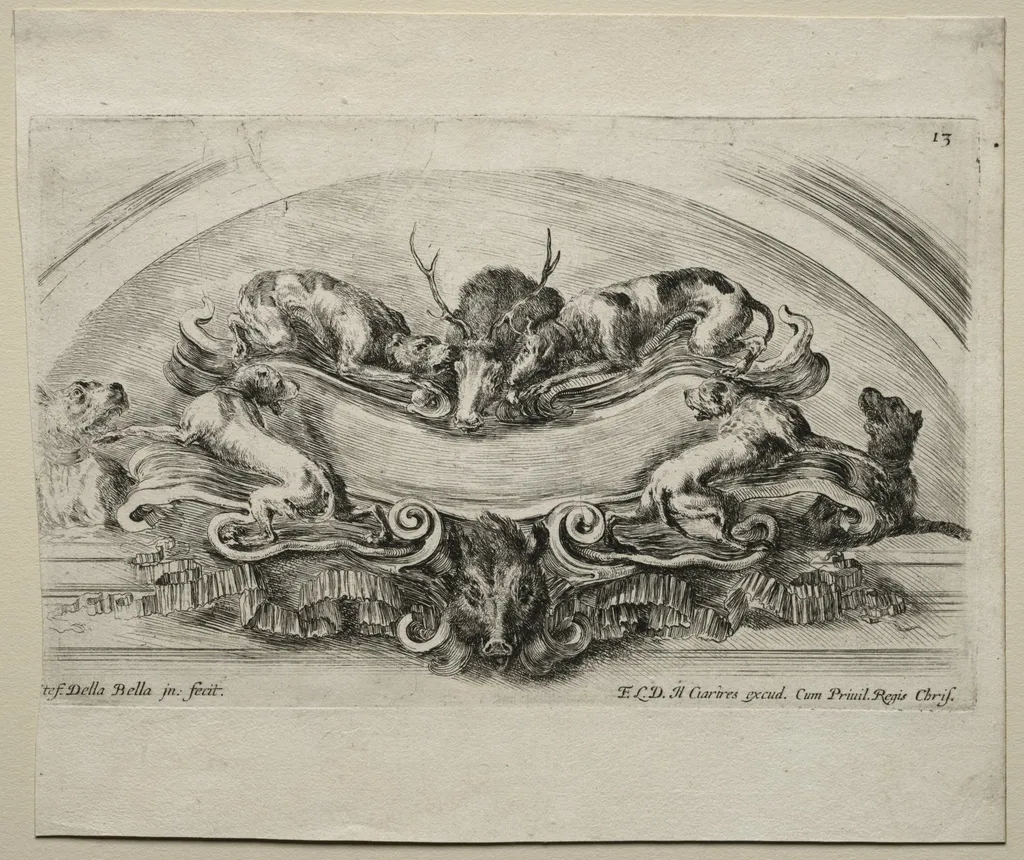
Collection of Various Caprices and New Designs of Cartouches and Ornaments: No 13 is a print by the Baroque artist Stefano Della Bella. It dates from 1646 and is held in the collection of the Cleveland Museum of Art.
About this work
Overview
Created in 1646 by Stefano della Bella, this print is one of many in a series of ornamental designs that showcase his mastery of etching.
Created in 1646 by Stefano della Bella, this print is one of many in a series of ornamental designs that showcase his mastery of etching. As a Florentine artist active in the mid-17th century, della Bella produced over a thousand prints and countless drawings, often blending documentary precision with imaginative flair. This piece stands apart as a decorative study rather than a narrative scene, emphasizing pattern and movement over storytelling.
Subject & Meaning
The composition centers on a large ram with prominent horns, encircled by smaller animals—goats, birds, and other creatures—engaged in dynamic, almost chaotic motion. These forms are suspended in a swirling, cloud-filled void, suggesting a celestial or fantastical realm. The imagery does not convey a specific myth or allegory but instead evokes a sense of natural energy, possibly reflecting Baroque fascination with the sublime and the untamed.
Technique & Style
Della Bella employed fine, incisive etching lines to generate dense, rhythmic textures that animate the entire surface. The sharp, overlapping contours of clouds and fur create a sense of turbulence, while the varied density of hatching gives depth to the floating forms. His technique balances control with spontaneity, allowing intricate detail to coexist with an impression of wild motion, characteristic of his approach to decorative printmaking.
History & Provenance
This print was produced as part of a broader series of ornamental designs intended for use by artisans and designers, likely circulated among craftsmen in Florence and beyond. Though not commissioned for a specific patron, such works were valued for their adaptability in architecture and decorative arts. The print survives in multiple institutional collections, testament to its enduring utility and artistic appeal in the 17th-century print market.
Context
In mid-17th-century Italy, ornamental prints like this one served as visual references for stucco workers, goldsmiths, and architects. Della Bella’s work emerged alongside a broader European interest in fantastical and naturalistic motifs, diverging from strict classical norms. His ability to merge observed anatomy with imaginative arrangement aligned with Baroque sensibilities that embraced movement, complexity, and emotional intensity.
Legacy
Della Bella’s ornamental prints influenced later generations of designers and printmakers, particularly in the realm of decorative arts. His integration of natural forms into abstract compositions prefigured 18th-century Rococo exuberance and informed the development of pattern books. Though less celebrated than his military or genre scenes, these caprices remain vital examples of how printmaking could bridge fine art and applied design.
Artist & collection
Artist
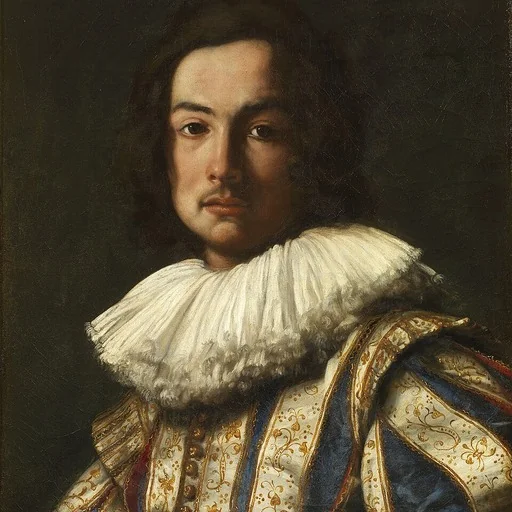
Stefano della Bella (18 May 1610 – 12 July 1664) was an Italian draughtsman and printmaker known for etchings of a great variety of subjects, including military and court scenes, landscapes, and lively genre scenes.

![The Flight into Egypt [verso], by Stefano Della Bella](https://artifactworldgallery.com/img/stefano-della-bella--the-flight-into-egypt-verso--3a100db72e6d25e3-w320.webp)
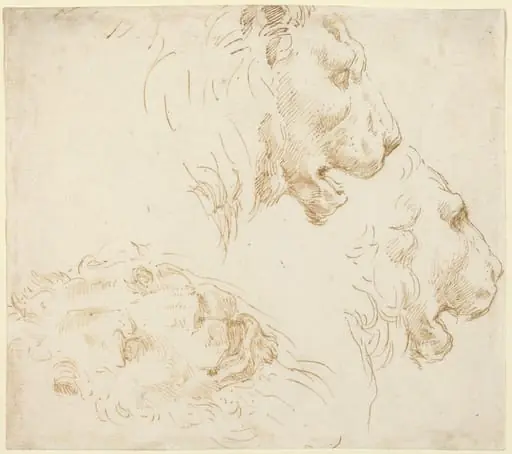
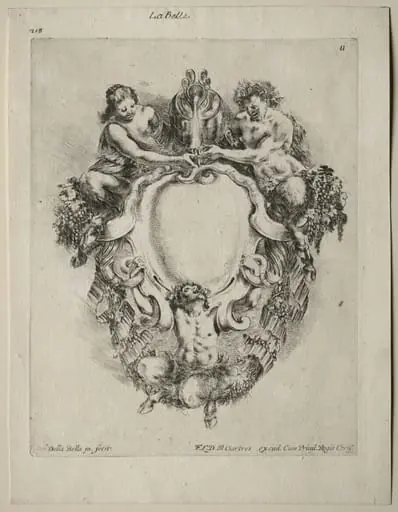 Collection of Various Caprices and New Designs of Cartouches and Ornaments: No 11
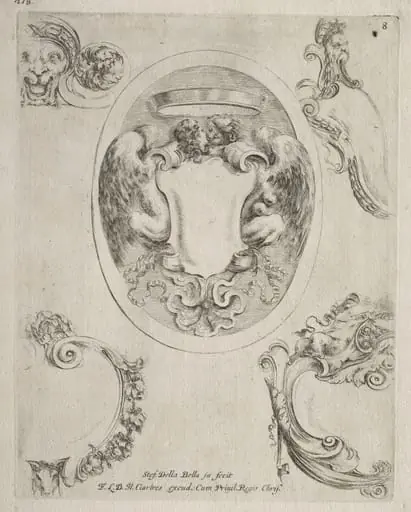 Collection of Various Caprices and New Designs of Cartouches and Ornaments: No 8
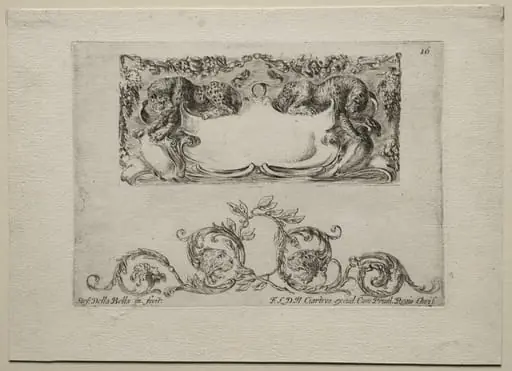 Collection of Various Caprices and New Designs of Cartouches and Ornaments: No 16
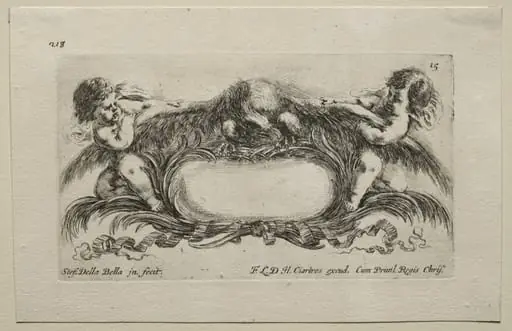 Collection of Various Caprices and New Designs of Cartouches and Ornaments: No 15
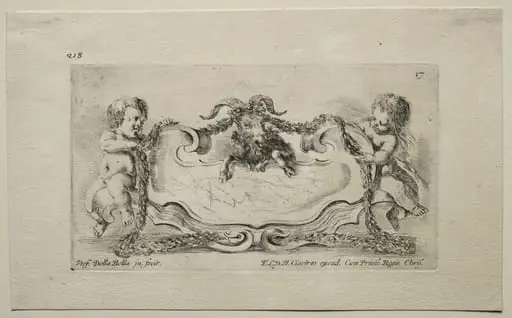 Collection of Various Caprices and New Designs of Cartouches and Ornaments: No 17
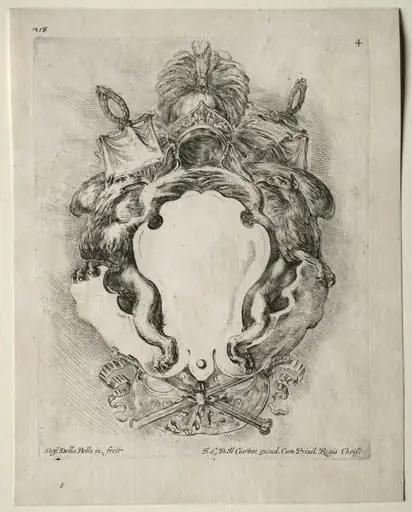 Collection of Various Caprices and New Designs of Cartouches and Ornaments: No. 4
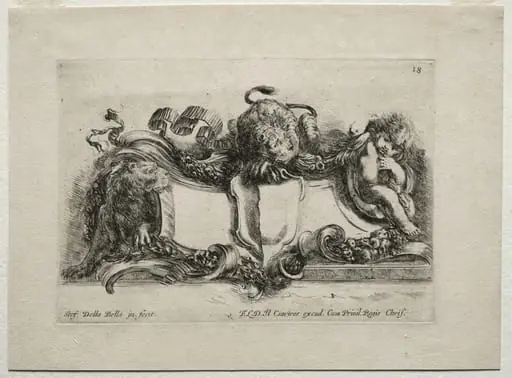 Collection of Various Caprices and New Designs of Cartouches and Ornaments: No 18
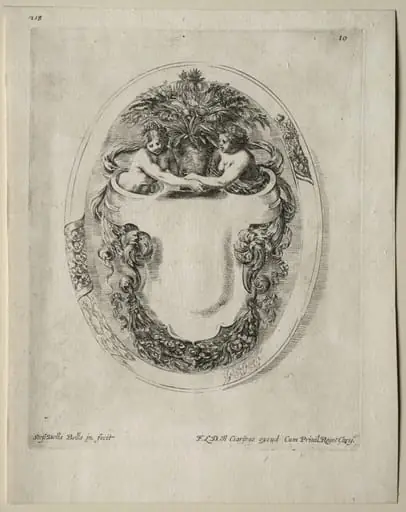 Collection of Various Caprices and New Designs of Cartouches and Ornaments: No 10
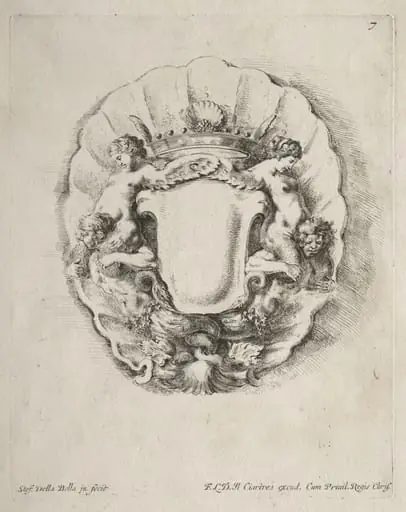 Collection of Various Caprices and New Designs of Cartouches and Ornaments: No 7
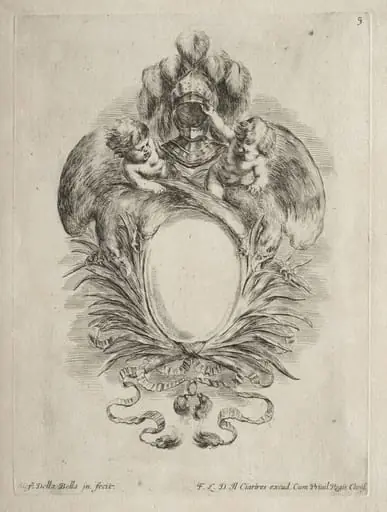 Collection of Various Caprices and New Designs of Cartouches and Ornaments: No. 5
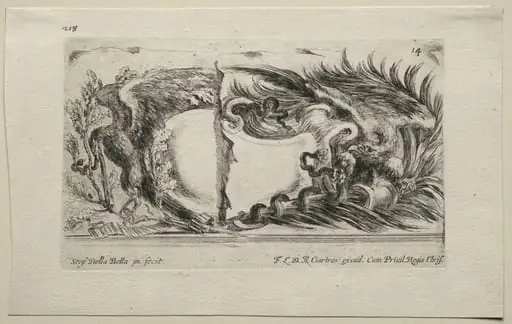 Collection of Various Caprices and New Designs of Cartouches and Ornaments: No 14
 Collection of Various Caprices and New Designs of Cartouches and Ornaments: No. 9