Artwork
Portrait of the Artist's Wife Marfa Yaremich
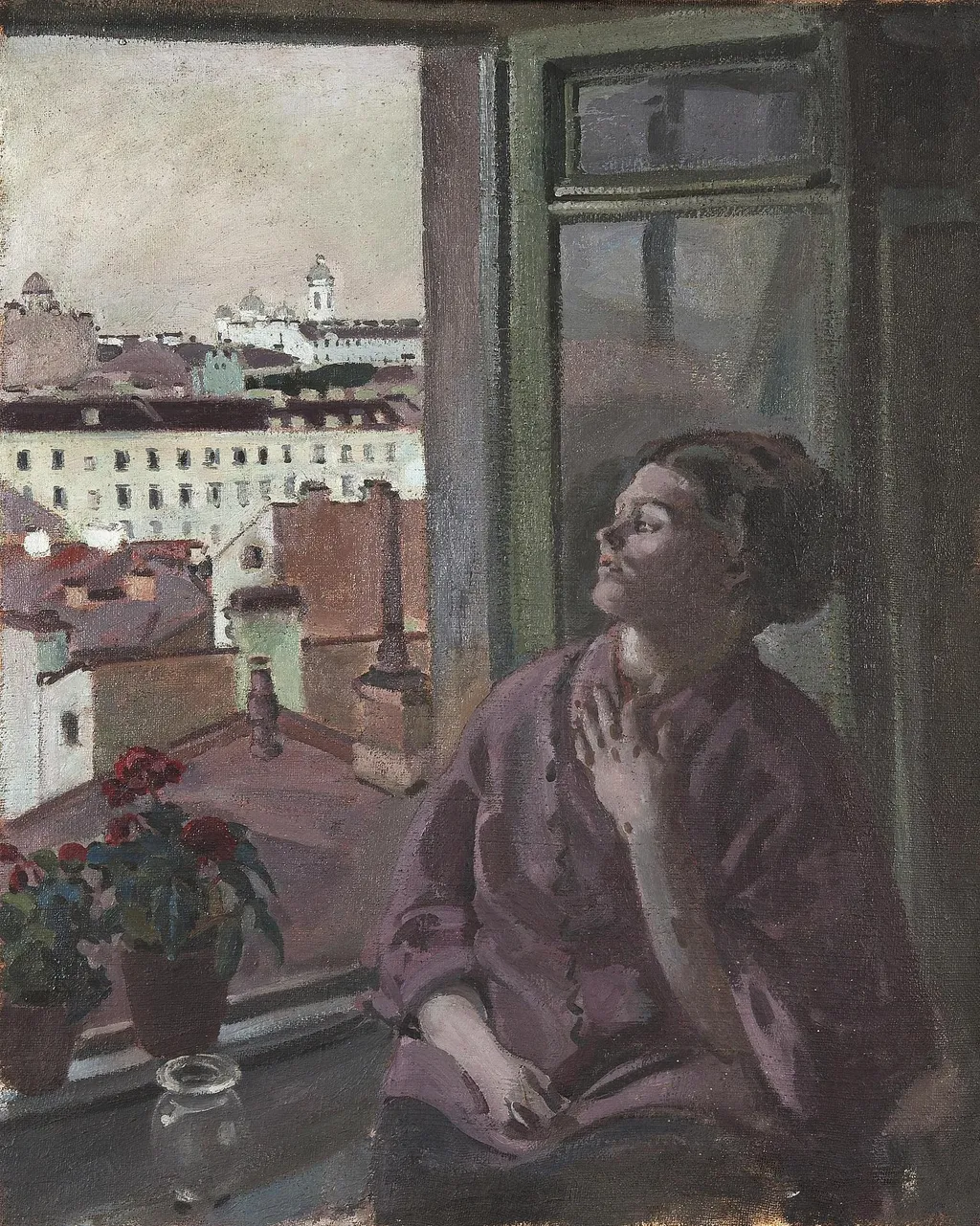
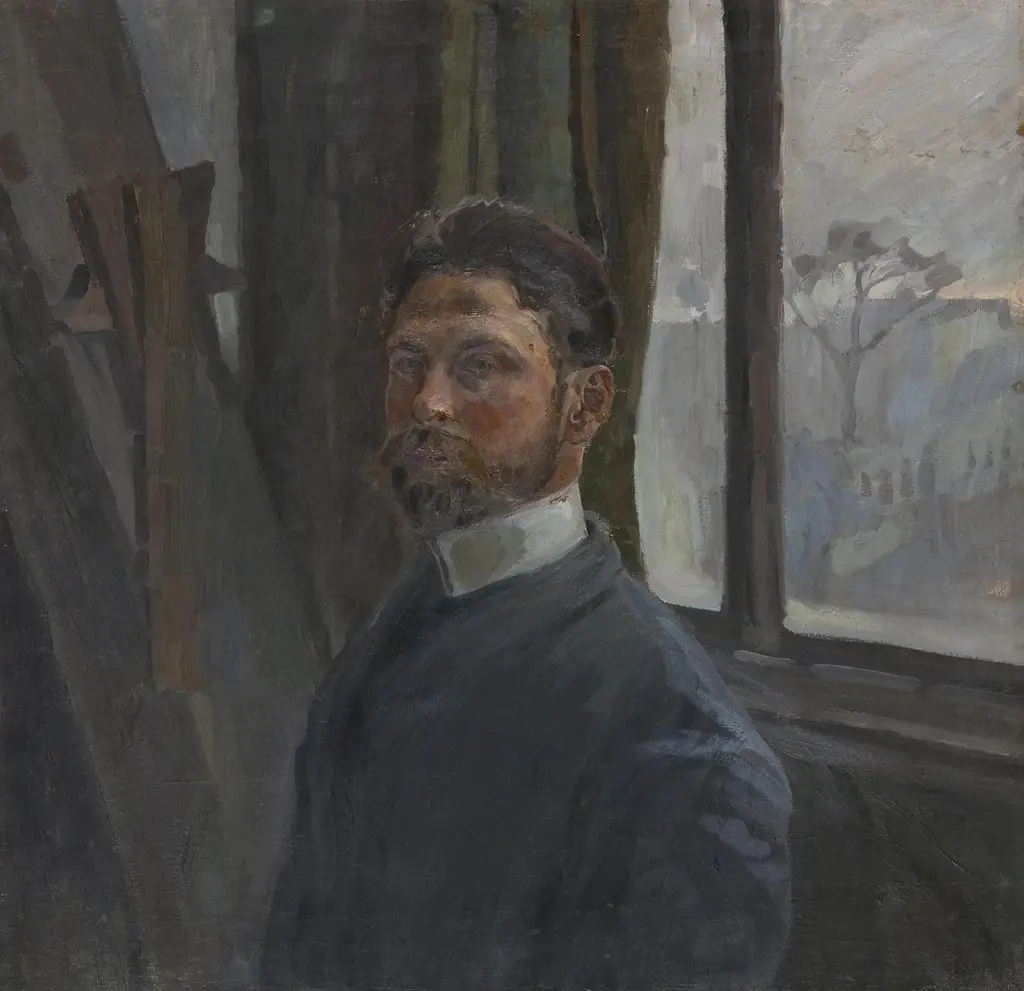
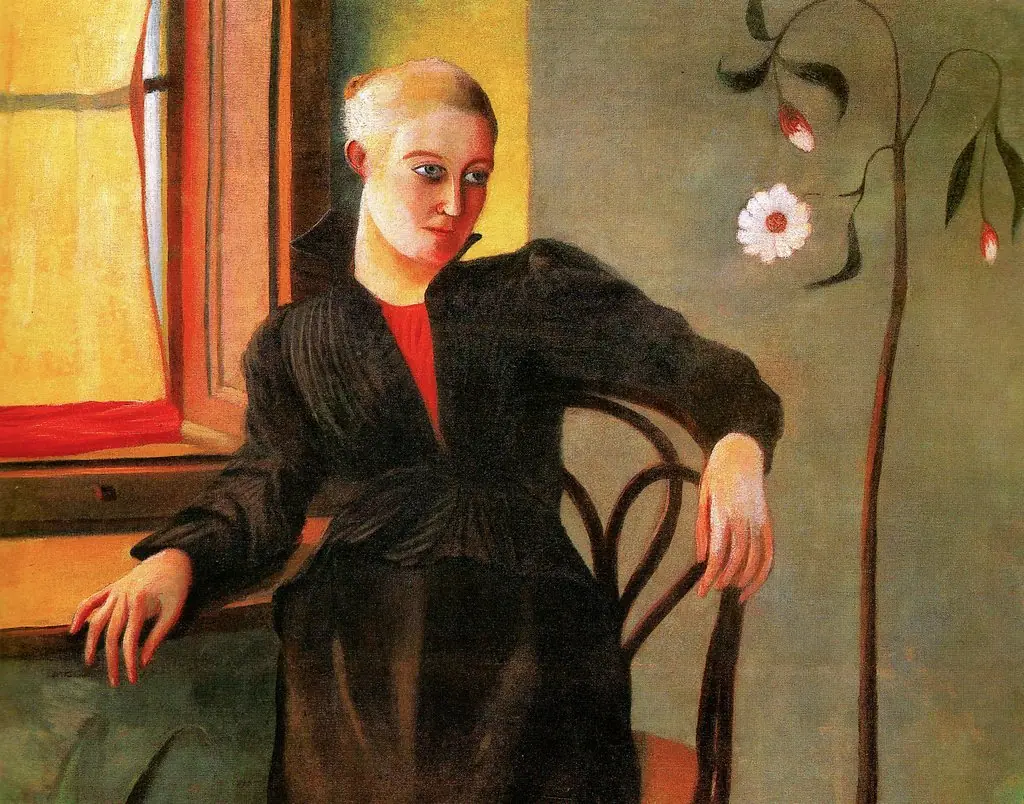
Portrait of the Artist's Wife Marfa Yaremich is an oil painting by the Realist artist Stepan Yaremich. It dates from 1905 and is held in the collection of the Hermitage Museum.
About this work
Overview
The composition emphasizes the contrast between the figure and the external world, rendered with deliberate texture and muted color.
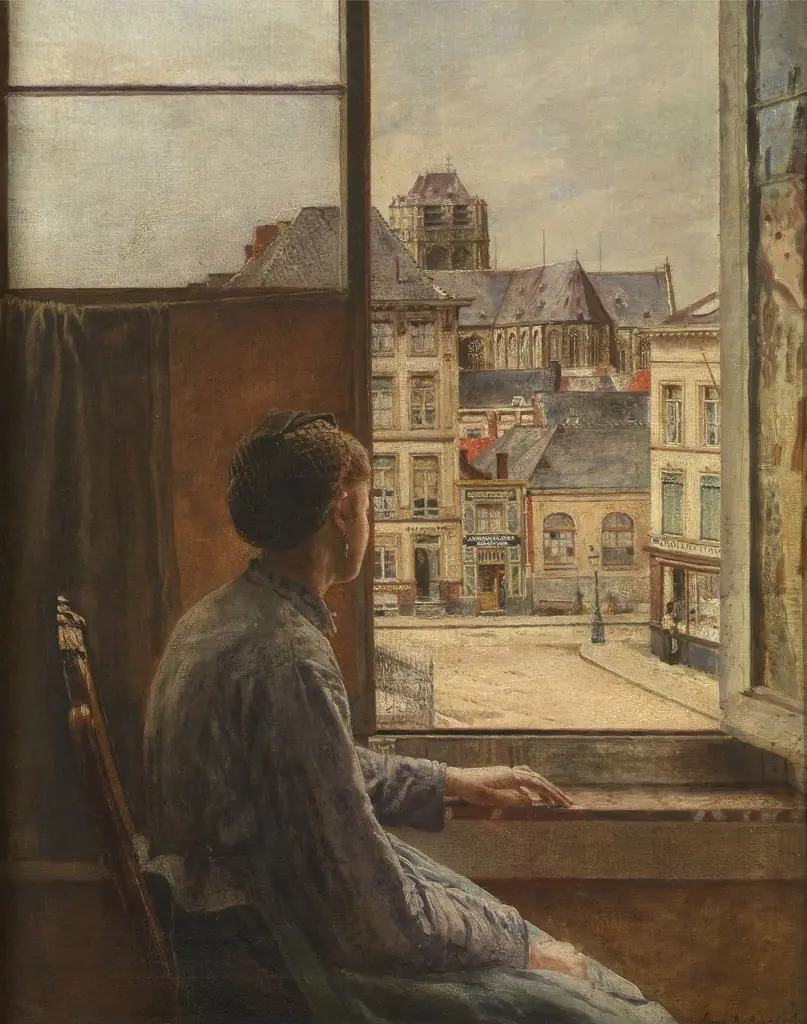
Painted in 1905 by Stepan Yaremich, this oil portrait depicts his wife, Marfa Yaremich, seated near an open window. The work is part of the State Hermitage Museum’s collection. It captures a quiet, introspective moment, blending intimate portraiture with a softly rendered urban landscape beyond. The composition emphasizes the contrast between the figure and the external world, rendered with deliberate texture and muted color.
Subject & Meaning
Marfa Yaremich is portrayed in a moment of stillness, gazing outward as if caught between inner thought and the world beyond. Her loose, dark garment suggests informality, reinforcing the personal nature of the scene. The blurred cityscape—buildings and a river—feels removed, almost unreal, implying emotional distance or contemplative solitude. The painting avoids narrative, instead inviting reflection on the quiet interiority of its subject.
Technique & Style
Thick, tactile brushwork defines the fabric of her dress, using impasto to create physical depth and texture. In contrast, the exterior landscape is painted with looser, more diffused strokes, blurring architectural details and softening light. The interplay of sharp shadow on her face and the luminous, indistinct view outside creates a visual tension. The technique prioritizes sensory impression over precise detail, aligning with late 19th-century expressive tendencies.
History & Provenance
The portrait was completed in 1905 and entered the State Hermitage Museum’s collection shortly thereafter. It remained within the artist’s family before acquisition, preserving its personal significance. Unlike many public commissions of the era, this work was a private study, reflecting the artist’s direct engagement with his subject. Its preservation in a major institution underscores its recognition as a significant domestic portrait of its time.
Context
Painted during a period of artistic transition in Russia, the work reflects influences from both Realism and emerging modernist approaches. While not overtly political or symbolic, its focus on an ordinary moment within a domestic space aligns with broader trends favoring intimate, psychological portraiture. The blurred urban backdrop echoes the changing cityscapes of early 20th-century Russia, subtly acknowledging industrialization’s encroachment on private life.
Legacy
The portrait stands as a quiet example of early 20th-century Russian intimate portraiture, notable for its emotional restraint and textural experimentation. It has not been widely reproduced or exhibited beyond institutional circles, but within the Hermitage’s collection, it contributes to the understanding of non-monumental, personal art-making during a time of broader cultural transformation. Its enduring presence reflects a preference for subtlety over spectacle.
Artist & collection