Artwork
Head of the prophet Daniel
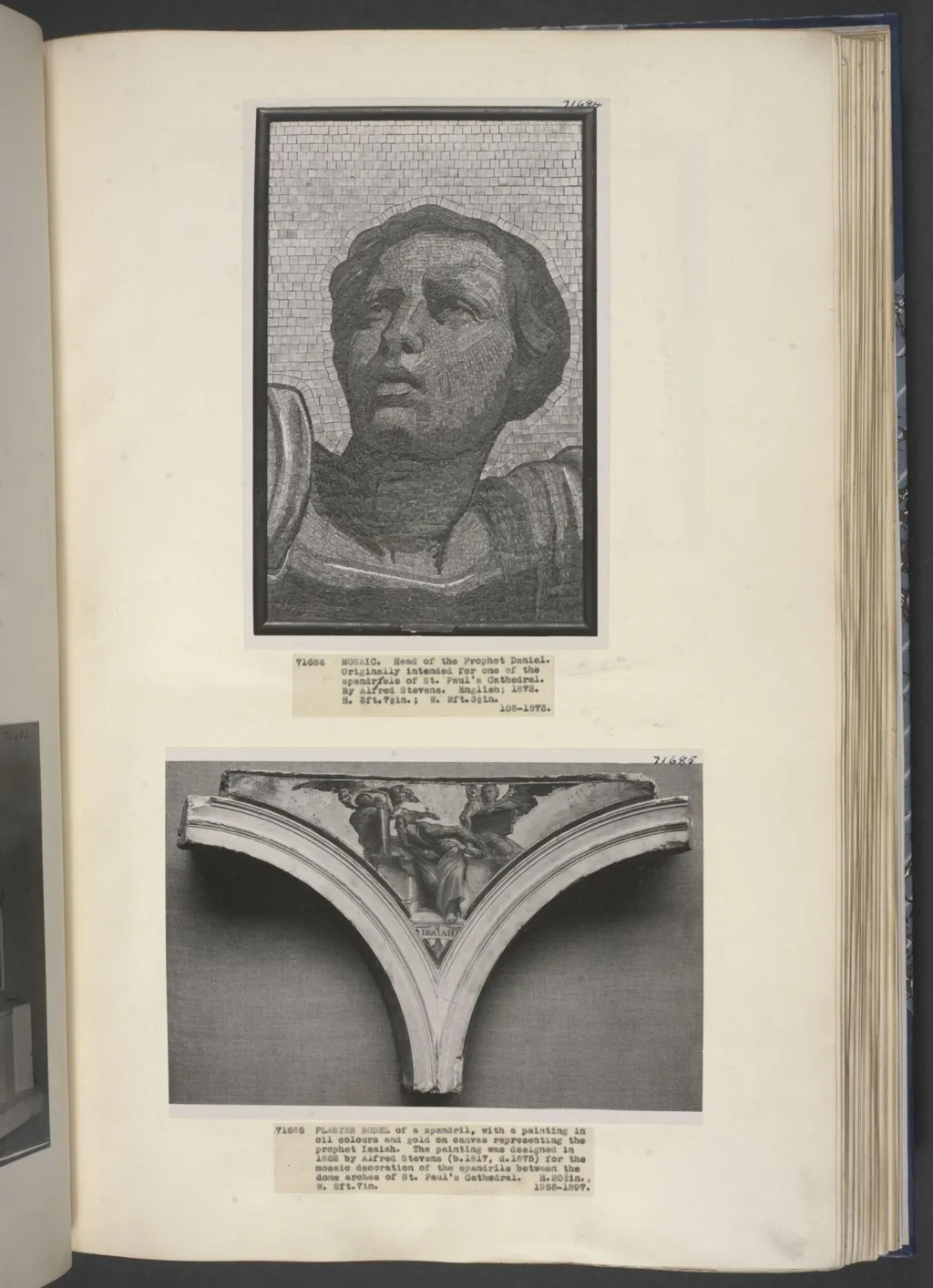
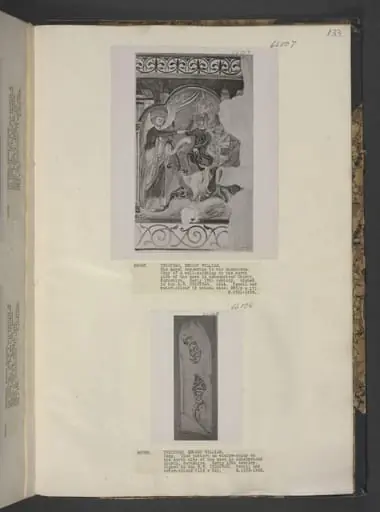
Head of the prophet Daniel is a mosaic by the Impressionist artist Alfred George Stevens. It dates from 1864 and is held in the collection of the Victoria and Albert Museum. This mosaic panel is a preparatory study for a larger decorative scheme in St.
About this work
Overview
Created as a trial piece, it depicts the head of the prophet Daniel and reflects Stevens’s engagement with mosaic as a medium for ecclesiastical ornamentation.
This mosaic panel is a preparatory study for a larger decorative scheme in St. Paul’s Cathedral, London, conceived by Alfred George Stevens. Created as a trial piece, it depicts the head of the prophet Daniel and reflects Stevens’s engagement with mosaic as a medium for ecclesiastical ornamentation. Though not the final executed work, it reveals his commitment to integrating fine art principles into architectural decoration.
Subject & Meaning
The figure of Daniel, a biblical prophet known for wisdom and divine insight, was chosen to align with the spiritual and intellectual themes of the cathedral’s interior. Stevens rendered the head with solemn dignity, emphasizing contemplative stillness rather than narrative action. The choice of Daniel may have been intended to symbolize prophetic vision, resonating with the cathedral’s role as a place of theological reflection.
Technique & Style
Executed in mosaic, the panel employs small tesserae to model form with subtle gradations of tone, mimicking the sculptural modeling of Renaissance relief. Stevens’s background in sculpture informs the volumetric treatment of the face, while the restrained palette and precise placement of tiles suggest a deliberate homage to early Christian and Byzantine precedents, filtered through 19th-century revivalist sensibilities.
History & Provenance
Stevens produced this mosaic between 1850 and 1857 during his tenure with Hoole & Co., though the commission for St. Paul’s came later. Though he did not win the initial competition for the Wellington Monument, his design was selected for its compatibility with the cathedral’s interior. The mosaic panel likely served as a model for the spandrel decoration, though the final execution may have been carried out by others under his supervision.
Context
In mid-19th-century Britain, there was a revival of interest in medieval and Renaissance decorative arts, particularly within religious architecture. Stevens, rejecting rigid boundaries between fine and applied art, aligned himself with this movement. His work at St. Paul’s was part of a broader effort to elevate ecclesiastical decoration through historical reference and craftsmanship, influenced by Italian Renaissance ideals.
Legacy
Though Stevens’s mosaic work at St. Paul’s was not widely documented, his broader contributions to decorative arts helped bridge sculpture and design. His emphasis on integrated, historically informed ornamentation influenced later artists in the New Sculpture movement. The mosaic panel stands as a testament to his belief that artistic integrity could be expressed through collaborative, architectural projects.
Artist & collection
Artist
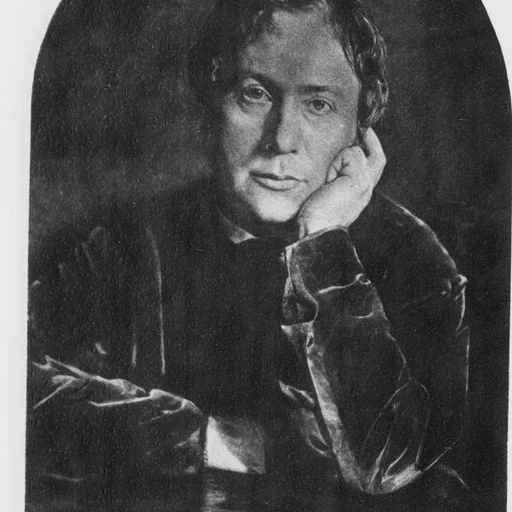
Alfred George Stevens (30 December 1817 – 1 May 1875), was a British sculptor. His major work is the monument to the Duke of Wellington in St Paul's Cathedral.