Artwork
Title Page for B. De Los Rios, De Hierarchia Mariana Libri Sex
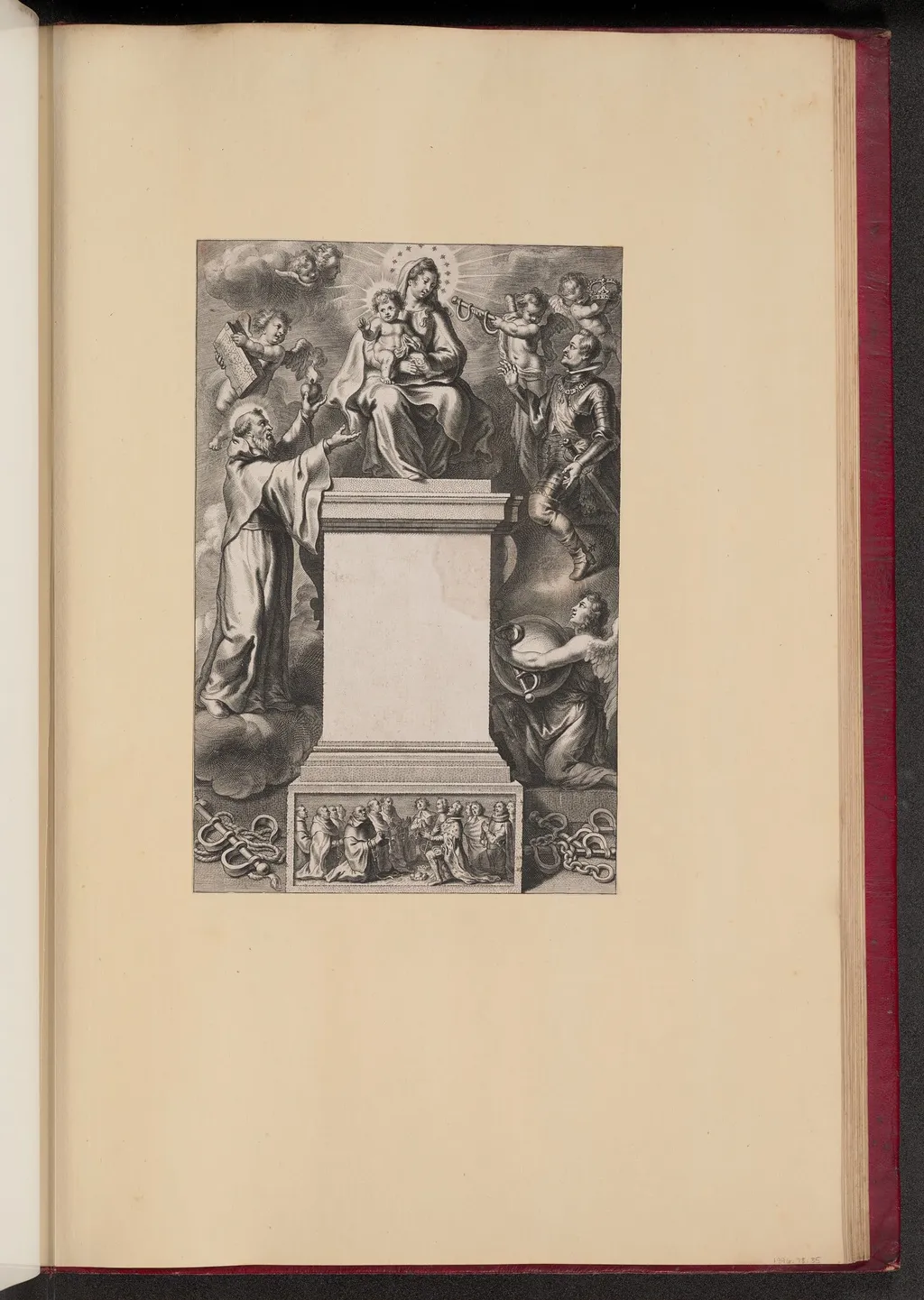
Title Page for B. De Los Rios, De Hierarchia Mariana Libri Sex is an ink print by the Baroque artist Cornelis Galle II. It dates from 1641 and is held in the collection of the National Gallery of Art.
About this work
Overview
Executed in fine line on laid paper, this impression predates the addition of lettering, indicating it was a proof stage.
An engraving by Cornelis Galle II, dated 1641, serves as the title page for B. De Los Rios’s six-volume work on Marian hierarchy. Executed in fine line on laid paper, this impression predates the addition of lettering, indicating it was a proof stage. The composition centers on a solemn female figure, elevated and adorned, surrounded by attendant figures, all rendered with meticulous detail characteristic of early Baroque printmaking.
Subject & Meaning
The central figure represents the Virgin Mary, depicted as the celestial queen seated on a pedestal, holding a scepter to signify spiritual authority. Cherubs and robed attendants surround her, reinforcing her role as the apex of a divine hierarchy. A gesturing figure in the foreground may symbolize the author or a theological interpreter, directing attention toward Mary’s exalted status within the Marian doctrinal framework of the text.
Technique & Style
Galle employed fine, controlled engraving lines to model form and texture, creating depth through cross-hatching and delicate shading. The Baroque emphasis on verticality and dramatic spatial arrangement is evident in the elevated throne and layered figures. The absence of color and reliance on tonal contrast heightens the solemnity, aligning with the gravity of the theological subject matter.
History & Provenance
Produced as a proof before the addition of printed letters, this impression likely served as a trial for the final publication. Cornelis Galle II, part of a prominent Flemish printmaking family, was known for translating paintings into engraved plates for scholarly and religious texts. This piece was part of a larger devotional work commissioned to affirm Marian doctrine in the post-Reformation Catholic context.
Context
Created in the mid-17th century, the engraving reflects the Counter-Reformation’s emphasis on visual propaganda to reinforce Catholic teachings. Marian devotion was central to Jesuit and Tridentine spirituality, and illustrated theological texts like De Hierarchia Mariana were used to educate clergy and laity. The imagery aligns with contemporary iconography promoting Mary’s intercessory power and celestial sovereignty.
Legacy
As a high-quality proof from a respected printmaker, this engraving offers insight into the production process of religious publications in the Spanish Netherlands. It survives as a testament to the collaboration between theologians, publishers, and engravers in disseminating doctrinal content. Few such proofs remain, making it a valuable artifact for studying early modern print culture and devotional imagery.
Artist & collection

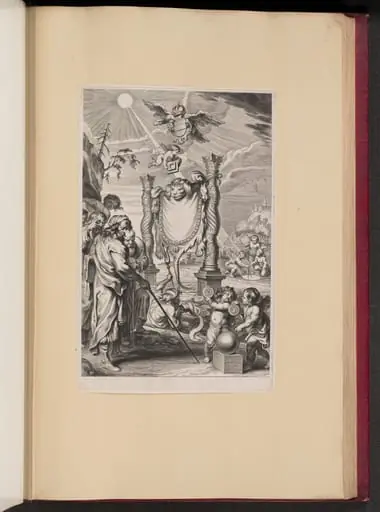 Title Page for G. de St. Vincent, Opus Geometricum Quadraturae Circuli
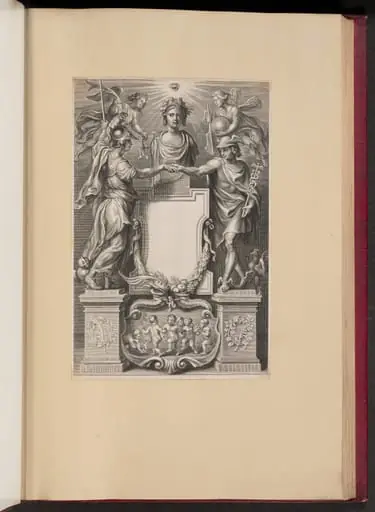 Title Page for Frederik de Marselaer, Legatvs
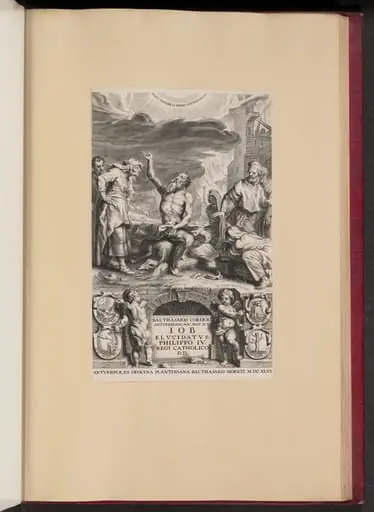 Title Page for Balthasar Cordier, Iob Elvcidatvs
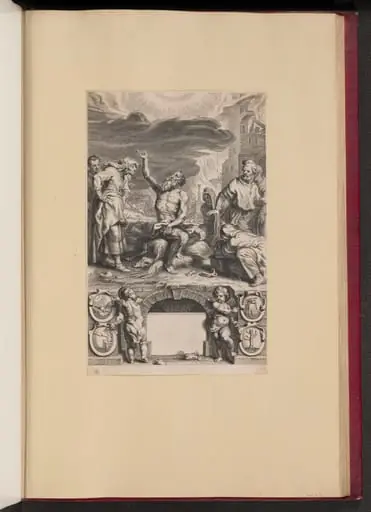 Title Page for Balthasar Cordier, Iob Elvcidatvs
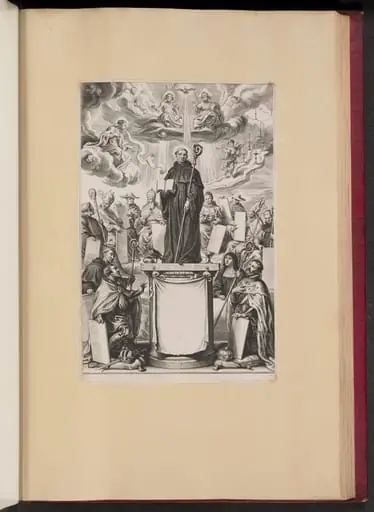 Title Page for Dommo Benedicto Haeftano's S. Benedictvs Illvstratvs
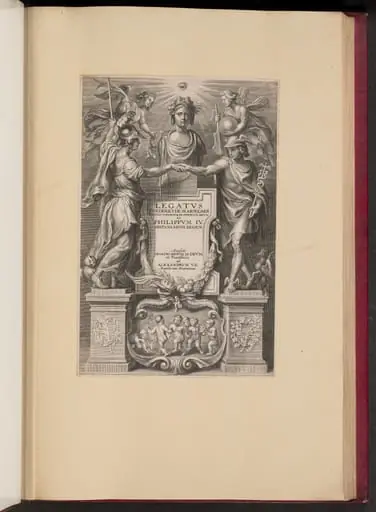 Title Page for Frederik de Marselaer, Legatvs
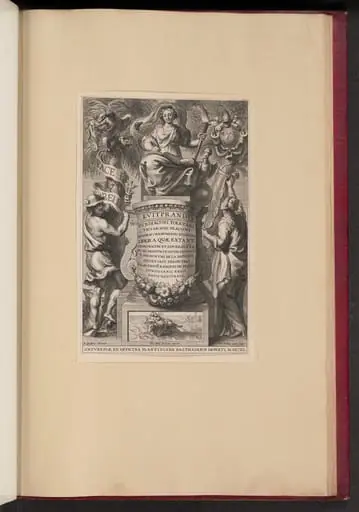 Title Page for Liutprand, Opera
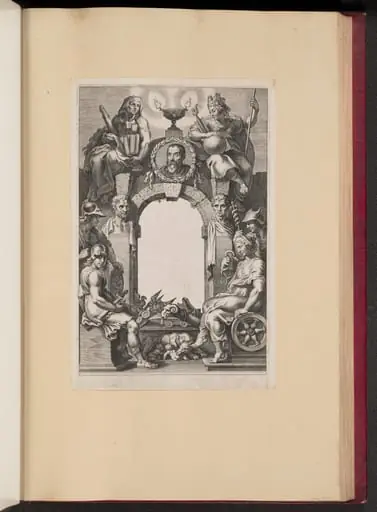 Title Page for Justus Lipsius, Opera Omnia, I
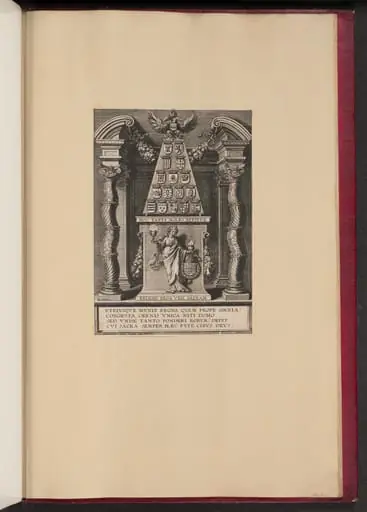 Hoc Tanta Moles Nititvr...
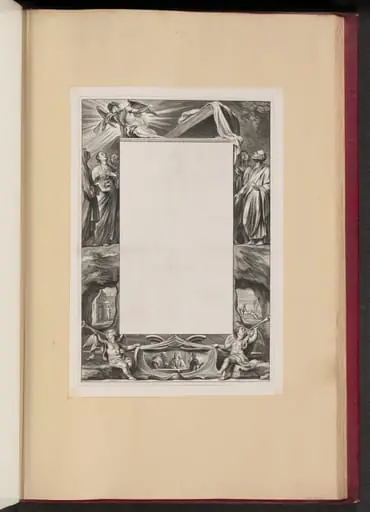 Border Illustration with Saints and Scenes from the Life of Christ
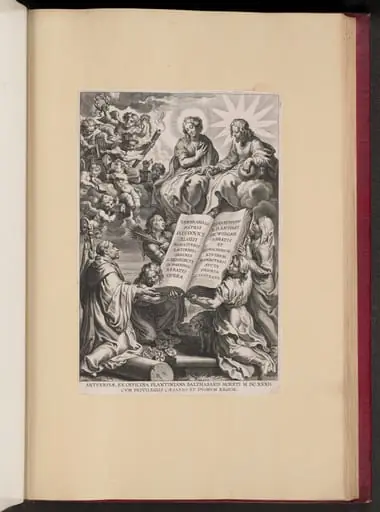 Title Page for Ludovicus Blosius, Opera
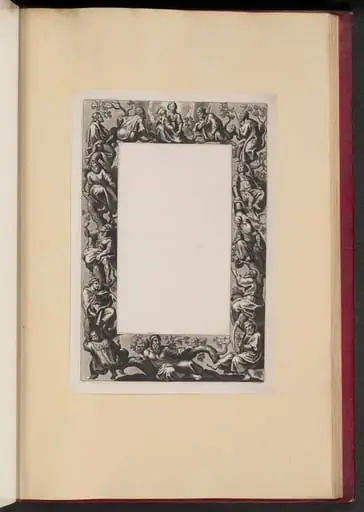 Border Illustration for the Missale Romanum: The Tree of Jesse
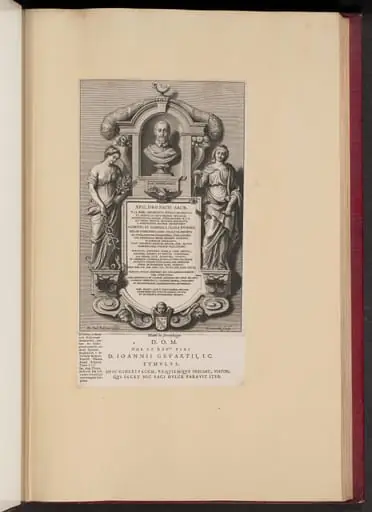 Epitaph of Claude Jean Gevaert
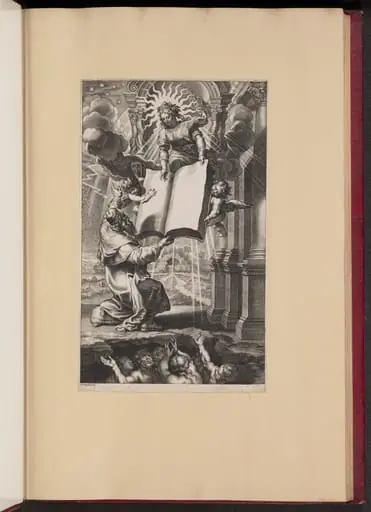 Title Page for Olivier Boonaerts' "In Ecclesiasticvm Commentarivs..."
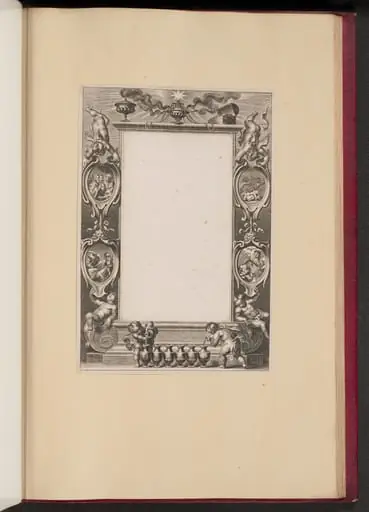 Border Illustration with Scenes from the Life of Christ and Putti Pouring Wine