Artwork
Lot's Wife
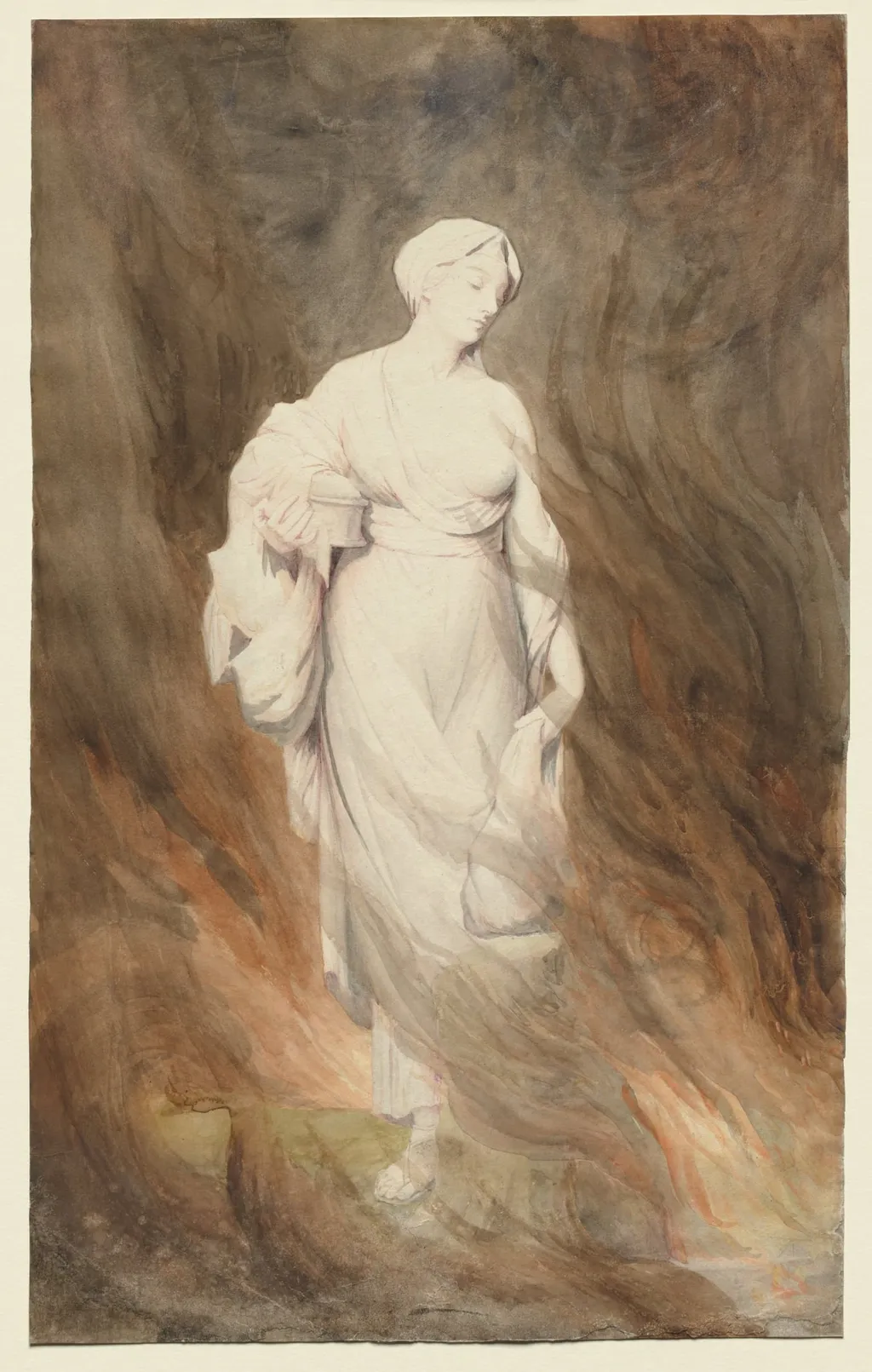
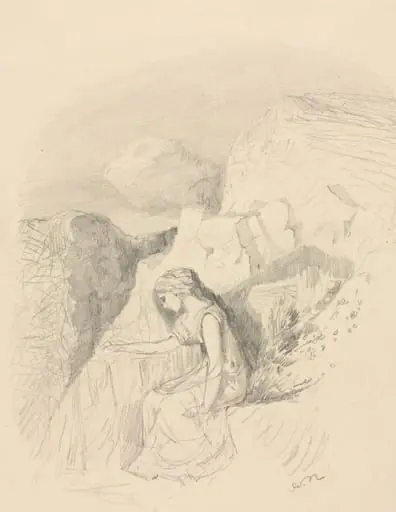
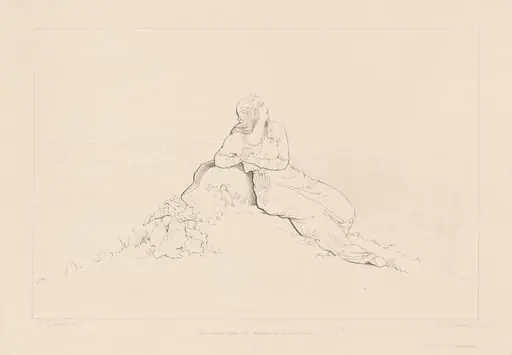
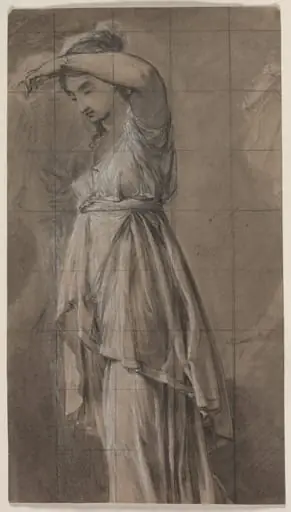
Lot's Wife is a drawing by the Romanticist artist Alfred George Stevens. It dates from 1854 and is held in the collection of the Cleveland Museum of Art.
About this work
Overview
Lot's Wife is a drawing by Alfred George Stevens, dating to 1854. The work represents a pivotal moment from the biblical narrative of Lot, focusing on his wife's doomed glance back at Sodom and Gomorrah.
Subject & Meaning
The drawing captures the instant of Lot's wife's transgression, as she looks back upon the destroyed cities, conveying a sense of longing or regret. Her solitary figure embodies the narrative's themes of loss and divine retribution.
Technique & Style
Executed in a style consistent with Romanticism, the drawing features a contrast between the luminous, flowing white dress of the subject and a dark, textured background evoking ruins or cliffs. The subtle play of light on her attire creates a sense of glow against the shadowy landscape.
History & Provenance
Created in 1854 by British artist Alfred George Stevens, also known for monumental sculptures like the Duke of Wellington memorial in St Paul's Cathedral. Specific provenance details for this drawing are not provided.
Context
Part of the broader Romantic movement, the drawing reflects the era's emphasis on emotion, the sublime, and often, the dramatic reinterpretation of classical or biblical themes.
Legacy
As a work by Stevens, it contributes to the artist's diverse oeuvre, spanning sculpture and drawing, though its direct influence or prominence within the Romantic canon is not explicitly defined in available information.
Artist & collection
Artist
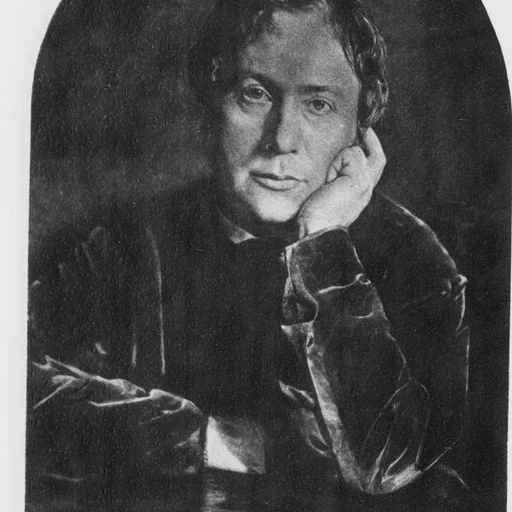
Alfred George Stevens (30 December 1817 – 1 May 1875), was a British sculptor. His major work is the monument to the Duke of Wellington in St Paul's Cathedral.


![Study for "Greek Girls Bathing" [recto], by Elihu Vedder](https://artifactworldgallery.com/img/elihu-vedder--study-for-greek-girls-bathing-recto--19bafb603a99e598-w320.webp)