Artwork
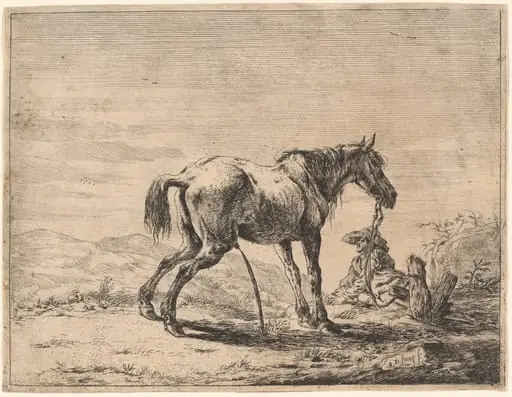
A Horse Bound to a Post
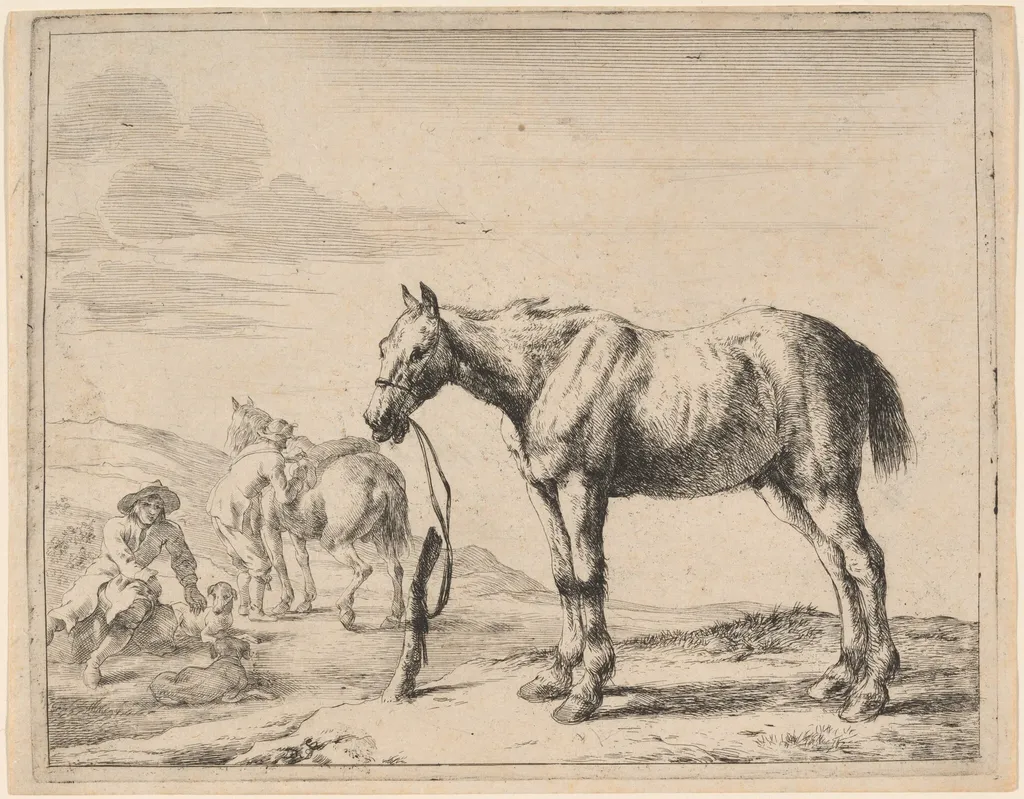
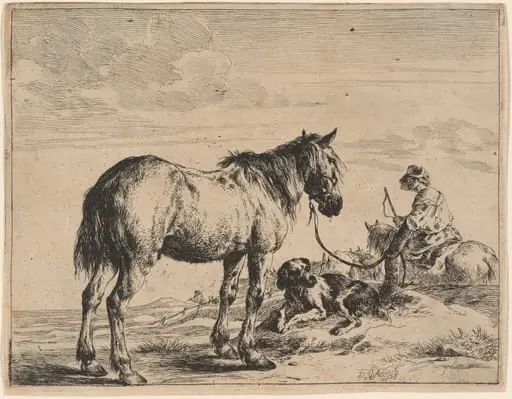
A Horse Bound to a Post is an ink print by the Baroque artist Dirck Stoop. It dates from 1651 and is held in the collection of the National Gallery of Art.
About this work
Overview
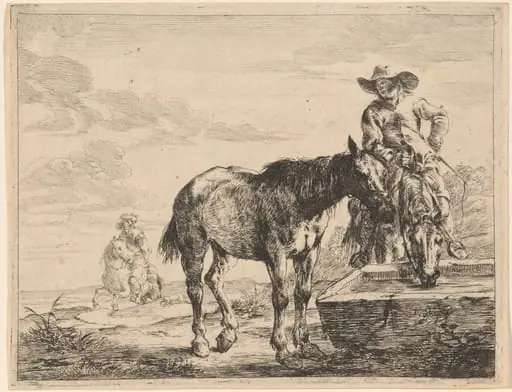
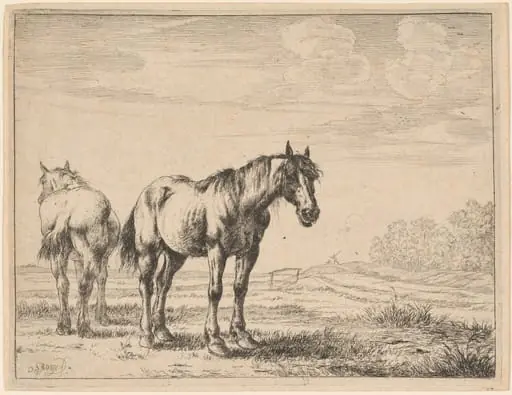
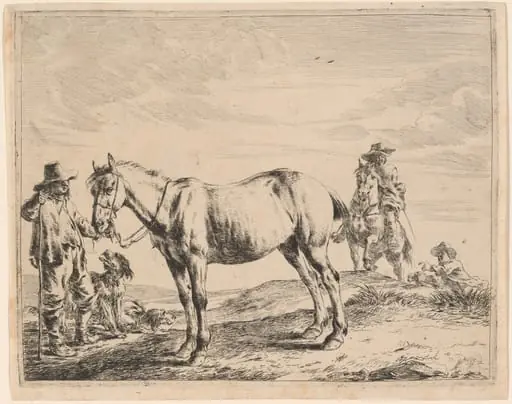
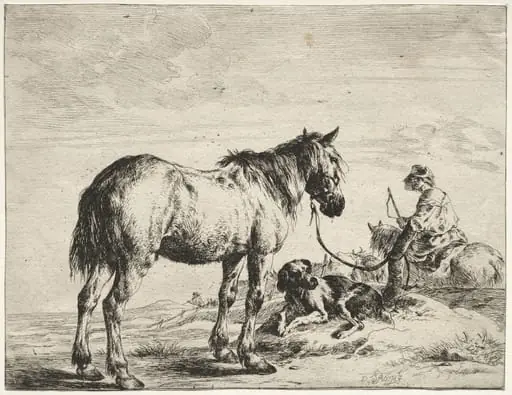
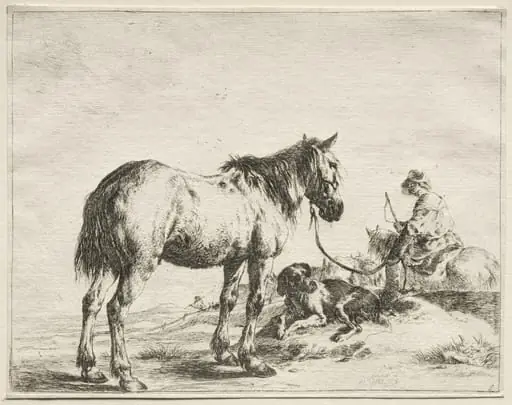
A Horse Bound to a Post is an etching by Dirck Stoop, dated 1651, executed on laid paper. It depicts a solitary horse tethered to a wooden post on a gentle slope, its posture alert yet still. A seated figure, hat pulled low, rests against a tree nearby, accompanied by a dog. The composition conveys quiet stillness, with no overt narrative action, inviting contemplation rather than drama.
Subject & Meaning
The image presents a moment of suspended tension: the horse, restrained yet attentive, and the man, passive yet observant, coexist in a shared silence. The rope binding the animal suggests control, yet neither figure appears distressed. The scene may reflect themes of patience, domesticity, or the quiet relationship between human and beast, common in Dutch pastoral imagery of the period.
Technique & Style
The use of light suggests late afternoon, enhancing the calm atmosphere without dramatic contrast, characteristic of Stoop’s restrained approach to printmaking.
Stoop employed etching to achieve fine linear detail and subtle tonal gradations. The horse’s musculature and the texture of the tree bark are rendered with delicate, controlled lines, while soft hatching defines the shadowed ground and the man’s clothing. The use of light suggests late afternoon, enhancing the calm atmosphere without dramatic contrast, characteristic of Stoop’s restrained approach to printmaking.
History & Provenance
Created in 1651, the print belongs to a small body of work by Dirck Stoop, a Dutch artist active in the mid-seventeenth century. While not widely reproduced in major collections, it appears in several European print rooms, often grouped with other Dutch animal studies. Its survival in good condition reflects its modest but enduring appeal among collectors of genre prints.
Context
In mid-1600s Holland, scenes of rural life and animal subjects were popular among printmakers, reflecting broader cultural interest in observation and naturalism. Stoop’s work aligns with artists like Rembrandt and Adriaen van de Velde, who explored quiet moments in everyday settings. This print contributes to a tradition that valued stillness and subtle emotion over grand narrative.
Legacy
Though not among Stoop’s most famous works, A Horse Bound to a Post remains a representative example of Dutch etching’s capacity for emotional restraint. It influenced later artists interested in pastoral themes and the psychological presence of animals in human landscapes. Its quiet composition continues to be studied for its understated use of line and mood.
Own this work as a print
Artist & collection