Artwork
Schiță de plachetă
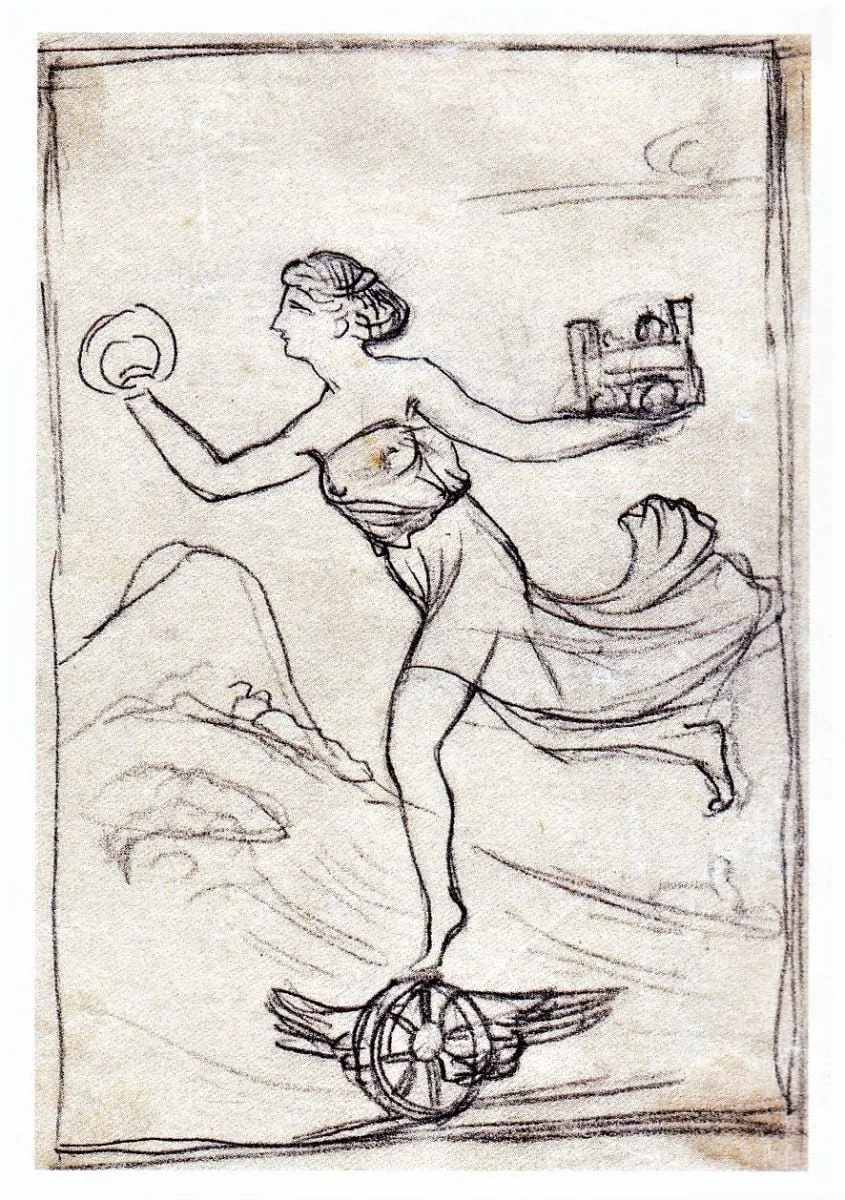
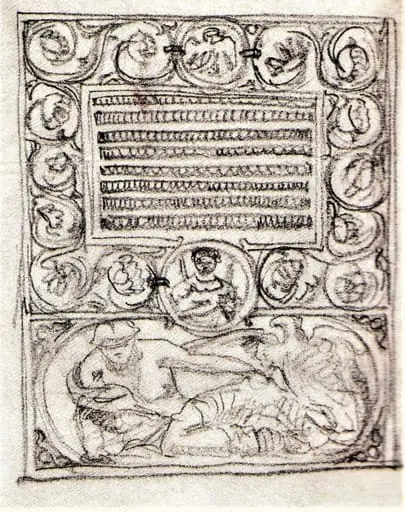
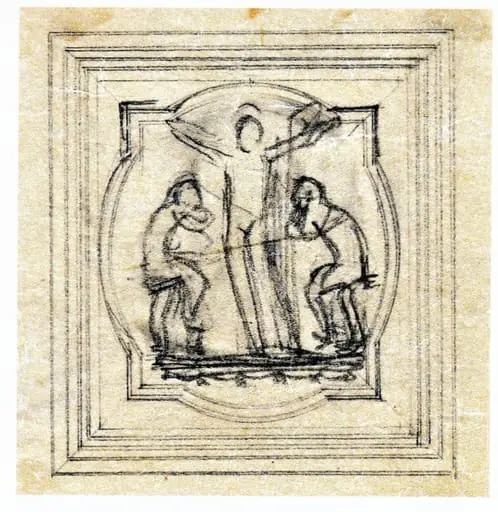
Schiță de plachetă is a drawing by Frederic Storck. It dates from 1911 and is held in the collection of the Bucharest Municipality Museum.
About this work
Overview
Created around 1911 by Romanian sculptor Frederic Storck, this preparatory drawing serves as a study for a commemorative plaque.
Created around 1911 by Romanian sculptor Frederic Storck, this preparatory drawing serves as a study for a commemorative plaque. Executed in ink or pencil on paper, it captures a dynamic figure in motion, suggesting a narrative or ritual context. The work is part of the Museum of Ethnography’s collection, where it is preserved as an example of early 20th-century Romanian graphic design linked to public monument planning.
Subject & Meaning
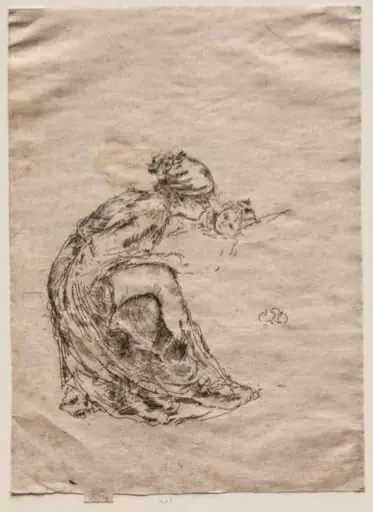
The central figure is a woman in motion, her flowing garments and outstretched arms conveying urgency or ritual action. She holds a circular object, possibly a shield or disc, and a small rectangular form, perhaps a tablet or offering. The wheeled platform beneath her feet introduces a symbolic or allegorical element, hinting at progress, divine transit, or mythic journey. The plain background isolates her, emphasizing gesture over setting.
Technique & Style
Storck employs dense, fluid linework to suggest movement and texture, particularly in the drapery and wind-swept fabric. The figure’s anatomy is rendered with precision, while the background features minimal, suggestive strokes—faint contours that imply distant terrain or atmospheric elements. The drawing’s energy arises from rhythmic line variation and controlled spontaneity, characteristic of preparatory studies for sculptural reliefs.
History & Provenance
The drawing was likely produced during Storck’s engagement with public commemorative projects in the early 1910s. It entered the Museum of Ethnography’s holdings as part of a broader collection of Romanian artistic materials related to national identity and cultural expression. Its preservation reflects institutional interest in the intersection of fine art and ethnographic symbolism during the period.
Context
Storck worked amid a wave of Romanian cultural nationalism, where artists often drew from folk motifs and classical allegory to construct visual narratives of collective identity. This sketch aligns with contemporaneous efforts to merge decorative arts with national symbolism, particularly in monuments and public plaques intended to commemorate historical or mythic themes.
Legacy
Though the final plaque for which this was a study may not have been executed or has since been lost, the drawing remains a significant artifact of Storck’s design process. It illustrates how sculptors of the era translated abstract ideas into visual forms, bridging fine art and public commemoration in a period of evolving national aesthetics.
Artist & collection

Artist
Frederic Storck was a Romanian sculptor. His father was the sculptor Karl Storck. His brother, Carol Storck, was also a sculptor and his wife, Cecilia Cuțescu-Storck was a painter.
 Cameo, No. 1 (Mother and Child)
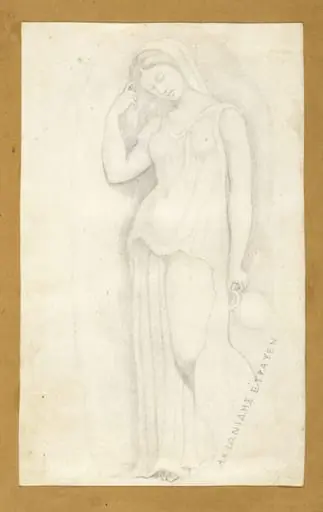 drawing from the Ionides Album
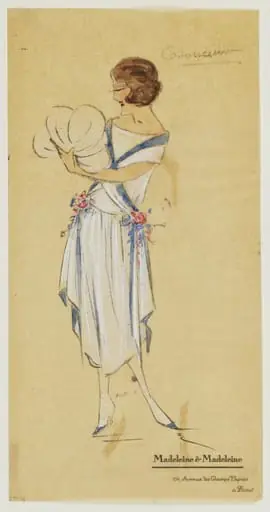 Douceur
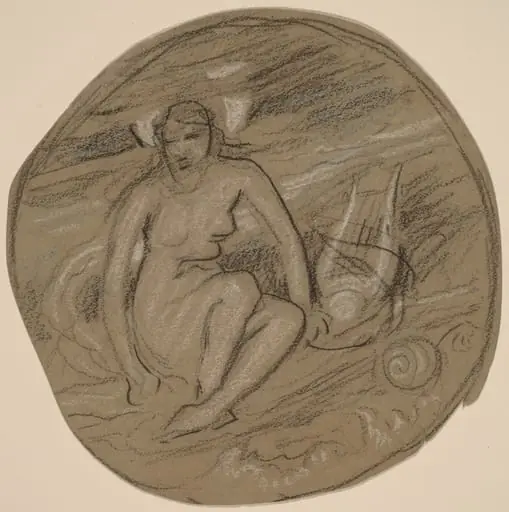 Study for "Music"
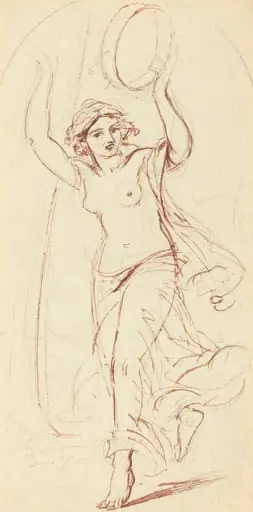 Dancing Woman with a Tambourine
 A Standing Youth Gesturing to His Right
 Study
Study Allegorical Figure: Woman with Sword and Sphere
![Standing Female Nude Holding a Bowl [recto], by James McNeill Whistler](https://artifactworldgallery.com/img/james-mcneill-whistler--standing-female-nude-holding-a-bowl-recto--5735c897b3eb1bb8-w320.webp) Standing Female Nude Holding a Bowl [recto]
Standing Female Nude Holding a Bowl [recto] Untitled
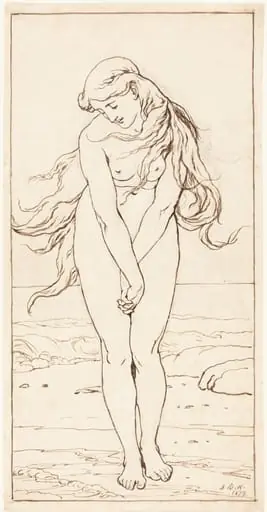 Standing Nude with Crossed Arms
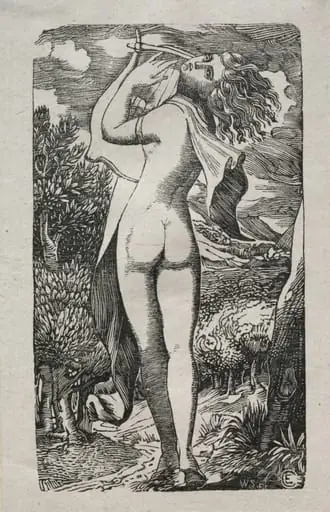 Bacchante or The Player on The Lyre