Artwork
Copie după Michelangelo
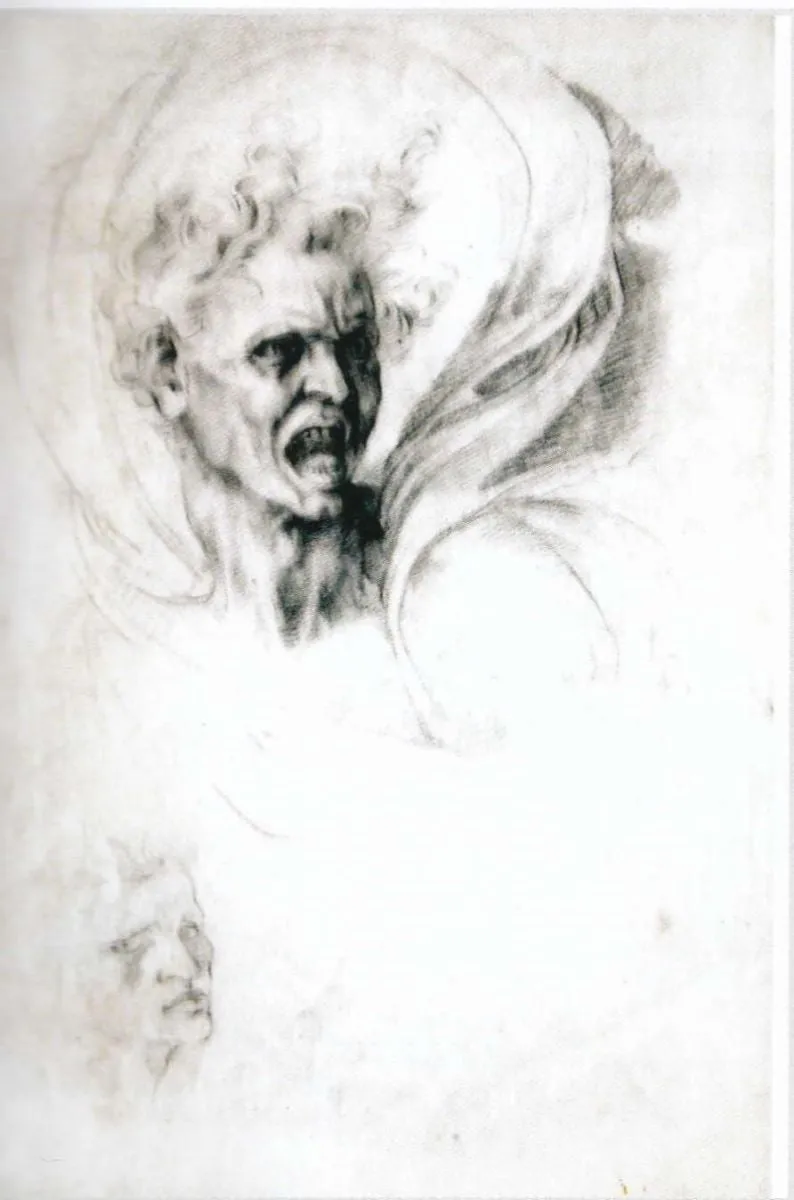
Copie după Michelangelo is a drawing by Karl Storck. It dates from 1850 and is held in the collection of the Bucharest Municipality Museum.
About this work
Overview
Karl Storck created this drawing around 1850 as a study after a work by Michelangelo. Executed in pencil or charcoal, it reflects the 19th-century academic practice of copying Old Master drawings to understand composition and expression. The piece is part of the Museum of Ethnography’s collection, where it serves as an example of artistic pedagogy rather than an independent finished work.
Subject & Meaning
The drawing depicts a contorted human face, mouth open in a silent cry, with eyes squeezed shut and hair erupting in chaotic strands. One hand reaches outward, fingers splayed as if grasping at an unseen force. The intensity suggests emotional or physical anguish, echoing Michelangelo’s interest in the human form under strain, though Storck’s version emphasizes raw immediacy over idealized form.
Technique & Style
The lines are unrefined, avoiding clean outlines in favor of gestural marks that mimic the energy of the subject.
Storck employed rapid, uneven strokes with smudged contours to convey motion and urgency. The lines are unrefined, avoiding clean outlines in favor of gestural marks that mimic the energy of the subject. This approach reveals his focus on capturing the dynamism of Michelangelo’s figures, prioritizing expressive force over polished finish, typical of preparatory studies in 19th-century art academies.
History & Provenance
The drawing was likely made during Storck’s training or early career, when artists routinely copied Renaissance masters to develop skill. It entered the Museum of Ethnography’s holdings through unspecified acquisition, possibly as part of a broader collection of artistic studies. Its presence there, rather than in a fine arts collection, suggests its value was seen as pedagogical or anthropological.
Context
In mid-19th-century Europe, copying Old Masters was standard practice for art students. Storck, trained in Vienna and later active in Romania, would have engaged with this tradition as part of formal instruction. His choice of Michelangelo reflects the enduring influence of High Renaissance ideals, even as Romanticism emphasized emotional intensity over classical harmony.
Legacy
This drawing survives not as a celebrated artwork but as evidence of artistic learning. It illustrates how 19th-century artists absorbed and reinterpreted Renaissance models through personal expression. While not widely known, it contributes to understanding the transmission of artistic techniques across generations and geographies in Eastern Europe.
Artist & collection

Artist
Karl Storck (1826–1887) was a Hessian-born Romanian sculptor and art theorist, the most prominent Romanian sculptor of his time. His sons Carol Storck (1854–1926) and Frederic Storck (1872–1924), were also noted artists.
 Evil
Evil Print from Drawing Book
 Head of a Screaming Man (recto)
 Saint Michael
 Study of a Mask
 A Flying Angel (recto)
 Man Reaching Down and Two Studies of Heads (recto)
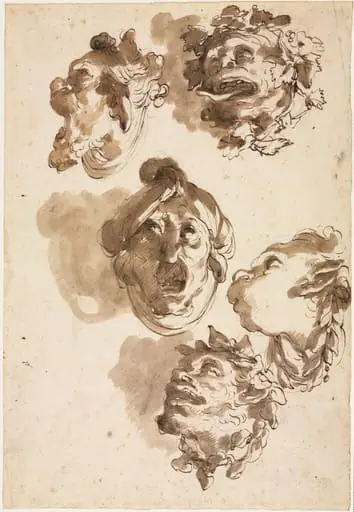 Five Grotesque Heads
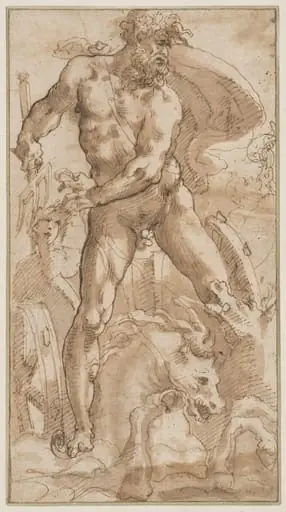 Untitled
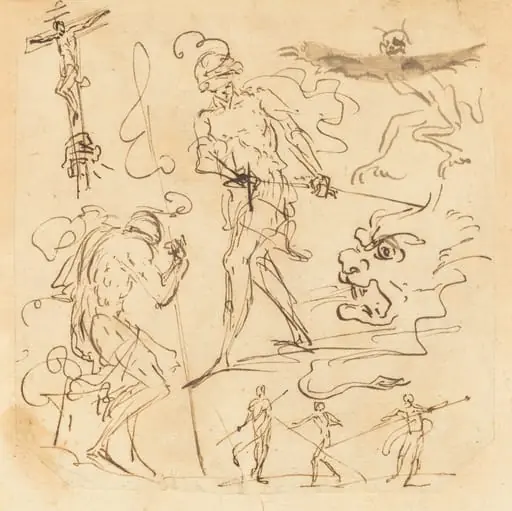 Sheet of Studies with a Soldier Drawing a Sword, a Crucifix, Monstrous Animals, and Other Figures
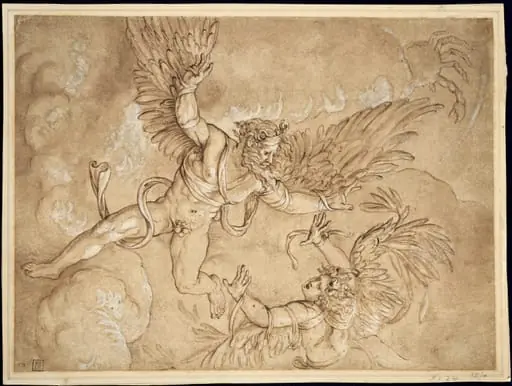 Copy after Giulio Romano's Fall of Icarus
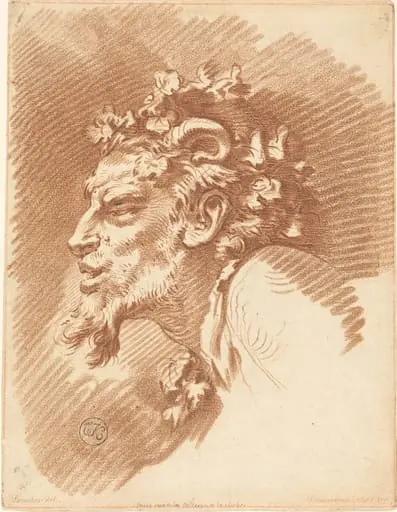 Head of a Faun