Artwork
Monument to William Shakespeare
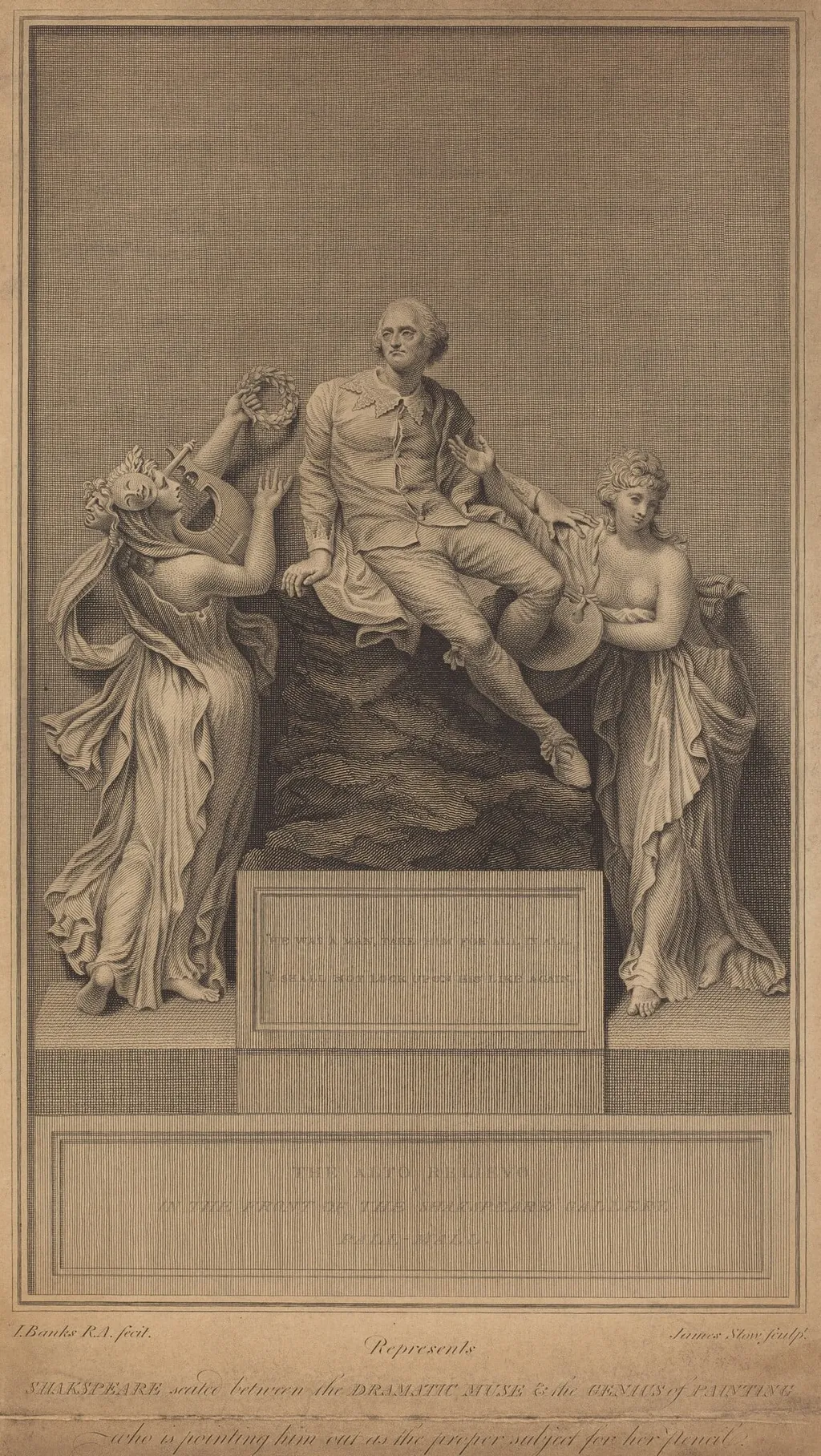
Monument to William Shakespeare is an ink print by the Romanticist artist James Stow. It dates from 1798 and is held in the collection of the National Gallery of Art.
About this work
Overview
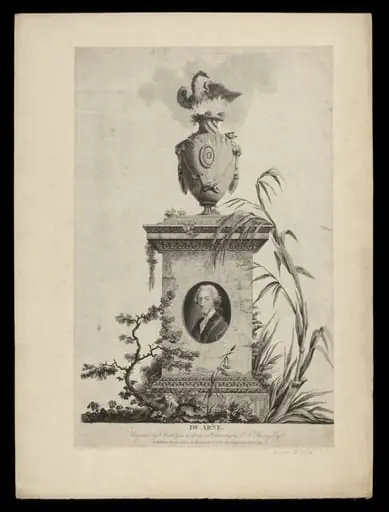
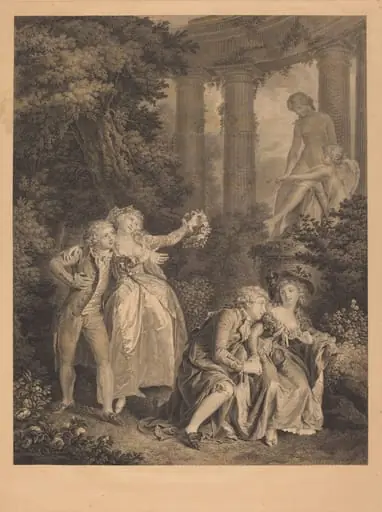
Created in 1798 by James Stow, this print combines etching and engraving techniques to depict a symbolic tribute to William Shakespeare. The composition presents Shakespeare in a contemplative pose, flanked by two allegorical female figures. The image functions as a visual homage, merging literary reverence with artistic representation through the conventions of 18th-century printmaking.
Subject & Meaning
Their gestures suggest offering tribute, framing Shakespeare not merely as a writer but as a central figure in the broader landscape of artistic expression.
Shakespeare is portrayed seated, holding a scroll and quill, embodying the poet as a figure of enduring thought. To his left, a woman plays a lyre, representing the Dramatic Muse; to his right, another holds a palette and brushes, symbolizing the Genius of Painting. Their gestures suggest offering tribute, framing Shakespeare not merely as a writer but as a central figure in the broader landscape of artistic expression.
Technique & Style
Stow employed fine-line etching and engraving to achieve detailed textures and tonal contrasts. The figures are rendered with crisp, controlled lines, while the background remains minimal, directing focus to the central group. The stage-like setting and elevated pedestal reflect classical compositional ideals, aligning the work with Enlightenment-era traditions of honoring cultural figures through allegorical imagery.
History & Provenance
The print was produced in London during a period of renewed interest in Shakespeare’s legacy, following the rise of public memorials and literary festivals. Though Stow was not among the most prominent engravers of his time, this work was likely circulated among collectors and scholars seeking visual representations of the Bard. No major institutional provenance is documented prior to the 19th century.
Context
In late 18th-century Britain, Shakespeare was increasingly venerated as a national icon. This print emerged alongside other commemorative works, including statues and illustrated editions, reflecting a cultural movement to elevate literature to the status of public monument. The pairing of drama and painting underscores the era’s belief in the interconnectedness of the arts under Shakespeare’s influence.
Legacy
While not widely reproduced or exhibited today, the print remains a representative example of how Shakespeare was visually interpreted in the decades after his death. It captures a moment when literary figures were mythologized through allegory, influencing later artistic tributes. Its modest scale and medium reflect the accessibility of print culture in disseminating cultural ideals to a broader audience.
Artist & collection