Artwork
La soiree des Thuileries
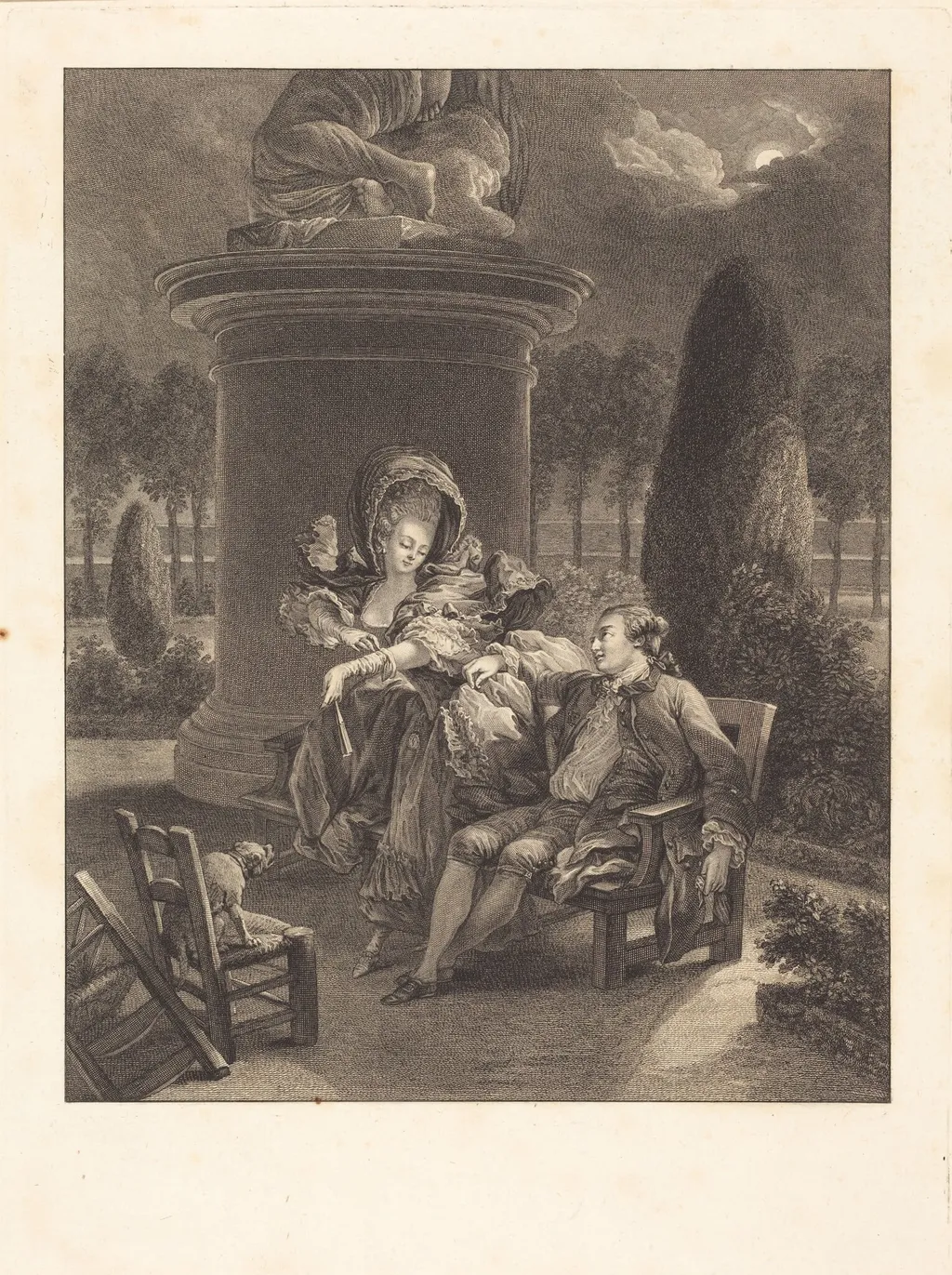
La soiree des Thuileries is an ink print by the Romanticist artist Jean-Baptiste Blaise Simonet. It dates from 1774 and is held in the collection of the National Gallery of Art. Jean‑Baptiste Blaise Simonet’s print titled *La soirée des Thuileries* dates from 1774.
About this work
Overview
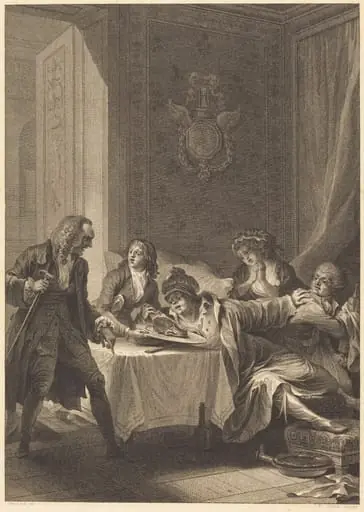
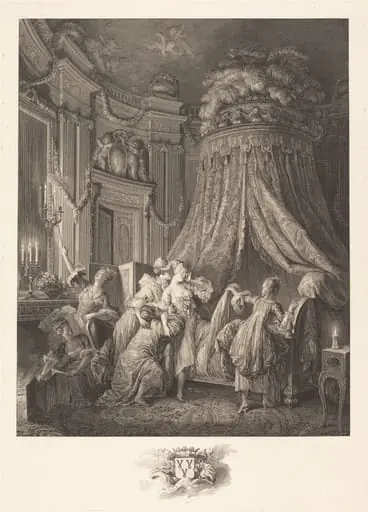
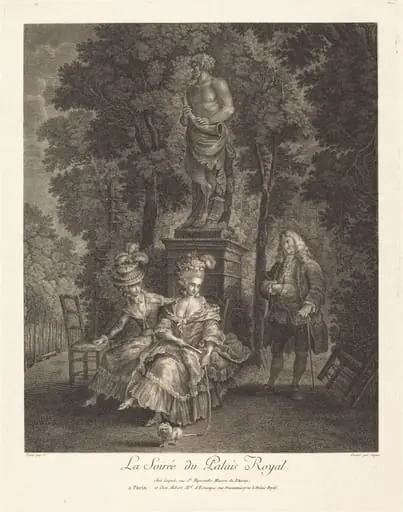
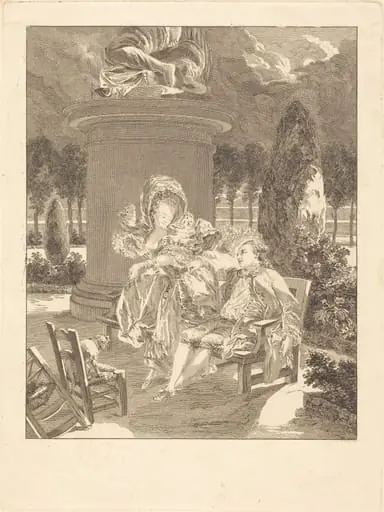
Jean‑Baptiste Blaise Simonet’s print titled *La soirée des Thuileries* dates from 1774. Executed as an engraving, the work depicts a nocturnal garden scene in which a couple is seated outdoors, surrounded by architectural elements and a small dog, all rendered in subdued tonal contrasts.
Subject & Meaning
The composition presents a man and a woman in an intimate setting. The woman, attired in elaborate eighteenth‑century fashion and holding a fan, gazes downward toward the seated man, whose relaxed pose suggests a private conversation. The surrounding garden, dimly illuminated, reinforces a sense of quiet evening repose.
Technique & Style
Simonet employed traditional engraving methods, using incised lines to model forms and shading to convey depth. The tonal gradations, achieved through careful hatching, create a night‑time atmosphere, while the crisp delineation of the statue and pillar reflects the precision typical of late‑Baroque printmaking.
History & Provenance
Created in 1774, the print belongs to the later phase of Simonet’s career, a period when he produced a series of garden and architectural scenes for the French market. Its survival in museum collections indicates it was circulated among connoisseurs of the decorative arts during the late eighteenth century.
Context
*La soirée des Thuileries* reflects the eighteenth‑century fascination with aristocratic leisure in landscaped gardens, a motif popularized by artists documenting the fashionable life of Parisian elites. The inclusion of a reclining statue and a decorative pillar situates the scene within the neoclassical aesthetic that was gaining prominence at the time.
Legacy
While not as widely reproduced as some contemporaneous prints, Simonet’s work contributes to the visual record of domestic garden culture in pre‑revolutionary France, offering scholars insight into period costume, interior‑exterior interaction, and the technical capabilities of eighteenth‑century engraving.
Artist & collection