Artwork
Forellenweiher (Trout Pond)
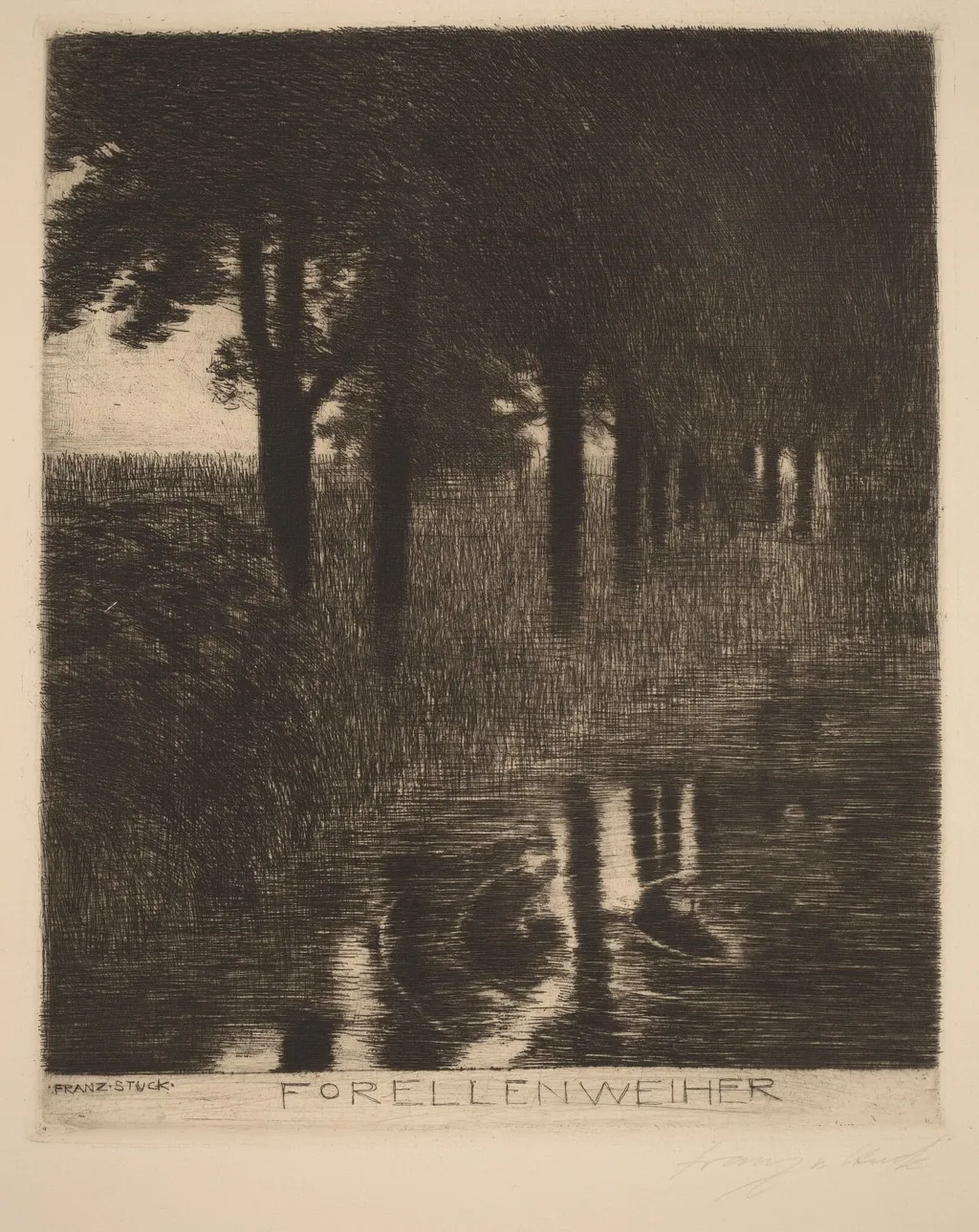
Forellenweiher (Trout Pond) is an ink print by the Impressionist artist Franz von Stuck. It dates from 1890 and is held in the collection of the National Gallery of Art.
About this work
Overview
Forellenweiher, created around 1890, is a print by Franz von Stuck executed in etching and drypoint on cream laid paper.
Forellenweiher, created around 1890, is a print by Franz von Stuck executed in etching and drypoint on cream laid paper. The composition presents a somber, atmospheric landscape dominated by dense trees and a still, textured pond. Light is minimal, confined to a narrow band at the top of the sheet, suggesting a twilight sky. The surface bears the distinct, incised marks of hand-carved tools, emphasizing the tactile nature of the medium.
Subject & Meaning
The scene, titled 'Trout Pond,' evokes a secluded natural setting, though human or animal figures are only hinted at—faint, indistinct forms floating or standing in the water. The ambiguity invites contemplation rather than narrative clarity. The title grounds the image in a specific locale, yet the obscurity of detail and mood suggests a psychological or symbolic dimension, aligning with late 19th-century interests in introspection and the sublime in nature.
Technique & Style
Stuck employed etching and drypoint to achieve a dense, linear texture. The drypoint’s burr creates rich, fuzzy lines, while etched grooves define the trees and water’s surface. The paper’s cream tone enhances contrast, making the dark ink areas feel immersive. The absence of broad tonal gradients and reliance on incised marks give the image a raw, almost primal quality, characteristic of Stuck’s interest in expressive line over polished finish.
History & Provenance
Created circa 1890, this print belongs to Stuck’s early period, before his shift toward more monumental, symbolic paintings. It reflects his engagement with printmaking during a time when German artists were re-examining graphic techniques as vehicles for personal expression. While specific early ownership records are sparse, the work is recognized within scholarly catalogs of his graphic output from the 1880s–1890s.
Context
In the 1890s, German artists increasingly turned to printmaking to explore mood and subjectivity outside academic traditions. Stuck’s Forellenweiher aligns with broader Symbolist tendencies, where nature became a vessel for inner states. The work contrasts with the polished realism of the time, favoring emotional resonance through texture and ambiguity, reflecting influences from both Romanticism and emerging modernist sensibilities.
Legacy
Forellenweiher remains a significant example of Stuck’s graphic work, illustrating his ability to convey atmosphere through minimal means. Though less known than his paintings, this print exemplifies his technical command and psychological depth in printmaking. It contributes to the understanding of how late 19th-century German artists used etching to bridge traditional landscape and emerging modernist expression.
Own this work as a print
Artist & collection

 Countryside
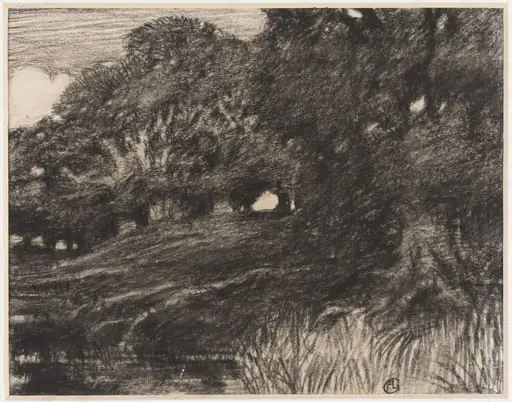 Druid Shades
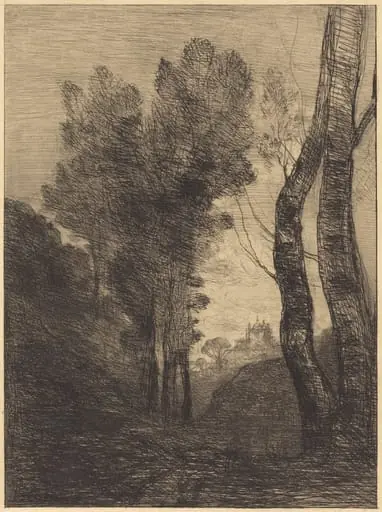 Environs of Rome (Environs de Rome)
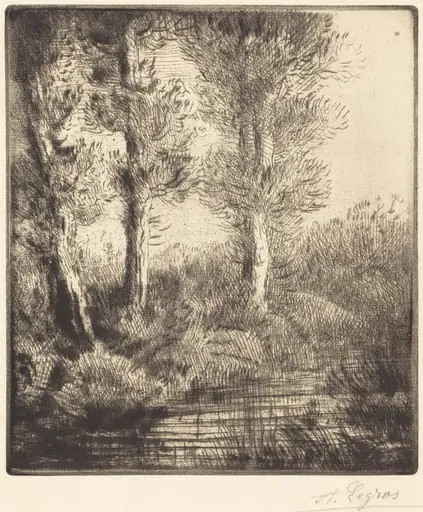 Banks of the Saint-Pre (Rive du Saint-Pre)
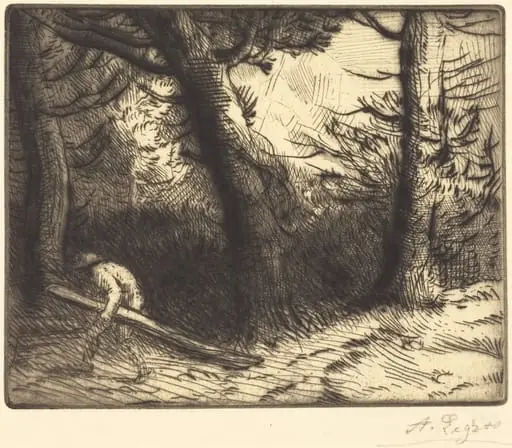 Edge of a Forest in Bourgogne (Un coin de foret en Bourgogne)
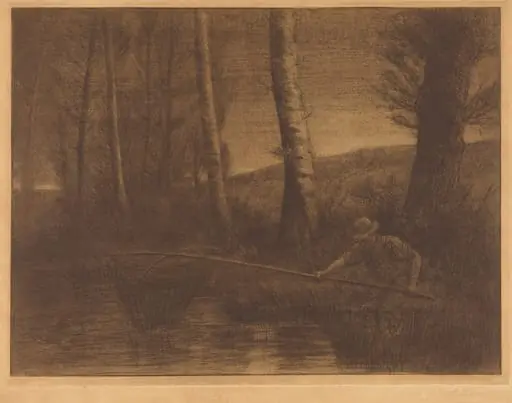 Fisherman with a Hoop-net (La peche a la truble)
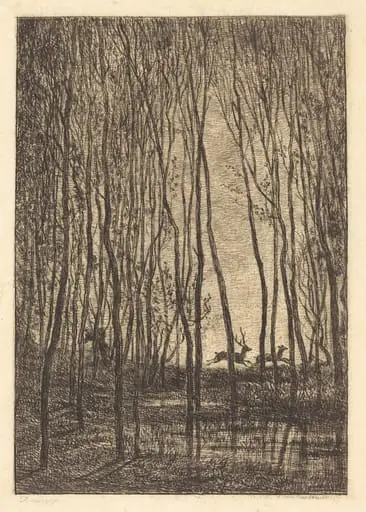 Deer in the Woods (Les Cerfs sous bois)
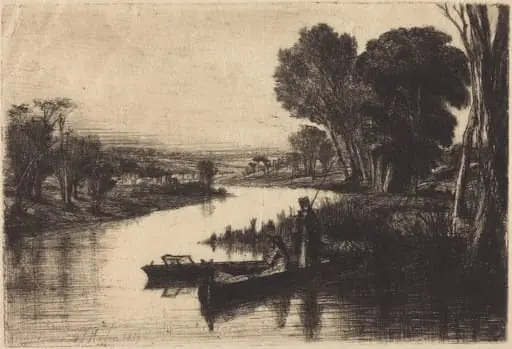 Thames Fishermen
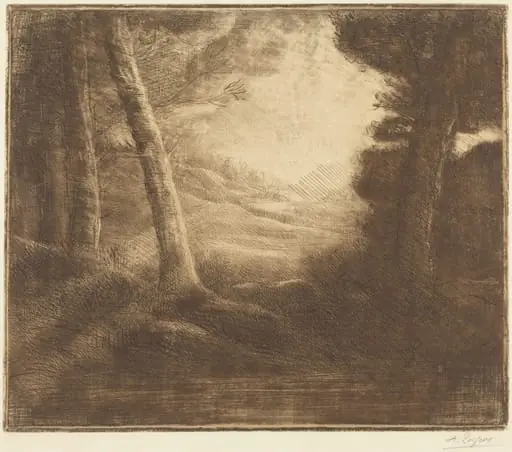 Water's Edge by Morning Light (Au bord de l'eau (Effet du matin))
 La Ronde de nuit (Night Patrol)
 Deer Hunt (La chasse au cerf)
 Sunset (Le soir (Coucher de soleil))